‘Come On, Trees!’ Lahaina Nonprofit Plants A Natural Firebreak
Kaiāulu Initiatives, a grassroots nonprofit, aims to revitalize Lahaina’s landscape and prevent future wildfires by planting native plants and trees.
Even before a deadly wildfire reduced much of Lahaina to ash, the former plantation town had been changing for years.
Jeremy DelosReyes had lived there almost his entire life. Over the years, he saw how the mango, lychee and papaya trees lining the streets began to dwindle, rain became more infrequent, and the average temperature inched upward. He saw how the sugarcane fields that once blanketed the hills overlooking the town were abandoned, allowing highly flammable invasive grasses to devour the landscape and deplete the water table below, he said.
“All of this used to be green,” said DelosReyes, pointing out at the dry, brown brush that grew wild as far as the eye could see.

DelosReyes, 50, said he grieved for the Lahaina that was lost, but he saw an opportunity to rebuild his hometown in a way that prevents future disasters and better serves the local community.
In the months after the blaze, DelosReyes said he established the grassroots nonprofit Kaiāulu Initiatives to revitalize the region’s natural environment, recharge the local aquifer and mitigate wildfire risk by planting native plants and trees.
Three times a week, DelosReyes, his wife Gracie DelosReyes and a team of volunteers take the short drive up a bumpy, unpaved road to a 2-acre plot of state-owned land in the dry, grassy hills above Lahaina and Kāʻanapali. The government allowed the group to clear the area and plant thousands of native plants that have since begun to grow.
“A good society is one where a man plants a tree knowing he’ll never sit under its shade. I’ll never harvest those trees for build a canoe or make woodworking, but somebody will,” DelosReyes said. “The thing about Hawai‘i that you have to understand is we worry more about our future generations. I’m building this for them.”
Locals have also led revegetation efforts in Kula, where another devastating wildfire raged on the same day as the deadly Lahaina blaze.
‘A Natural Firebreak’
Sugarcane was a driving force in Maui’s economy for more than a century, until 1999 when the industry behemoth Pioneer Mill Company shut down, according to the Lahaina Restoration Foundation. The expansive sugarcane fields that had long dominated West and South Maui’s terrain were left fallow, allowing highly flammable haole koa, cane grass, buffelgrass and other invasive plant species to grow unimpeded, DelosReyes said.
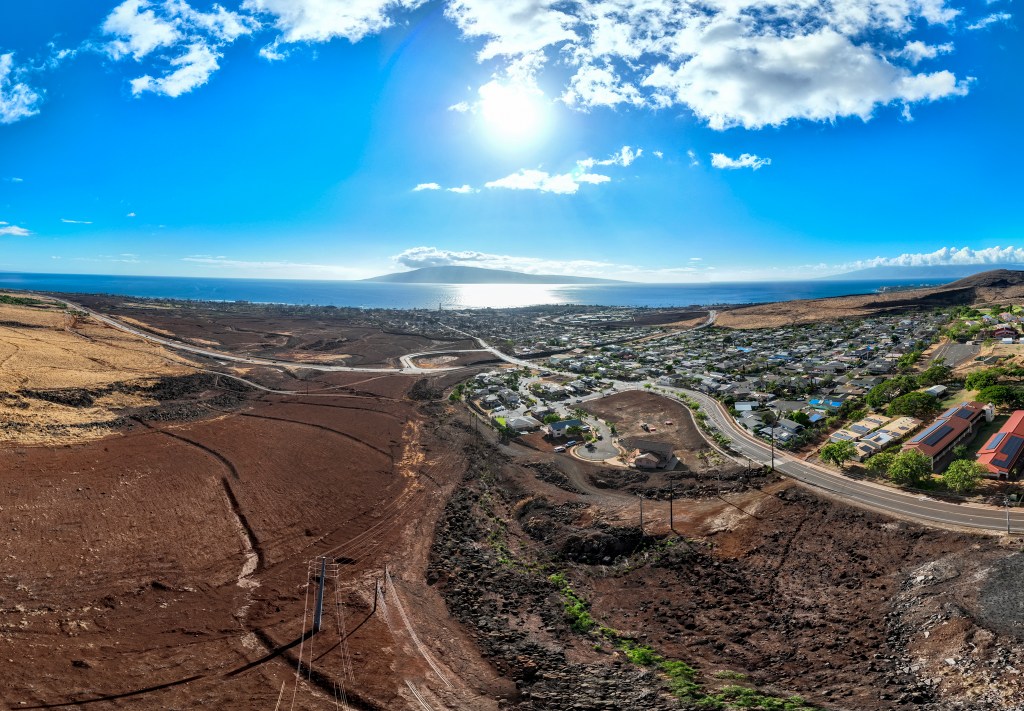
The spread of invasive species caused the state’s wildfire risk to grow rapidly over the last century, and it played a crucial role in the 2023 Lahaina fire, according to a report by the Hawaiʻi Attorney General last year. Removing these non-native plants and promoting native ecosystem restoration are among the steps that governments can take to help “reduce fire risks and protect both natural resources and communities from rapid ignition and fire spread,” the report states.
Removing invasive plants and restoring a more natural environment is no small task, said Hank Oppenheimer, a local botanist and the former Maui Nui coordinator for the Plant Extinction Prevention Program.
“They’re very aggressive,” he said of the invasive grasses in Lahaina. “That’s why they are habitat-modifying. They will just elbow their way in and get established and then spread out.”
DelosReyes, a carpenter and former high school teacher, said for years he had been thinking about how the island’s history of plantation agriculture and the fall of the sugarcane industry had left much of Maui’s once-lush terrain parched and brown, made drought conditions more frequent and put his community at increased risk. After the fires, he decided it was finally time to take action.
He sought advice from experts like Oppenheimer who helped him develop a plan to revegetate the area, with the goal of eventually bringing down the cloud line, encouraging more rain and creating a more fire-resistant landscape, he said.

“It’s a natural firebreak that we’ve created,” he said.
Oppenheimer spent a few hours volunteering with Kaiāulu Initiatives over the summer, and he said he saw the work being done there as a demonstration of what could be done with enough resources.
“It’s an incredible amount of work they’ve done just to get that small little site cleared of most of the invasives and then starting to plant endemic or culturally important plant species,” he said. “There’s a lot of reasons to be optimistic.”
The nonprofit is predominantly funded by donations, and DelosReyes has personally shelled out significant amounts of money to keep operations going, he said.
“We desperately need funding,” DelosReyes said.
Currently, the group is fundraising to purchase a water tanker truck that would reduce the amount of effort needed to haul thousands of gallons of water up the hill every week. That water is stored in large tanks so that they can operate a gravity-fed watering system.
The trucks cost roughly $80,000 used or $210,000 new. The group has raised roughly $70,000 since its inception, including $600 so far for the water tanker.
‘Part Of Something Bigger’
On Tuesday afternoon, about a dozen people met in a parking lot above the Lahaina Civic Center for a Kaiāulu Initiatives volunteer work day. The group included a few locals who regularly volunteer and some employees from Monkeypod Kitchen, a restaurant in Kāʻanapali.
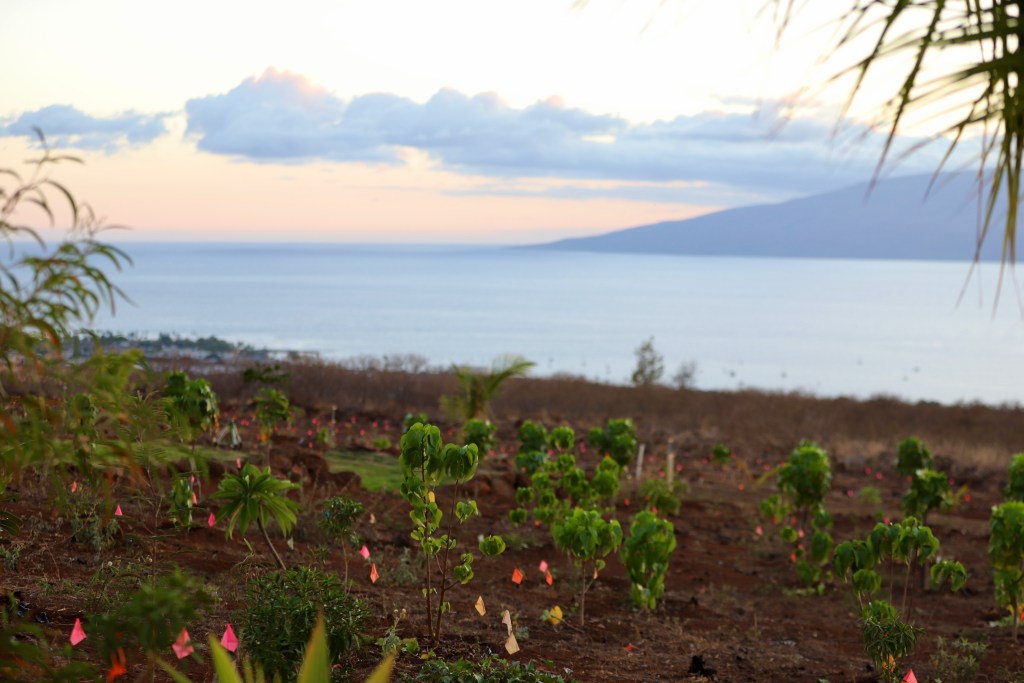
When DelosReyes launched the organization in November 2023, only a few people knew about the work he was trying to do, said volunteer Sarah Marchello.
“But more people are starting to hear about it, slowly but surely,” she said. “The word is spreading.”
Marchello, a 34-year-old manager at Monkeypod Kitchen, said she grew up in Lahaina and her family lost their home in the fire. She wanted to be involved in an effort to prevent another disaster.
“We all go to our 9-to-5 job in the tourism industry, but it feels good to do something for our community and for our island,” she said, taking a short break from watering some of the native koa, ʻulu, ʻōhiʻa, kukui and other plants. “It makes you feel like you are a part of something bigger.”
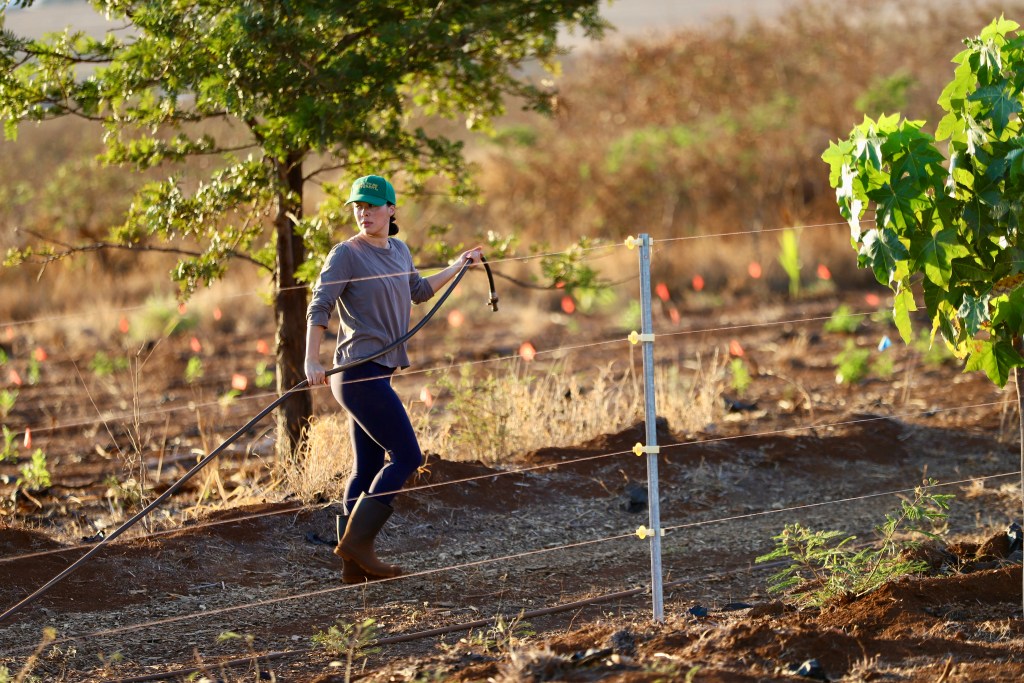
Taylor Kealoha, who also grew up on Maui, said Kaiāulu Initiative’s mission resonated with her because she regularly experiences anxiety related to wildfires. When winds are high, droughts stretch for months or she looks out at dry grass as far as the eye can see, that fear is heightened.
“It’s definitely scary,” she said, “especially driving through Lahaina town and seeing all the dry brush everywhere.”
Just over 93% of people on Maui were affected by drought conditions as of Thursday, according to the National Integrated Drought Information System.
Taking some time to help plant native species helps Kealoha feel like she is doing something, she said.
Someday, DelosReyes said, he hopes he will be able to stand in Lahaina’s streets and see lush greenery growing from the hillside.
“But I have no patience,” said DelosReyes, letting out a frustrated laugh. “I’m just like, ‘Come on, trees!’”
Civil Beat’s coverage of Maui County is supported in part by a grant from the Nuestro Futuro Foundation. Civil Beat’s coverage of climate change and the environment is supported by The Healy Foundation, the Marisla Fund of the Hawai‘i Community Foundation and the Frost Family Foundation. Civil Beat’s coverage of environmental issues on Maui is supported by grants from the Center for Disaster Philanthropy and the Hawai‘i Wildfires Recovery Fund and the Doris Duke Foundation.