

Hawaiʻi Colleges Face Loss Of Federal Grants For Minority Students
The U.S. Department of Education terminated several grant programs on Wednesday supporting universities with high proportions of minority students, including Asians and Native Hawaiians.
Hawaiʻi colleges could lose millions of dollars under a directive from the U.S. Department of Education ending several grant programs for universities enrolling large numbers of minority students.
In a shift upending decades of precedent, the education department said Wednesday it now believes it is unconstitutional to award federal grants using eligibility requirements based on racial or ethnic enrollment levels. The agency said it is holding back a total of $350 million in grants budgeted for this year and called on the U.S. Congress to re-envision the programs for future years.
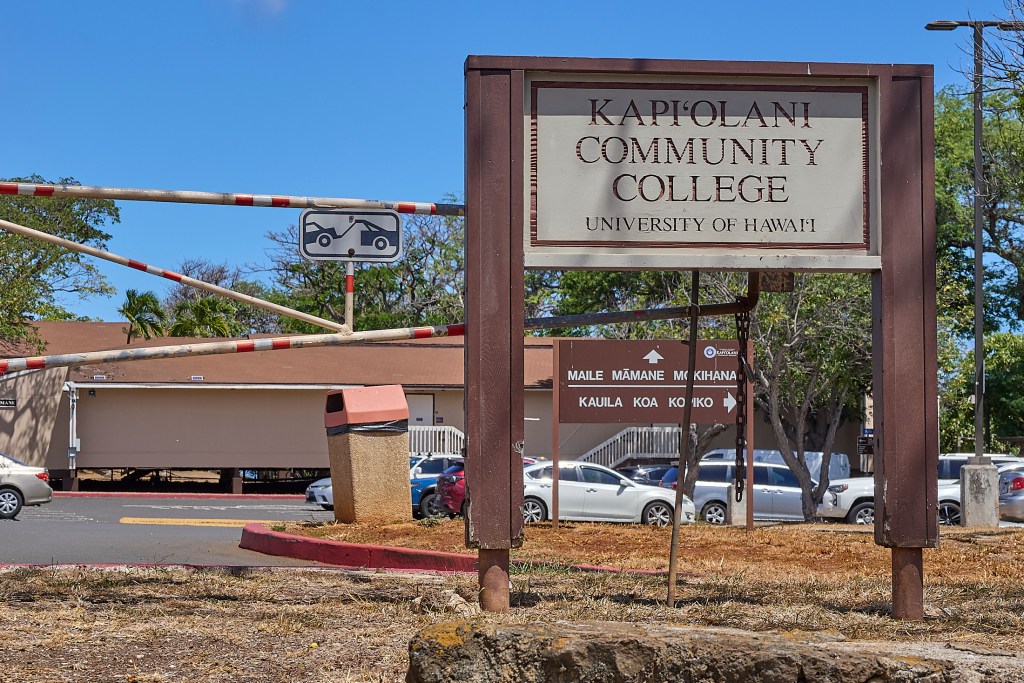
This year, 13 Hawaiʻi colleges — including all 10 University of Hawaiʻi campuses — qualified for such grants, although not all of them received funding. The UH system in recent years received as much as $44 million in federal grants for minority-serving institutions.
The programs have traditionally received bipartisan support in Congress and were created to address longstanding racial disparities in education. Not included in the cuts is federal funding for Historically Black Colleges and Universities, which are open to all students regardless of race.
At Chaminade University, President Lynn Babington said her campus also could lose roughly $9.5 million in funding as a minority-serving institution. The federal grants have supported a range of initiatives there, she said, including the university’s first doctor of nursing practice program and stipends for students conducting summer research.
The university is prepared to cover some of the cuts, Babington said, including its new nursing program. But Chaminade has received funding as a Native Hawaiian-serving institution since 2004, and losing federal grants makes it harder to keep tuition low and meet community needs.
“It’s very hard for a small institution with no state funding at all to remain affordable,” she said, adding that the university may need to scale back some of its initiatives.
The University of Hawaiʻi is still determining how much funding is at stake, Communications Director Dan Meisenzahl said. Nine of its 10 campuses were supposed to receive federal grants this year.
One program subject to possible cuts aimed to increase the number of Native Hawaiian students enrolling at UH from Kauaʻi high schools. The $2.6 million grant, which was supposed to run from 2021 to 2026, allowed students at Waimea High School to take college courses at Kauaʻi Community College at no cost.
Last year, UH West Oʻahu received a $1 million grant to support Native Hawaiian students transferring from community colleges. The initiative aimed to improve access to remote learning for students in partnership with Maui College and Kauaʻi Community College.
In fall 2024, roughly 30% of UH West Oʻahu students were Native Hawaiian.
Hawai‘i Pacific University also estimates it will lose $1.5 million in federal grants, including funding for a program that used aquaculture to encourage more Native Hawaiian students to pursue degrees in STEM.

Federal Education Secretary Linda McMahon said in a statement Wednesday that she aims to work with Congress to repurpose the funding for institutions that serve “underprepared or under-resourced” students without using quotas.
The Education Department said it will still release about $132 million for similar grant programs that are considered mandatory, meaning their levels are dictated by existing laws. Even so, the department said it “continues to consider the underlying legal issues associated with the mandatory funding mechanism in these programs.”
Babington countered that federal funding for minority institutions supports all students’ learning, not just those belonging to minority groups. For example, she said, Chaminade recently used some of its grants to redesign classrooms to promote more collaboration and engagement.
“It seems ill-informed to cancel these when everybody who goes to the institution benefits,” she said.
The government’s grants for Hispanic-Serving Institutions, which provides funding to colleges where at least a quarter of undergraduates are Latino, are being challenged in a federal lawsuit brought by the state of Tennessee and the anti-affirmative action group Students for Fair Admissions. Tennessee argues that all of its public universities serve Hispanic students, but none meet the “arbitrary ethnic threshold” to be eligible for the grants.
“It seems ill-informed to cancel these when everybody who goes to the institution benefits.”
Chaminade President Lynn Babington
The Justice Department declined to defend the grants in the lawsuit, saying in a July memo that the 25% enrollment requirement violates the U.S. Constitution. In court filings, a national association of Hispanic-Serving Institutions said the grants are legal and help put its members on an even playing field.
Most recently, Students for Fair Admissions launched a website challenging Kamehameha Schools’ admission policies that give preference to Native Hawaiian students. The Virginia-based group argued that the school’s policy violates federal civil rights laws preventing racial discrimination, although Kamehameha denied those same claims and successfully defended its admissions practices in court 20 years ago.
Civil Beat’s education reporting is supported by a grant from Chamberlin Family Philanthropy.


