

Hawaiʻi Is Turning To Charters To Expand Free Preschool Options
Backers say charter preschools can encourage more teachers to work in early education if the state increases their funding.
Kristine Kaneichi enrolled her oldest son in Waikīkī Community Preschool eight years ago, drawn to the center’s low cost, safe facilities and flexible hours that accommodated her schedule as a college student.
She went on to send her two younger kids to the center. The youngest, now 3, is still a student there but, for the first time in years, Kaneichi doesn’t have to worry about paying tuition or applying for state tuition subsidies.
Last month, Waikīkī Community Preschool became the first program to make the transition from a private to charter school in Hawaiʻi. As a result, the school reports to the State Public Charter School Commission, receives state funding — and is tuition-free.
“This helps a lot,” Kaneichi said.
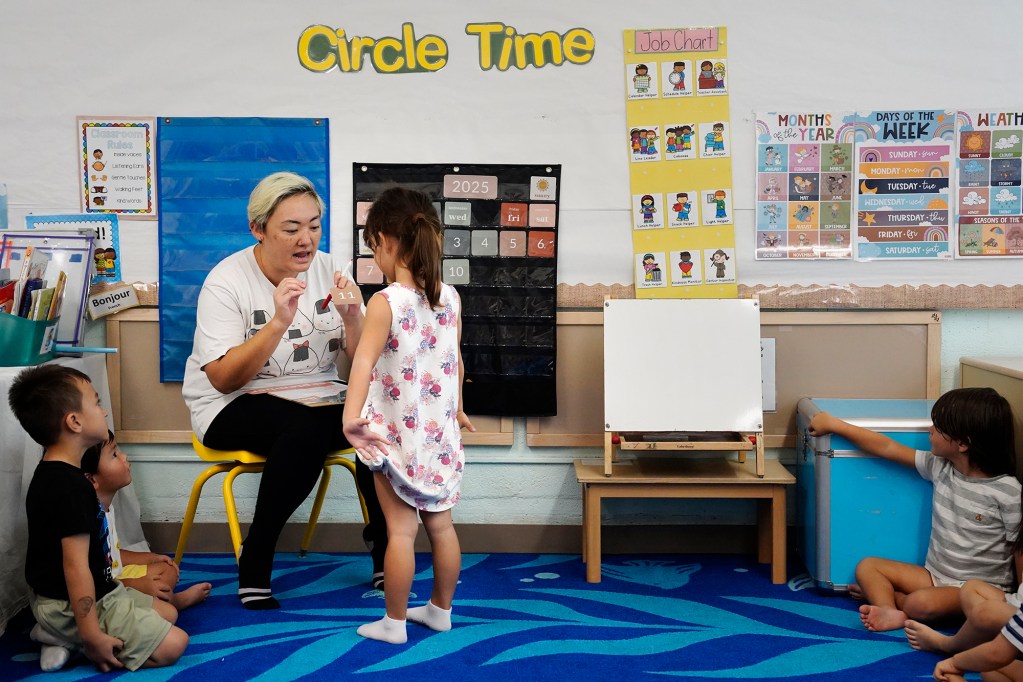
Waikīkī Community Preschool is part of the state’s ongoing strategy to involve more charter schools in its ambitious goals to provide all 3- and 4-year-olds access to preschool by 2032. Charter schools currently operate 33 preschool classrooms in the state, including six at Waikīkī Community Preschool, said Deanne Goya, who oversees early learning programs at the charter commission.
The state opened an additional 26 preschool classrooms this fall on Department of Education campuses and plans to add around 25 more next year. Roughly 6,700 children don’t have access to preschool, meaning that Hawaiʻi needs to open around 330 classrooms over the next seven years, according to state estimates.
Preschool directors and advocates say charter preschools can help solve the state’s long-time shortage of early educators. Private preschools typically struggle to hire staff and increase teacher wages because they’re reliant on tuition payments and don’t want to raise the prices for parents, said Malia Tsuchiya, early childhood policy and advocacy coordinator at Hawaiʻi Children’s Action Network.
Converting private preschools to charters creates a steady source of state funding for providers and often ensures higher wages for teachers, making hard-to-fill jobs more attractive, Tsuchiya said. Teachers working for charter preschools are state employees and receive the same benefits and salaries of educators working in K-12 public schools.
The current funding model makes it difficult for other programs to follow Waikīkī Community Preschool’s lead, however. Charter preschools receive $171,000 in state funding per classroom, which Tsuchiya said falls short of what schools need to cover staff, rent, facilities and other expenses. Most charters run small preschool programs, she said, so it’s harder to spread the costs across multiple classrooms.
The Waikīkī preschool is counting on its nonprofit partner, Waikīkī Community Center, to help fundraise thousands of dollars to make up the shortfall of state funds this year.
A New Type of School
Waikīkī Community Preschool always focused on serving low-income families, drawing parents who worked in the tourism industry and sometimes held multiple jobs, said Caroline Hayashi, president of the Waikīkī Community Center. In recent years, the preschool charged low-income families around $500 a month but only after extensively fundraising to lower the costs. Families covering the full tuition paid around $990 a month.
“We’ve been really trying to do what we can as a nonprofit to help make quality early education affordable,” Hayashi said. “We have been successful, but always kind of struggling to subsidize.”
When the state started looking for private preschools interested in becoming charters, the center jumped at the opportunity, Hayashi said. The school wanted to be tuition-free, she said, and receiving state funding would alleviate some of the pressure of fundraising.

In addition to eliminating tuition costs, becoming a charter school also allowed the center to operate at full capacity for the first time since the Covid-19 pandemic, Hayashi said.
When it reopened after Covid, the school wasn’t able to staff one of its classrooms and could only serve 85 students. More educators seem willing to work for a charter preschool, Hayashi said, likely because they can receive the same pay as K-12 public school teachers with more flexible work schedules.
Now, the school operates at its maximum capacity and is serving 98 kids this year, with a waitlist typically of between 10 and 30 students.
Private preschools often struggle with staffing and increasing teacher pay because they don’t want to raise tuition for families. In 2021, preschool teachers in Hawaiʻi earned an annual salary of roughly $37,000. In comparison, licensed public school teachers – including those working in charter preschools – have a starting salary of $53,390 this year.
Charter preschools can offer more stability and state benefits for staff members, Hayashi said, but it also raises the bar for teacher qualifications. Teachers working in private, licensed preschools must hold an associate degree or credential in early childhood education. But charter schools require educators to be licensed, meaning that they must have completed both a bachelor’s degree and a teacher preparation program.
It’s a hard requirement to fill amid a statewide shortage of early educators, Hayashi said. Five of her six lead teachers are emergency hires, meaning that they have three years to complete their licensing requirements. Once they meet those requirements, they’ll be eligible for higher salaries.
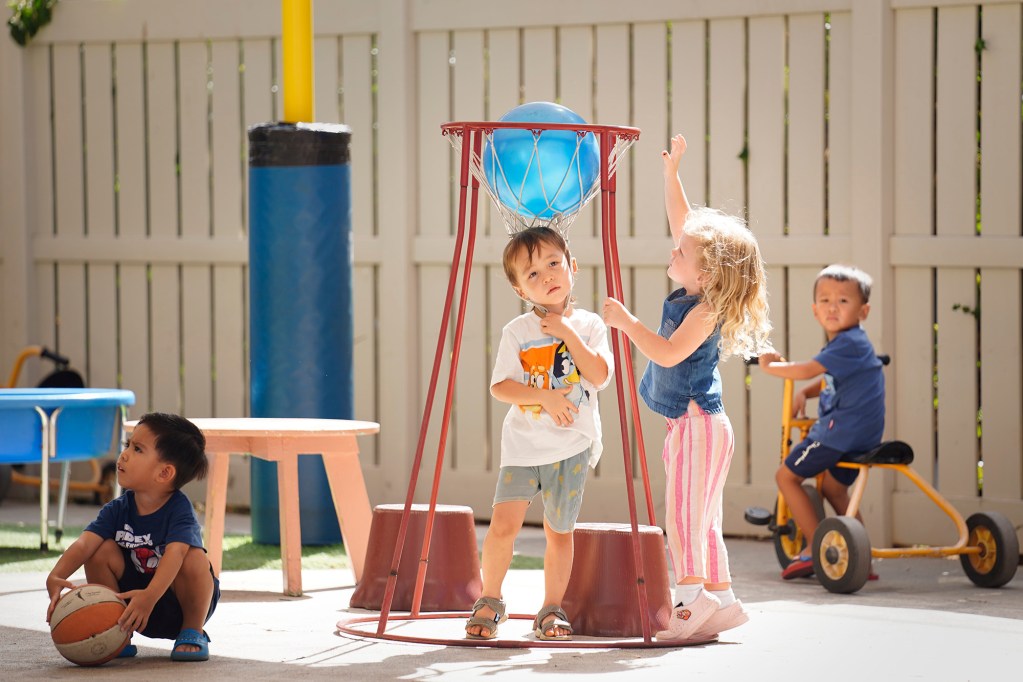
Complicating staffing challenges, Hayashi said, several preschool teachers also work as after-school care staff. The after-school program runs separately from the charter school and is offered through Waikīkī Community Center for $200 a month.
It’s sometimes difficult to offer after-school care when teachers have afternoon staff meetings for the charter school, Hayashi said, but it’s the best solution she’s found to meet the needs of working families.
“It’s just been an adjustment,” she said. “The only way that it works so far is that we have a lot of our staff that have been willing to have basically a second job.”
Short On Funding
Like K-12 public schools, charter preschools rely on state dollars — but the current funding levels aren’t enough to sustain these programs, Goya said.
The state provides monthly tuition subsidies up to $1,500 for low-income families attending private preschools, Goya said, meaning that these programs could receive up to $300,000 annually in state funds for a classroom of 20 students, compared to the $171,000 for a charter classroom.
DOE schools receive less money — around $146,000 for every preschool classroom they open on their campus — but they also need to cover fewer costs than charters. For example, Tsuchiya said, DOE schools already have money set aside in their budgets for principals and janitors, regardless of whether they add a preschool classroom to their campus.
On the other hand, she said, set costs for administrators’ salaries and facility maintenance are spread across just a few classrooms in charter preschools, which typically have smaller programs and fewer kids. Most charters face the additional expenses of rent and facilities since they aren’t located on state land.

Hayashi estimates Waikīkī Community Preschool will face a budget shortfall of around $150,000 to $200,000 this year, although she’s confident the school can raise enough money with the support of the community center, which has raised similar amounts of money for the preschool in the past.
Another charter, Parkway Village Preschool in Kapolei, is also facing budget shortfalls after opening four classrooms earlier this year. While Parkway originally projected it would have an annual deficit of $34,000 per classroom, it’s now up against shortfalls of closer to $50,000 to $60,000 per class as it grows its staff, said Ben Naki, who oversees early learning programs at Parents And Children Together, the nonprofit associated with the preschool.
The school is prepared to make up the difference through fundraising and support from foundations, Naki said, and hopes to participate in a federal meals program that can help reduce the costs of producing lunches. But the current levels of funding make it difficult for small programs to become charter schools, especially if they’re not partnering with outside organizations that can provide administrative support or help with major fundraising efforts.
“We’re committed to it with the notion, or, I guess, hope, that funding will increase on the charter side, because that would be huge,” Naki said.
Earlier this year, the state received only two applications from prospective charter preschools — Waikīkī Community Preschool and Mana ‘Ulu Montessori Charter Lab School. Mana ‘Ulu planned to build on existing partnerships with Chaminade University’s lab school, which has its own private preschool, but its application was not approved.
Turning privately owned programs into charters won’t necessarily add new preschool seats for the state, Tsuchiya said. But, with enough funding, the charter model can stabilize existing programs at risk of closing by providing them a steady stream of state funding and incentivizing educators to earn their teacher licenses and qualify for higher pay.
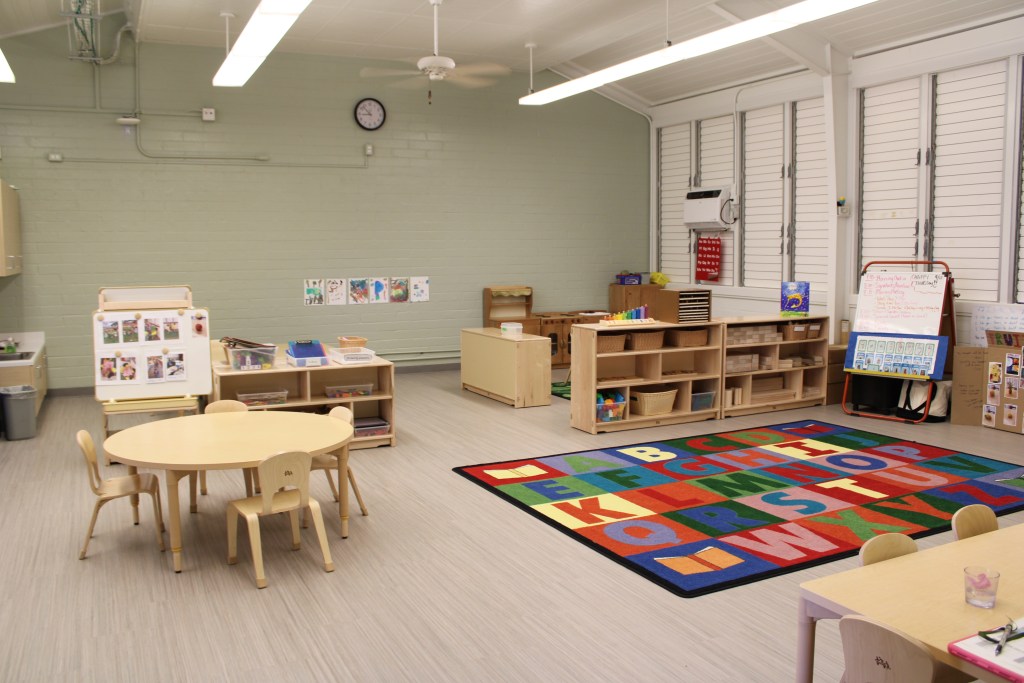
At the same time, Goya said, the commission is working with K-12 charter schools to add preschool programs to campuses with available space. Currently, she said, the commission is planning to add 15 more preschool classrooms by fall 2028.
The School Facilities Authority, the state agency in charge of preschool construction, recently received $20 million to build more preschool classrooms over the next three years, but the funding can only go toward adding classrooms to schools on government-owned land.
Since many charters are on private property, not all schools qualify for the money, authority director Riki Fujitani said. But the agency was still able to renovate three preschool classrooms at Waiʻalae School this summer and is working on preschool projects at an additional four charter campuses.
“Charters,” he said, “have really been quick to embrace pre-k.”
Civil Beat’s education reporting is supported by a grant from Chamberlin Family Philanthropy.

