How Many Crosswalks Have Been Removed In Honolulu? The City Isn’t Sure
The city took out dozens of crosswalks more than six years ago, but city officials they haven’t tallied how many have been removed since then.
To bolster pedestrian safety, Honolulu officials have celebrated crosswalk upgrades to improve visibility, such as adding a flashing light beacon that officials said has cut pedestrian collisions in half at a Kalihi crosswalk in March.
Less touted, however, is when the city decides not to improve crosswalks but instead to remove them by darkening the telltale white stripes.
How often does that happen? Turns out it’s complicated.
Four months after Civil Beat asked the Honolulu Department of Transportation Services for a list of locations where crosswalks were blacked out, the city still hasn’t provided a list.
The reason is because no list exists, the city’s chief traffic engineer Kelly Akasaki said Thursday, adding that staff would need to sift through countless work orders spanning multiple departments to get the answer.
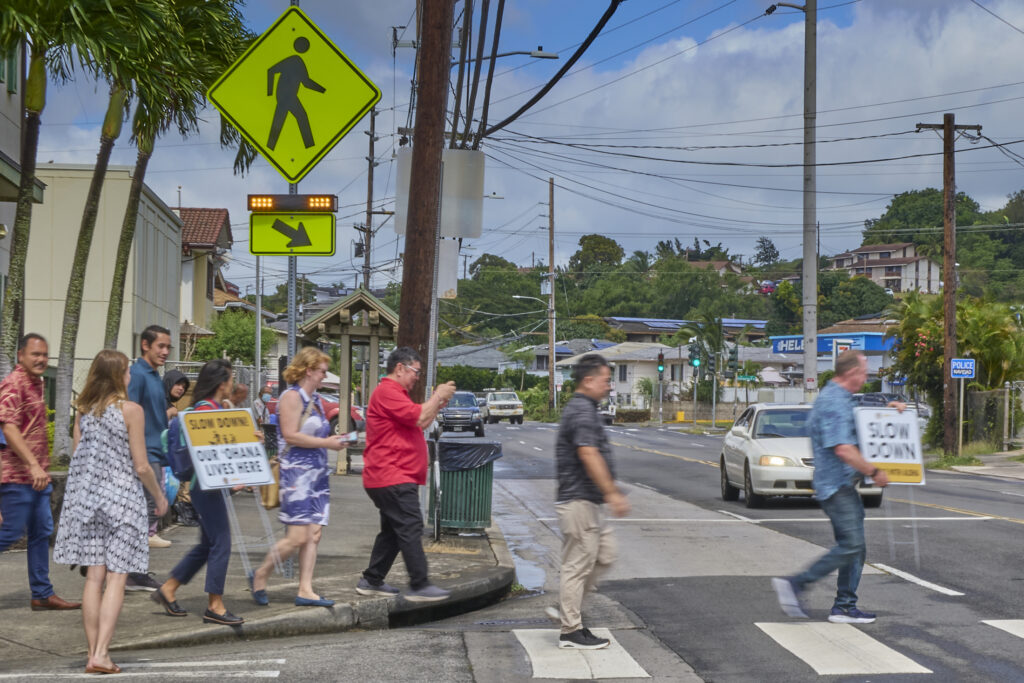
By September 2019, 45 crosswalks on Oʻahu’s streets had either been blacked out or were planned to be blacked out, according to data obtained by Civil Beat. They spanned busy roads around the island like Kapiʻolani Boulevard in urban Honolulu, Lehua Avenue in Pearl City, Lualualei Homestead Road in Waiʻanae and Kolowaka Drive in ʻEwa.
No Centralized Information
When asked for the analogous information from subsequent years, Akasaki said it’s difficult because other city departments like those handling facility maintenance and design and construction also sometimes add or remove crosswalks when they complete road projects.
“We’re not the only people who can modify or install or delete crosswalks,” Akasaki said.
A sharp increase in traffic fatalities on Oʻahu this year — 65 as of Thursday, double last year’s figure — has added urgency to city and state efforts to improve safety.
Pedestrians are often the victims. In those cases, police reports specify whether the person who was hit was inside or outside of a marked crosswalk, even if none exists in the immediate area.
Crosswalks are meant to protect pedestrians, but officials face a balancing act in deciding where to place them and when to remove the stripes. This is particularly fraught with crosswalks that aren’t marked by traffic lights and those along wide and fast traffic corridors as well as rural highways.
Sometimes the crosswalk is removed but substitute measures aren’t put in place for years. No single record exists of improvements and removals, according to Akasaki.
The city said it takes out crosswalks in part to mitigate its liability if pedestrians using them get hit, but that carries its own dangers if people don’t notice the change or decide to rush across the road anyway.
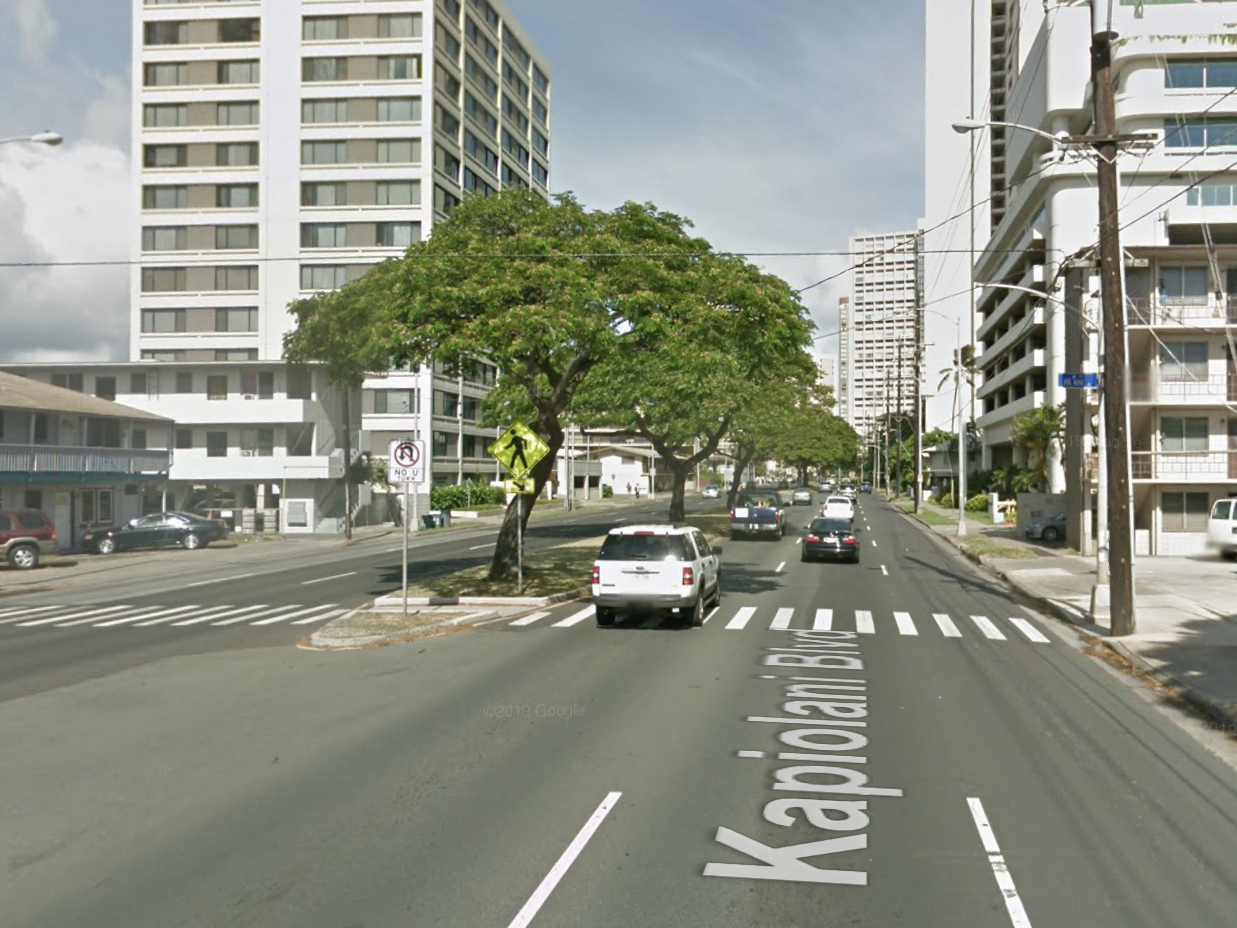
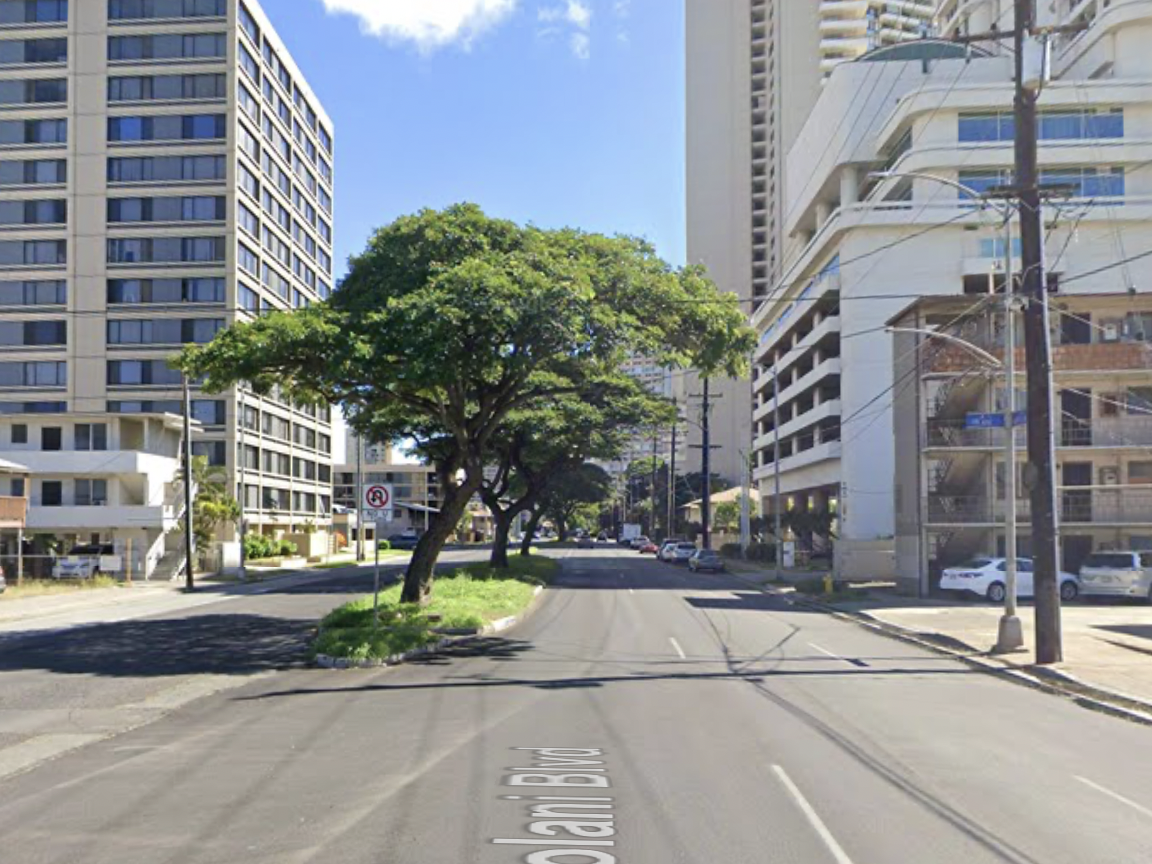
The risk was exemplified when a crosswalk that once spanned a stretch of Kapiʻolani Boulevard with a pedestrian island in the middle was deemed too dangerous and the city removed it several years ago. That proved costly for taxpayers.
Costly To Taxpayers
In 2019, Deioleen Marquez was crossing Kapiʻolani Boulevard with her husband and young son when she was hit by a car. The collision broke her femur and fractured her spine and pelvis, forcing her to spend a month in a rehabilitation center, according to a lawsuit she filed against the driver and the city.
The lawsuit pointed to the removed crosswalk.
“They painted the crosswalk black,” Marquez’s lawyer John Choi told Civil Beat on Thursday. “But they left the sign up — you know, the pedestrian sign with the arrow that points to the crosswalk — inviting people to cross now at a blackened crosswalk. Just insane.”
On Wednesday, the City Council gave initial approval to settle the lawsuit for $85,000, according to Choi. Department of Transportation Services spokesperson Travis Ota declined to comment on Marquez’s lawsuit because it’s still pending.
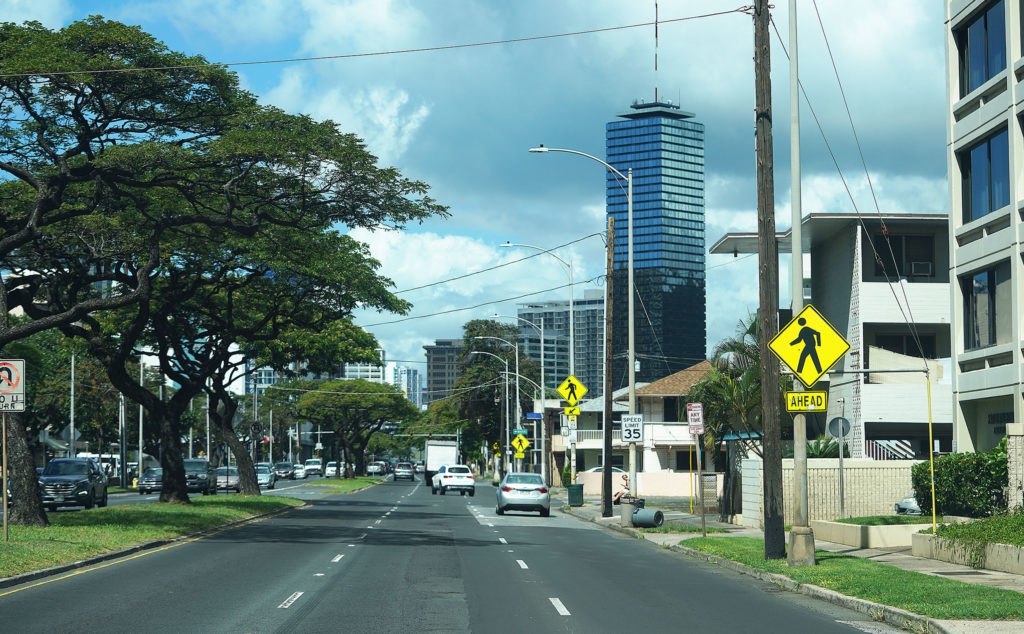
There’s a whole system for deciding whether and where to add a crosswalk, which is spelled out in the city’s Complete Streets Manual.
Generally, a road that is more dangerous to cross on foot — because of more lanes, faster speed limits, more traffic, or some combination of all these factors — requires more safety improvements to justify the presence of a crosswalk.
The section was most recently updated in 2022, and a preceding letter signed by the directors of four city departments says the update should result in “the retention and upgrades” of well-used crosswalks not regulated by a traffic light or stop sign.
For those that are removed, Choi said, the city should put up a sign saying something like: “Crosswalk has been removed. Cross elsewhere. This is dangerous. Proceed at your own risk.”