County Weighs Moratorium On New Backyard Pools In West Maui
Citing a consequential drought and a longstanding housing crisis, some county officials are backing a short-term moratorium on private swimming pools in West Maui.
As the need to conserve enough water to support the demand for new affordable housing in West Maui grows, some county officials have thrown their support behind a temporary ban on most new private swimming pools in the drought-prone region.
The Maui Planning Commission voted 5-2 in support of a moratorium — after members made a few amendments last week — on issuing permits to construct new private pools through at least 2030. The resolution now goes back to the Maui County Council for final approval.
Commissioners also unanimously agreed to urge council members to consider additional conservation measures, including mandating the use of pool covers, limiting irrigation to certain days or times, encouraging the use of native plant species in landscaping and adopting a pending bill that would impose new water restrictions.
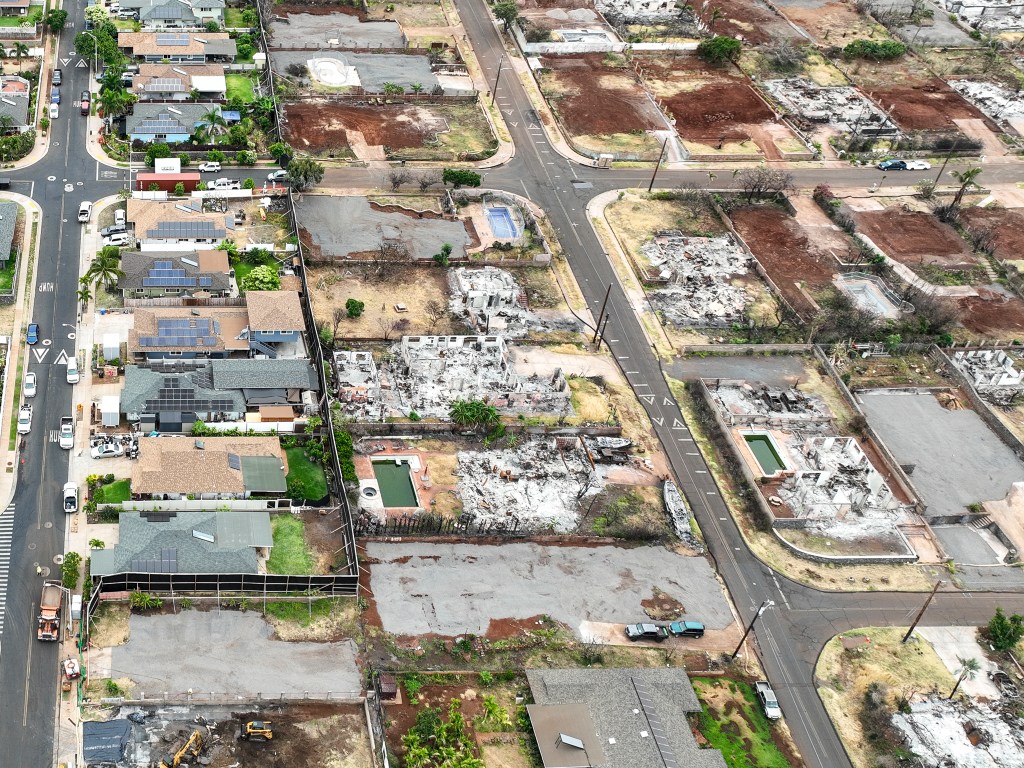
While officials agreed a ban on new pools would help conserve water, they underscored its limitations.
For starters, there were only 69 permit applications for new pools in West Maui as of Tuesday morning, according to Paul Barany, Public Works deputy director.
Based on the typical evaporation rate and annual rainfall, an average 15-by-30-foot pool would use about 20,476 gallons per year — or 56.1 gallons per day — in Lahaina, according to Department of Water Supply Director John Stufflebean. By comparison, the average household uses about 500 gallons per day, he said.
The proposed restrictions on private pools would not be sufficient on their own to conserve enough water to support more housing, Stufflebean said in a letter to the commission. He added that another measure worth considering would be to mandate the use of pool covers, which reduce the amount of water lost to evaporation by roughly 90%.
“There’s so much focus on a pool, and a lot of weight being given to people that have pools, a lot of guilt, when I’m not sure that is a significant contribution to our problem,” commissioner Mark Deakos, who lives in West Maui, said prior to Tuesday’s vote.
Still, advocates have said it should be part of the county’s broader efforts to conserve water.
“It’s definitely one tool in that tool belt,” said Kai Nishiki, a local community advocate. “Every single drop matters. Every single effort matters, and it does add up.”
She added, “If we’re serious about solving our housing crisis, we must start by valuing water as the lifeline it is.”
A Nice Amenity
Maui County Council member Tamara Paltin, who represents West Maui, put the resolution forward earlier this year in response to the state Commission on Water Resource Management beginning to oversee the region’s water resources in 2022 and the deadly wildfire that destroyed much of Lahaina’s housing in 2023.
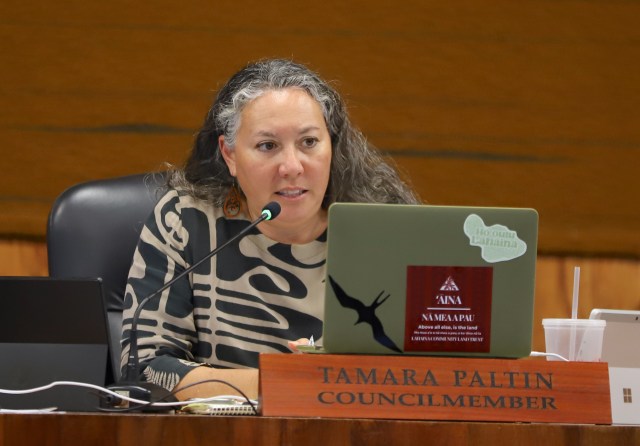
Finding ways to free up water is critical to support the construction of desperately needed new affordable units, the resolution says. To that end, “a private swimming pool is an amenity that requires a large quantity of potable water but does not serve essential housing needs,” according to the resolution. “In addition, the West Maui community has access to public swimming pools and beaches for recreation and exercise.”
Many Lahaina residents who did not previously have a pool included one in their plans to rebuild, Paltin said. A lot of people were also planning to rebuild bigger houses and new or expanded accessory dwelling units that they can operate as long-term rentals, she said.
“Prior to the fire, we were using more water than we had capacity for,” she said, and increasing the number of people living on various properties would also increase demand for water. “We’re talking about more density. When I weigh the two — housing or swimming pools — at this point, it’s got to be housing.”
In May, the council voted 5-2, with two members excused, to forward the resolution to the Board of Water Supply and the Planning Commission for their input.
Council member Tom Cook, who represents South Maui, said at the time that he declined to vote in favor of forwarding the resolution because he did not believe it would significantly reduce water consumption.
“I understand the challenges of West Maui and I’m supportive of conservation,” he said. “But my math and calculations and experience with swimming pools don’t add up.”
The restrictions would be in place through Dec. 31, 2030, or until a study looking at the availability of groundwater in West Maui is completed, CWRM determines that the West Maui water system’s capacity exceeds demand and the Department of Water Supply acquires an additional West Maui water source sufficient to rebuild all of the structures that were destroyed by the 2023 wildfires as well as the needs of new residential development — whichever occurs sooner.
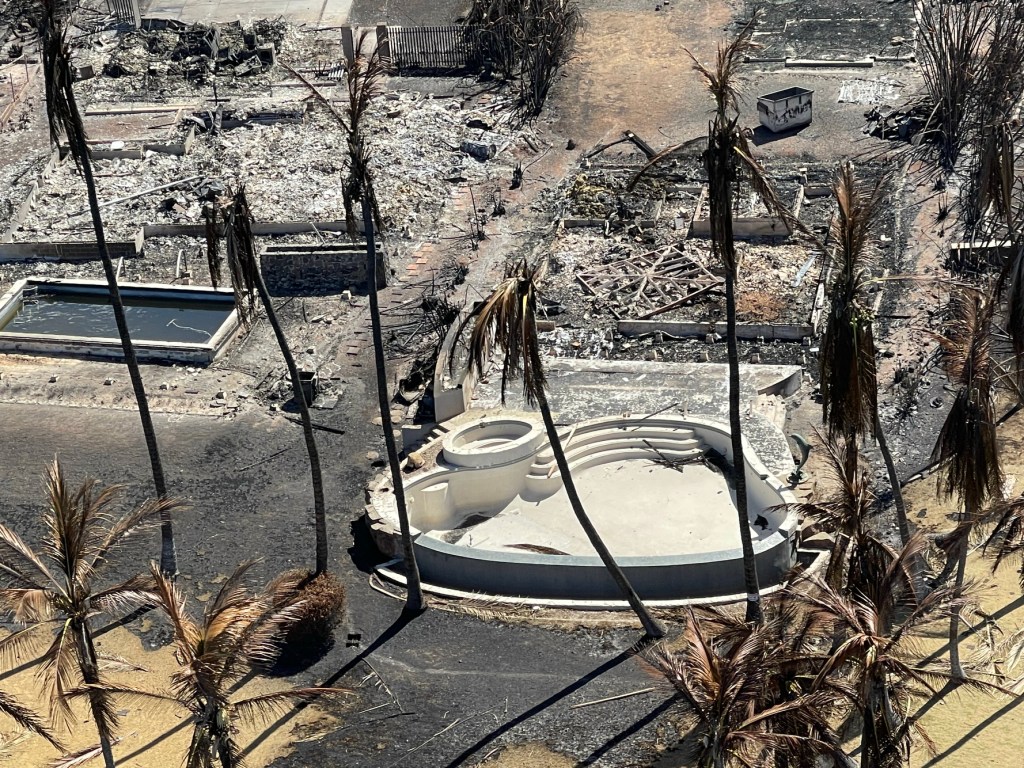
The restrictions would not apply to property owners who were granted or who properly applied for a permit to build a pool before the resolution’s effective date or those seeking to maintain or repair an existing pool, including pools destroyed during the 2023 wildfire. There are also exemptions for public pools and those applying to build pools on properties where the covenants and conditions have allowed for pools since before the effective date.
The Board of Water Supply voted in July to recommend the measure, viewing it as “a useful step to help manage limited water resources” while the county continues to assess the community’s broader needs, according to a letter to the Planning Commission from the board’s chair, Donna Sterling.
“However, Board members also emphasized the importance of the Council considering additional forms of water conservation beyond pool restrictions as well as improved monitoring of water resources,” Sterling wrote.
The council is taking up legislation that would establish new water conservation measures —including a requirement that private pools be covered if they are unused for more than 30 days — and give the county more authority to penalize those who do not follow water restrictions.
Other proposed measures include: requiring the county to be more proactive about detecting and repairing leaks in water infrastructure; giving DWS the authority to declare a water shortage and implement water use restrictions; and mandating that various types of new businesses take advantage of recycled R-1 water.
‘A Lot Of Pushback’
West Maui’s water supply has been a point of contention dating back to the plantation era. While Native Hawaiian communities have historically viewed water as a shared sacred resource, plantations controlled Maui’s water for more than a century and used irrigation methods that starved the streams that once sustained local communities.
Tensions have boiled over many times, including in the months leading up to CWRM’s June 2022 decision to designate the Lahaina aquifer as a surface and ground water management area. The designation gives state regulators the authority to decide who can use West Maui’s water and how much water is taken from local streams and wells while limiting county officials’ power to pump more water from the aquifer or take water from another source.
That means that in the wake of the 2023 wildfires that displaced roughly 12,000 residents and with more frequent droughts, county officials cannot unilaterally approve new water use permits that would allow for the construction of new affordable housing. In one instance, Stufflebean said last year that there was not enough water for the potentially 1,000-unit Pulelehua affordable housing project north of Lahaina.
Amidst an ongoing drought, the county recently announced that West Maui was in a stage two water shortage and imposed restrictions on commercial and residential irrigation.
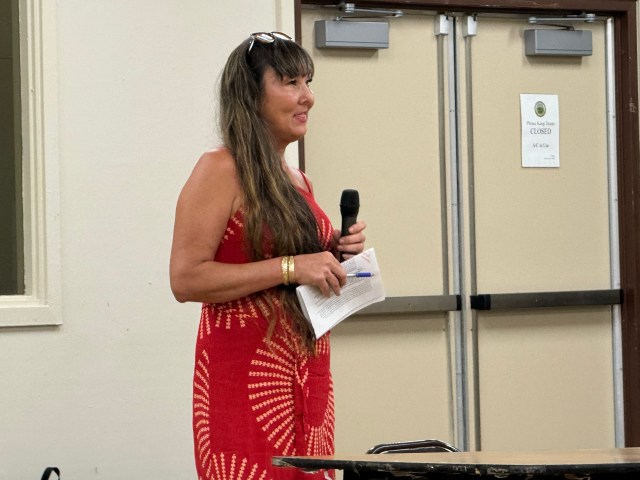
When Paltin’s proposed moratorium on private pools went before the council in May, it sparked online debates and garnered written testimony on both sides of the issue.
“There has been a lot of pushback from folks who don’t think that the county should be restricting private pool building in West Maui,” Nishiki said. “But I always say to them that when we live in community with others, sometimes we have to sacrifice luxuries so that we can provide for the basic needs of other folks.”
Paltin emphasized that the restrictions would be temporary, but “the lack of water in West Maui is very real right now.”
“Every drop of water counts when you’re in extreme drought,” she said.
In May, Elizabeth Schaack submitted testimony to the council opposing the ban, arguing that officials should consider limiting the size of new pools rather than imposing a broad moratorium “that punishes responsible, rebuilding families.”
Though Schaack’s family did not have a pool before their house was destroyed in the fire, they plan to include a small 49-square-foot pool and a hot tub when they rebuild, she said. The pool would not only offer a way for them to cool down while limiting their electricity consumption from air conditioning, but it could serve as an emergency water reservoir during another fire.
“I’m sure I’m not the only person who was on the roof the night of the fire trying to save their home, and I know I’m not the only person whose hose ran dry,” she said. “Where this gets to be a dicey situation is when you’re telling people they can’t take steps that might make them feel safe.”
Schaack’s permit to rebuild was approved on Wednesday, meaning that her family’s plans to build a pool would be exempt from the moratorium if it is implemented. But she still believed others should be able to build private pools and officials should consider other water conservation measures, she said.
“Living on the island, there is a recognition that water is our most precious, valuable resource,” she said. “I want everybody to have water. I just want it managed better.”
Civil Beat’s coverage of Maui County is supported in part by a grant from the Nuestro Futuro Foundation.
Civil Beat’s coverage of environmental issues on Maui is supported by grants from the Center for Disaster Philanthropy and the Hawai‘i Wildfires Recovery Fund and the Doris Duke Foundation.