Nonprofits Want To Help Maui Fire Victims — If They Can Reach Them
Limited communications and continued grief have made it more challenging for nonprofits to connect with survivors who could most benefit from their services.
Hawaiʻi nonprofits still have millions of dollars in donations and grant funding to help Maui’s fire recovery, but many are struggling to connect that aid with some of the people who could use it the most, nonprofit leaders and others said.
Thousands of survivors remain scattered across the island two years after the fires destroyed most of Lahaina and parts of Upcountry. Language barriers — Filipinos comprised nearly half of the historic town — have proven challenging. Others continue to suffer from intense trauma.
“Recovery is not a linear path,” said Jeeyun Lee, interim CEO for Maui United Way, explaining how a variety of obstacles have made the process difficult for nonprofits, survivors and government agencies to navigate.
“We’re still continuing to sharpen that skill and make it as easy as possible,” she said.

Nonprofit groups have played an instrumental role in the island’s recovery since the Aug. 8, 2023, wildfires. They have helped fire-affected locals find housing, access health care, feed their families, rebuild their homes, file insurance claims, communicate with lawyers and apply for government aid programs.
But challenges like limited communications capabilities and the need for translators have made it more difficult for some organizations to advertise their services and spread the word about who is eligible, nonprofit leaders said.
Many fire survivors are dealing with the ongoing grief, and they feel burnt-out after two years of navigating government bureaucracy, insurance claims and aid programs, said Ruben Juarez, a researcher from the University of Hawaiʻi and one of the leaders of the Maui Wildfire Exposure study. As a result, it may be harder for them to research and apply for different types of assistance.
“This is a pattern that we see with almost every major disaster,” Juarez said. “The people with the most urgent needs are often the slowest to get the help.”
Closing The Gaps
For many nonprofits, simply securing the funding they needed to assist the community was hard enough. But after clearing that hurdle, some have found it difficult to then get the word out about the support they can provide.
“Most nonprofits don’t really have a budget for communications,” Maui United Way Community Impact Chair Skye Kolealani Razon-Olds said. “So especially if you’re a new startup nonprofit, or if you’re a grassroots organization, those things can be more challenging.”
Smaller nonprofits are straining to afford staff to maintain a website, work with local news outlets, post on social media and do in-person outreach.
But larger organizations have also found it difficult to distribute their message more widely and ensure they are helping the survivors who are most in need, said Jeff Gilbreath, executive director of the nonprofit mortgage lender Hawaiʻi Community Lending.
The Hawaiʻi Community Foundation designated HCL to manage the Lahaina Homeowner Recovery Program, which is funded by the Maui Strong Fund and other local backers. The program aims to help owner-occupant Lahaina homeowners avoid foreclosure and secure financing to rebuild their homes, including by coordinating no-cost property surveys.
Survivors looking to rebuild their homes sometimes have to wait months and spend thousands of dollars for surveys, which are required to apply for permits to rebuild.
“If you don’t have a property survey, that’s the first initial step you need to take before you can start the rebuild,” Gilbreath said.
While many property owners have expressed an inability to afford the cost of rebuilding, Gilbreath said HCL has not received a lot of applications for the program. Most of the households he has worked with who are trying to rebuild faced gaps between $25,000 and $1.2 million.
Still, HCL had enough funds available to pay for surveys for another 544 applicants on top of the approximately 150 that were expected to be completed by the end of August, said Gilbreath.
“After a disaster like this, you typically see those who have all the financial resources are the ones that are rebuilding,” he said, adding that nonprofits like HCL, Samaritan’s Purse, Habitat For Humanity, Lahaina Community Land Trust and others have helped families rebuild who didn’t have the resources.
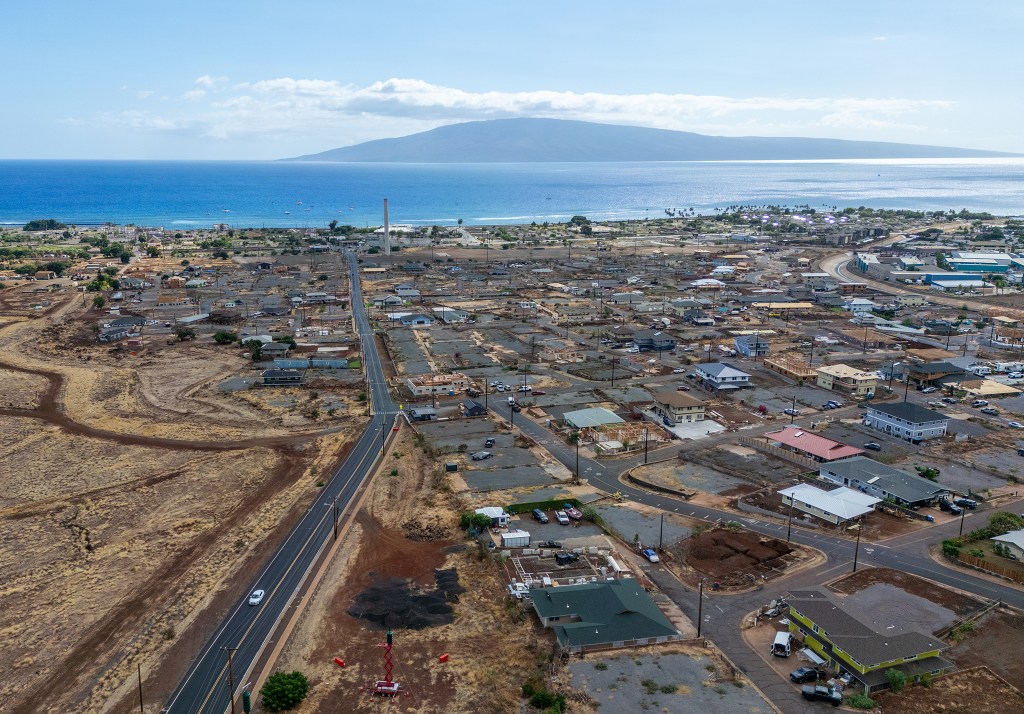
The limited communications capabilities of numerous nonprofit groups has posed an especially difficult challenge because many of those who have the most need are also the most difficult to reach, said John Smith, administrator of Maui’s Office of Recovery, which has led the county’s efforts to connect wildfire survivors with direct aid and other resources.
“There are the kūpuna that may not be able to get out and about as much as others can, or they don’t use the internet the same way,” he said. “I can see there being challenges with both technology and mobility.”
Many fire survivors are also immigrants, and language barriers have been one of the most common obstacles that nonprofit leaders and government officials have faced while trying to assist people and connect them with resources.
“That was one of the most obvious gaps,” Lee said, adding that this resulted in immigrant communities receiving less aid early on.
Since the fires, more organizations geared toward specific immigrant communities have cropped up and the government has begun doing more outreach targeted at community members who don’t speak English as their primary language. Smith said the county recently hosted a community meeting for Filipino Lahaina residents, and they brought in translators to help communicate details about local government programs.
“We had some really neat breakthroughs in terms of people signing up for the programs during the meeting,” he said.

Perhaps the most complex challenge faced by nonprofits and others leading recovery efforts is the severe trauma and grief that many survivors continue to grapple with.
It has been two years since thousands of locals unexpectedly lost their homes, jobs and loved ones. Many of them have moved numerous times and spent countless hours filing insurance claims, applying for loans, trying to secure government aid, talking to lawyers and working to rebuild their lives, nonprofit leaders and government officials said.
Navigating those processes is confusing and exhausting at the best of times, but survivors also struggle with trauma that can reemerge every time they have to fill out another application for assistance, said Gilbreath.
“You’re re-traumatizing the family almost with every step they need to take. They’re just being faced with all these overwhelming and daunting tasks,” he said. “For the families, it’s hard. They’ve got so many other things on their mind.”
Searching For Solutions
Even though the availability of resources and the community’s needs are constantly changing, nonprofit leaders and government officials have been searching for new strategies to more quickly connect survivors with assistance.
A team from the University of Hawaiʻi created the Maui Health Registry, an online tool fire-affected locals can use to get connected with organizations that provide health care and other types of assistance, Juarez said. The same group has also been working with the governor’s office on developing a universal form that can be filled out by disaster survivors and used to apply for multiple different aid programs, he added.
“That is there for the next disaster,” Juarez said, “instead of filling out an application for FEMA or for the state, another one for MauWES, another one for all of these other services … which not only is time-consuming, but actually, it’s not trauma-informed.”
Local government officials have also been working to increase access to resources at the county’s recovery centers in Lahaina and Makawao, according to county spokeswoman Laksmi Abraham. In addition to assistance with the permitting process, federal aid applications and county services for fire survivors, the recovery centers also have space for nonprofits including Kākoʻo Maui, Kaibigan ng Lahaina, Aloha House, Ho’ōla iā Mauiakama Disaster Long Term Recovery Group, Lahaina Strong, Ho’ola Maui and Pono Legal, she said.
The goal is for the recovery centers to be a “one-stop shop” for post-wildfire recovery resources, Abraham said.
“We see ourselves as a hub and as the gateway to nonprofit organizations. The idea with our community recovery centers is basically to serve as a connector for the community,” she said.
Smith acknowledged that for a long time, the county found it difficult to meet survivors’ needs, in part because they were waiting for federal funding.
But now that the county has received federal grant money to fund various initiatives, they are “meaningfully engaging with everyone” and working more closely with nonprofits, he said.
“I think our aim is to make recovery simpler, more coordinated and more accessible, and to act as a unifier,” he said. “We really want to ensure nobody falls through the cracks, and we know that we need to step up and help be that coordinator.”
Civil Beat’s coverage of Maui County is supported in part by a grant from the Nuestro Futuro Foundation.