Can This West Hawaiʻi Coral Reef Be Saved From Sewage Runoff?
Cesspools in the Kohala Coast community of Puakō have been leaking into the ocean for years. So residents came up with a plan.
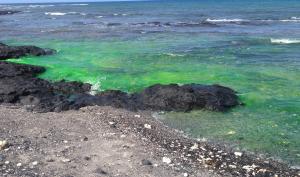
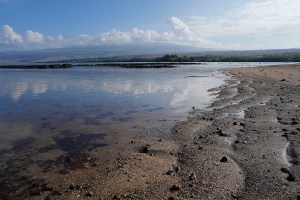
By now there is no doubt the Puakō reef is dying. The decline of the coral on the South Kohala coast of the Big Island has become a famous example of what can happen to ocean ecosystems under attack from leaking cesspools and runoff.
Scientists visit Puakō over and over to assess the damage to the reef. Studies have been done, reports written and elaborate maps developed to chart the dramatic long-term impact of wastewater oozing into the ocean.
For a dozen years, the residents of Puakō who use those cesspools and septic systems have searched for a workable solution, raising more than $3.5 million from their neighbors and others to fund engineering studies and other research to explore the options.
The permanent fix they settled upon requires big money — perhaps as much as $15 million to $20 million for a sewer line — but no one has stepped up to commit that kind of support.
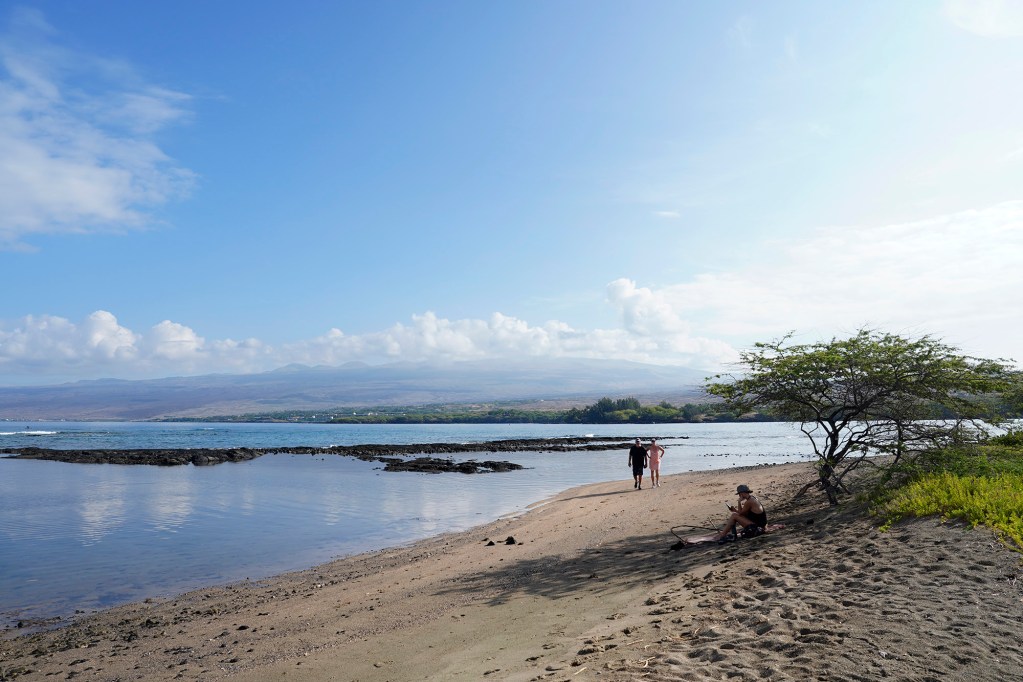
Residents say their yearslong grassroots effort to deal with their cesspool problem could be a model for the tens of thousands of other homeowners with cesspools across the Big Island, if they can get it funded.
“No single entity can be responsible for solving Hawaiʻi’s wastewater issues,” said Karen Anderson, a retired engineer and former Puakō resident who has been working on the cesspool problem there for more than a decade.
“We in the community would really like for the government to do it, but they don’t have the time, the money, or a model to get it done themselves,” she said. “They would really like us to do it, but we as a community, we don’t have the time and the money.”
Hawaiʻi County Mayor Kimo Alameda said he is working with the residents at Puakō, which the county identified as one of four Big Island areas where leaking cesspools urgently need to be addressed. The others are Keauhou, Miloliʻi and Keaukaha.
But Alameda has questions about the Puakō project, including the construction cost estimate.
“I think that $20 million is way too high,” he said in an interview. He also wants to ensure the best technology is used to make the conversion “financially palatable,” and is investigating whether federal funding might be an option.
For Puakō, the big question now seems to be whether government and residents can unite with a sense of purpose in time to save the dying reef in an area that serves as a key ocean access point for much of South Kohala.
Seeking Money For The Plan
According to the state Department of Health, the Big Island has an estimated 49,300 cesspools that release some 27 million gallons of wastewater into the environment each day. That includes about 4,500 cesspools in South Kohala, including Puakō.
State law requires almost all cesspools be closed out by 2050, but that will likely cost billions of dollars. Alameda describes the law phasing out cesspools as an “unfunded mandate” imposed by the state, and warned earlier this year the 2050 deadline to close out all cesspools is unworkable.
Part of the problem is Hawaiʻi County has other pressing, legally binding wastewater obligations that are already taxing county resources.

Last year the county administration and County Council entered into a consent order with the Environmental Protection Agency that requires the county to overhaul its long-neglected sewer treatment facilities at a cost of hundreds of millions of dollars. As one part of that effort, the county recently broke ground on a $337 million rehabilitation project for the Hilo Wastewater Treatment.
The county last year issued a Puakō and South Kohala Regional Wastewater Master Plan, which recommends continued use of individual wastewater systems such as septic systems.
But that option won’t work in Puakō, Anderson said. Four engineering studies have confirmed that replacing cesspools with septic systems is not a solution for that area because septic systems at that low elevation will continue to leak nutrients such as nitrogen into the ocean, killing the reef.

“The only solution is a sewer line,” she said. The logical approach, residents say, is a 3-mile sewer collector line to accept waste from about 180 homes near the coast at Puakō and deliver the sewage to a private treatment plant at a nearby resort.
The residents formed a nonprofit called Puakō for Reefs, and hope to establish a financing mechanism called a community facilities district to allow homeowners to repay the cost of the sewer line over time.
But they need an estimated $12 million to $20 million up front to pay for construction of the sewer line, Anderson said.
“We thought that the county would put that up, but they don’t have the money,” Anderson said. “We’ve asked the state, the state said they don’t have the money to do that. We’ve asked the USDA (Department of Agriculture), they said they don’t put the money up front. So, who puts up that money?”
Broad Community Support
Puakō is a coastal community of mostly single-family homes built along Puakō Beach Drive near the shoreline. Residents are mostly retirees and second homeowners, with many of the homes operating as vacation rentals, according to a county assessment of the wastewater problem there.
One of those owners is George Fry, 82, a retired freelance photographer who has lived in Puakō for 23 years. An avid ocean enthusiast, he is in the water several times a week paddling or swimming.
Fry said he first learned of the leaking cesspool problem years ago after the county posted signs along the Puakō shoreline warning of unsafe levels of bacteria in the nearshore waters.
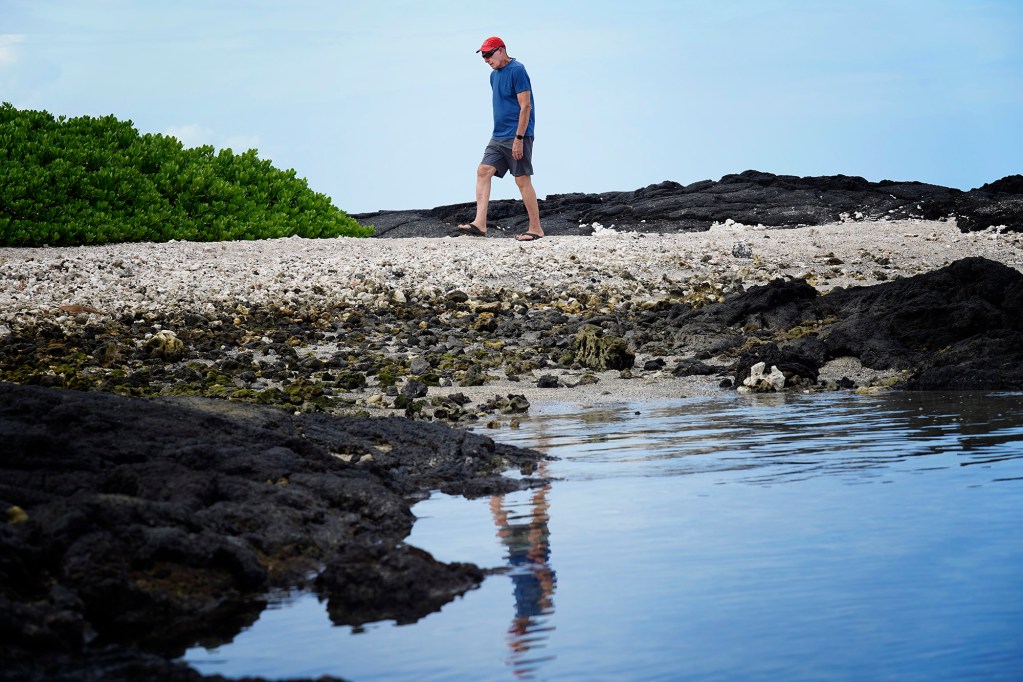
Over the years, researchers with Cornell University, the University of Hawaiʻi and experts with the Seattle Aquarium all did extensive studies of the problem at Puakō, Fry said.
One consultant’s summary of some of that work declared in 2019 that “the entire coast of Puakō was characterized as polluted by wastewater containing harmful nutrients (nitrates, phosphorus), fecal bacteria, and other contaminants known to harm corals and marine wildlife.”
During the last 50 years, the Puakō reef has lost 90% of its coral coverage, Anderson said, and if it suffers much more damage it will be extremely difficult for the reef to ever recover.
Fry said the coral no longer looks healthy, and there are fewer fish on the reef. As the coral loses its color and turns gray, “you’ll have big stretches that are actually kind of scary and dead.”
This is not just a problem for Puakō, he said. People come from other parts of the island to access the ocean there, and “they want to be able swim here and not get sick,” Fry said.
Fry replaced the cesspool at his home with a septic system, and became active in Puakō for Reefs, the nonprofit that is trying to cope with the problem.
“My feeling has always been that we bought a home here, we became residents of Puakō, it’s an obligation that we have to protect not only the ʻāina but the water,” Fry said. “This is the one thing we can do. We can broker this deal to take the sewage off the reef, and I think it’s our obligation to go for it.”
A survey of the community found about 80% of the residents who responded support the sewer line project provided it is “affordable,” Anderson said. She hopes the Puakō project can become a blueprint for other communities like theirs, making it easier for them to cope with the cesspool problem.
Fry believes state lawmakers and other players are waiting for a signal the county is committed to the Puakō project before they pitch in to help, “but we’re not hearing that,” he said.
Alameda said his office will help Puakō residents select the best technology and search for funding for the sewer line, but he stopped short of committing the county to pay for construction.
Alameda wonders why some people assume closing out cesspools is a county responsibility.
“It’s not even the county’s mandate, it’s the state’s mandate to make this conversion,” he said.
“That’s part of the problem with unfunded mandates,” Alameda said. “People all just point at each other.”
Civil Beat’s coverage of environmental issues on Hawaiʻi island is supported in part by a grant from the Dorrance Family Foundation, and its coverage of climate change and the environment is supported by The Healy Foundation, the Marisla Fund of the Hawai‘i Community Foundation and the Frost Family Foundation.