Government Shutdown: Hawaiʻi Announces Financial Aid For Housing, Utilities
Applications for one aid fund open today. Details are still being worked out for another, which is specifically for Native Hawaiians.
Some of the Hawaiʻi residents who have lost their November food stamp benefits or been otherwise impacted by the federal government shutdown can look to two new sources of help announced Wednesday, including one specifically focused on assisting Native Hawaiians.
The Hawaiʻi Relief Fund, put together by Gov. Josh Green’s administration, will provide up to four months of financial assistance for housing and utility payments to families with at least one dependent child under 18 who are experiencing a financial crisis.
Hawaiʻi residents who can demonstrate hardship — including those whose government paychecks have been halted during the shutdown — can apply for help even if they do not use the Supplemental Nutrition Assistance Program, or SNAP, the official name of the food stamp program.
The fund will pay for housing-related deposits up to $6,000, and rent or mortgage payments up to $6,000 also. For utilities, the fund will cover deposits up to $3,000 for each utility, as well as paying bills up to a maximum of $2,000.
Green also noted that the Department of Human Services will give $2 million to Hawaii Foodbank to support its operations statewide.
“These are challenging times for working families across Hawaiʻi. No one should go hungry or lose stability because of gridlock in Washington, D.C.,” Green said in a statement. “Our administration, together with the Hawaiʻi State Legislature, the Department of Human Services, the Office of Hawaiian Affairs, the Department of Education and community partners — is stepping up to ensure everyone in Hawaiʻi has access to food and essential aid during this federal shutdown.”
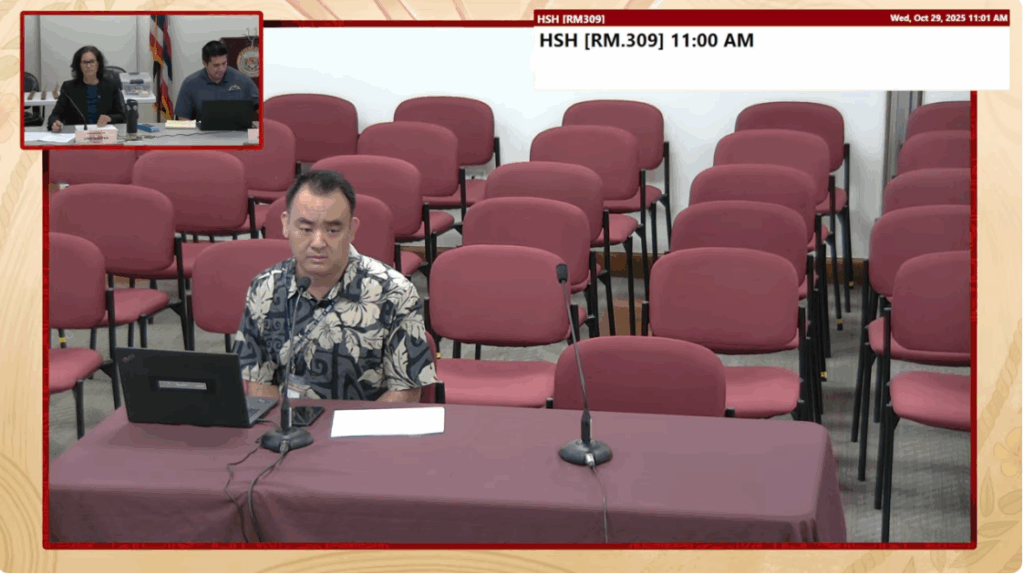
The fund “is helping families by targeting housing, which is the largest expense,” Scott Morishige, administrator of the state Department of Human Services’ division that manages the SNAP program, told legislators Wednesday.
About 168,000 Hawaiʻi residents, or 86,000 households, rely on SNAP, with an average monthly benefit of $343 per person.
The relief initiative is using $100 million from the federally funded Temporary Assistance for Needy Families cash assistance program. Morishige said other options are being studied to assist those not eligible for that assistance, including elderly people without dependent children.
Fund For Native Hawaiians

The Office of Hawaiian Affairs also announced a $6.1 million emergency fund for Native Hawaiians affected by the shutdown on Wednesday, including those whose SNAP benefits have been suspended.
An estimated 47,000 Native Hawaiians receive SNAP, according to OHA, and about 5,000 of the nearly 25,000 federal employees in the state are Native Hawaiian.
“Families are missing paychecks, losing benefits, and facing impossible choices about how to feed their ʻohana,” OHA Board of Trustees Chairperson Kaialiʻi Kahele said in a statement. “OHA will not wait on the sidelines — we are taking immediate action to help our people through this crisis.”
Full details about the OHA fund, including eligibility guidelines and how to apply, are to be released in early November.
How To Apply For State Aid
The Hawaiʻi Relief Fund opens for applications today. The human services department is partnering with Catholic Charities Hawaiʻi to manage the fund and application process on Oʻahu, the county of Hawaiʻi and Kauaʻi. The nonprofit partner for Maui County is Maui Economic Opportunity.
Aid payments will go directly to utility companies and landlords or lenders, in the case of mortgages — and will not affect income eligibility for other benefit programs, Morishige said. Applicants will need to provide documents including government issued identification, proof of income and lease or mortgage statements.
For more information, Oʻahu, Big Island and Kauaʻi residents can reach Hawaiʻi Relief Fund staff at 808-521-4357 ext. 1 or hrp.mail@catholiccharitieshawaii.org. For more information and to apply online go here.
In Maui County, call 808-243-4357 for information, email Housing.utility@meoinc.org or go to this website. To apply online go here.
Civil Beat’s reporting on economic inequality is supported by the Hawaiʻi Community Foundation as part of its work to build equity for all through the CHANGE Framework; and by the Cooke Foundation.