

Hawaiʻi Is Making A Big Push To Increase College Enrollment. Will It Work?
A new program offers Hawaiʻi seniors guaranteed admissions to nine University of Hawaiʻi campuses, but advocates say more needs to be done if UH really wants to reach more disadvantaged students.
As a senior at Castle High School, Shanelle Bartlett wished for an easier way of applying for college. She planned to enroll in Kapiʻolani Community College’s competitive medical laboratory technician program, but she didn’t know how to apply for the program and struggled to find financial aid options.
“I had to figure out how to do the KCC application by myself,” said Bartlett, who graduated from high school in May and is now pursuing the college’s medical laboratory technician program with a scholarship covering her first year of tuition. “I was very confused, and I didn’t understand anything.”
Hawaiʻi lags behind the nation when it comes to college attendance. Just over half of Hawaiʻi high school graduates attend college, compared to the national average of 63%, with roughly a third of graduates attending a University of Hawaiʻi campus.
A partnership between UH and the Department of Education aims to change this by simplifying the admissions process for in-state colleges. The initiative, called Direct2UH, provides all DOE seniors with guaranteed admissions to the system’s seven community colleges. Those with a 2.7 GPA or higher are also guaranteed admissions to UH West Oʻahu and UH Hilo.
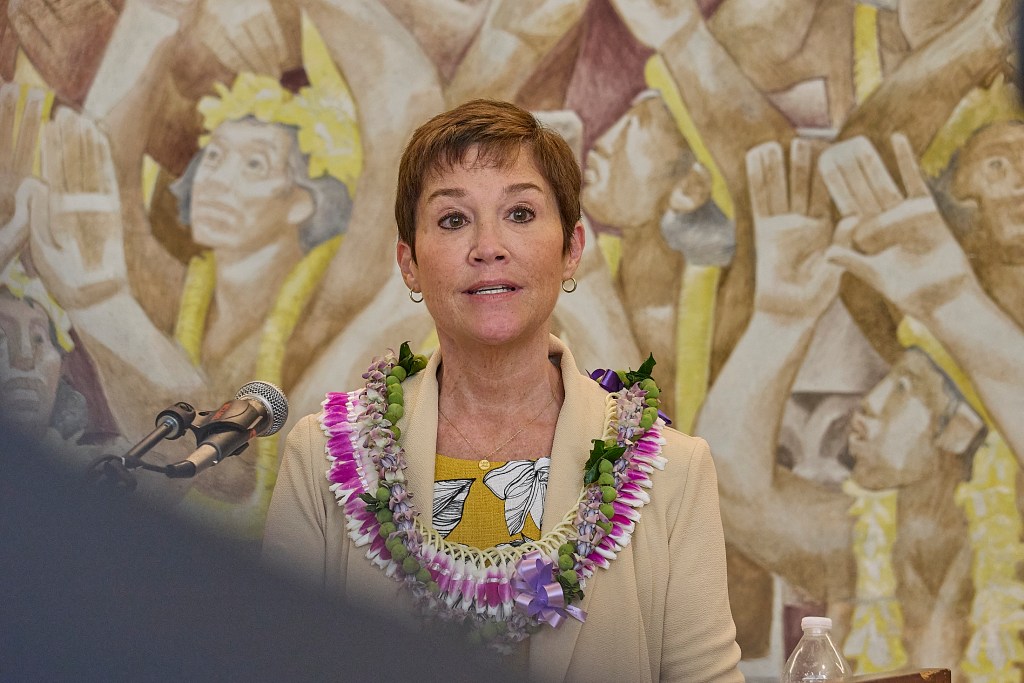
The initiative doesn’t include the flagship campus UH Mānoa, but the university will participate in the program next year, UH President Wendy Hensel said earlier this month.
Acceptance letters sent to graduating seniors instruct them to secure their spots by completing a free, simplified application that allows them to select the college of their choice. Admission is contingent on students’ graduation from high school.
The program aims to increase enrollment at UH campuses, particularly among students who haven’t considered higher education as an option. But local advocates and outside studies say students still need additional support around financial aid and career counseling for automatic admissions to have a significant impact.
For example, students can qualify for Hawaiʻi Promise, a state scholarship covering tuition and books for residents attending UH community colleges, but recipients must complete the Free Application for Federal Student Aid. Last year, less than half of Hawaiʻi public school seniors completed the FAFSA.
“One piece without the other,” said David Sun-Miyashiro, executive director of HawaiʻiKidsCAN, “I don’t think is really going to have the impact that folks hope.”
Simplifying The Process
Automatic admission programs aren’t new, but it’s unclear how successful they are at boosting enrollment among students who need the most help in the application process. One study of Idaho’s direct admissions program, launched in 2015, found that the initiative increased attendance at community colleges but had little impact on the enrollment of low-income students.
A more streamlined admissions process can encourage more seniors to pursue college, especially if they’re the first in their family to seek higher education, said Taylor Odle, an assistant professor at the University of Wisconsin-Madison. But students don’t always know what it means to have an automatic offer of admission, he said, and still need help making sense of the enrollment process.
Sarah Akina, a counselor and associate professor at Windward Community College, said she’s hopeful the new application will make the admissions process less daunting for students. Previously, she said, some Hawaiʻi students would incorrectly fill out questions about their residency and get flagged as out-of-state students, requiring them to spend $25 on the community college application and get charged higher tuition.
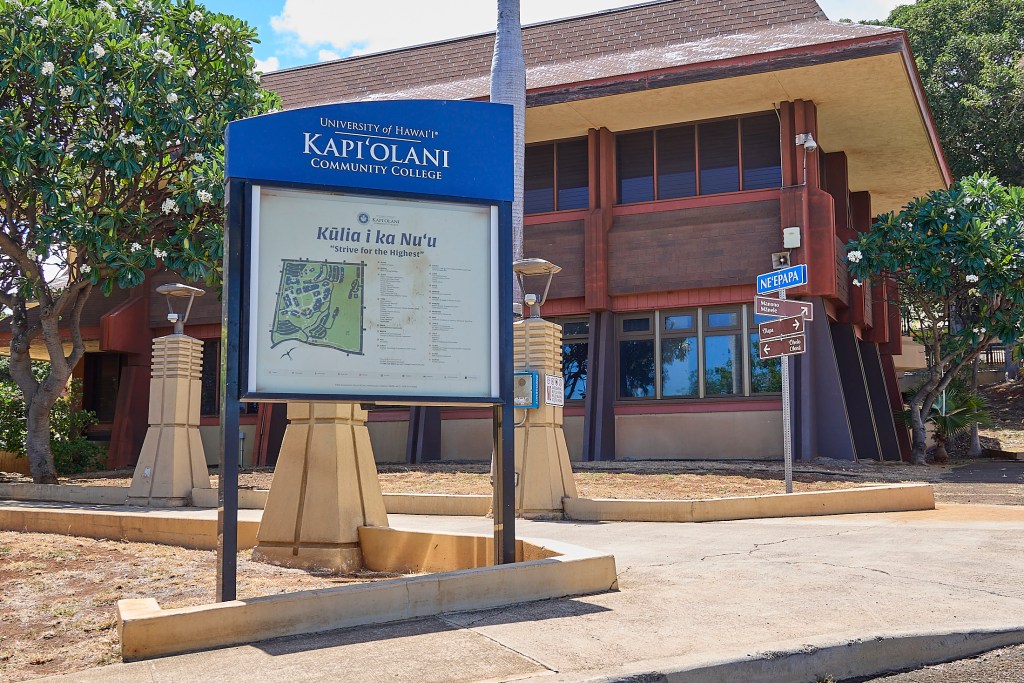
Counselors knew how to catch and address these mistakes, Akina said, but correcting students’ files can delay when they receive their acceptance letters and financial aid.
“All of those things just set them back even more and make them feel like, ‘Nope, this isn’t the place for me,’” Akina said.
Moving forward, high schools need more resources to help students navigate the new Direct2UH application, said Sheldon Tawata, who coordinates a college transition program at Kapiʻolani Community College. While the new application is easier to complete, Tawata said, students need to think critically about what campus and program is best for them before making their choices.
Tawata said he’s working with high schools to develop workshops that highlight the Direct2UH program and ensure seniors are still talking with their counselors throughout the process.
Sun-Miyashiro said he’s hopeful the initiative will boost students’ awareness and interest around college, but he would like to see the Direct2UH program put more emphasis on financial aid. Without these resources, he said, students might see an acceptance letter from UH but think they can’t afford tuition or assume they’re better off working instead of investing in college.
The Direct2UH acceptance letter sent to high school seniors instructs them to complete the FAFSA and explore state scholarships covering the costs of tuition.
Grace Won, a senior at Kalani, said she doesn’t think many of her classmates are aware of the Hawaiʻi Promise scholarship, which could allow them to attend community college for free. If students want to stay in Hawaiʻi for college, she added, it’s important to know the options available to them.
“They can take so much advantage of that,” she said.
More Support For Transfers
While Direct2UH aims to boost college enrollment among Hawaiʻi seniors, students also need support once they make the move to community colleges.
A month before classes began at Kapiʻolani Community College, Kathreen De La Cruz showed up to her academic counselor’s office, worried it was too late to enroll for her first semester of classes. Her counselor helped her enroll, De La Cruz said, and she now seeks academic advising regularly, receiving advice on what classes she should take or how her credits may transfer to UH Mānoa if she pursues a four-year degree in the future.
“I’m there pretty much every single time I need help,” De La Cruz said.
While community colleges offer an affordable starting point for students who want to earn their bachelor’s degrees, fewer students have been transferring to four-year campuses in recent years. Navigating general education courses that should transfer between colleges can be confusing, Hensel said in a recent Board of Regents meeting, and students occasionally need to retake similar classes once they move to a four-year campus.
Roughly 40% of Hawaiʻi community college students are interested in attending a four-year campus, but only a quarter of them successfully make the transition, according to recent data from UH. The number of students transferring from community colleges to four-year campuses in the UH system has dropped over the past several years.
“There’s a gap there that we want to have a conversation about,” Hensel said.
Basic courses, like English 100, transfer easily between campuses, said Debora Halbert, vice president for academic strategy at UH. The confusion comes when community colleges and four-year universities have similar graduation requirements, she said, but a course that fulfills the requirement at one campus doesn’t transfer to another, requiring students to retake similar classes.
The university is working to address this problem by reviewing its general education curriculum and aligning the requirements across the 10 campuses, Halbert said. The proposed curriculum is supposed to be presented before the Board of Regents next spring.
In other cases, students may take community college classes that fulfill their general education credits but won’t cover their major requirements once they transfer and start pursuing a bachelor’s degree, Akina said. It’s important for students to meet regularly with their advisers, especially if their college and career plans change, so they can ensure they’re taking the right classes and making the transfer process as smooth as possible, she said.

Moving forward, UH is investing in a new technology platform to proactively identify students who need advising and extra academic support, Halbert said. Students also have access to an online registration system that allows them to see what classes they need to take at two- and four-year colleges to successfully transfer and complete their intended degrees, she said.
De La Cruz said she would have taken advantage of the Direct2UH program if it were offered when she was graduating from Pearl City High School in 2024. At the time, she said, she lacked the confidence to decide if she should pursue higher education, and it would have helped to know that she was already qualified to attend college.
“If there were to be that type of thing for me back in high school,” she said, “I for sure would have signed up.”
Civil Beat’s education reporting is supported by a grant from Chamberlin Family Philanthropy; reporting on economic inequality is supported by the Hawaiʻi Community Foundation as part of its work to build equity for all through the CHANGE Framework; and by the Cooke Foundation.

