

Hawaiʻi Parents Are Hopping Fences To Sneak Into Playgrounds
Lawmakers have pushed schools to open their facilities for recreational use, but the education department has raised concerns about liability and safety.
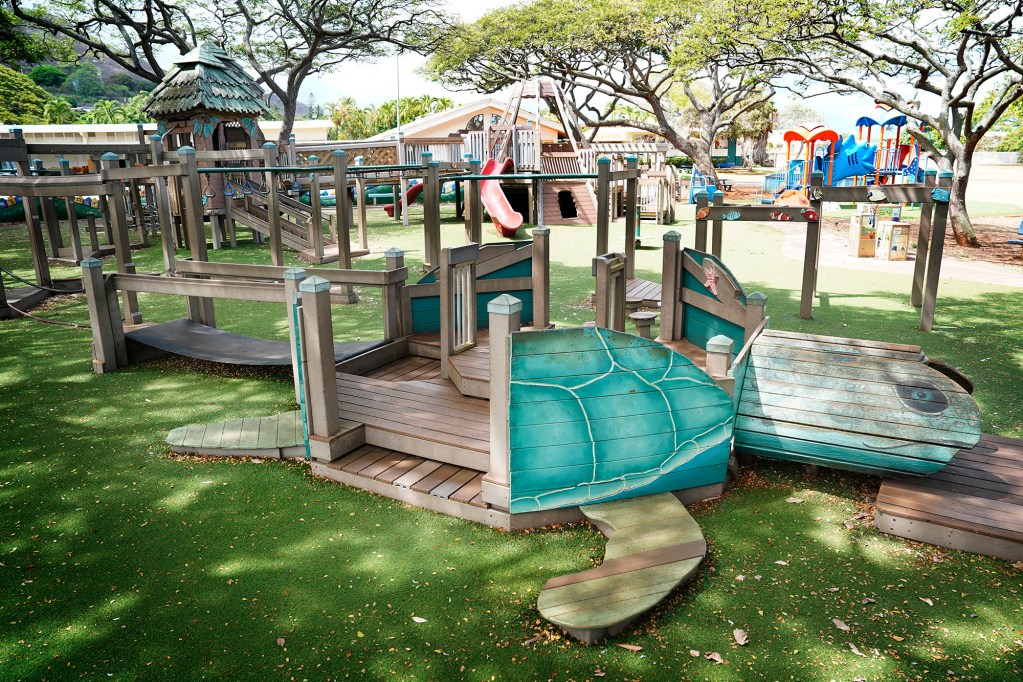
The playground at ʻAikahi Elementary School is perfect for Maya Childress’ three kids. The slides and climbing structures are small enough for toddlers to safely play on weekends, and the large monkeypod trees and benches offer parents a shady spot to watch their kids.
The only problem: Childress and her kids need to jump the school’s fence or crawl under a gate every time they want to play. The Kailua playground on ʻAikahi Elementary’s campus sits behind a locked gate and is surrounded by no trespassing signs, warning the public that kids should only use the equipment under the supervision of school staff.
Even still, ʻAikahi Elementary draws dozens of children on weekends, with many families considering it the best playground on Oʻahu.
“It puts these parents in a weird situation,” Childress said. “Do I do this? All these other parents are doing it.”
Debates around access to the playground escalated last month when the Honolulu Police Department was called to investigate a child’s birthday party held at ʻAikahi Elementary on a weekend. The police didn’t issue any citations, HPD spokesperson Jocelyn Oshiro said, but the incident sparked widespread frustration on social media, with families arguing that the playground was built with community support and should be open to the public on weekends.
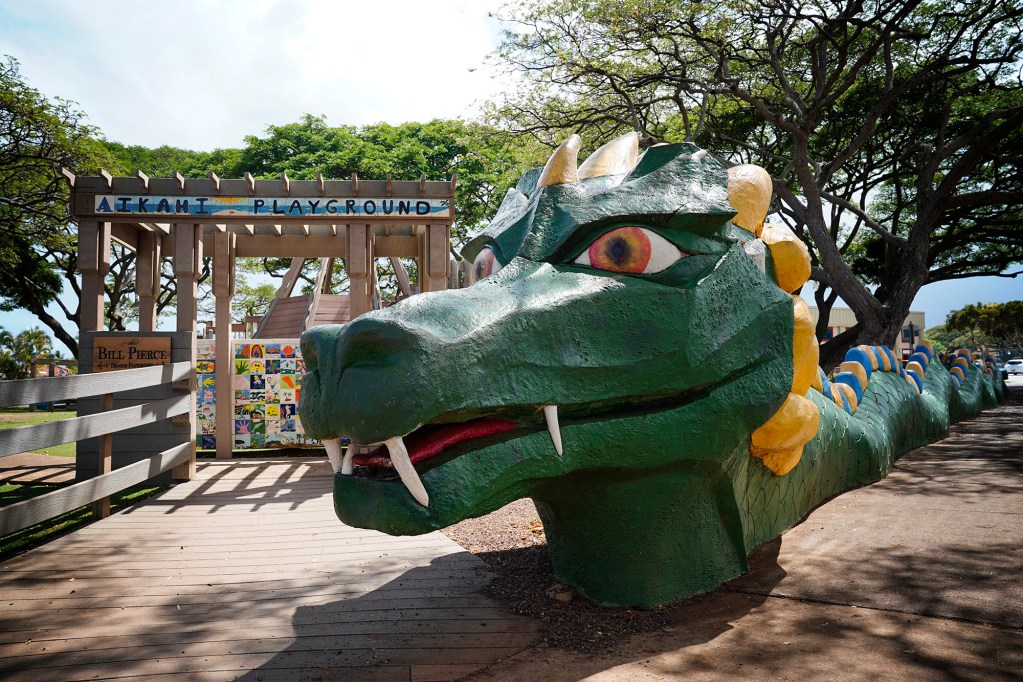
School campuses are supposed to be available for public use, but the Department of Education requires people to submit applications to use school facilities and pay hourly fees to help cover the costs of utilities and custodian wages.
Families rarely – if ever – go through formal channels to use school playgrounds. Access to city-run playgrounds varies widely by neighborhood, with families in urban Honolulu having more options than those living on the Leeward Coast.
On the mainland, some cities and school districts have successfully negotiated agreements allowing the public to use school fields and playgrounds when classes aren’t in session. Hawaiʻi lawmakers have urged the DOE to follow suit over the past two years, citing a growing demand for public park spaces.
The education department has pushed back on these proposals, arguing that the public already has a way to request access to school facilities and expanding access to campuses increases the possibility of vandalism and liability claims against the state.
But parents say the current approach doesn’t serve the best interests of communities and believe that opening school playgrounds would give kids more convenient, safe options to play, while also helping families feel more connected to their local campuses.
“Is a school just a place for them to get educated, or is it like more than that?” said Mairwyn Forster, a mother of a 5-year-old. “If it’s a safe place for them to go, to have fun, shouldn’t that be a positive reinforcement?”
Questions Of Access
The Honolulu Department of Parks and Recreation operates more than 130 playgrounds across Oʻahu, while the DOE runs nearly 120 elementary schools with playgrounds on the island. But while every neighborhood is guaranteed a local elementary school, public playgrounds tend to be more concentrated in urban Honolulu, with fewer options in parts of Central and West Oʻahu.
For example, Nānākuli has a 7-mile stretch with no city playgrounds, although the parks department is working to add a new playground in Waiʻanae, said Honolulu Department of Parks and Recreation Director Laura Thielen.
Even in neighborhoods with a playground, some parents say access to schools would give them more quality options.
All Oʻahu public elementary schools have playgrounds (April Estrellon/Civil Beat).
While her 2-year-old daughter enjoys playing at Mānoa and Ala Wai community parks, April Meinken said, city playgrounds aren’t always geared toward younger kids.
Some playgrounds aren’t enclosed, making it easier for kids to run into the road, Meinken said. She also often picks up trash so her daughter doesn’t put it into her mouth. If school playgrounds were open to the public, she would use them with her daughter.
“Kids get kind of bored of doing the same thing over and over again,” Meinken said. “Having the variety of even just going to a different school during non-school hours or weekends would be really nice.”
Across the island, parents have turned to school playgrounds as gathering spots for their kids. Sunset Beach Elementary’s playground appears on a list of kid-friendly destinations for families on the North Shore. Jefferson Elementary has issued letters to families, instructing them that kids can’t be on the playground unsupervised before or after school.
Trespassing on DOE property and ignoring requests to leave is a misdemeanor in Hawaiʻi, but elementary schools often lack the security staff to patrol their campuses after hours. While schools have reported serious vandalism in recent years, some principals say it’s unlikely these problems stem from families using their playgrounds for fun.
At ʻAikahi Elementary, community members volunteered their time and raised $150,000 to build a new playground around 2009, believing it would be open to the public. But within a few years, the school closed the playground to the public amid concerns about student safety and trash left on the campus, said Thielen, who represented the community in the Legislature at the time.
“They just felt strongly that they needed to close it for the safety of the kids,” Thielen said. “It was sad, because you would want shared use of those facilities.”
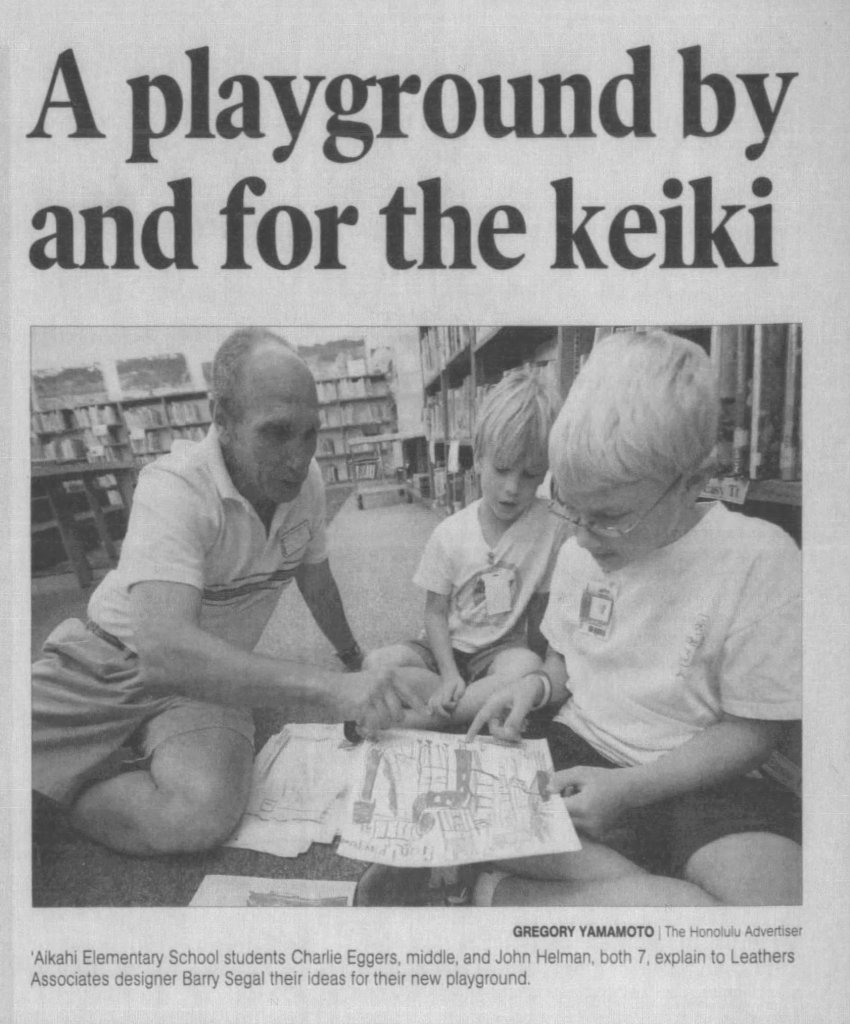
Even after the playground was closed to the public, families kept coming — and concerns about campus safety continued. In 2021, ʻAikahi Elementary’s playground was vandalized, with some of its benches overturned and trash and vaping devices left on the campus.
Other schools have faced similar problems with intruders on their campuses. In 2018, Makakilo Elementary filed nearly a dozen police reports for vandalism, including damage to its playground. In 2023, Nānāikapono Elementary’s playground was intentionally set on fire, sparking a police investigation and calls for more security on campus.
Kāneʻohe Elementary Principal Derek Minakami said he’s occasionally faced incidents of vandalism and trash left at his school, but it’s hard to pinpoint the cause of these problems since it’s not just families passing through the campus after classes are done. Minakami said his main concern when it comes to playground use on weekends is the lack of staff on campus, especially if kids are playing unsupervised or damaging school property.
“We’re more worried about safety,” he said.
Finding A Compromise
At some campuses, the distinction between city parks and school property isn’t as clear.
On Oʻahu, the city owns more than 80 properties, including some park land, that are also home to DOE schools. The close proximity allows students to use public parks for recess and physical education and, in exchange, the city uses school facilities for summer camps and other activities, Thielen said.
Last year, schools held 855 events on nearly 200 county facilities across the state, according to the DOE.
But agreements between campuses and parks are made on a case-by-case basis, Thielen said, and can be difficult to maintain over long periods of time.
“If the principal changes and that relationship is ended, or if the park recreation staff changes and that relationship ends, those agreements may end,” Thielen said. “And that’s really hard for people in those communities to see that shared use end.”
In recent years, the Legislature has pushed the DOE and city to clearly define the boundaries of school property and public parks. One law, passed in 2018, requires the city to transfer any properties that hold school facilities to the DOE.
The parks department strongly opposed the legislation, raising concerns that transferring city property to the DOE would reduce public recreation spaces in cases where schools and parks were built next to each other.
“The department cannot support actions which will result in the loss of park facilities and fields, an insurmountable recreational impact to the children, teens, adults, families, and organizations of these communities,” former parks department director Michele Nekota said in her written testimony against the bill.
The final version of the law included a provision allowing the city and DOE to negotiate what parcels of land would be transferred to the state or remain as public parks. As of last summer, the city had started transferring some land to the DOE, but hadn’t been able to complete the process because of limited funding and staff.
Other proposals from state and city leaders have encouraged more widespread collaboration between city parks and the DOE.
Last year, the Honolulu City Council adopted a resolution asking the parks department to work with the DOE to open more schools for public use, citing the need for more sports fields and recreational spaces. A resolution introduced in the Legislature this spring made a similar request of schools, but it failed to pass after the DOE and the Attorney General’s Office pushed back against the proposal, citing concerns around liability and vandalism.
“The Department is concerned that opening public school recreational facilities for ‘unrestricted’ public use, without legal safeguards, may expose the DOE to substantial liability for injuries or worse,” the Attorney General’s office said in its written testimony, adding that the resolution lacked specifics on who would be responsible for the costs of maintaining and repairing school facilities used by the public.
Concerns around liability and increased costs for facilities is often a challenge for communities that want more access to their local schools, said Jeff Vincent, who works at the University of California Berkeley’s Center for Cities and Schools. In some cases, he said, cities might provide their own park staff to open and close schools on weekends or provide funding to help repair facilities that are damaged by the public.
For example, San Diego Unified School District allows the public to use fields and playgrounds on its campuses when classes aren’t in session. In exchange, the city helps maintain and improve the school facilities.
Thielen said she would like to pursue similar agreements with the DOE. In the meantime, she said, the parks department is aiming to build more playgrounds tailored to younger kids and add more trees and picnic spaces to parks to appeal to families.
“It’s all the same kids,” Thielen said. “We just want to make sure that we can provide the best community services for education and recreation.”
Civil Beat’s education reporting is supported by a grant from Chamberlin Family Philanthropy.

