

Police Still Don’t Know How Theresa Cachuela’s Killer Got A Gun
Cachuela’s death shows the danger ghost guns pose to victims of domestic violence and the general public, law enforcement officers say.
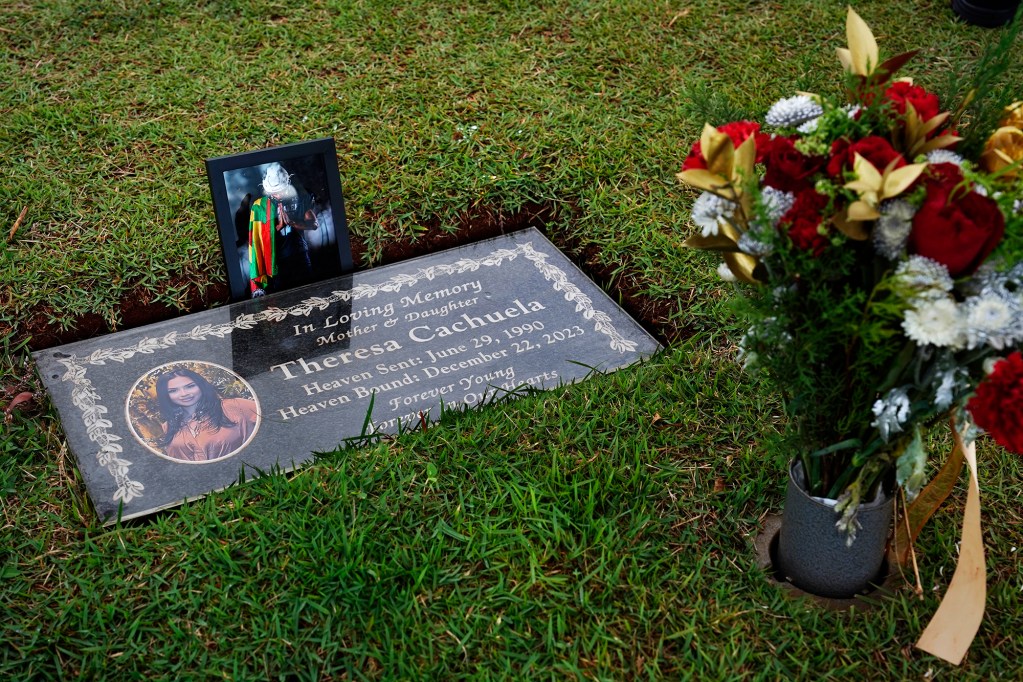
In the nearly two years since Theresa Cachuela was shot and killed by her husband, Jason Cachuela, one question has remained unanswered: How did he get the gun?
Theresa Cachuela had taken out a temporary restraining order against him, and police had confiscated all five of his registered firearms.
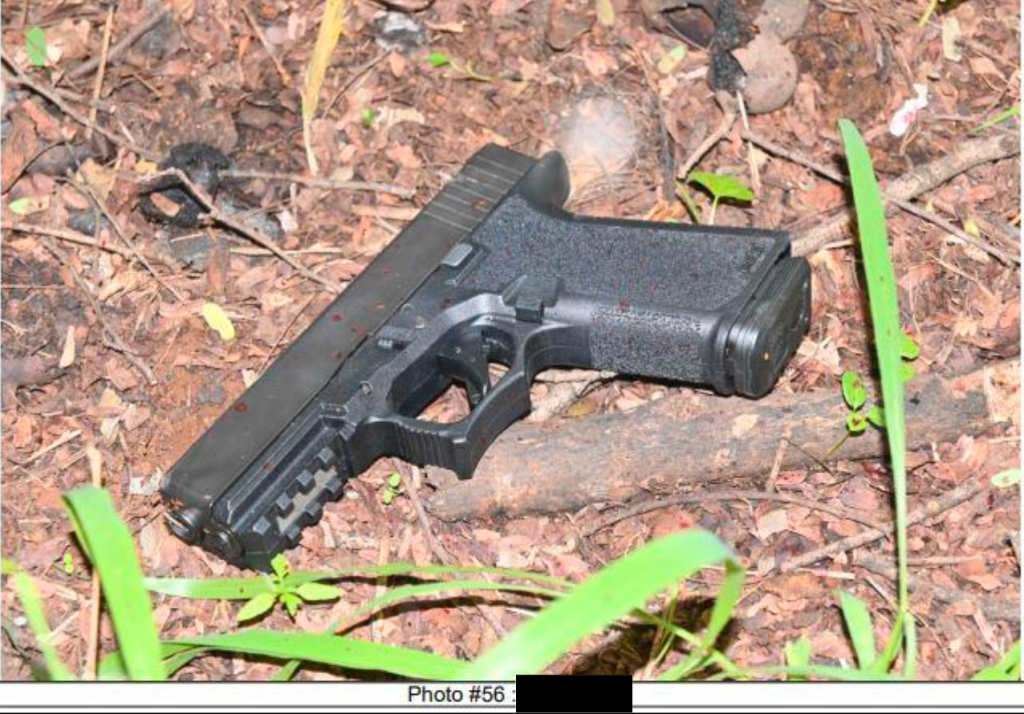
But the one he used on Dec. 22, 2023, to kill his estranged wife and then himself was not a registered weapon. It was an unserialized firearm known as a ghost gun, according to an investigative report that was recently finalized and obtained by Civil Beat last month.
While the report contains details about the gun itself — a Glock-style semi-automatic pistol from the brand Polymer80 — it doesn’t include information about how he obtained it.
Police spokesperson Alina Lee said in an email that during the investigation, “there was no evidence indicating how the suspect obtained the firearm or whether he personally manufactured it.” The department declined interview requests about this case.
Ghost guns are difficult to trace because they lack serial numbers, but detectives can still try to find out where they came from by checking credit card reports or conducting forensic exams of a person’s phone and computer to find out if they purchased the parts online, said Felipe Rodriguez, adjunct professor at John Jay College of Criminal Justice in New York.
Investigators can also compare casings fired from the weapon in a lab to casings found at other crime scenes to see if the gun may have been used before, said Hawaiʻi Department of Law Enforcement Director Mike Lambert.
It’s unclear what type of investigation, if any, HPD did into the origins of the weapon.
“Due to investigative integrity, we do not disclose the specific steps, methods, or resources utilized during the course of our investigations,” Lee said.
But since Theresa Cachuela’s killing, ghost guns are being used more frequently in crimes in Hawaiʻi and other states.
In the first 10 months of 2024, HPD reported 68 ghost gun cases — more than twice as many as the same period the year before, Ernest Robello, then a lieutenant in the Honolulu Police Department’s Narcotics Vice Division, told state senators in February during a hearing on a bill to further restrict where firearms and firearms parts can be carried. Robello is now deputy director of administration for the state Department of Law Enforcement.
“When we do search warrants and when we do game rooms, the guns we’re finding are not registered guns or legal guns that were stolen from a car or a house,” he said. “They’re all ghost guns. And the main reason for that is the parts aren’t traceable.”
Since her daughter’s killing, Theresa Cachuela’s mother, Lucita Ani-Nihoa, has been pushing to find out how Jason Cachuela got the gun and whether police could have intervened sooner. The investigative report hasn’t given her any answers.
“They never cared about my daughter’s case,” Ani-Nihoa said. “Like it’s just another statistic, it’s not a person.”
Lee said in a statement that detectives worked diligently throughout the investigation.
“We remain committed to treating victims and their families with compassion and respect,” the statement said, “as we seek justice on their behalf.”
Untraceable Weapons
Lambert said the fact that Jason Cachuela was able to use a ghost gun to carry out the killing despite having a TRO against him illustrates the dangers these types of weapons pose to victims of domestic violence and the general public.
“The whole issue is that they can move through the mail and it’s technically legal, which is problematic,” he said. “And because there’s no mechanism to track it, it’s impossible for law enforcement to know.”
In Jason Cachuela’s case, police confiscated the five firearms registered in his name on Dec. 11, 2023, the day they served the temporary restraining order. Under Hawaiʻi law, the target of a restraining order or domestic abuse protective order must relinquish all firearms to police when they are served. Police can also confiscate firearms — registered or unregistered — and ammunition in plain sight or those found through a consensual search when serving the orders. If the person being served has registered firearms or ammunition that they have not relinquished and that officers have not been able to locate, police can apply for a search warrant to try to find and seize the weapons.
But if a person is hiding an untraceable weapon, police won’t know to look for it.
It’s unclear if Jason Cachuela was hiding the gun at the time or acquired it after the order was served.
It is already illegal in Hawaiʻi to possess a ghost gun, and lawmakers passed a bill this year that increased the penalties for having one and using one in the commission of a crime. But Lambert said he is working with U.S. Rep. Jill Tokuda on a national bill that would require gun parts to be registered any time they are shipped through the mail.
Tokuda introduced the bill in May and said she is waiting for it to get a hearing in the House Judiciary Committee. The bill has 33 Democratic cosponsors, but Tokuda said she has not gotten a Republican to sign onto it yet.
“It’s about holding these gun kit manufacturers and sellers accountable for actually selling parts that become weapons that end up killing innocent people,” she said. “It’s about giving law enforcement the ability to track, to know where these kits are going.”
This bill may have had an impact in the Cachuela case, Lambert said. The gun Jason Cachuela used was a Polymer80, meaning that — unless someone brought the ghost gun into the state already assembled — the frame that holds the firearm parts together was shipped to Hawaiʻi from the Nevada-based company Polymer80, which sells parts and kits online.
The company has been one of the most popular manufacturers of ghost gun parts in recent years and lists handgun building kits online for under $300.
A person can buy all or some of the parts needed to build a handgun through the site and put them together at home with the help of a simple YouTube tutorial, Lambert said.

“It comes with this jig and you just basically line it up, and you basically drill where it tells you to drill,” he said. “Kind of scary, right?”
Polymer80 announced it was shutting down in 2024, according to The Trace, after getting sued by multiple cities. Its website appears to be active and still shows kits for sale, but it’s unclear if the company is currently operating. Emails to the company were not returned and a phone number listed on its website is inactive.
Other companies, though, have popped up in its place, Lambert said, often shipping gun parts in multiple packages or breaking them down into more pieces to skirt tightening restrictions around gun-building kits.
Tokuda’s bill would require any company selling gun parts through the mail to register those parts so law enforcement officers can track where they’re being sent. It would also require companies to ship them by certified mail and have buyers sign for the packages.
Ghost guns can also be made almost entirely with parts manufactured at home using 3D printers, Lambert said, though some of the metal pieces may still need to be ordered online or purchased at a hardware store.
Some states have proposed laws regulating the printers themselves. A bill introduced this year in New York would require a criminal background check for anyone purchasing a 3D printer capable of making a firearm.
Lambert said it may be too late to try to regulate 3D printers because there are already so many. But, he said new 3D printers are being made that can work with metal instead of just plastic, and state lawmakers could start looking into how to regulate those.
“Law enforcement is trying to be very proactive,” he said.
‘Where Did He Get It?’
As police and lawmakers grapple with how to control ghost guns, Ani-Nihoa is left wondering about her daughter’s killing.
Detectives found the firearm Jason used lying on the ground in a wooded area behind his Waipahu home, where his body was found. They also found around 70 boxes of ammunition in his room.
“Where did he get it?” Ani-Nihoa said of the gun. “Even with the bullets, where did he buy those bullets?”
Ani-Nihoa said she’s been extremely frustrated trying to get information from detectives in her daughter’s case. She paid $650 for a CD containing the final investigative report, but still has more questions than answers.

The police department charged her for an estimated 34 hours of work reviewing and redacting the 1,024-page report, according to a document provided to Ani-Nihoa.
Brian Black, executive director of Public First Law Center, said immediate family members are not supposed to be charged for police reports about the deaths of their loved ones. Lawmakers passed a bill earlier this year that went into effect in April, three months before Ani-Nihoa filed her request, giving families the right to receive report copies without going through the state’s regular public records process.
“The rights that the Legislature granted are greater than the rights granted to the general public,” he said. “So surviving family members should have access to more information at little to no cost.”
Lee said in a statement that the department still charges to review, process and redact information in accordance with the state’s Office of Information Practices rules on assessment of fees.
“In this case, the fee reflected the administrative time needed to prepare the report for release while ensuring that confidential information was protected,” the statement says.
Since her daughter’s death, Ani-Nihoa has been working with advocates and legislators to try to change laws and help protect other victims of domestic violence. She helped push for Senate Bill 295, which passed this year and increased the penalties imposed on those convicted of violating the terms of temporary restraining orders.
But she can’t shake the feeling that more should have been done to protect her daughter while she was still alive.
She was considering taking a break from advocating for domestic violence victims because it’s been a challenge to juggle her grief with the responsibilities of daily life, she said.
But she also feels she can’t stop. She doesn’t want the memory of her daughter to slip away.
“I’m so devastated,” she said through tears. “I still grieve, in and out.”
Civil Beat’s reporting on women’s and girls’ issues is funded in part by the Frost Family Foundation.

