

Viral Bullying Videos Are Sign Of Bigger Problem In Hawaiʻi Schools
Social media is amplifying conflicts and normalizing bad behavior as teens film fights and post them online to draw hundreds of views and comments.
The video was choppy, but the yells and cheers from students were clear as the girl dropped her backpack, ran down the sidewalk and began shoving another teen against a chain-link fence. Amid repeated calls to “Punch her in the face,” the girl kept hitting the other student, chasing her onto a nearby campus.
The incident, which took place last month near Nānākuli High and Intermediate on Oʻahu, drew a small group of students but was about to have a much larger audience. When footage captured by one of the teens was anonymously posted to Facebook — with a request for people to come forward with information to help the victim — it drew nearly 70 comments from angry parents and community members.
“I hope their parents are proud of what they created,” one commenter said. “And to the ones in the background, you’re all cowards for encouraging this behavior.”
Videos of fights and bullying at schools have become increasingly common on Hawaiʻi social media pages in recent years, and the state has seen a moderate increase in reports of bullying in middle schools since the Covid pandemic.
Some of the most severe cases of bullying have resulted in student arrests, most recently at Kalama Intermediate School on Maui, where five girls were arrested and charged with kidnapping after trapping a classmate in a soundproof room for 20 minutes and filming the incident.
Bullying in schools isn’t new. The growing challenge, educators say, is the way social media can spark and amplify conflicts while normalizing problematic behavior as teens film fights and post them online to draw hundreds of views and comments.
“They are seeing a lot of these kinds of behaviors posted online, and they’re not really able to understand that, even though I see an occurrence online, it doesn’t necessarily mean it’s normal behavior,” said Laura Clary, an assistant research professor at Johns Hopkins University.
Middle schoolers in particular have dealt with more bullying in recent years. These students were in their early elementary years during the pandemic, meaning they had fewer chances to learn important social skills and interact with their classmates during key developmental years, said Reynold Fernandez, a program director at the YMCA’s Kalihi branch.
Schools are doubling down on anti-bullying initiatives, teaching kids about empathy and respect, and some have banned cellphones from campuses to try to limit kids’ abilities to use social media during the school day. But some advocates say families need to be more involved in the crackdown against bullying by more actively monitoring their kids’ online activity and modeling good behaviors at home.
A Post-Pandemic Surge
Michael Ladera’s daughter became the target of bullying at Kapolei Middle School while she was in the seventh grade. Students tripped and shoved her in the hallways, he said, and sent her mean messages online calling her stupid or ugly.
One of Ladera’s greatest concerns was an Instagram page anonymously run by kids at the school, posting videos or pictures of students who were frequently bullied and instructing their peers to target them.
Ladera repeatedly met with school administrators, and one of the students who led the bullying against his daughter was eventually suspended, he said. But the girl had turned other students against his daughter, he said, so the attacks continued even after her suspension.
Addressing the online attacks was harder. Ladera went to the police to get the Instagram page removed but said he was never informed when the page was taken down or if officers were able to identify the students involved.
“It was very bad. It broke my heart,” Ladera said. The family moved to the mainland in 2023, partly to give his daughter a fresh start, since Ladera worried she would face bullying as long as she remained in Hawaiʻi schools.
In 2023 — the most recent year data is available — 48% of Hawaiʻi middle schoolers said they had experienced bullying on school campuses or electronically, up from 45% in 2019. Roughly 13% of students said they skipped class because they felt unsafe.
Consequences for bullying and harassment can range from detention and parent conferences to suspension and dismissal from school. Principals are supposed to investigate reports of bullying to determine if it’s dangerous enough to require police involvement, and law enforcement has arrested students in more severe incidents of fighting and assault over the past year.
Schools have also reported a small uptick in incidents requiring more severe discipline since the pandemic, which began in March 2020. In the 2023-24 academic year, the state Department of Education reported a rate of 40 suspensions for violence for every 1,000 students in middle and high school, compared to a rate of 38 suspensions per 1,000 students in 2019.
While schools reported an increase in bullying for middle schoolers from 2022 to 2024, incidents have declined since then, DOE spokesperson Nanea Ching said in a written statement. DOE encourages students to anonymously submit information about bullying through a reporting app, she said, and schools provide families and staff members training and resources on how to support struggling kids.
Jon Cho, who oversees programs for teens and young adults at YMCA Honolulu, said middle schoolers sometimes bully one another because they assume they won’t get caught or be held accountable for their actions. Conflicts between kids may start on social media through unkind messages or posts before escalating to fights and in-person bullying, he said.
“Middle schoolers, they tend to think that bullying is a way of being dominant, and that’s the only way to get the respect or the relationships of others,” Cho said.
In some cases, he added, he’s heard of students planning off-campus fights at parks or shopping centers where they believe they’re less likely to get in trouble.
Schools typically don’t have authority over fights or conflicts that happen off-campus and after school hours, said Washington Middle School Principal Michael Harano. But, he said, it’s still important to help kids resolve conflicts that happen outside of school, even if he can’t discipline students.
“If we know about it, even if it happens off-campus, we want to address it,” Harano said. “Because we don’t want any residual effect or action or whatever to come on our campus.”
The school also tries to identify students who are bystanders in fights so teachers and counselors can address this behavior, Harano said. In these cases, he said, the school starts by talking to families about the importance of using phones responsibly and reminds students to ask for help when their classmates are being bullied instead of filming the situation.
In some cases, social media amplifies conflicts already resolved by families and students. Community members have sometimes responded to online bullying videos with threats and attempts to find the perpetrators themselves when they believe schools or law enforcement aren’t acting quickly enough.
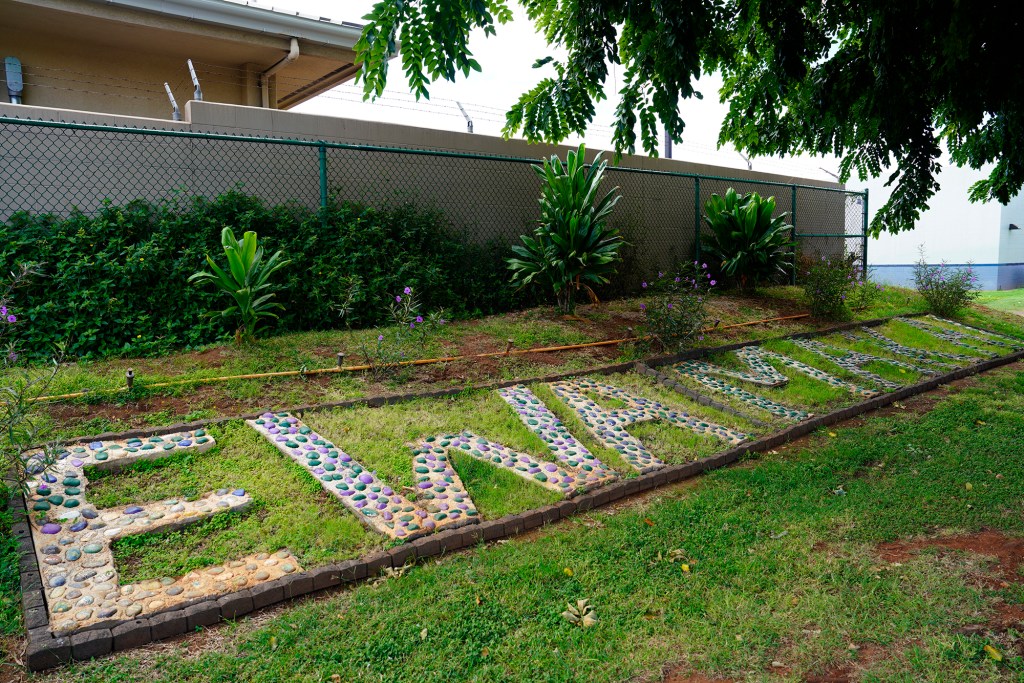
In early September, a video of two Ewa Makai Middle School students fighting off-campus circulated on social media. But the fight had happened nearly a month prior, said Principal Corey Barton, and the school had offered mediation to the students involved.
The families were able to address the conflict on their own, Barton said, and the video unnecessarily resurfaced the fight after the students had found a resolution. The school successfully got the video removed, he said, and sent a letter home asking families to talk to their children about the importance of finding an adult to intervene in fights, rather than being a bystander.
“I think we all have a responsibility to act in a responsible way,” Barton said. “In sharing these things, it’s not a responsible solution.”
Finding Solutions
At Ewa Makai, educators put a strong emphasis on teaching kids empathy and social development to address and prevent bullying, Barton said.
Students spend an hour every day in an advisory period, which includes activities helping kids practice communication and decision-making skills, Barton said. The campus prohibits cellphones during the day so students can focus on classes, he said. Teachers also hold discussions about how teens should use social media responsibly and shouldn’t film fights or incidents of bullying.
“Middle school is a great age, but it’s also an age where it can be difficult for students,” Barton said.
Other campuses have adopted similar policies about personal devices amid concerns that cellphones contribute to bullying. In a DOE survey published earlier this year, only 13% of families said they believed cellphones haven’t contributed to bullying at their children’s schools.

Most Hawaiʻi schools have policies regarding cellphone use, according to the survey, although guidelines vary by campus.
While Washington Middle bans cellphones during the school day, Harano knows it’s not a perfect solution to prevent bullying or online fights that often take place off-campus. The school asks parents to monitor their kids’ online chats and social media and encourages kids to talk to trusted adults when they’re feeling upset, rather than taking their frustrations online, he said.
But it’s sometimes hard for the message to stick once kids leave school and see what’s on social media, Harano said.
Middle schoolers have a lot of independence and free time outside of class, Cho said, since they don’t have the same after-school programs or organized sports and clubs available to students of other ages. YMCA’s programs try to fill the gap by providing students with activities and a safe space outside of school with adult supervision, he said, adding that staff members can monitor kids’ cellphone time and talk to teens about appropriate behavior toward their classmates.
Families should also play a larger role by continuing school anti-bullying campaigns at home and understanding how their kids are feeling at school, said Deborah Bond-Upson, president of Parents for Public Schools Hawaiʻi and interim director of the Hui for Excellence in Education Coalition.

For example, she said, it would be helpful for schools to give parents more guidance about monitoring kids’ presence online and understanding the lessons their children receive about bullying and empathy.
One bill introduced last session would have required DOE to share its anti-bullying procedures with students and parents, but the measure failed as the department argued that families already receive this information. The bill, however, received strong support from the teachers’ union and other community organizations, which said parents would like more information and transparency about how schools respond to bullying, especially when their kids are involved.
“Whatever we do in school, we really need family engagement to make it happen,” Bond-Upson said. “We need to not undo what’s done in school.”
Civil Beat’s education reporting is supported by a grant from Chamberlin Family Philanthropy.

