

Honolulu Could Become The First US City Where Food Is A Human Right
Among dozens of proposed amendments that the Charter Commission will consider putting on the ballot next fall is one underscoring a basic need: to eat.
As many of us sit down to a Thanksgiving feast, some Oʻahu residents are pondering this question: Is food a human right?
It’s a question advocates hope will move from dining room tables to the ballot this time next year based on a proposal among the 276 that have been submitted to the Honolulu Charter Commission — 10% of which touch on agriculture and food access.
If voters were to ultimately answer yes, Honolulu would be the first city in the nation to do so, following the lead of Maine. Advocates view it as an important step toward fixing a long list of problems in the island’s food system that contribute to household food insecurity.

Public review period of the proposals begins in December as part of the monthslong charter amendment process.
Food and agriculture-related submissions to the commission covered everything from increasing the city’s control of invasive species to establishing 100 more acres of community gardens around the island. All support the goal of increasing — or addressing a lack of — agricultural productivity and food security in a state where 1 in 4 households struggle to buy food and almost 10% of the population receives federal food assistance.
“It seems kind of obvious: We all need to eat. Let’s put it on paper.”
Kima Wassel Hardy, community organizer and urban agroecologist
That’s where proponents say codifying a right to food could help nations and government bodies ensure residents have unrestricted access to sufficient nutritious food. It is a globally accepted concept acknowledged by almost 190 countries – but not the United States – under the Universal Declaration on Human Rights.
“It seems kind of obvious: We all need to eat,” said Kima Wassel Hardy, the first to submit the proposal to the charter commission. “Let’s put it on paper.”
The proposals were delivered before the Nov. 7 deadline, when the federal government was in the final throes of a 43-day shutdown that threatened key food subsidy programs, leading the state to step in with emergency funding. Now even as federal services resume, anti-hunger advocates are raisin gconcerns over new work requirements for food stamp beneficiaries and food banks are contending with increased demand and reduced federal support.
On Oʻahu, momentum appears to be building as the county works on its own dedicated food systems plan. Mayor Rick Blangiardi is spearheading a public food project — which includes planting fruit and food trees in public — and the county has staff dedicated to developing the food system.
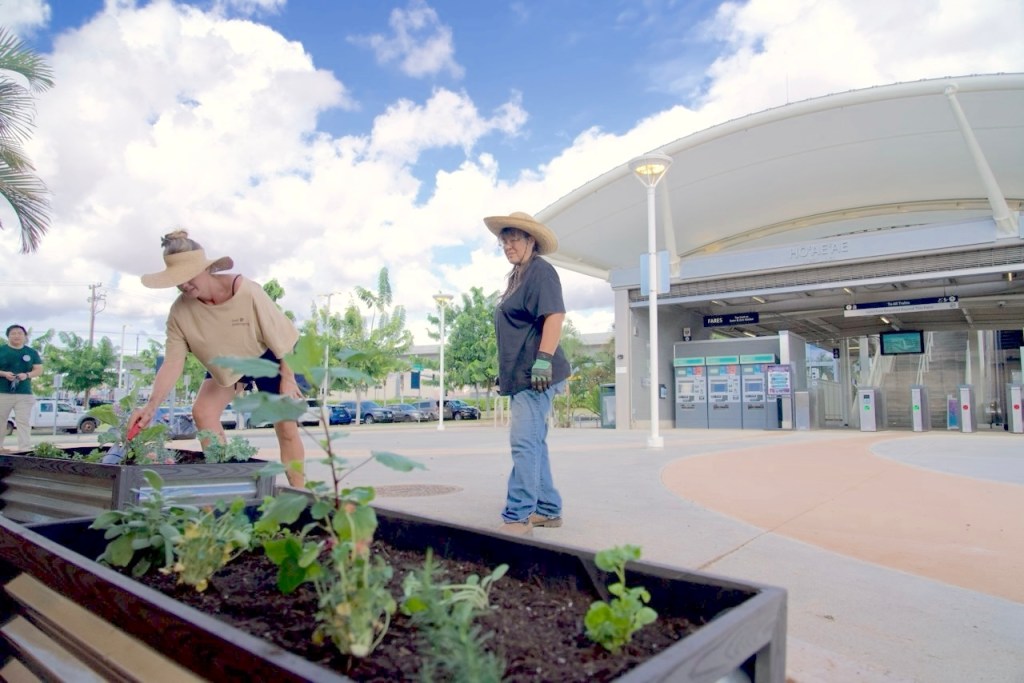
Adding the “right to food” into the city charter could influence all city policies going forward, which Wassel Hardy said she believes would build on local momentum as the federal government pulls funding not just for food banks and food subsidy programs but for farming. Approximately $175 million in federal grant funding for farming and local food has been cut from the state, according to Agriculture Stewardship Hawaiʻi.
“We need to state the obvious right now because the systems that we relied on are being eroded very actively,” said Wassel Hardy, a community organizer and urban agroecologist.
Equal Opportunities To Eat
The “right to food” concept can have myriad applications with a singular goal: to promise everyone unrestricted and lifelong access to sufficient nutritious, culturally appropriate and affordable food.
For Honolulu, the proposed amendment would enshrine the right alongside the county’s mandate to serve the “general welfare, safety and aspirations of its inhabitants.”
The idea has been a step too far for the U.S. which joined Israel as the only two countries to vote against acknowledging the right during the 2021 United Nations General Assembly. That same year, Maine voters were the first in the U.S. to add the concept to their state constitution, kickstarting a movement for others, including West Virginia, Washington, Iowa, California and New York.
“It’s not the ‘right to be fed’ or that it’s the government’s responsibility to feed people,” said Subhashni Raj of the University of Hawaiʻi’s Department of Urban and Regional Planning. “What it means is that governments are charged with enabling environments that are fair and give everyone equal opportunities.”
A Chicken For Every Pot?
How that right is applied varies widely. For Maine, the constitutional right to food evolved into a new law enacted this year, which promotes community food production — including in public spaces — while ensuring no one is blocked from growing their own food.
Writing in the proposed amendment won’t “mean that the next day there’s a chicken in every pot,” said Alison Cohen, director of the National Right to Food Community of Practice. Instead, Cohen, whose organization helps advocacy groups implement the right, said enshrining such language in Honolulu’s charter would be just the start of a long, four-year slog akin to Maine’s.
The whole notion could be complicated — as Maine has found — because Honolulu is a city within a state, within a federal system, containing what Raj described as layers upon layers of regulation.
In Britain, city governments are increasingly adopting the right to food despite a lack of national policies. Durham University academic Katie Morris argues in a journal article that cities can have greater impacts because local governments are on the frontlines of their own unique food security problems.
“People don’t often engage with the idea of rights,” Morris told Civil Beat. “But they certainly do want to have food on their plates every day.”
Systemic issues such as the rising cost of living are harder to tackle at a local level. But the groundswell of support for the right to food trickles up, which Morris said she believes influenced Britain’s recent decision to scrap a two-child cap on family welfare payments.
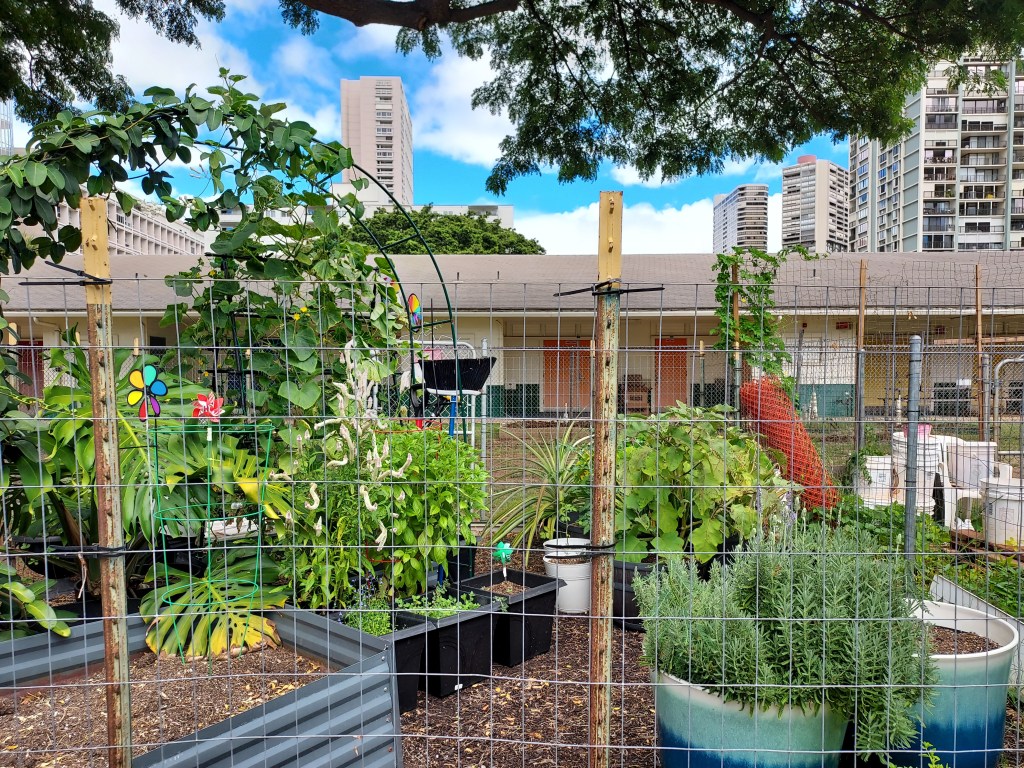
Acknowledging the right in Honolulu could mean the city and county helps make sure healthy food is readily available and affordable on parts of the island that fall short, such as Waiʻanae, or increases the number of community food gardens, which have a waitlists hundreds of people long.
Unless the state or city acts — or the people act — “it will just stay there in writing,” Cohen said. “It’s not a silver bullet. But it is critically important.”
Planning, To Feed People
Food systems professor Albie Miles of UH West Oʻahu says it could have tangible results for the island, buttressed by the state’s ongoing efforts to boost the agricultural economy.
“The food system is about feeding people,” Miles said. “It’s not about exporting mac nuts to the mainland and saying ‘It’s done.’”
How exactly a charter amendment would affect the county’s future work is less clear.
Even though the proposed amendment overlaps with the county’s development of an Oʻahu Food Systems Plan, its Food Security and Sustainability Program manager said he couldn’t say whether he supported the right to food proposal. A draft of the county’s plan, Jason Shon said, should be made public early next year.
The Honolulu Charter Commission will spend the rest of November processing proposals from the public, with public review and meetings taking place from December until April. Final amendment proposals will be chosen in May, and appear on ballots in the November 2026 general election.
Civil Beat’s reporting on economic inequality is supported by the Hawaiʻi Community Foundation as part of its work to build equity for all through the CHANGE Framework; and by the Cooke Foundation. “Hawai‘i Grown” is funded in part by grants from the Stupski Foundation, Ulupono Fund at the Hawai‘i Community Foundation and the Frost Family Foundation.

