Lawsuit Claims ‘Negligence’ Led To Fatal Stabbing Of State Hospital Nurse
Family claims administrators at Hawaiʻi’s only public psychiatric hospital failed to institute basic safety protocols to prevent the death of Justin Bautista by a patient.
The stabbing death of a staff nurse in 2023 was not the “unanticipated and unprovoked incident” described by Hawaiʻi State Hospital leaders at the time, but the result of chronic safety failures at the institution, according to a lawsuit filed earlier this month by the nurse’s family.
Hospital leaders ignored multiple warning signs, chronic overcapacity and staffing issues, and failed to put basic measures in place to prevent a patient with a violent past from obtaining the knife he used to kill nurse Justin Bautista, the lawsuit says.
The patient, Tommy Carvalho, was housed in an unsecured unit despite having previously pleaded guilty to assaulting a state hospital worker. He was free to come and go from the hospital grounds unsupervised — even after he failed a drug test — and nothing was done to make sure that he didn’t have a weapon when he returned to the unit on the day of the stabbing.
“The murder of Justin was not an isolated or unforeseeable event but the tragic culmination of a systemic failure by state officials to address long-standing and publicly recognized risks to the safety of hospital employees and patients alike,” the lawsuit states.
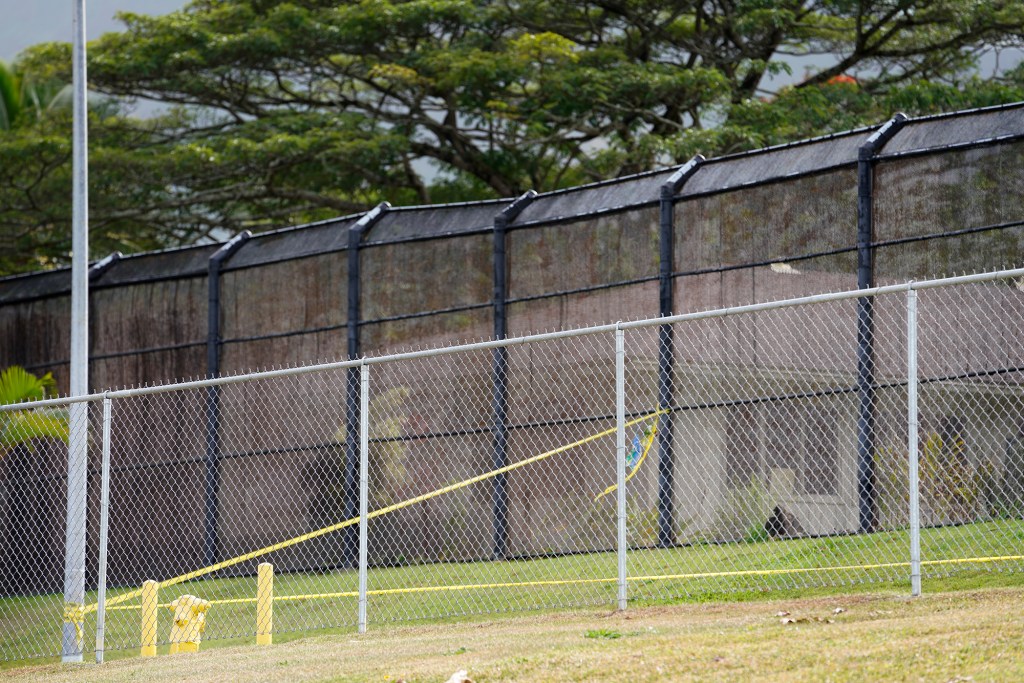
Following the death, the hospital increased security patrols in the unsecured unit and started searching patients when they return from unsupervised trips off hospital grounds. But other safety concerns remain.
Dangerously overcrowded at the time of Bautista’s death, the hospital has even more patients today. Late last month, the state’s occupational safety division fined the hospital just over $14,000 for failing to adequately protect workers from violent patients, although the hospital was able to get the fine reversed by arguing that it has better implemented safety policies since the state investigation took place.
Assaults on staff appear to have grown considerably in the last two years. Hospital staff reported more than 320 assaults between July 2024 and September 2025, averaging about 21 a month.
Policies Questioned By Staff, Safety Officials
Hawaiʻi State Hospital houses patients with mental illness who are sent to the facility by a court. Many have complex mental health conditions and substance use issues. Some are aggressive or at risk of self harm. The vast majority of assaults on staff are committed by a handful of patients, according to a 2024 report to the Legislature from the state Department of Health.
In the year Bautista was killed, staff were assaulted 119 times, according to the Department of Health. Last July, the state hospital changed how it counts assaults to include any contact between a patient and a staff member regardless of injury, making direct year-over-year comparison impossible. So far this year, there have been 223 assaults.
Assaults on staff reached a peak in January, with 31 reported in a single month. No injuries have required medical attention since June 2024, according to Department of Health spokesperson Adam LeFebvre.
“While staff safety is a priority and efforts are continually made to reduce patient-on-staff assaults, some incidents do occur, similar to all psychiatric hospitals throughout the country,” LeFebvre told Civil Beat in an email.
HSH’s rate of aggressive patient attacks on staff is also relatively low compared to other hospitals in the Western U.S., LeFebrve said.

In June, a hospital employee filed a workplace safety complaint alleging that the institution’s policies failed to adequately protect staff. In particular, hospital employees were instructed not to use restraints when transporting patients who could be violent or at risk of harming themselves and were discouraged from instituting one-on-one monitoring of these high-risk patients, according to a copy of the complaint obtained by Civil Beat through an open records request.
The hospital also failed to properly document some assaults on staff, the complaint further alleged. In one incident cited, a patient attacked multiple staff members over the course of two days. In another, a psychiatric technician was punched in the jaw while giving a patient a shot, leading to a finger sprain that landed the staff member at an urgent care clinic. Those incidents occurred this May, during the period when the health department spokesperson said there had been no injuries resulting in requiring medical care.
The documents obtained by Civil Beat do not identify who filed that complaint.
State workplace safety investigators concluded in October that the state hospital was in serious violation of workplace safety laws.
“Medical ward employees were exposed to the hazard of physical assaults, such as being bitten, punched, struck with an object, or kicked by clients exhibiting violent behavior during medical evaluations, medical examinations and transportation,” according to the notice of violation obtained by Civil Beat through an open records request.
That was the violation that led to a $14,187 fine. Hospital leadership told workplace safety officials that at the time of the inspection, those policies around seclusion and restraint were being revised. These new policies, rolled out in October, call for minimal reliance on restraints, restricting their use to “an emergency intervention only.”
“Some employees experienced confusion regarding which version of the policies to follow,” reads a settlement agreement effectively reversing the violation. The violation was downgraded to “other than serious” and the monetary penalty dropped about three weeks after it was issued.
The Department of Health, which oversees the state hospital, did not respond to requests for comment about the workplace safety investigation or the lawsuit brought by Bautista’s family.
The workplace safety agency will continue to monitor the hospital to ensure it is “effectively reducing the risk of injury to employees,” wrote Chavonnie Ramos, the press officer for the Department of Labor and Industrial Relations, in an email to Civil Beat.
Crescendo Of ‘Institutional Negligence’
Safety concerns at the hospital stretch back decades, but the death of a staff member marked a turning point.
In Nov. 2023, Justin Bautista worked as a nurse in the State Operated Specialized Residential Program, a transitional group home located on the hospital grounds outside the main locked-down building. Some patients move into these less secure cottages as they near the end of their time at the state hospital, a step meant to facilitate their reintegration into the community. At the time, patients living in the transitional cottages were allowed to leave the hospital grounds unsupervised with few security protocols.
One of those patients was Carvalho.

On the afternoon of Nov. 13, Bautista was working in the medication room when Carvalho entered the room and stabbed the nurse with a knife he had obtained when he left hospital grounds earlier that day, according to the lawsuit.
The lawyers representing Bautista’s family argue that overcrowding drove state hospital officials to move patients with significant behavioral issues to these transitional units with lower security to open up space in the more secure units.
Carvalho, the lawyers argue, should not have been moved. He had been in the state hospital four times before, and had pleaded guilty to assaulting a state hospital employee three years earlier.
“We think he was moved a little bit too quickly to transitional housing to accommodate bed space,” Sean Fitzsimmons, one of the attorneys representing Bautista’s family, told Civil Beat.
The hospital is licensed to hold 297 patients. At the time of Bautista’s death, it had about 325 patients, according to the complaint. This September, there were 379.
The lawsuit also alleges that Carvalho was not searched when he returned to the hospital grounds after an unsupervised trip off-site. None of the roughly 20 security guards on staff were assigned specifically to the transitional housing units, according to the complaint.
After Bautista’s death, the Department of Health recommended the state hospital take a number of steps to improve safety, including creating an assistant administrator position to oversee security and forming a rapid response team with additional training to subdue a patient during a violent incident.
The state hospital also changed the staff-to-patient ratio in the transitional unit from 1:5 to 1:3 and increased security patrols around those cottages. Hospital staff started searching patients returning from unsupervised excursions with a pat down, a metal detector wand and a urine drug test.
State workplace safety investigators also launched a probe into the stabbing but closed the inquiry last year without issuing a violation, concluding that the circumstances “were unforeseeable.”
Lawyers for Bautista’s family disagree. His death, Fitzsimmons said, “unfortunately was the culmination, the crescendo of this institutional negligence. Things were getting worse and worse and worse and worse until the point where a murder occurred.”
Carvalho is facing a second-degree murder charge and is being held at the Oʻahu Community Correctional Center while efforts to determine whether he is competent to stand trial continue.