Maui Church Makes Space Amid Pews To House Fire Recovery Volunteers
The cost of renting a place to stay has been prohibitively expensive for some who want to come help the island rebuild. Now, there’s a new option.
When wildfires devastated Maui in 2023, Elder John Toillion of Mililani Presbyterian Church on Oʻahu knew he wanted to contribute to the island’s recovery.
“But even pre-disaster, there was already a shortage of available housing,” he said. “And the expense of individually finding rooms to rent is enormous.”
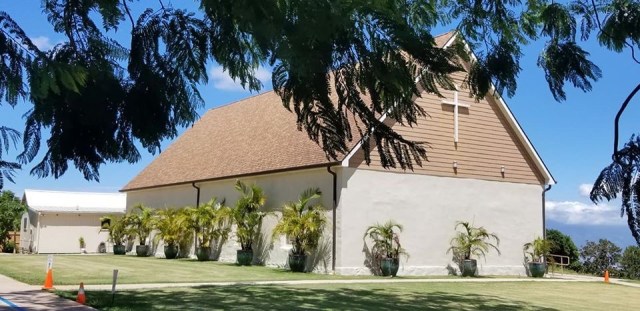
Last week, Toillion was finally able to bring a small team of volunteers to the Valley Isle. They were the first to stay at Po‘okela Church in Makawao while volunteering to help Maui’s long-term recovery effort. Rev. Dr. Kimberly Fong invited the group to stay there at a very low cost, and they have been offering feedback that will help her prepare to host larger volunteer groups in the future, she said.

Significant work remains to be done more than two years after fires razed most of Lahaina, destroyed at least 19 homes in Kula and scorched 6,700 acres across the island on that deadly day in August 2023. The fires caused an estimated $5.5 billion in damage, and while much has been cleaned up, not a lot has been rebuilt.
Fong, who has lived in Upcountry Maui for more than 20 years, said she focused on providing relief for survivors in the disaster’s immediate aftermath but wanted to find a way to help her community’s long-term recovery.

“We had this vision of helping long-term recovery groups by hosting people who want to help. We talked to our congregation, and we voted to make this site available,” Fong said. “In these difficult times, we have to step up and shine the light of compassion and care and empathy.”
Fong said she and other church leaders spent more than a year preparing the church to house up to 22 volunteers at a time and meet the requirements so that it could be certified by the national Presbyterian Disaster Assistance organization as an official volunteer hosting site. She had to ensure volunteers would have access to showers and bathrooms, and she coordinated with local nonprofits like Kula Community Watershed Alliance and Mālama Kula to help visiting groups determine where their help would be most beneficial.
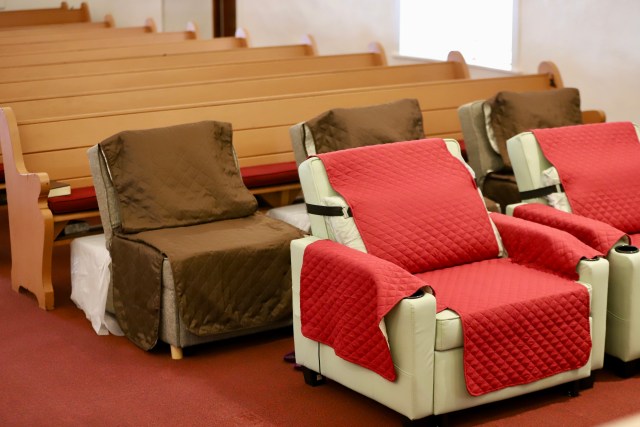
The church purchased several recliners and set them up wherever there was extra space — pastoral offices, storage rooms, hallways — so volunteers would have a place to sleep, Fong said. They even replaced the first two rows of pews in the church’s main worship area with a dozen recliners.
“We had to convince the congregation to give up those two pews in front. But we know people are very attached to the pews, so they are right over there,” she said, smiling and pointing to a pair of wooden pews in the back of the church.

Not all of the changes have been easy for congregants and others who utilize the church property, but Fong said church leaders tried their best to make sure that no one felt like they were sacrificing too much.
An Alcoholics Anonymous group has been meeting in the church for decades. To continue accommodating that group, the church installed a $10,000 tent outside and portable restroom so it could host meetings there.
Even though the AA chapter’s leaders have been supportive, Fong said that she only intends to host one or two volunteer groups per month so that group can still occasionally meet inside the church.
Stepping Up
Volunteers gathered around a table near the kitchen at Po’okela Church just after 8:30 a.m. on Thursday morning before heading outside to load up their rental car and make the roughly 20-minute drive to an area of Kula heavily impacted the 2023 wildfire.

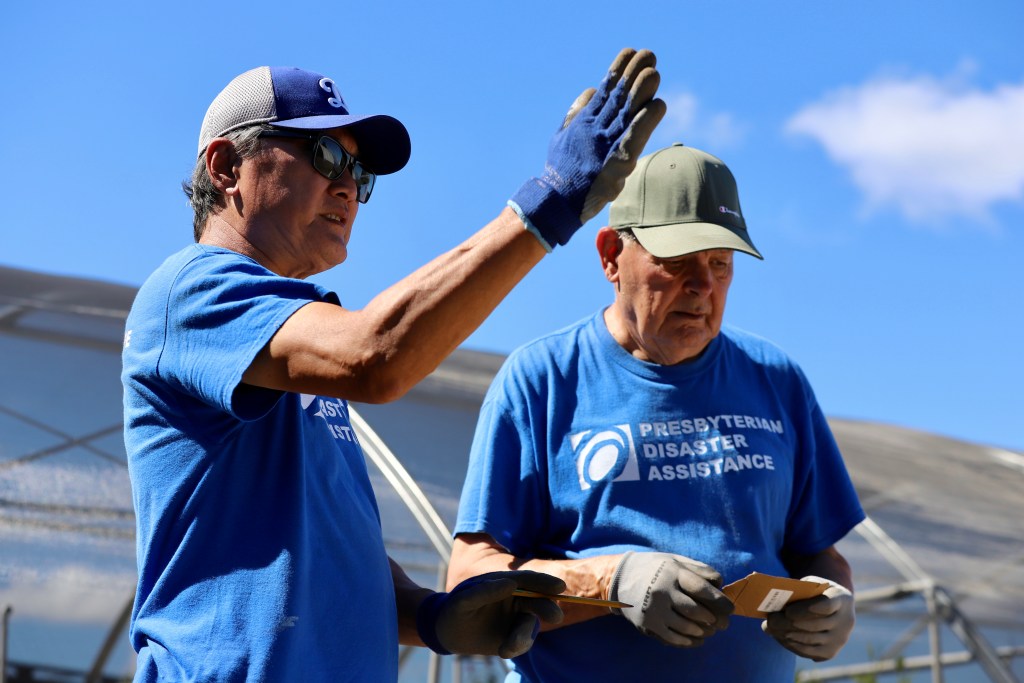
The group spent the day volunteering with Kula Community Watershed Alliance, helping to build an irrigation system for two greenhouses where the nonprofit has been growing native plants that are intended to eventually replace some of the invasive species that fueled the blaze.
The alliance has not historically relied on off-island volunteers because the group’s leadership believes in encouraging locals to volunteer regularly so they feel like they play an important role in helping their community heal, according to Sara Tekula, the organization’s executive director.
“We appreciate that Po‘okela has stepped up and helped Kula right from the beginning, and they have come out multiple times to support us,” Tekula said. “So to me, this is a match for us: building relationships, not just having volunteers who pass through.”
The volunteers from Oʻahu arrived on Maui on Sunday, and by Thursday, they had accomplished quite a lot, said Dave Albright, the organization’s president. It was their third day working with the alliance — they’d spent Wednesday volunteering with Habitat For Humanity in Lahaina — and they’d already built a utility sink, cut and measured dozens of PVC pipes that could be used to build a sprinkler system and began running water lines on rods placed above the plants in the greenhouse.
“The work they are doing is really huge. You can’t really hire a contractor to come in and do this kind of work, because that could be very, very expensive,” he said. “I can’t do it all by myself. As I’m getting older, I’m finding that’s not very easy anymore, so having groups like the Presbyterian Church groups come in and help us move these things along has been phenomenal. Because of their work, we’re going to be able to water and keep thousands of plants.”
Just before noon, Mitzi Marter and Michelle Emerson were using pick axes and shovels to dig a shallow trench where they planned to later bury a hose that could be used to carry water to one of the greenhouses.
Having grown up in Northern California, Marter understood the devastation that wildfires could cause. Still, the amount of loss that Maui experienced in 2023 was staggering, she said.
“It’s meant a lot to be here,” Marter said as she used the side of a pick axe to pull loose dirt out of the trench. “I always loved volunteering, but I haven’t always been able to do it as much as I like to. … So when I heard what happened in Lahaina, of course I — and I think everybody— wanted to help.”
Toillion said volunteering has been an important part of his life for more than 30 years, since he retired from the military. He has traveled all over the country to help communities recover from wildfires, floods, hurricanes, tornadoes and other disasters, but nothing affected him quite like the Maui fires in 2023.
“It brought all the work that I had been doing home,” he said.
Civil Beat’s coverage of Maui County is supported in part by a grant from the Nuestro Futuro Foundation. Civil Beat’s coverage of environmental issues on Maui is supported by grants from the Center for Disaster Philanthropy and the Hawai‘i Wildfires Recovery Fund and the Doris Duke Foundation.