

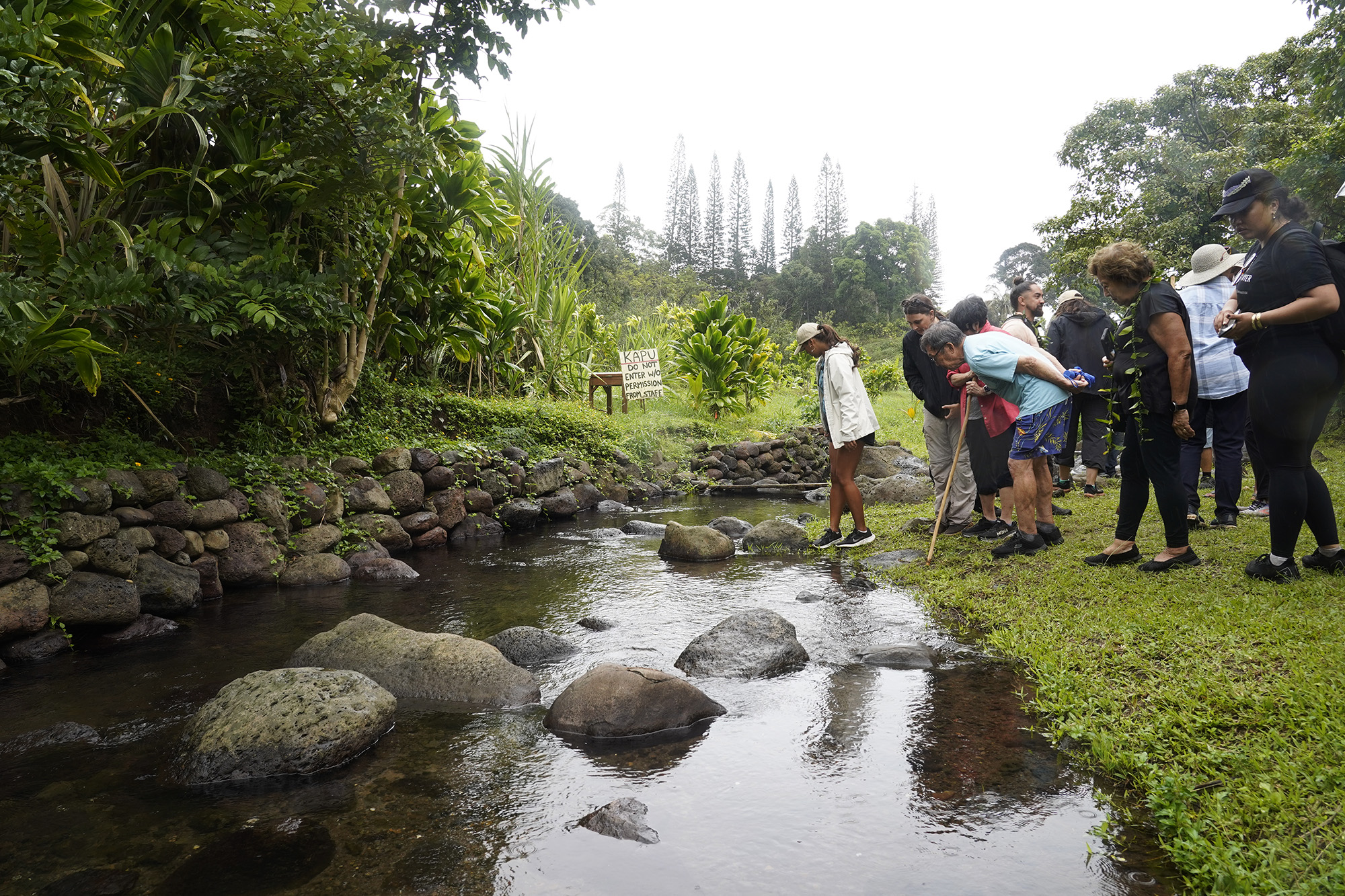
Following almost 25 years of restoration work, volunteers will make their final push next month to complete the last section of Heʻeia fishpond as part of reviving an 800-year-old aquaculture system that once fed the Windward community with hundreds of thousands of pounds of fish.
While the 1.3-mile rock seawall is expected to be finished, a critical piece is still lacking. Native Hawaiian and scientific research groups say there is not enough fresh water from Heʻeia Stream flowing into the coastal pond to create the brackish environment necessary to fully restore it.

The organizations are calling on the state and City and County of Honolulu to look into the stream diversions made in 1940 and bring back more fresh water to the pond. That would help the nonprofits quell the effects of climate change while restoring ecological balance in the watershed and produce more food for the community using the ahupuaʻa system, or traditional land management practice.
The 88-acre Heʻeia pond, contained by a curving rocky seawall, sits at the foot of a valley north of Kāneʻohe that was once considered among Oʻahu’s most agriculturally productive areas. But without fresh water, or wai in the Hawaiian language, the restoration work will stall, advocates say.
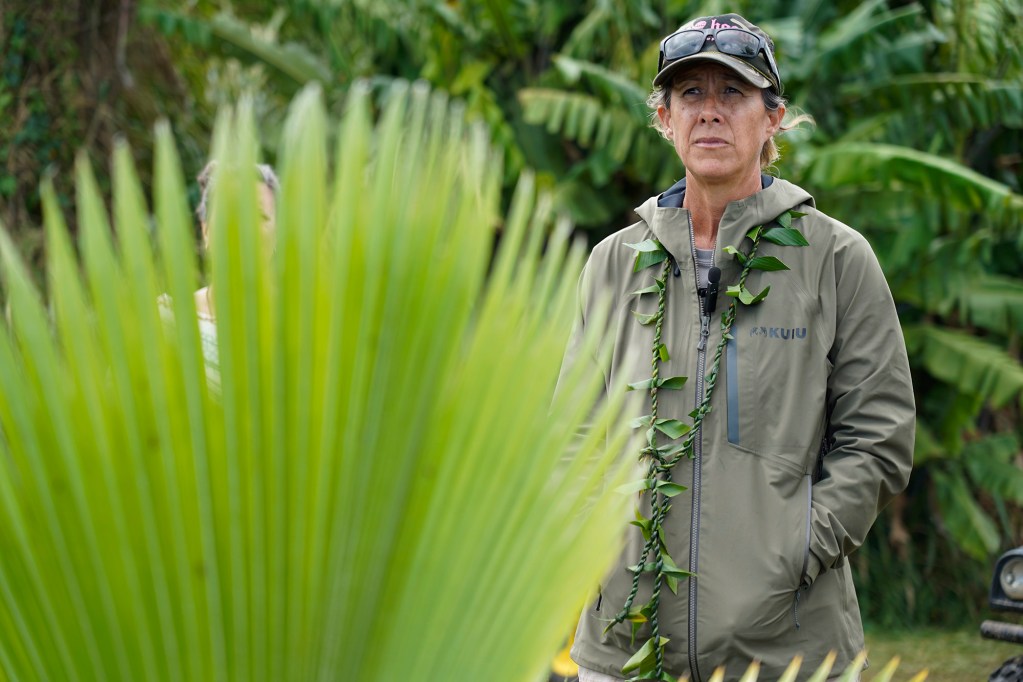
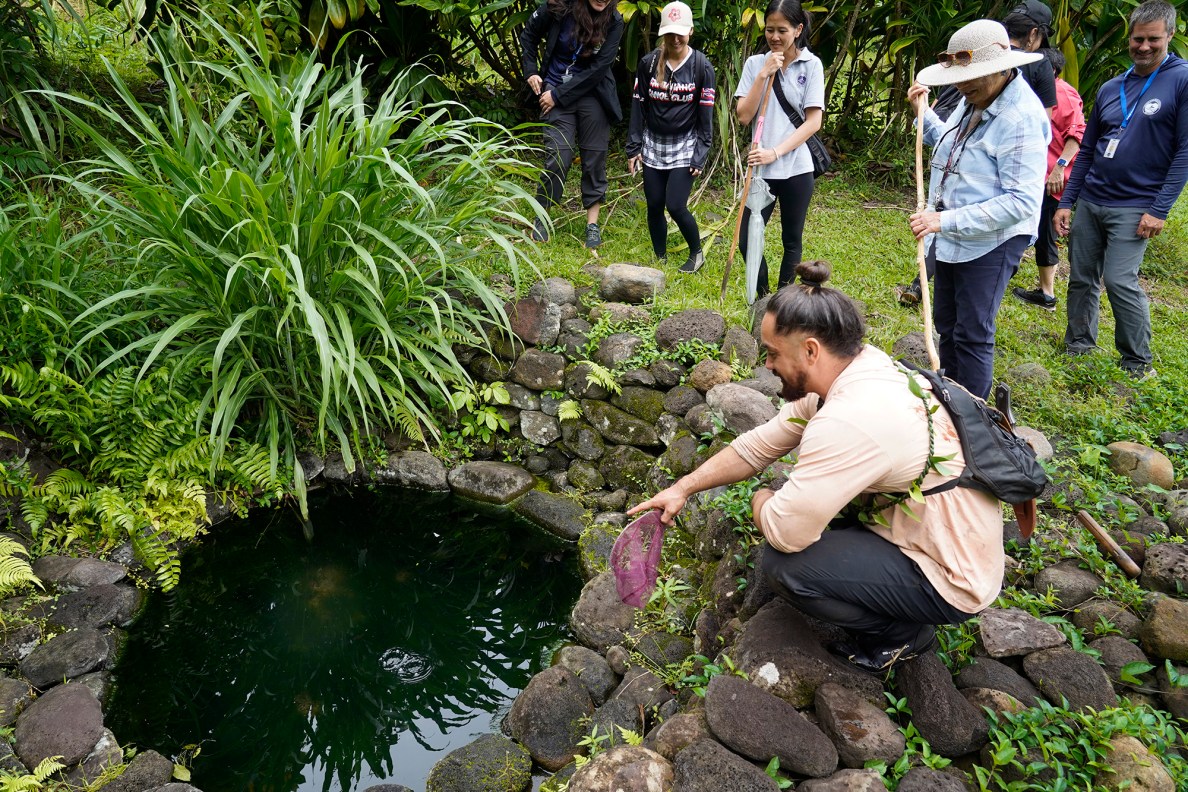
“It has become apparent to us the fish aren’t here, or enough fish aren’t here, to feed the community because there’s not enough wai to feed the system,” Hi‘ilei Kawelo, Paepae o He‘eia executive director, told government officials last week during an official site visit.
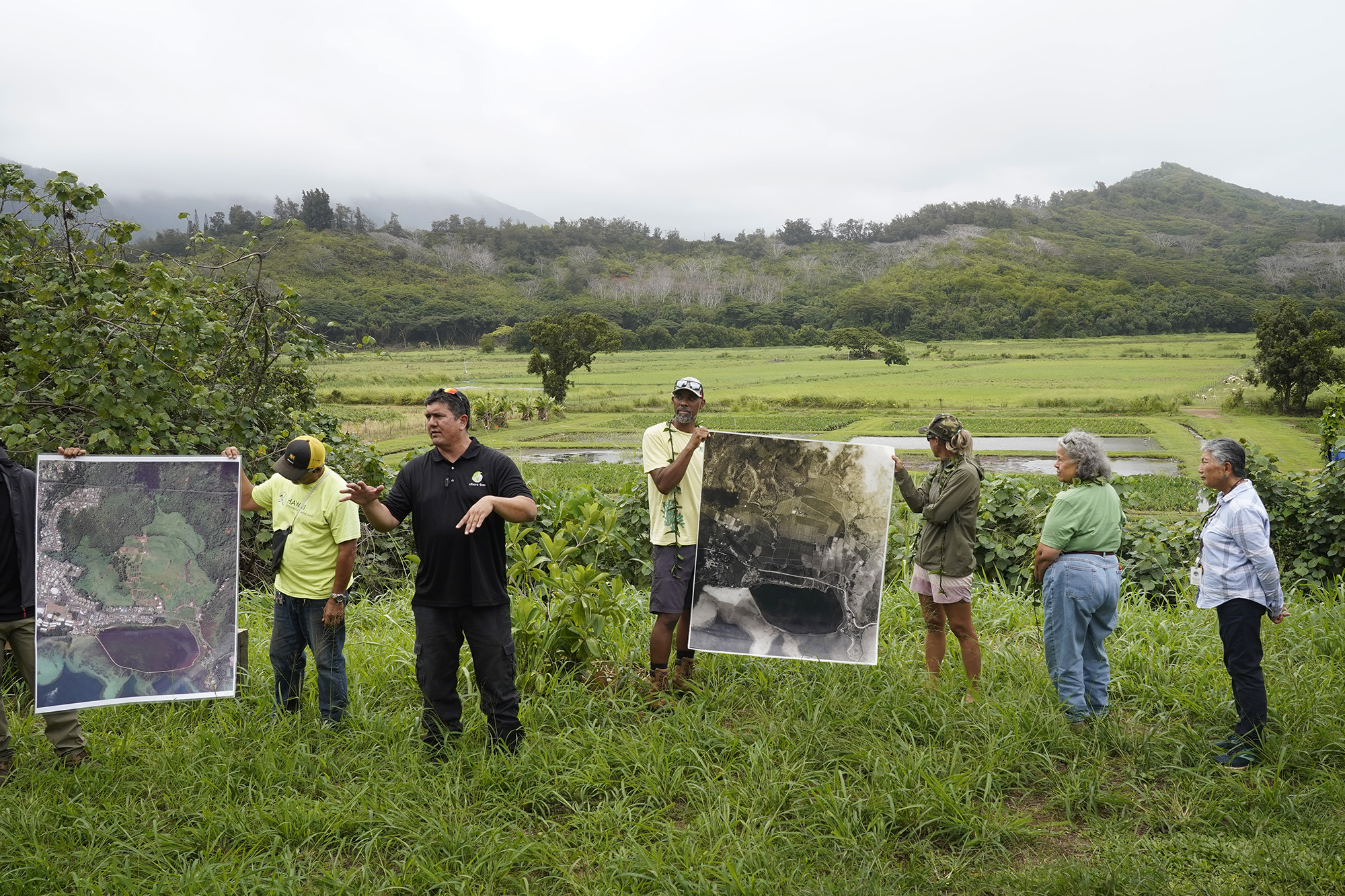
Kawelo and other nonprofit leaders hosted the Commission on Water Resource Management and Honolulu Board of Water Supply during a meeting on Monday to illustrate how the ailing streamflow has hamstrung their restoration efforts.
The pond and surrounding coastal area are of national importance, part of the National Estuarine Research Reserve System, one of 30 sites designated for protection and research nationwide.


Brackish
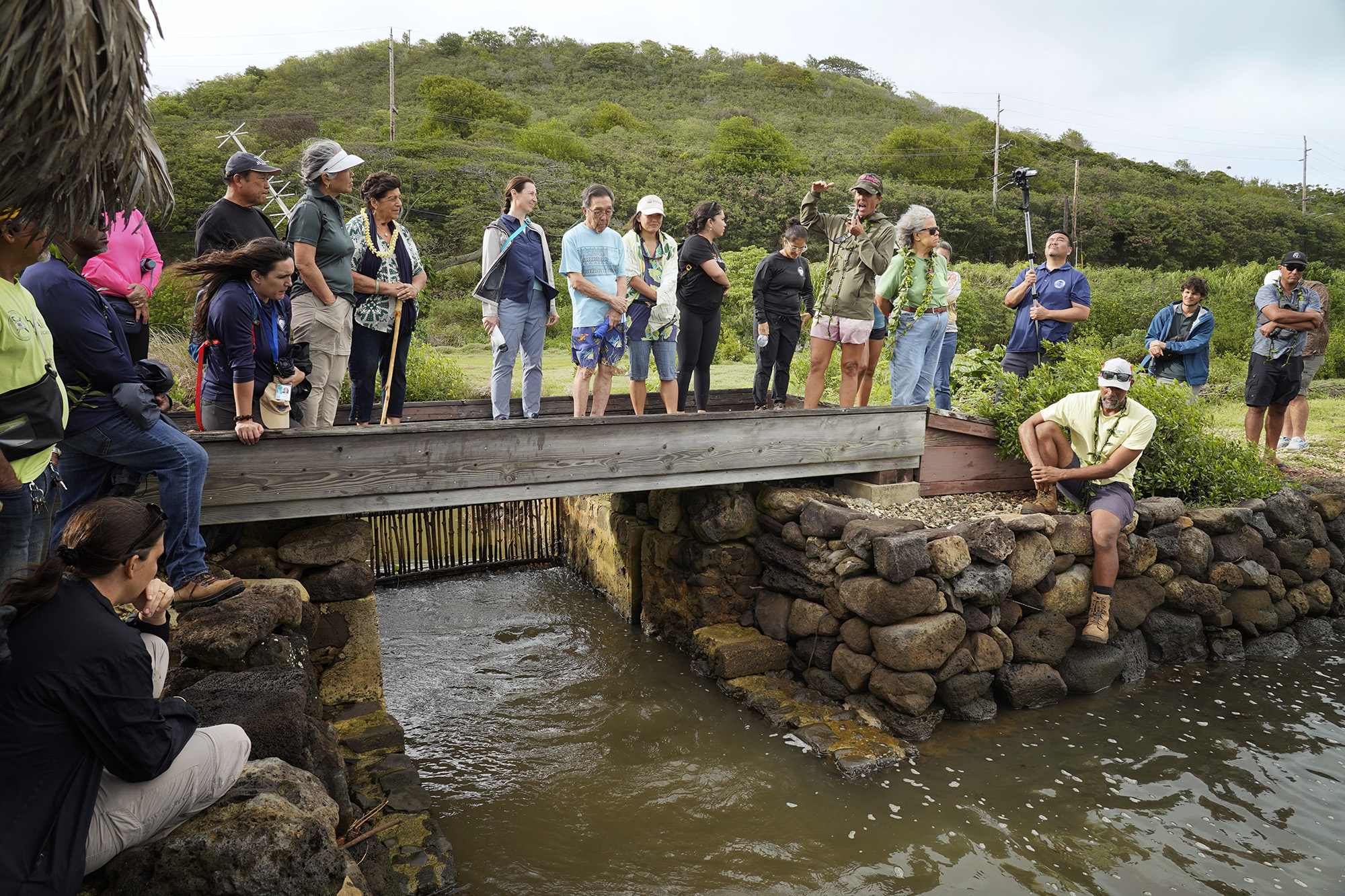
The ahupuaʻa system relies on the stream to maintain an ecological harmony from the mountains to the sea, where the confluence of fresh water and salt water helps form the foundation of the pond’s food chain that grows fish like ʻamaʻama and awa, mullet and milkfish.
The resulting brackish water incubates phytoplankton, which triggers blooms of algae that feed the herbivorous fishes which enter the ponds while young.
Maintaining the right ratio of fresh water to salt water is essential. It’s currently fluctuating between 27 and 32 parts per thousand, depending on the location in the pond, according to Kawelo. She said the optimum range would be in the high teens or low 20s.
“It has to be the secret sauce,” she said, “the right amount of fresh water to produce the right amount of phytoplankton.”

Pockets of the pond have created the right conditions but the whole pond should be like that, estuarine research reserve director Kawika Winter said.
“A lot of people don’t realize we need fresh water in our ponds,” he said. “It’s not just a wall in the reef.”
There were more than 480 fishponds prior to western contact, according to researchers’ best estimates, producing more than 2 million pounds of fish annually. A U.S. government survey in 1900 estimated production was just over 680,000 pounds of fish from the 99 ponds still active statewide at the time.
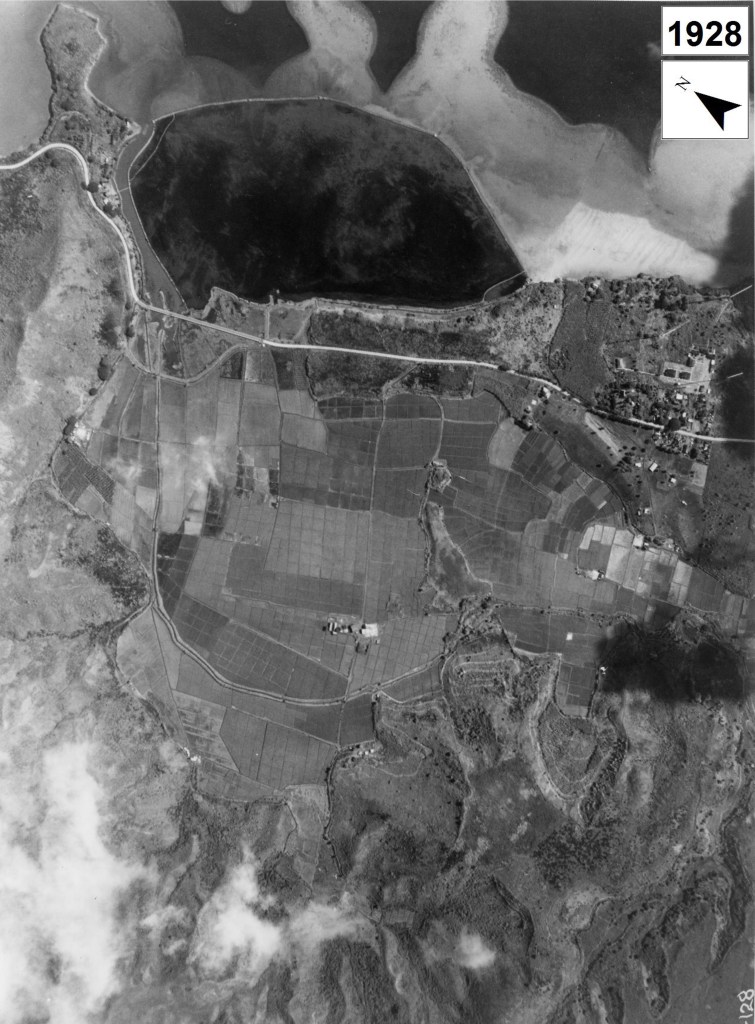
Most have since fallen into disrepair, though groups such as Paepae o He‘eia and others are reviving the practice amid calls for greater in-state food production and climate change resilience, among other other things.
More fresh water, Kawelo says, will help cool coastal waters as well as produce more fish. And inland loʻi kalo, or taro patches, can stem the tide of sediment during extreme weather.
Papahana Kuaola and Kākoʻo ʻŌiwi, partner Native Hawaiian nonprofits, oversee inland facets of the watershed restoration efforts and hope the state will help restore streamflow.
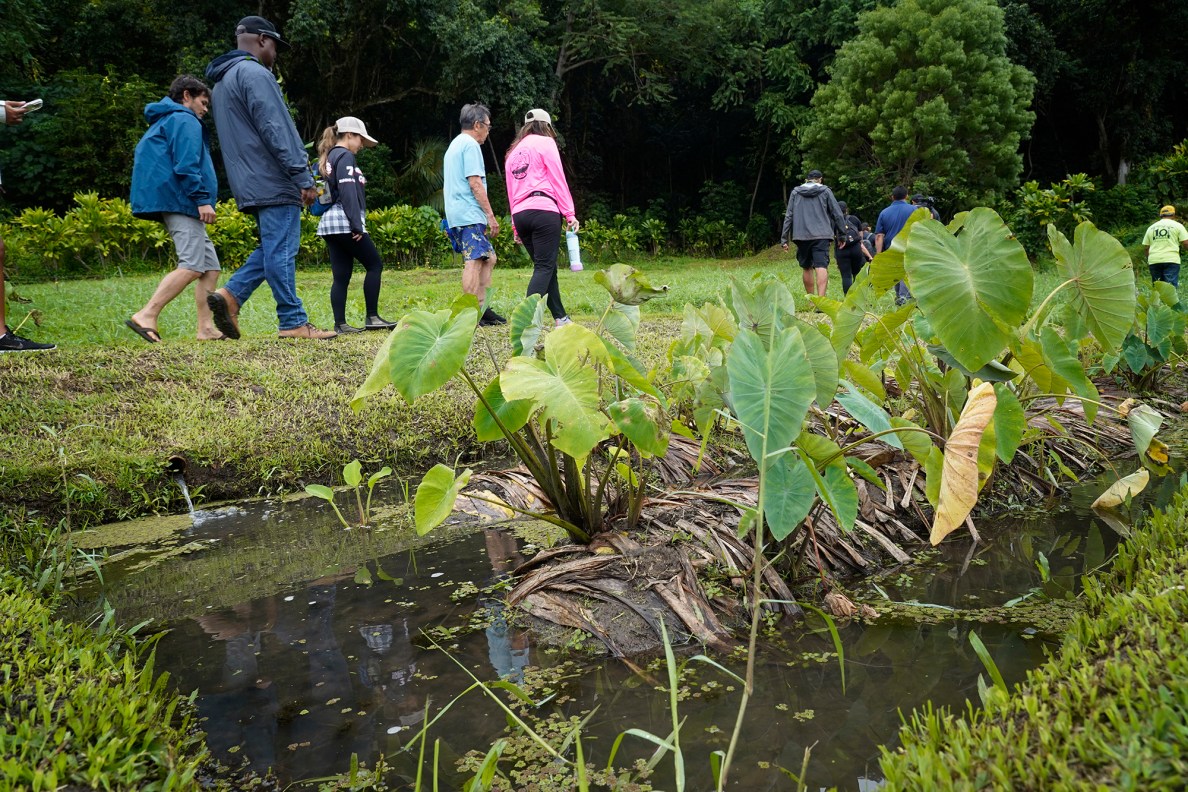
For Kākoʻo ʻŌiwi, which manages about 400 acres of wetlands, more fresh water means more kalo to feed the community. Those patches — which once covered 290 acres of the ahupuaʻa — are also key nesting sites for native and endangered waterbirds, such the ʻalae ʻula, or Hawaiian gallinule.
The organization is only able to cultivate about 15 acres of kalo, including 9 acres of wetland kalo, due to insufficient water, executive director Jonathan Kanekoa Kukea-Shultz said. Another 150 acres could be farmed if there were more water, he added.
“Oʻahu can actually feed itself,” Kukea-Shultz said. “But we can’t do it with lacking water.”
Restoring Flow

The source of Heʻeia Stream and Windward communities’ drinking water is a key concern for the state, county and the nonprofit restoring the ahupuaʻa.
Both are fed by naturally formed water storage ducts within the mountains, called dikes, which were diverted and drained when the county dug Haʻikū Tunnel in 1940 to irrigate thirsty sugarcane plantations before diverting it to serve Windward water customers.
Those customers included the Marine Corps Base and its golf course in Kāneʻohe, along with three other Windward courses, together accounting for just over 1.9 million daily gallons of water demand in 2021.
In the 1940s, the water diversion resulted in an approximately 1.4 million gallon-per-day drop in flow towards the stream head, according to federal water gauges.
Water is held in the public trust, meaning state authorities must balance serving paying residents while protecting water resources, public uses and Indigenous rights.

In 2021, the state water commission found the streamflow in Heʻeia should be restored — largely thanks to the work of the nonprofits in the watershed.
That year the amount of water the county was diverting dropped by half, to about 300,000 gallons per day, but that did not correlate to a direct increase in Heʻeia.
Part of the issue has been the reliability of data in stream gauges, which can vary depending where they are in relation to the mouth or head of the streams they measure. Barry Usagawa, head of the Board of Water Supply’s Water Resources Division, said the disconnect prompted the USGS to run a seepage study to better understand the dike water’s destination.
“The water we are not using in our water system is showing up in streams that are in adjacent valleys,” Usagawa said. “So it’s not just Heʻeia. It’s the Luluku and it’s Kahaluʻu, where it could be benefiting.”
That report has been stalled by staffing and administrative issues at the federal agency, which slowed further under the recent government shutdown, Usagawa said.
“We’re trying to do our part to enhance the restoration and watershed,” Usagawa said. “But full restoration, to what it was pre-contact or pre-tunnel construction, is not possible. But it is in a better place than what it was prior to 2021.”
Another USGS study, which the county has paid for, estimates that blocking off the dike could result in a 20% to 26% increase in water in the stream, without taking rainfall or other sources into account.
The agency’s preferred option would cost an estimated $7.3 million and would take between 18 and 21 months to complete, Usagawa said, though it has yet to present its findings to the commission because the seepage report was incomplete.
The Board of Water Supply is expected to present its findings to the state water commission once a second report on seepage is published, perhaps next year, Usagawa said.
“Hawai‘i Grown” is funded in part by grants from the Stupski Foundation, Ulupono Fund at the Hawai‘i Community Foundation and the Frost Family Foundation.
Civil Beat’s coverage of climate change and the environment is supported by The Healy Foundation, the Marisla Fund of the Hawai‘i Community Foundation and the Frost Family Foundation.
