

AI Is Everywhere. Will Honolulu Voters Get To Set Limits?
Artificial intelligence is already widely used in city government. Some residents want to see the charter updated to require more transparency.
Some Honolulu residents want to see the city limit the use of artificial intelligence by government agencies and ensure greater transparency, even as use of the technology is already widespread in local government.
Various departments, including the departments of Planning and Permitting, Customer Services and Parks and Recreation, already use AI in some capacity. The Honolulu Police Department is testing an AI-assisted report-writing tool that transcribes audio from body cameras.
The Honolulu Charter Commission is considering three proposed charter amendments that suggest adding provisions to the city’s governing document to address how AI is used. Proposals include setting up a public registry of all departmental uses of AI or algorithmic systems, creating a process for human review and appeal of any decisions made using AI and requiring the use of AI to undergo regular public audits.

The Charter Commission, which convenes every 10 years to review and update the city charter, received more than 270 proposed charter amendments on a variety of topics, including government transparency, public safety, transportation and infrastructure and housing and land use. It will hold public hearings on all of the proposals over the next three months.
Kiara Bacasen, the author of one of the AI-related proposals, said she wants to see city officials start thinking about how AI should be regulated before its use becomes even more common.
“It’s not an easy topic,” she said, “but it’s one that feels like it’s being rushed without any public oversight or consent in a lot of different areas of the country.”
AI In City Government
Multiple city departments are already using AI to streamline processes and make operations more efficient, according to Scott Humber, city communications director.
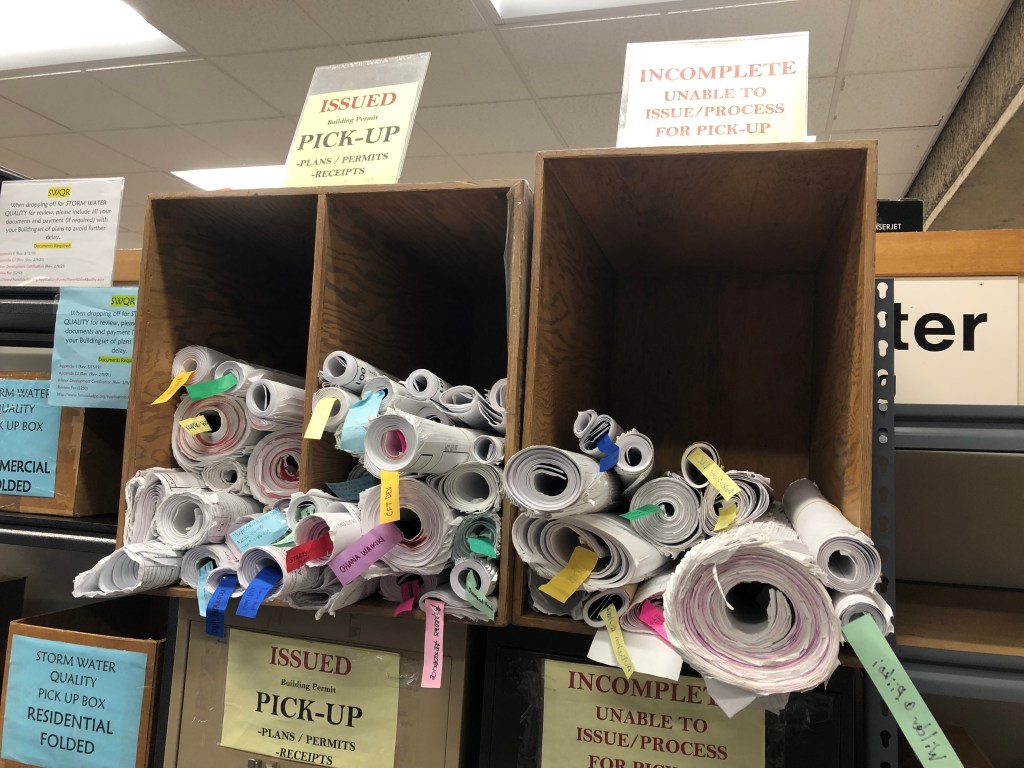
The Parks and Recreation Department uses automation to pay its electric bills. The Department of Customer Services has an AI chatbot on its homepage that can help answer users’ questions about motor vehicle registration, drivers licenses and other city services. The Department of Planning and Permitting has implemented a program called CivCheck, which uses artificial intelligence to scan building plans for code compliance. Some city staff also have access to an internal AI chat system to help them with sensitive work, according to Humber.
Other departments are likely using the technology, but there is no exhaustive list of all the different ways AI is used across the city, Humber said in an email.
Any technology used by the city, though, must comply with “applicable laws, procurement requirements, and internal policies, including data privacy and security standards,” he said.
Hunter Heaivilin, who authored one of the charter amendments concerning AI, said he wasn’t aware of all the ways the city is using the technology.
His proposal suggests creating a public registry that would list all the ways city agencies use AI or algorithmic systems, which are programs that process data and can facilitate automated decision-making. Under his proposal, any resident affected by a decision made by AI instead of a human would need to be notified and would also have a right to a review or appeal process conducted by a human.
“I think we need to ensure that there are good mechanisms for human oversight, for recourse and for the extent of transparency that we can pursue,” said Heaivilin, a food systems planner who runs his own research and consulting company.
While he said he supports the use of AI to make government operations more efficient, he wants to see more scrutiny of systems that can seriously affect people’s lives.
“If this is determining aspects of your healthcare eligibility, your access to social safety nets, your potential carceral periods or prison sentences, that’s a big concern,” he said.
Cities around the world already have models in place to publicly track how AI is used.
Helsinki, Finland, has an AI register with information on how artificial intelligence is used by city departments. City agencies use AI for things like chatbots to answer questions about summer job vouchers, give book recommendations from the library and help users with apartment searches.
New York City in 2018 established an Automated Decisions Task Force to review when city departments use algorithms to aid in decision-making and help ensure fairness and accountability.
And San Jose, California, in 2023 established a GovAI Coalition to come up with responsible AI practices for the city.
AI Use By Law Enforcement
The Honolulu Police Department is in the middle of testing an AI-assisted report writing program called Draft One, which is run by Axon, the company HPD contracts with for its body cameras. The program transcribes audio from body cameras and uses it to create a transcript and summary for a police report.
A statement sent by HPD spokeswoman Jocelyn Oshiro described the test as “small-scale functionality testing of the features and accuracy of Axon Draft One in an internal and closed environment.”
Patrol officers are not involved in the testing, according to Oshiro.
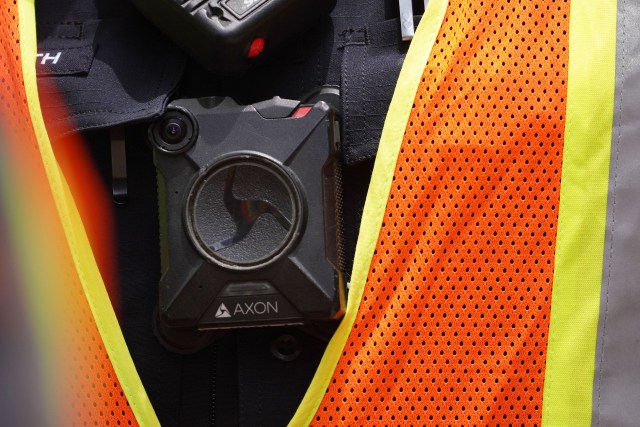
Some community members and the state police union raised alarms after Honolulu interim Chief Rade Vanic announced at an October police commission meeting that the department was exploring using AI to help with report writing as a way to save officers time.
Nicholas Schlapak, president of the police union, said he has many concerns about the department’s use of the program, including how the data collected will be used, how accurate the transcription software is and the fact that the department has not revealed what other vendors it is exploring besides Axon. He said the union has also not been included in the testing process.
“We have not received any information or feedback from the department, test results, data, anything like that,” he said. “So we have a lot of questions, but we don’t have any answers.”
HPD spokeswoman Alina Lee said in a statement the test will be done by the end of next week.
Vanic said at the October meeting that he plans to get public input before officially rolling out a program.
For Bacasen, who authored one of the charter amendment proposals on the use of AI, maintaining transparency and informed consent from members of the public is important. She wants to ensure any use of AI, especially if it is eventually used for surveillance purposes, is done with heavy oversight and is subjected to regular public audits.
“The most important part,” she said, “is that people are informed and that there is a rigorous scrutiny over public investment and utilization of AI.”

