

As Arrests In Hawaiʻi Climb, Immigration Advocates Push Protective Legislation
Advocates seek to limit cooperation with ICE and to rein in the agency’s actions amid a major increase in immigration arrests locally.
The table of immigration-related bills in the Hawaiʻi Legislature’s next session was at least partially set Monday, as advocates described measures they want to see introduced and painted a picture of legal rights being trampled under the Trump administration’s immigration crackdown.
Among the bills that died last session that advocates will be pushing for again is one to address ICE’s ability to conduct enforcement actions in what have been dubbed “sensitive places,” such as schools, hospitals and churches.
“It’s not that we can keep the feds from coming in anywhere that they want to if they followed the proper procedure,” said Liza Ryan Gill, co-coordinator of the Hawaiʻi Coalition for Immigrant Rights. “But we can set protocols on making sure that they follow the proper procedure. So you can’t just bust in if you didn’t get your warrant signed by a judge.”
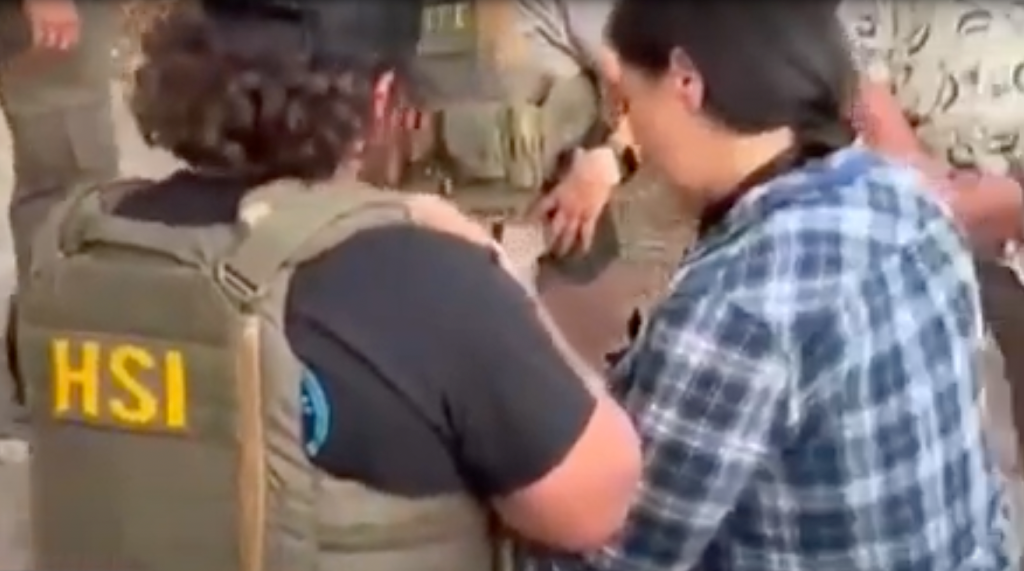
Another would prohibit local law enforcement officers from being deputized as immigration agents through agreements with the federal government. Under those 287(g) agreements — there are now about 1,200 nationwide, up from 135 in January — police officers can perform immigration-related enforcement such as questioning immigrants in custody about their immigration status, and arresting and turning them over to ICE.
The police departments in all four Hawaiʻi counties already have agreements with federal agencies including Homeland Security Investigations, a division of the federal Immigration and Customs Enforcement agency, or ICE. But police officials have said those agreements enable officers to take part in law enforcement operations aimed at transnational crimes such as drug or human trafficking— and that they do not allow officers to join in immigration enforcement. Critics say the agreements are a slippery slope that make that all too possible.
The hearing at the state Senate Judiciary Committee was called by Sen. Karl Rhoads, the only lawmaker in attendance. He offered the advocates a friendly forum. In the 2025 legislative session, Rhoads introduced a bill to prohibit state and local law enforcement agencies from collaborating with the federal government for immigration purposes except in limited cases. It died at the committee level before getting a vote.
A former lawyer, he opened Monday’s meeting by saying some of the administration’s enforcement policies and actions “appear to me to be of dubious legality.”
More Than Just Criminals
The hearing was partly an opportunity to correct narratives that undocumented immigrants are all criminals who hurt the economy, said longtime Hawaiʻi civil rights activist Amy Agbayani. “Data do not support that,” she said, adding that one in five state residents is foreign-born.
The Trump administration, while claiming to be going after hardened criminals, has targeted many others, including immigrants with legal residency status and people who turned out to be U.S. citizens, she and other advocates said.
ICE officers arrested 153 people in Hawaiʻi between January and July — a 273% increase from the same period in 2024, when there were 41 arrests, said Bettina Mok, executive director of The Legal Clinic, a nonprofit that provides legal, education and advocacy services to immigrants.
But 67% of people held by ICE at the federal detention center near the Honolulu airport have no criminal record, and “very few” have been charged with a violent crime, Mok said.
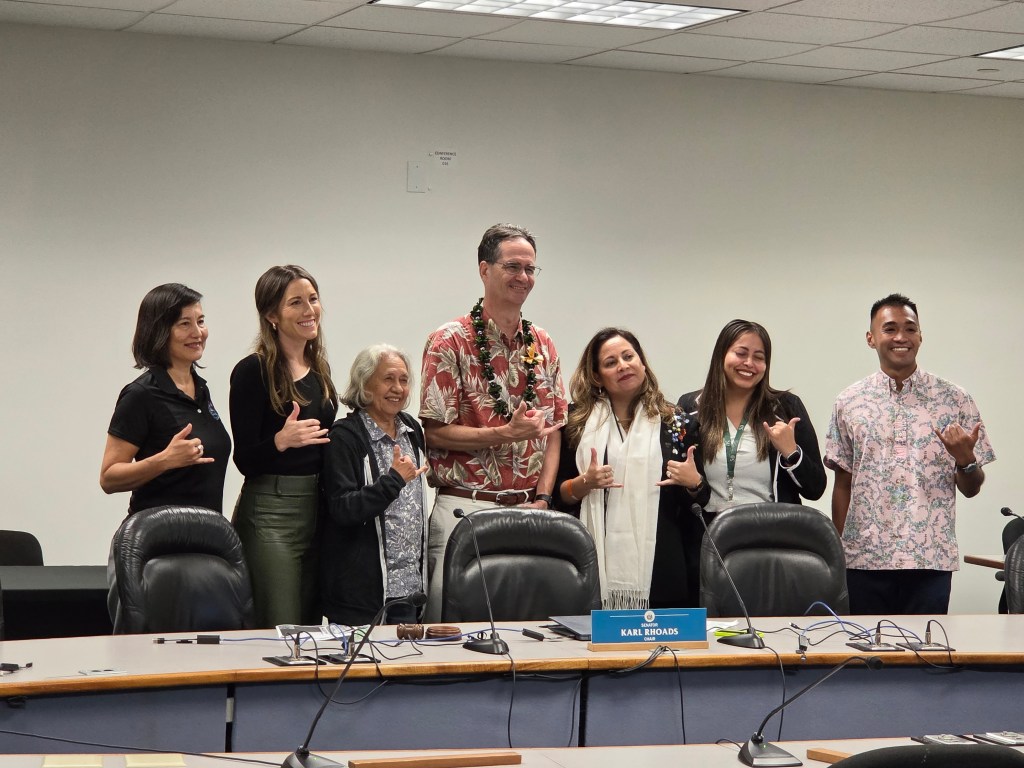
Rhoads returned repeatedly to the question of whether ICE has been violating constitutionally guaranteed due process rights during arrests.
He expressed disbelief when Mok described the case of a young man from Central America who was in Florida on a student visa and was arrested for speeding. He was turned over to ICE after police found out he was not actively enrolled in college, Mok said, and was transferred six or seven times among federal detention facilities before ending up in Hawaiʻi’s.
The student, Mok said, had never been told what he was being detained for.
“The lawyer in me is just like, ‘What?’” Rhoads said.
At another point, Rhoads asked for advocates to ignore his law degree and explain due process.
“Does that apply to everybody or is that just U.S. citizens? If you get picked up for whatever reasons do you always have the right to some sort of due process?”
“It should apply to everyone but what we have seen is that the same rights that should be afforded are not being given to immigrants or detained individuals,” said Stephanie Haro Sevilla, a fellow and immigrant advocate at the Refugee and Immigration Law Clinic at the University of Hawaiʻi law school.
‘You’re Not Immune’
After the hearing, Rhoads told Civil Beat that he was concerned a lot of people “see the stuff on TV from the continent and they think, ‘Well, that doesn’t have anything to do with us here in Hawaii.’ And that’s not true. I want people to know that this kind of stuff is happening here, and that if there’s no due process, you’re not immune to it either.”
Gill of the Hawaiʻi Coalition for Immigrant Rights said based on preliminary discussions with legislators, she is confident the bills she and allies are backing — including one that would clarify the criteria under which immigrants who are crime victims can become eligible for residency — will get a hearing in the next session.
What happens next, she said, is up to legislators who should know by now that the president sees very few limits to his authority.

Explore detailed legislator profiles, voting records and what happens in hearings on Digital Democracy.
“I’m sympathetic to the idea that under the first Trump administration, it’s like, ‘OK, well if we don’t cross this particular line, then maybe X, Y, or Z won’t happen,’” Gill said. “What is so different about this, the second administration, is that none of that holds water anymore.”
It’s hard to forecast the prospects for immigration-related bills in the upcoming session, Rhoads said.
“There’s a big divide in the Legislature,” he said.
There are lawmakers who believe “laying low” is the best way to get through the Trump era, Rhoads said. “I believe if we’re going to beat him, we’ve got to fight now.”
On other fronts, too, there are efforts to draw lines related to immigration enforcement.
The Honolulu City Council last week passed a resolution calling on Mayor Rick Blangiardi’s administration to affirm “its support for the constitutional rights of all” city residents and “its commitment to protecting and upholding the rule of law, due process, and other constitutionally established rights of all residents.”
A proposal up for consideration by the Honolulu Charter Commission would require the Honolulu Police Department to protect residents from unauthorized immigration enforcement actions and from people impersonating immigration agents.

