

Hawaiʻi Building Fires Are On The Rise; Safety Inspections Aren’t Keeping Up
Two fatal fires at the Wild Ginger Inn and the old Puʻuʻeo Poi Factory in Hilo expose gaps in the state’s fire safety inspection system.
Regular inspections of hotels and other accommodations required by the state are being inconsistently carried out by most county fire departments.
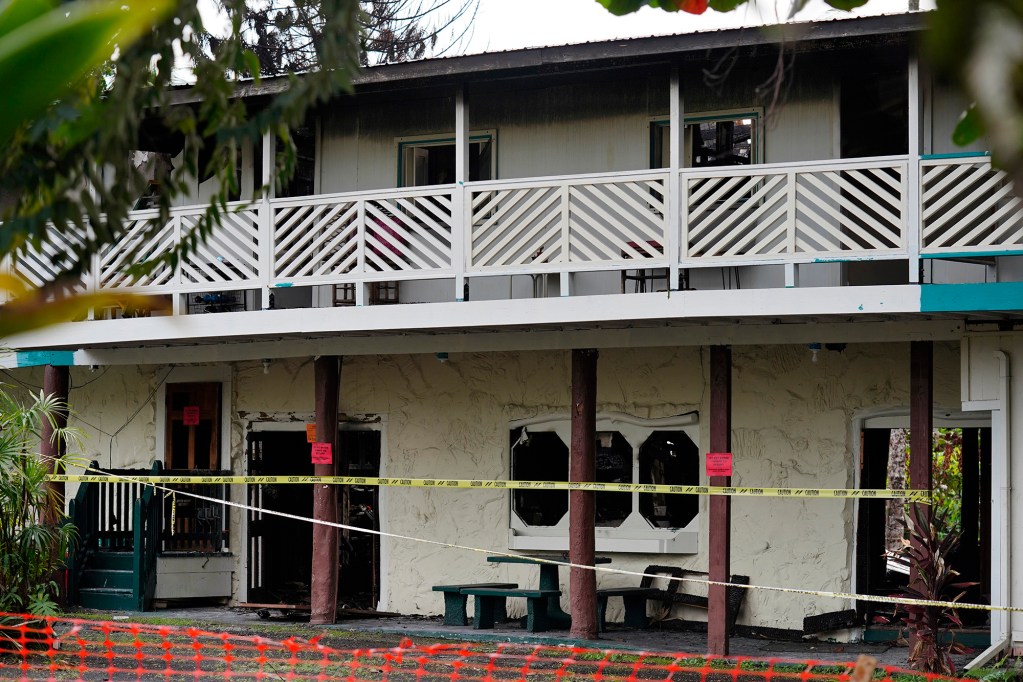
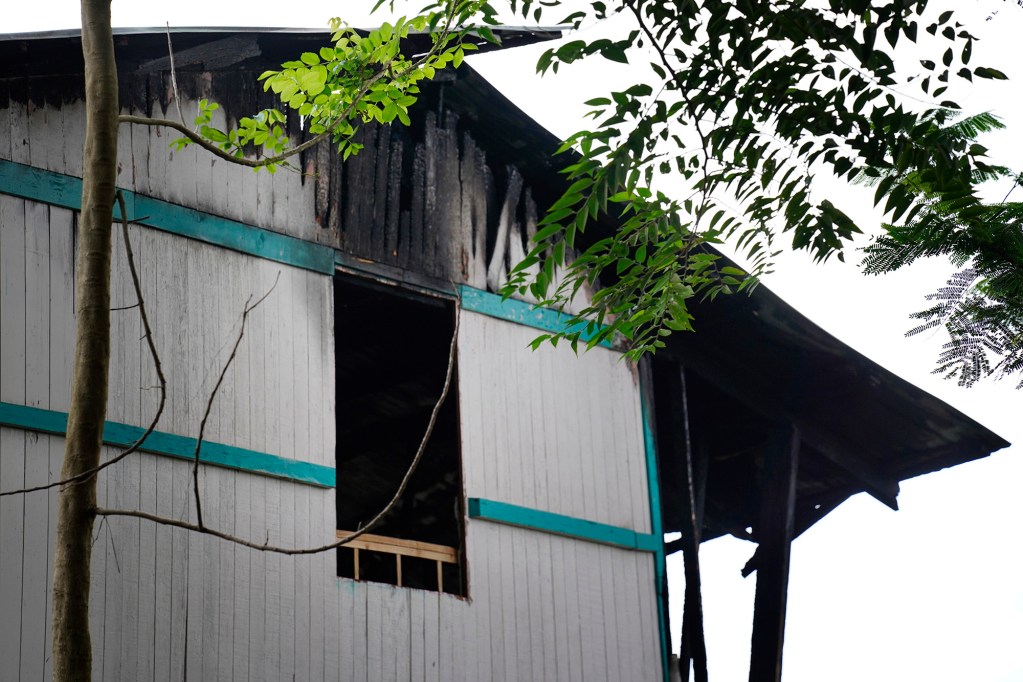
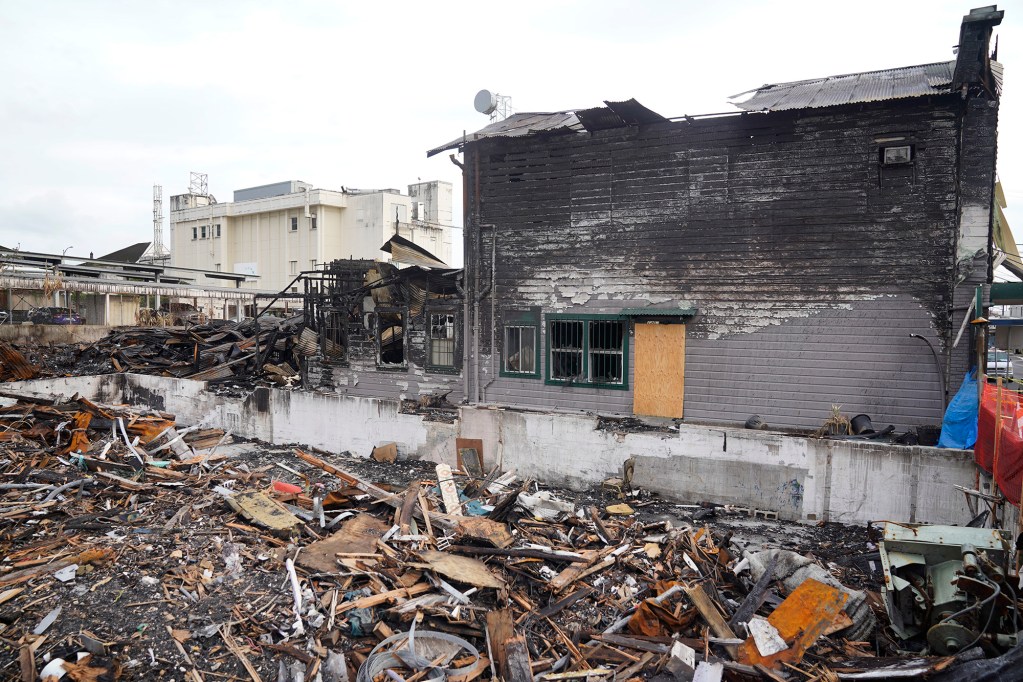
Three people died in two structure fires in Hilo on Hawaiʻi island in October and November in a downtown hotel and in a factory illegally converted to rentals, neither of which had ever been inspected, according to the county. Those buildings fall into the category for which state law calls for fire inspections at least every five years, with corrective actions issued where necessary.
In reality, staffing and resource limitations mean that all of the state’s county fire prevention bureaus only inspect a fraction of the state’s accommodations, leaving visitors and residents at risk. Hawaiʻi County, for example, has three inspectors to oversee fire safety standards of an estimated 14,600 rental rooms spread out over 4,000 square miles.
Annual inspections are mandatory in some other states, including California and Missouri. But with no statutory requirement for annual inspections of Hawaiʻi’s 1,700 registered hotels, motels or lodging houses, only one county — Maui — says it has been doing so since 2023.
Even so, Maui, like other counties in Hawaiʻi, was unable to say exactly how many hotels have been inspected this year when Civil Beat requested a breakdown.
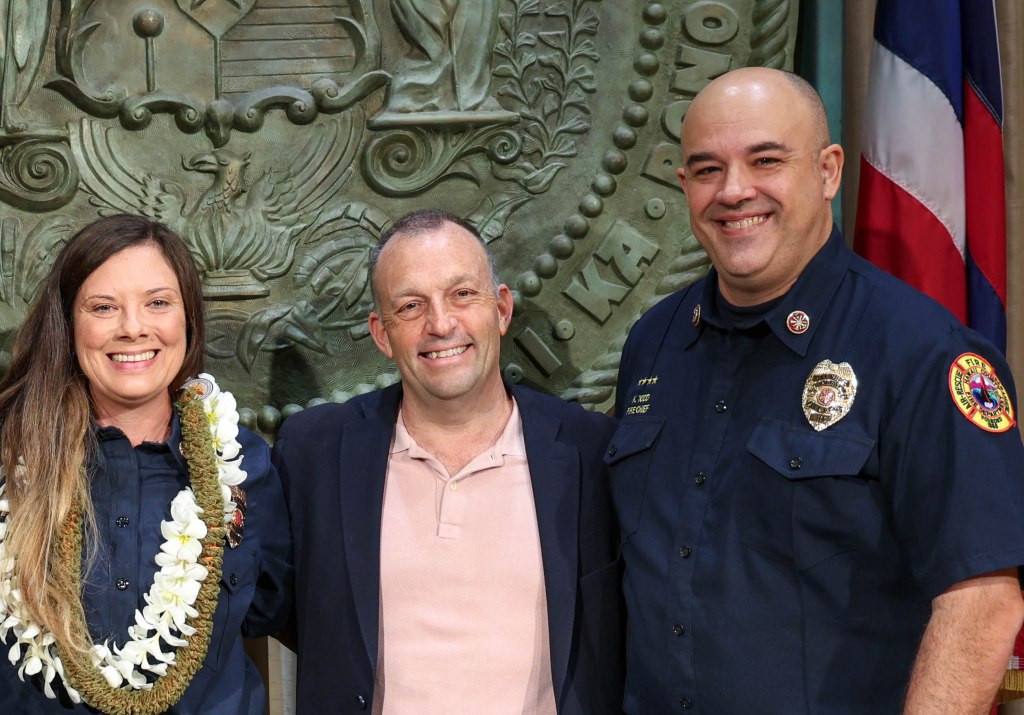
And while the appointment of the new state fire marshal — who will build a team of state inspectors — is a step in the right direction, the problem will not be addressed in the short-to-medium term, the late Hawaiʻi County Fire Chief Kazuo Todd said in a phone interview three days before his unexpected death on Sunday at age 45.
“The system needs to be improved,” and county fire prevention bureaus need to be better funded, Todd told Civil Beat.
The governor’s director of communications, Makana McClellan, said the State Fire Marshal’s office is moving toward a major overhaul of the state’s fire inspection regime.
Initially, a statewide community-risk assessment process will identify “target hazards and risk concentrations,” she said in an email, including hotels, motels and other lodgings. The frequency of safety inspections, she said, would then be based on that risk and other factors, rather than “solely on complaints, requests or historical practice.”
But establishing that new benchmark will take about a year to complete, McClellan estimated, and then will require continual reevaluation.
Fires And Losses On The Rise
A register of Hawai‘i accommodations maintained by the U.S. General Services Administration currently says that 18% — 293 — of Hawaiʻi’s registered hotels, motels and other accommodation businesses are complying with federal fire safety standards that require alarms, sprinklers, voice communication systems and visible emergency plans.
That leaves hundreds of hotels, motels and hostels — which provide an estimated 110,000 rooms in Hawaiʻi, according to Hawaiʻi Tourism Authority data — that may not meet national standards.
The tourism authority data does not include the estimated 31,000 private vacation properties rented through Airbnb. Private vacation rentals by owners must comply with residential zoning and fire codes but are not subject to fire department inspections.
While fires and related losses in Hawaiʻi have steadily increased over the last decade, according to the 2024 State of Hawaiʻi Data Book, they have largely plateaued elsewhere in the country over the same period, the National Fire Protection Association found.
Statewide, the most recent available data shows the number of building fires has increased by two-thirds since 2014, to 5,019 from 2,995 — more than half of them in Honolulu. Building fires killed an average of six people per year between 2014 and 2024, not including those who died in the Maui wildfires.
Todd, who was a former fire inspector and chaired the State Fire Council at the time of his death, said many properties in Hawaiʻi lack fire protection systems such as sprinkler systems or hardwired smoke alarms and the “fire departments don’t know what they don’t know.”
And he said that Hawaiʻi’s rapidly aging housing stock, with a median age of 46 years, means that the fire risks that accompany old dwellings are only going to increase, including those used as accommodations.
The Reality Of Inspections
Hawai‘i Revised Statute 132-6 specifies an inspection schedule. It requires county fire departments to inspect public schools once a year and all other buildings, premises and public thoroughfares for fire risks “at least once every five years, or as often as deemed practicable or necessary.”
But on the Big Island, those non-annual inspections are primarily complaint- or request-driven, county spokesman Tom Callis said.
Callis said in an email that the three Hawaiʻi Fire Department inspectors had conducted 227 property inspections between Jan. 1 and Nov. 30, but could not provide details on the type. There are 481 registered accommodation businesses alone on Big Island.
Todd confirmed that neither the Wild Ginger Inn where one person died in October, nor the old Puʻuʻeo Poi Factory in Hilo where two died last month, were among the structures inspected. Neither, he said, had been the subject of formal complaints either.

The state grants county fire chiefs broad authority to enter properties and issue enforcement actions and Todd said inspections on the Big Island can also be triggered by building or changes-in-occupancy permits.
The department does its best to get out and inspect as many places as possible,” Todd said, but “driving down the dirt road, to see if that old warehouse has been converted, that may never happen.”
In the case of the two recent Hilo fires, the permit triggers that could have led to inspections never happened.
County records show that the most recent permitted work at the 114-year-old Wild Ginger Inn at 100 Puʻuʻeo St. was completed in July 1990, and the most recent permitted work at 245-D Kekūanāoʻa St. at the old Puʻuʻeo Poi Factory was completed in July 1998.
The Puʻuʻeo Poi factory, located in an industrial area adjoining a state recreation area, was illegally converted into short-term accommodation after the death of its original longtime owner in 2017, Todd said.
Investigations into the fires are ongoing and investigators are still waiting on DNA analysis to confirm the identities of the three victims of both fires, Hawaiʻi Police Department spokeswoman Denise Laitinen said via email. The department previously reported that the victims of the poi factory fire were two women, one 56 years old and the other 72. No details have been released about the victim of the Wild Ginger fire.
Attempts to reach the owners of Wild Ginger Inn, a limited liability company registered in Washington state, and the owners of the old Puʻuʻeo Poi Factory were unsuccessful. Records show that the registered owner of the building, Marie A.P. Sajulga of Honolulu died in April 2023.
County Inspection Schedules Vary
A request for updates from county departments indicates that inspections are occurring on a variety of schedules and none of the departments were able to provide a detailed breakdown of the precise type of properties inspected this year.
Annual inspections of hotels by the Maui Fire Department started in 2023, after the devastating wildfires. These inspections are carried out between January and March, according to department spokesman Christopher Stankis.
In addition to the annual school inspections, he said other high-hazard buildings like theaters and arenas are inspected every year. Buildings with fire sprinklers and alarm systems not in the annual group are inspected every two years, and all other facilities are inspected every five years.
Maui has five dedicated fire inspectors and will add another three in January, Stankis said. Inspectors have conducted 528 inspections so far this year but the county did not have a record of how many of those covered the 435 registered accommodations, not including private rentals.
With four inspectors, Kauaʻi inspections occur as resources and public safety priorities allow, with the five-year minimum as the baseline for inspections and more frequent visits where appropriate, Kauaʻi Fire Department Prevention Bureau Captain Justin Kinoshita said in an email.
“While there isn’t a fixed ‘biennial’ or annual schedule set for every business, the Kauaʻi bureau works to inspect facilities on a regular basis and prioritizes inspections based on risk and operational planning,” Kinoshita said.
Kauaʻi has completed 182 inspections this year and there are 441 registered accommodation businesses in that county.
The Honolulu Fire Department complies with the statutory requirements of annual inspections for public schools, and the five-year minimum for other structures including hotels, motels or lodging houses, HFD spokesman Captain Jaimie Song said in an email.
The department can inspect more often based on complaints or requests, Song said.
There are 23 people assigned to fire prevention on Oʻahu, including five fire captains.
Oʻahu has 356 registered accommodation sites, not including short-term-rentals. Larger sites such as resorts provide half of the 110,000 rooms available statewide.
Honolulu inspectors have completed 11,200 inspections of all types this year, Song said, plus visual inspections made from the outside, without entering buildings.
Wildfires Not The Only Issue
State Fire Marshal Dori Booth, whose appointment in June revived a public safety role that had been missing from the state for over 45 years, was not available for an interview, McClellan said in an email.
Hired in the wake of the Maui wildfires, amid renewed awareness that the state has underinvested in fire preparedness, Booth is tasked with implementing a shopping list of recommendations that grew from investigations into the wildfires.
But wildfires won’t be all that the office has to address, as the legislation that reestablishes the office also requires her to eventually take over responsibility for conducting inspections of all state facilities, except state-owned airports which are inspected by the state aircraft fire-fighting unit.
Booth’s office will provide support to county departments, but also apply oversight to ensure they are complying with the state fire code. County chiefs are now also required to submit annual reports on any potential fire risks in their jurisdictions to the fire marshal’s office.
McClellan said that an overarching objective of Booth’s office was to align Hawaiʻi’s fire prevention practices, including inspections, with National Fire Prevention Standard 1730. That would provide a nationally-recognized framework for prioritizing inspections, she said, “using a risk-based methodology rather than a one-size-fits-all inspection frequency.”
Todd said that a key motivation for him in helping to reestablish the role of the state fire marshal was to provide an enforcement arm for fire safety in all state facilities, particularly public schools.
The annual inspections of public schools have regularly turned up issues with the fire protection systems, including faulty alarms and broken alarm systems that have not been replaced.
“So the big pitch for me was that even though we were inspecting some buildings, we weren’t even able to fix the problems there and these buildings had all of our kids inside of them,” he said.
The only problem, Todd said last week, is that the state currently doesn’t have any of its own fire inspectors.
Booth’s office is currently budgeted for $2.2 million for fiscal year 2026 and 2027. According to a November 2024 report by the Department of Labor and Industrial Relations, that level of funding would only fund one fire prevention officer and two fire inspectors.
If fully funded, at between $4.3 million and $6.4 million-a-year, the fire marshal’s office would bump up to four fire prevention officers and eight fire inspectors.
Booth’s future goals “will rely heavily on the ability to gain the budgetary support and approval at all levels,” McClellan said, “to recruit, train, and retain qualified individuals to maintain a proactive, forward-leaning Fire Prevention program.”
Disastrous Fire Prompted Reform In California
California has required county fire departments to conduct annual inspections of hotels, motels and other lodging since 2018.
The legislation came two years after a warehouse fire in Oakland, California killed 36 people. The exact cause of the “Ghost Ship” warehouse fire — named after the illegally converted work and living space — was never determined, but faulty wiring is believed to have been a factor.
The California Office of the State Fire Marshal did not respond to a request for an interview about how well the program is working, but reporting shows that even large departments there struggle to meet annual requirements.
The San Diego Tribune reported in May that 3,600 residential buildings and hotels and 76 private and public schools there either had no inspection record, or had not been inspected since 2023. The reporting did not specify the number of hotels on that list.
At the Hawaiʻi State Insurance Commission, spokesman William Nhieu responded via email on behalf of Commissioner Scott Saiki, saying that “from an insurance perspective, fire safety inspections play an important role in risk assessment and loss prevention, particularly for hotels, motels, and lodging houses that serve the public.
“When inspections are inconsistent or infrequent,” Nhieu wrote, “insurers may perceive increased risk, which can impact the availability, scope, and cost of insurance coverage.”

