

Can Kamehameha Fend Off Admissions Lawsuit With Free Tuition?
The state probate court must first approve a plan to make the school tuition-free starting in the 2026 school year.
Inside a court petition to make Kamehameha Schools tuition-free, officials hint at how they may be gearing up to fight a pending lawsuit challenging the school’s admission policies as discriminatory.
Woven throughout the 14-page petition is trustees’ argument that eliminating tuition makes attendance at one of Kamehameha’s three main campuses — for those who get in — a gift, not a contract.
The school has almost exclusively accepted Native Hawaiian students since its creation in 1887. That admissions policy is now being challenged in federal court under a law banning racial discrimination in contracts, including those between a school, its students and their families. Two new plaintiffs, a high-schooler and her mother, identified only by their initials, joined the case Dec. 1.
It’s the third recent challenge to the admission policy in the last century. The school has settled past challenges out of court.
Kamehameha has not yet filed a response to the latest lawsuit. But in its petition to a state court asking for approval to make tuition free, the school’s Board of Trustees hints at a legal strategy to fight back, which they call a “Complete Gift Approach.”
“It’s clearly a strategy to deal with the current lawsuit,” said Moses Haia III, a lawyer, Kamehameha alumnus and former director of the Native Hawaiian Legal Corp., a law firm that takes on Native Hawaiian rights cases.

In a message on the school’s website regarding the free tuition proposal, which will require approval from state probate court, the trustees write that “external parties” have tried to frame the 138-year-old school’s relationship with students through a “Western contractual lens.”
“Kamehameha Schools rejects that framing,” the trustees wrote.
Mother Sues To ‘Vindicate Her Own Rights’
The idea that students and their parents are in a contractual relationship with the school is key to the admission lawsuit, which cites a 1976 U.S. Supreme Court case. In Runyon v. McCrary Black students were denied admission to a white school. The justices held that federal law prohibits “racial discrimination in the making and enforcing of private contracts.”
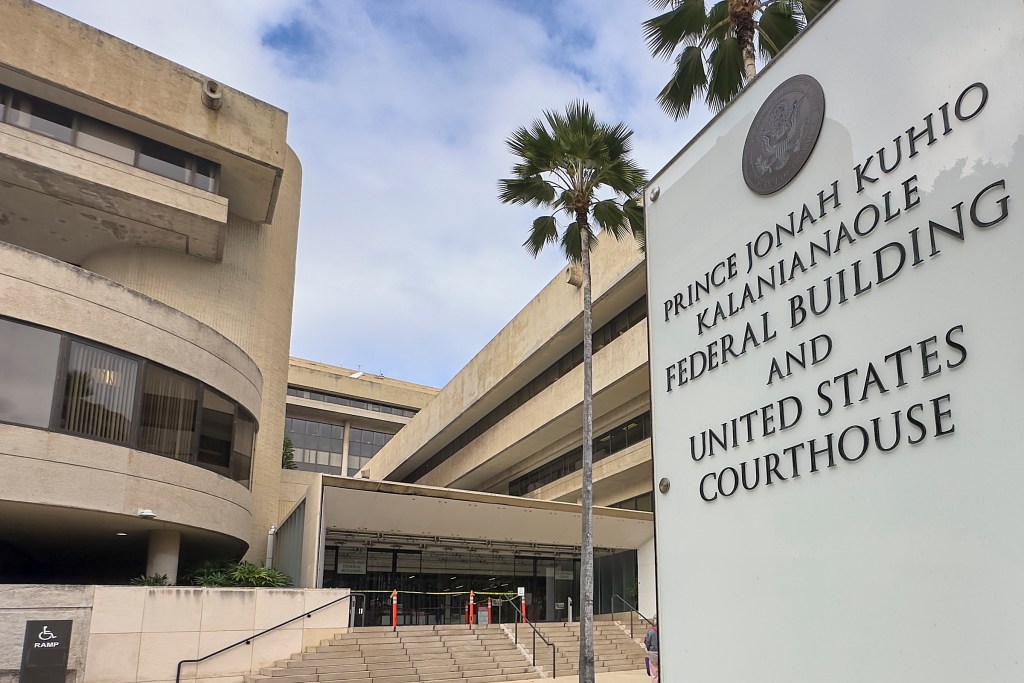
In an amended complaint Dec. 1, lawyers for Students for Fair Admissions — an anti-affirmative action group leading the charge in the Hawaiʻi lawsuit — argue that parents applying for Kamehameha Schools enter a contract when they agree to access Kamehameha’s online portal.
One of those parents was “B.P.,” a new plaintiff in the lawsuit suing on behalf of her minor daughter, identified as “I.P.” The daughter dreamed of attending Kamehameha, according to the lawsuit, and previously attended another school with a Hawaiian curriculum.
“Though I.P.’s knowledge and interest in native Hawaiian culture is stronger than many of her native Hawaiian classmates, I.P. is not herself native Hawaiian,” the lawsuit said. “She is Caucasian.”
I.P. applied in 2023, completing the admissions test and interview, but was denied. Because her mother, B.P., “signed the contracts with Kamehameha that let her daughter apply there. B.P. sues to vindicate her own rights,” the lawsuit says.
Lawyers for the plaintiffs did not respond to messages seeking comment on this story.
‘A Gift Is A Gift’
The school’s trustees directly reference the lawsuit halfway through the petition for free tuition, saying that court approval of the proposal will have “indirect but important benefits.”
“Legal challenges to Ke Aliʻi Pauahi’s mission and intended charitable purposes have sought to constrain the Trustees’ ability to fully carry out her wishes,” the trustees wrote, adding that free tuition, from preschool through grade 12, is a gift “consistent with the Trust’s charitable and fiduciary obligations … and not any sort of contractual arrangement.”
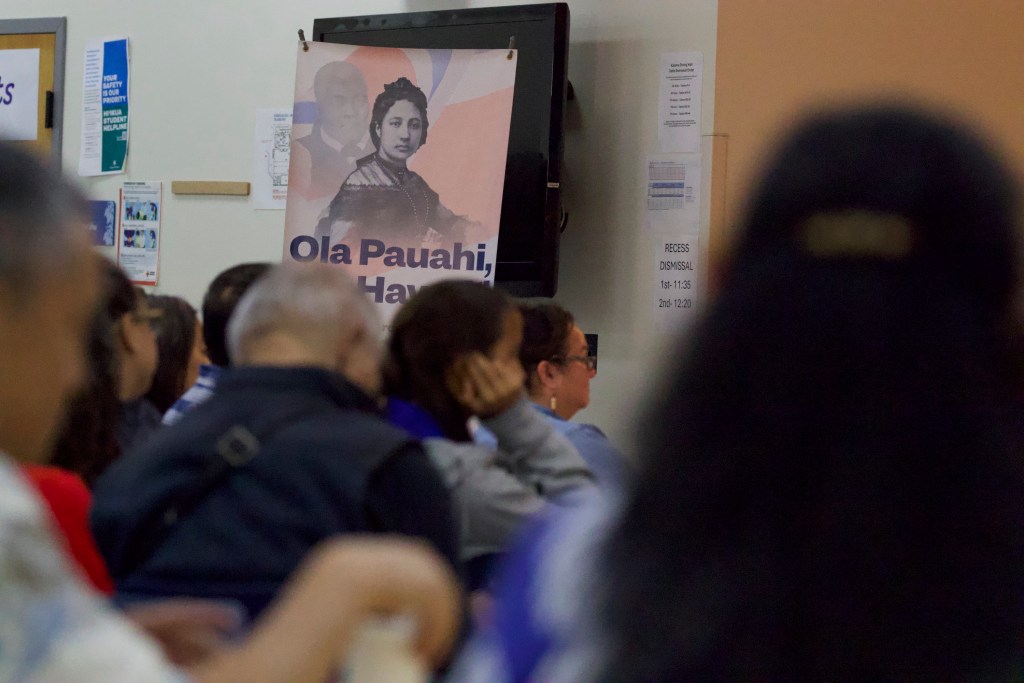
The school was formed out of a royal estate and must seek approval from the state probate court for major administrative decisions.
Trying to reframe the relationship between the trust and its students aligns with the school’s mission of educating Hawaiians, Haia said. In his opinion, that change is also not coincidental, and is part of Kamehameha gearing up for what could be a yearslong fight in the court system.
“This is probably the trustees and their attorneys looking the entire length of the field … in the hopes that they will be able to convince enough justices that a gift is a gift and you can’t say anything about it,” he said.
He anticipates an early success, with Kamehameha prevailing at the district and appellate court levels. But the big question is the conservative-leaning U.S. Supreme Court, which handed Students for Fair Admissions a victory last year when it struck down affirmative action in college admissions.
The Supreme Court justices, Haia said, “may look at it and say it’s based on discriminatory practices.”
KS Already Subsidizes Tuition
The schools were created and are sustained by the estate of Bernice Pauahi Bishop, a descendant of Kamehameha I. The trust assets now total about $15 billion, which includes the school’s investment portfolio and real estate.
In their petition to the court, the trustees wrote that going tuition-free won’t change the level of services and education provided to students and will be financially sustainable.
The school reported collecting about $11.8 million in net tuition revenue last year; it already subsidizes more than 97% of the cost of education for its current enrollment of more than 7,300 students. The schools reported distributing more than $35 million in financial aid to its students last year.
That reduces the tuition at the Kapālama Campus to about $6,900 per student and $12,000 for boarders. In comparison, full tuition at ʻIolani is more than $31,000 a year, while Punahou charges just under $33,000.
If approved, the proposal would cover tuition as well as student meals and fees including boarding fees, according to the petition.
The schools are already starting to save money in other areas.
Earlier this year, Kamehameha began phasing out its Kipona scholarship program, which provided financial aid to Native Hawaiian students attending schools other than Kamehameha. The schools distributed more than $7 million in aid through that program each year.
The schools’ lawyers are asking for an expedited review of the free tuition petition to let parents know for certain whether tuition will be free in the upcoming school year and beyond. The trustees have asked for a hearing on the petition Jan. 15.
The date of that requested hearing generally aligns with a timeline in the admissions lawsuit laid out by the federal court.
U.S. Magistrate Judge Rom Trader put a brief halt on the proceedings to give the U.S. Department of Justice time to decide if it will intervene in the case because it calls into question a federal statute.
The case could resume anytime from Jan. 14 to Jan. 30, at which time Kamehameha will be required to respond to the lawsuit.
Civil Beat’s education reporting is supported by a grant from Chamberlin Family Philanthropy.

