

Delayed Maui County Grants Leave Local Nonprofits In Limbo
The county says it is tightening up its oversight of public money to prevent fraud and abuse.
Local nonprofits on Maui are struggling to serve the community while waiting for hundreds of thousands of dollars that the county owes them in grant payments.
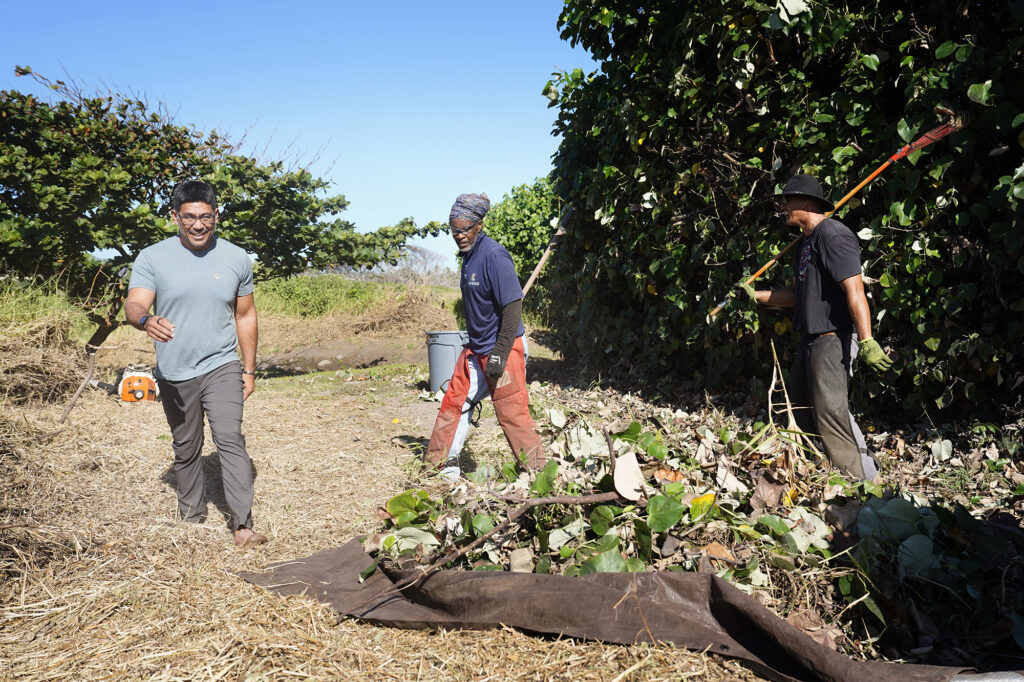
As the situation has grown increasingly desperate, nonprofit leaders have had to consider layoffs and lean on one another for support and guidance on how to keep operating without as much money as they had budgeted for, said Keolamau Tengan, director of organizational development at Ka‘ehu. The group is focused on restoring the land surrounding Ka‘ehu Bay in Central Maui and promoting Native Hawaiian culture.
“The meetings that we have nowadays are a lot of venting,” he said. “Tears are shed, but we’re able to really show up for each other. Still, there’s often a feeling of hopelessness and helplessness.”
Tengan is one of four Ka‘ehu employees who have been furloughed, he said, and one employee was laid off.
County government officials told the Maui County Council last week that the unpaid funds are the result of improved enforcement of fraud protection policies and the implementation of new financial practices that require grant recipients to initially pay the cost of most projects before they are reimbursed by the county.
However, these changes have been poorly managed and communicated to grant recipients, and they place an unfair burden on smaller or new organizations that rely on advance grant payments, according to council member Gabe Johnson and some nonprofit leaders.
Johnson said this system gives preference to larger, more-established nonprofits while hurting some of the new nonprofits that are trying to step up to address new challenges, such as those stemming from wildfires and invasive species.
“They don’t have the capacity to put up tens of thousands of dollars or $100,000 and then wait to get reimbursed,” he said. “They’re trying to tackle an issue that only just came up, and now they are getting lost in the sea of bureaucracy.”

The future of several nonprofits now hangs in the balance, he said.
The delayed funding has been devastating for the Maui Invasive Species Committee, a nonprofit that has for nearly three decades worked to control high-threat invasive species like little fire ants and coqui frogs, according to its outreach and education specialist, Lissa Strohecker. With $2.8 million from county grants accounting for almost three-quarters of the organization’s annual budget, the delays have been extremely stressful for the committee’s leaders and recently prompted furloughs, she said.
“There is so much uncertainty,” said Strohecker, one of those furloughed. “You wonder if you should be spending that time looking for another job, and it’s just extremely stressful.”
Strohecker said she worried about what might happen to the organization if the funding delays continue.
“If we’re not able to rely on county funding, which is our single greatest funder, we’re going to have to really pursue other avenues,” she said.
The county’s fiscal year 2025 budget appropriated about $78.7 million for grant contracts, and as of Friday afternoon roughly $59.6 million had been dispersed, according to the county’s Budget Office. In fiscal year 2026 — which is ongoing — the county budgeted approximately $125.6 million for grant contracts, the office said, and roughly $46.1 million had been dispersed.
Nonprofits are owed money from grants awarded by various county departments, nonprofit leaders said. As of last month, 30 grant contracts totaling millions of dollars that were awarded by the Department of Environmental Protection & Sustainability Division in fiscal year 2025 remained open, according to a letter to the council from the department’s director, Shayne Agawa.
What Is Causing The Delays?
During a meeting of the County Council’s Budget Finance and Economic Development Committee on Tuesday, Johnson described the changes to the grant management process as “a real nightmare,” and said officials’ failure to properly communicate the new guidelines with nonprofits has led to widespread confusion.
“The management of grants has been an Achilles heel for this administration and has affected many people,” he said. “Nonprofits do the work the government is unable to do, and we should be bending over backwards instead of giving them a hard time.”
Maria Ornellas, who manages grants out of the Mayor Richard Bissen’s office, said the recent changes were recommended by county lawyers. The officials who administer grants have sympathy for nonprofits with limited financial resources, she said, but the county has been lenient with its enforcement of the terms outlined in grant agreements. Those officials have a responsibility to work with the Finance Department to ensure they are only dispersing money that would be used properly, she said.
“It is the grant manager’s function to pull together a package that will not get kicked back,” she said about approving reimbursements and advance payments. “But there are definitely some concerns about fraud, waste and abuse in relation to grants and managing public funds.”
“We do need to make sure we have those fiscal controls, because the county does give out a lot of grants.”
Maui Budget Director Lesley Milner
In Agawa’s letter to the council in November, he said the department’s previous grants manager who had been responsible for overseeing fiscal year 2025 grants until earlier this year had fully or partially disbursed money without receiving reports or proof of payments.
“The lack of administrative guidance, review, and support resulted in the delay of formal grant executions and confusion as to the contracts, reporting, and reimbursement processes,” Agawa wrote, adding that department staff was working with grant recipients to help them understand what documentation was still needed.
The department’s recently hired grants manager needs time to address longstanding issues and “adjust to all those wrinkles that you know came with the job,” Ornellas told council members last week.
While there are still issues to be worked out, the new guidelines and increased enforcement are ultimately part of an effort to assure Maui residents that public money is used responsibly and make the grant distribution process easier for both the county and grant recipients, Maui Budget Director Lesley Milner said during Tuesday’s meeting.
“We do need to make sure we have those fiscal controls, because the county does give out a lot of grants,” she said.
In recent months, county officials have formed a working group and have been meeting regularly to come up with additional recommended changes that could be implemented to ensure that grants are more efficiently disbursed and public funds are used appropriately, Ornellas said.
Nonprofits’ Questions Remain
Despite repeated attempts to gain clarity regarding the new guidelines from officials of the county’s Office of Economic Development, Environmental Protection & Sustainability Division and other departments that manage grants, nonprofit leaders said they still had numerous outstanding questions about what was holding up their grant funding.
Susie Thieman, the executive director of the nonprofit housing and community development organization Lokahi Pacific, said she had been meeting with county officials about once every month for over a year to learn why her organization’s grant funding was delayed.
“It’s such a nightmare, because one day it’s because of this, and the next day it’s because of that,” she said of the county’s explanations.

Tengan said the guidelines nonprofits must follow when submitting expenses for reimbursement from the county are significantly more compex than those required by other funding sources.
“We’ve had a receipt rejected for not having a logo,” he said.
While Tengan and others said they understood why the county would want to protect public money and prevent fraud, they said it was frustrating to see how these new measures have prevented nonprofits from serving the community.
“It’s been really very sad to have to have these conversations, definitely with our staff, but with the community as well,” he said. “Those of us who do things in conservation or cultural preservation and supporting our community, none of us are in it for the money. It’s sort of like this mantle of kuleana and care for our community that drives us.”
In many cases, the affected nonprofits are responsible for stewarding county-owned land, cleaning up illegal dumping sites and other work that directly benefits the county, according to nonprofit leaders including Kyle Ellison, the executive director and treasurer of Mālama Kula.
“Whether you say this work should be a county service or not, we all recognize that it is work that just needs doing,” said Ellison, whose organization is focused on helping the Kula community recover from the devastating 2023 wildfire and mitigate the risk of future disasters.
While Mālama Kula was not waiting for large amounts of grant funding, it had not yet received $280,000 that was appropriated to the group in the Fiscal Year 2026 budget, he said. Ellison believed that county officials were working to make sure that funding — as well as the grants that other nonprofits have been anticipating for months— would eventually come through, and recent events highlighted how important it is for nonprofits to diversify their funding sources. At the same time, many local organizations reasonably thought they could rely on county-awarded funds to get them through the year, he said.
“If you tell people you’re going to do something, I think it’s pretty important that you do it,” he said.
Civil Beat’s coverage of Maui County is supported in part by a grant from the Nuestro Futuro Foundation.

