Hawaiʻi Patients To Join New Lawsuit Against Army Doctor Accused Of Abuse
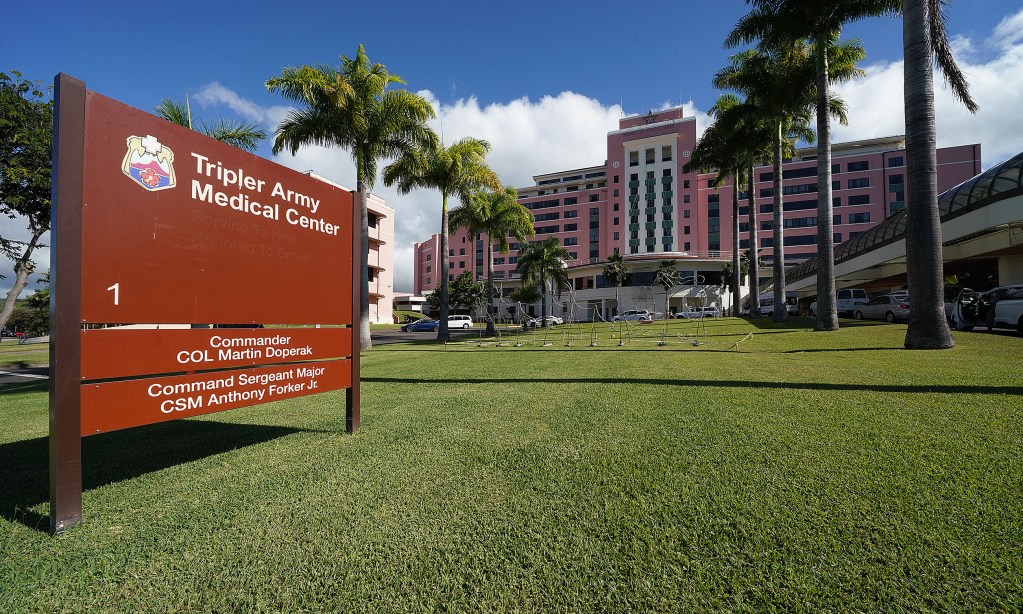
At least 10 women who were patients of Maj. Blaine McGraw when he was a resident at Tripler Army Medical Center are lining up to sue the OB-GYN and the Army.
The gynecologist would insist on a breast exam every time they had an appointment at the U.S. Army hospital on Oʻahu. He would touch patients inappropriately and make suggestive comments. On at least one occasion, he subjected a Hawaiʻi woman to a medically unnecessary procedure without her consent, while she was fully exposed without a gown to cover herself.
Those are just a few examples of what women say they experienced at the hands of Maj. Blaine McGraw when he served as a resident at the Tripler Army Medical Center from 2019 to 2023, according to Andrew Cobos, an attorney representing the former patients and dozens more in Texas.
Early this week, more than 75 women are expected to file a lawsuit against the Army under the Federal Tort Claims Act, seeking restitution. Among those lining up as plaintiffs are at least 10 patients McGraw saw in Hawaiʻi before he moved on to Carl R. Darnall Army Medical Center at Fort Hood, Texas.
The legal action is the latest in a chain of events involving McGraw. The Army’s Criminal Investigation Division opened an investigation into the now-47-year-old in mid-October, following a complaint from a Texas patient and the OB-GYN’s subsequent suspension. On Nov. 10, one of McGraw’s patients in Texas filed a separate lawsuit accusing him of using his phone to secretly film her during a pelvic and breast exam, among other things.
The dozens of other women expected to be named in the new federal legal action, including those from Hawaiʻi, are also expected to join the Texas lawsuit.
Details of the allegations that have surfaced so far vary, but the undercurrent is the same: a doctor in a position of power who exploited, harassed and assaulted women who trusted him for medical care. Many of them say they now suspect that McGraw surreptitiously filmed their exams and births.
One woman set to join the federal tort claim told Civil Beat that when McGraw broke her water unexpectedly, he said he was expecting a call and slipped his cellphone into the breast pocket of his scrubs, with the camera lens pointed out at her. When he delivered her son later that day, she said the phone was still there.
A photo shared with Civil Beat by Cobos, the plaintiffs’ attorney, shows McGraw helping a second woman deliver her baby at Tripler with his cellphone in his breast pocket, the lens again facing out.
The woman who filed the Texas lawsuit said Army investigators showed her screen grabs of her body during an exam from a video they found on McGraw’s phone. Her lawsuit also claims that years before another woman had filed a complaint at Tripler accusing him of filming her pelvic exam.
The lawsuit maintains that McGraw’s superiors in Hawaiʻi dismissed that woman’s allegations, “laughed it off” and allowed him to continue practicing medicine.
“It was a joke among the individuals in Hawaiʻi that McGraw always got the crazy patients who made crazy allegations,” Cobos told Civil Beat.
Staff at Tripler deferred questions about the complaint to the Army’s investigation division, which did not respond. But the Texas lawsuit blames McGraw’s continued actions in part on the failure of Army leadership in Hawaiʻi to act.
“That institutional indifference was not just negligent — it was a license for a predator to continue violating women under the protection of a U.S. Army Uniform,” the lawsuit reads.
In recent weeks, the Army has taken more aggressive action, including suspending McGraw on Oct. 17, the day it received the Fort Hood patient’s complaint. Officials at Tripler and Darnall have sent about 2,500 letters to patients who could have been victims — nearly half of whom might have encountered the doctor in Hawaiʻi.
McGraw’s attorney, Daniel Conway, did not respond to requests for comment, but told CNN that he is cooperating with the investigation and expressed disappointment with the Army’s handling of the investigation.
“At this point, beyond the allegations themselves, we’ve seen no records to support that patients were touched in a way that was not medically indicated,” Conway told CNN.
Hawaiʻi lawmakers have made it clear they want answers. In an unusual move, Sens. Brian Schatz and Mazie Hirono and Reps. Ed Case and Jill Tokuda have sent a letter to leadership at the Army, the Department of Defense and the department’s inspector general urging them to “move swiftly and thoroughly in the investigation to address these allegations” and “thoroughly review all patient complaints associated with (McGraw’s) postings at Tripler Army Medical Center and Fort Hood.”
Tripler Patient Recounts Abuse
The woman wasn’t expecting to give birth that day in the winter of 2021. She told Civil Beat she had gone into Tripler Army Medical Center for a routine set of tests to measure her baby’s heart rate and her amniotic fluid levels ahead of her scheduled induction a few days later.
But as she was leaving her appointment, she ran into McGraw, whom she recalls having seen just once previously for an exam. He said he wanted to look at her cervix.
At first, she resisted since at the appointment she had been told to go home for a few more baby-free days. But she recalls him being persistent. He brought her up to the clinic, which was empty during lunchtime.
In the exam room, she said he had her get undressed and lie down on the table without a gown or a sheet to cover her. She wasn’t prepared for what came next. “He didn’t tell me what a cervical check was,” she said. “He just did it.”
McGraw inserted his finger into her vagina, she said, again and again.
“Each time, it was harder and deeper,” she said. “As he pulled his finger out that third time, and it might have been two fingers… a gush of amniotic fluid came out.”
“We’re having a baby today,” she remembers him telling her, winking.

In retrospect, she sees red flags. McGraw told the woman not to tell anyone that he had broken her water, warning they could both get in trouble. She said he instructed her to go home — a 40-minute drive from the hospital on the outskirts of Honolulu — then call the hospital and tell them she was going into labor. He gave her his personal cellphone number and told her to text him when she was headed back to the hospital.
She panicked. Her husband wasn’t with her, and their three other kids needed someone to watch them. She was scared that something would go wrong.
“I don’t want surgery, I don’t want the baby to get sick, and the more amniotic fluid you lose, it could be more dangerous for the baby, especially if labor hasn’t started,” she said. “All of those things are now circling my head, like, ‘Oh my gosh, is my baby going to die because my water didn’t break on its own?’”
When the woman returned to the hospital a short time later with her husband, the birth went smoothly, and both mother and baby were healthy. Her son is about to celebrate his fourth birthday.
The woman pushed the incident to the back her mind. But in the last two months, as she learned of the allegations against McGraw, she said she found herself feeling sick, angry and betrayed by the Army.
She is also beginning to remember other troubling moments, such as when McGraw insisted on doing a vaginal and breast exam shortly after she gave birth, even though she’d had a postpartum check-up with a different doctor just a week before. She also claims McGraw later picked up her birth control from the pharmacy himself so that she had to retrieve it from him. When she did, she said he told her that he would have left his wife for her if she hadn’t been about to relocate out of state.
Most devastatingly, she said, her memory of her son’s birth has been irrevocably altered.
McGraw, she said, “took something very personal and very, very beautiful in its own sense and now it’s just this nightmare attached to it.”
Allegations Of Covert Filming Of Patients
By the time the Texas woman who would bring the lawsuit against McGraw went in for an appointment in October, the filing says she had already had unsettling interactions with him.
Once, after a uterine procedure that required sedation, he made comments about tattoos on her upper body that shouldn’t have been visible during the procedure, according to the lawsuit. Another time, he is quoted as having told her, “Your surgeon did a great job – your breasts look great.”
Her appointment on Oct. 14 was supposed to be a routine pelvic exam, although McGraw also insisted on examining her breasts. Several days later, the Army’s Criminal Investigation Division asked her to come in for an interview.
That’s when investigators showed her screen grabs of her body from a video they had found on McGraw’s cellphone, the lawsuit says. During her October appointment, it alleges, the gynecologist had his cellphone in his breast pocket with the camera facing outward, filming her as he conducted the two exams.
On that day, “inside a federal military hospital, Jane Doe’s most private boundaries were breached, her dignity stripped away, and her sense of safety shattered,” the lawsuit says.
Around this time, investigators also had been tipped off by a complaint from a patient, and officials at Fort Hood had suspended the doctor.
On McGraw’s phone, investigators had found thousands of photos and videos, according to the lawsuit, taken over the course of years and “depicting scores of female patients.” So far, Army investigators have identified at least 30 patients who had been photographed or videotaped, according to NBC News.
“The scope of this invasion of privacy is staggering,” the lawsuit says, “with the potential to affect hundreds of women in at least two major military installations who placed their trust in McGraw as their physician.”
Letters Sent To Former Tripler Patients
In late November, Tripler sent letters to about 1,100 women who may have been victims while McGraw was based in Hawaiʻi, according to Army public affairs officer Hugh Fleming. About 300 of those women still live in the state.
The letter does not name McGraw. Rather, it informs the recipients that during a review of the hospital’s medical records, their name came up as someone who may have seen a provider now under investigation.
“While your name appears on the list of patients, there is no indication you were affected by the alleged misconduct that is currently under investigation,” reads the letter dated Nov. 20 and signed by Tripler Commander Col. William Bimson.

It directs concerned patients to reach out to the Army’s investigation division with questions about the investigation and contact the hospital’s customer relations team for support at 808-469-1725 or via email at dha.tripler.tripler-amc.mbx.obgyn-medical-support@health.mil.
“We understand this information may be upsetting, and we sincerely regret any distress this news may cause. Your confidence in the care you receive at (Tripler Army Medical Center) is of utmost importance to us,” the letter reads.
Tripler officials also notified one civilian medical institution in Hawaiʻi where McGraw worked during his residency. The Army did not respond to questions about which institution this was or whether potential patients there had been notified.
Lawmakers, Victims Demand Accountability
The Hawaiʻi congressional delegation is calling on the Department of Defense, the Army and the Office of the Inspector General to conduct an inquiry into how officials up the chain of command failed to stop McGraw’s alleged misconduct.
In their Dec. 1 letter, they asked the OIG to commit to investigating medical professionals who supervised him or may have known about his alleged actions. They also called for recommendations of systemic changes to prevent future incidents.
“The damage done by Major McGraw’s alleged actions is irreversible,” reads the lawmakers’ letter. “The Department owes these victims accountability for its failure to stop this misconduct, including a comprehensive investigation and, where supported by the evidence, prosecution of Major McGraw under the Uniform Code of Military Justice to the fullest extent allowed.”
Officials at Fort Hood ordered McGraw into pre-trial confinement on Dec. 2, and he is currently being held at the Bell County Jail in Texas for violating “conditions of liberty imposed by his commander,” according to an Army press release. It is unclear what those violations are and McGraw’s attorney told CNN that the pretrial confinement is “completely unnecessary” and “a complete abuse of discretion.”
This week, a military magistrate will determine whether he should remain locked up while under investigation.
For the Tripler patient who said McGraw broke her water without consent, learning about the scale of the abuse allegations has shattered her sense of safety. She blames the Army for not doing more to protect patients.
“That’s very sad because my dad was in the Army, and my husband is current Army, and I have a lot of respect for the military… But also, I think the military failed us,” she said. “We were supposed to be safe.”
Civil Beat’s reporting on women’s and girls’ issues is funded in part by the Frost Family Foundation.