‘The Maui Method:’ A New Fix For A Major Fire Hazard In Hawaiʻi
Government officials developed a way to deal with tons of electric vehicle batteries left in the aftermath of wildfires and found at illegal dumpsites.
The 2023 wildfires left Maui with 400,000 tons of debris to clean up. Buried in that mess was an enormous amount of damaged and highly flammable lithium-ion car batteries that government officials had to figure out how to safely remove.
In the ensuring months, state, county and federal officials developed what’s been dubbed “the Maui method,” and now local authorities are modeling that lesson for state and federal agencies to learn for future disaster cleanups.
The Maui Emergency Management Agency recently invited representatives from various local and state fire, health, waste and emergency management departments in Hawaiʻi to observe and ask questions as county workers carefully removed roughly 13 tons of electric vehicle batteries from an area along Honoapi‘ilani Highway in Ukumehame, MEMA Administrator Amos Lonokailua-Hewett said.
It was the first time the Maui method was carried out as part of a non-disaster operation and overseen by federal and state partners, he said, and it could be a model for future hazard mitigation efforts related to the growing risks posed by high-voltage electric and hybrid vehicle batteries across the country and around the world.
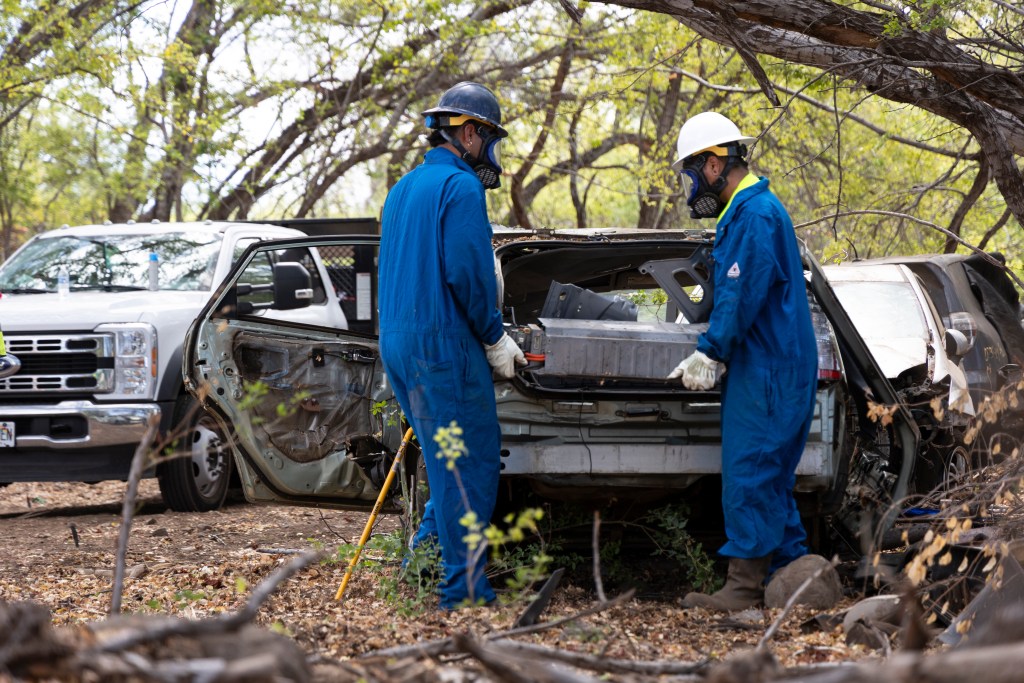
Lithium-ion batteries are generally safe, but they can be uniquely dangerous if they are damaged or defective, according to Lonokailua-Hewett. If they enter a state called thermal runaway, the batteries can become incredibly hot, explode, burst into flames and emit toxic vapors, he said.
“With those fires, typical water or foam suppression agents will not be able to suppress them, so you have an ignition source that can then cascade into other batteries and other adjacent fuels,” Lonokailua-Hewett said. “That obviously stops or delays the containment of a rapidly spreading brush fire that is much harder for the fire department to address.”
The batteries were removed from Ukumehame during a months-long wildfire risk reduction project that began over the summer and was completed on Nov. 28, county officials said.
“We were able to share our progress and this method with a lot of folks that have since gone back and are trying to figure out if this process can be used in their counties,” Lonokailua-Hewett said.
‘The Maui Method’
Moving damaged electric vehicle has always been dangerous, according to Justin Marquez, a federal on-scene coordinator for the U.S. Environmental Protection Agency.
Maui’s isolation required the batteries cleaned up after the fires in Lahaina and Upcountry to be transported to one of the country’s two battery disposal facilities — both on the mainland — via ship, he said, but maritime shippers were unwilling to travel with such a high level of risk.
“We had to develop some way to be able to get that material back to the mainland for disposal,” said Marquez, who is a member of the EPA’s National Lithium-Ion Battery Task Force. “So the Maui method was sort of born out of the necessity to remediate that material.”
Developed by EPA in coordination with local and state partners, the method removes any remaining power still stored inside the batteries and neutralizes the fire hazard through by soaking them in a brine solution for about three days, then crushing them into smaller pieces that can be safely transported to a disposal facility.
“Imagine if a battery that wasn’t properly deconstructed and changed into non-hazardous waste was on a ship and then thermally ran away,” Lonokailua-Hewett said. “It would be catastrophic.”
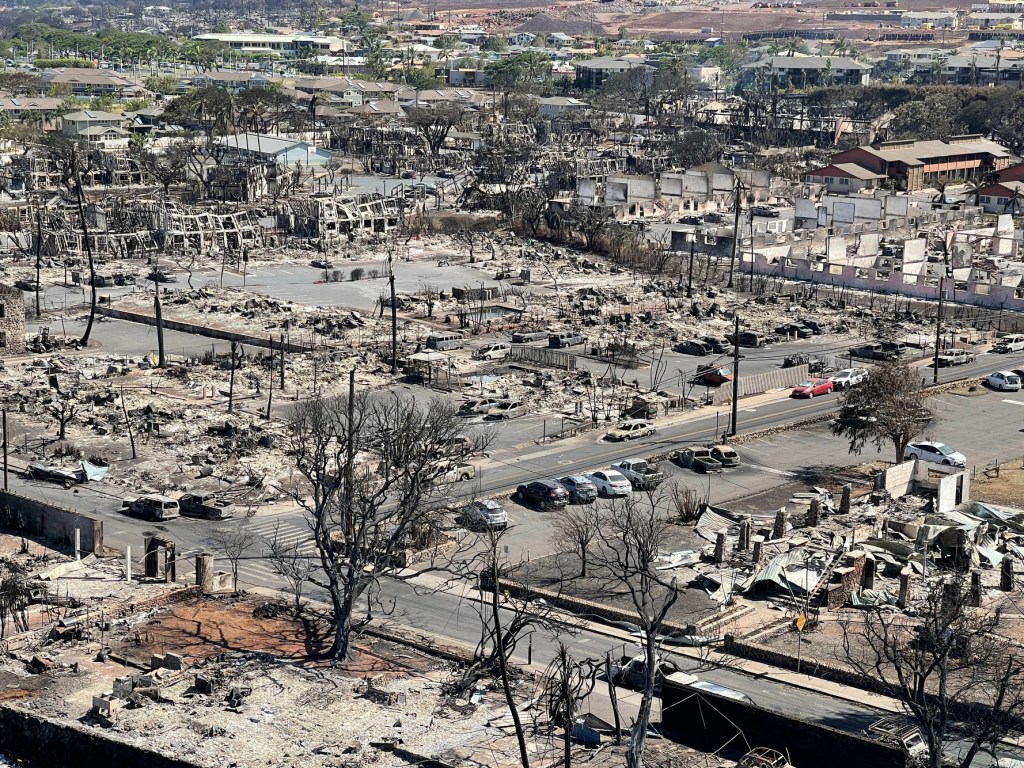
While the Maui method was initially developed in response to the unique challenges presented by the 2023 fires, it has since been used to respond to disasters on the mainland like the wildfires in Los Angeles earlier this year, according to Katherine Hull, a federal on-scene coordinator for the EPA.
“Prior to Maui, people could just ship these,” Hull said. “When we went down to LA, because we had this risk mitigation strategy — the Maui method — we employed that instead of shipping all of those batteries so that it would be safer on the road and so we could process it in bulk.”
In the three months following the Maui fires, the EPA oversaw the removal of two containers of more than 30 tons of decommissioned battery materials from electric and hybrid vehicles and power walls.
Preventing Wildfires In Ukumehame
When officials first began the wildfire risk reduction project in Ukumehame, they were taken aback by the amount of electric vehicle batteries that needed to be cleared from the area, said Chris Wegner, the county operation’s chief.
“Even as the cleanup was ongoing and we were getting debris out, we were finding more and more batteries underneath vegetation or being covered by tarps or whatnot,” he said.
Many of the batteries carried significant fire risks because they were damaged, he said. Some appeared to have been altered so that they could be used to power devices other than a car.
“When these batteries aren’t being used for their intended purpose, sometimes it can be very little that actually causes thermal runaway,” Wegner said.
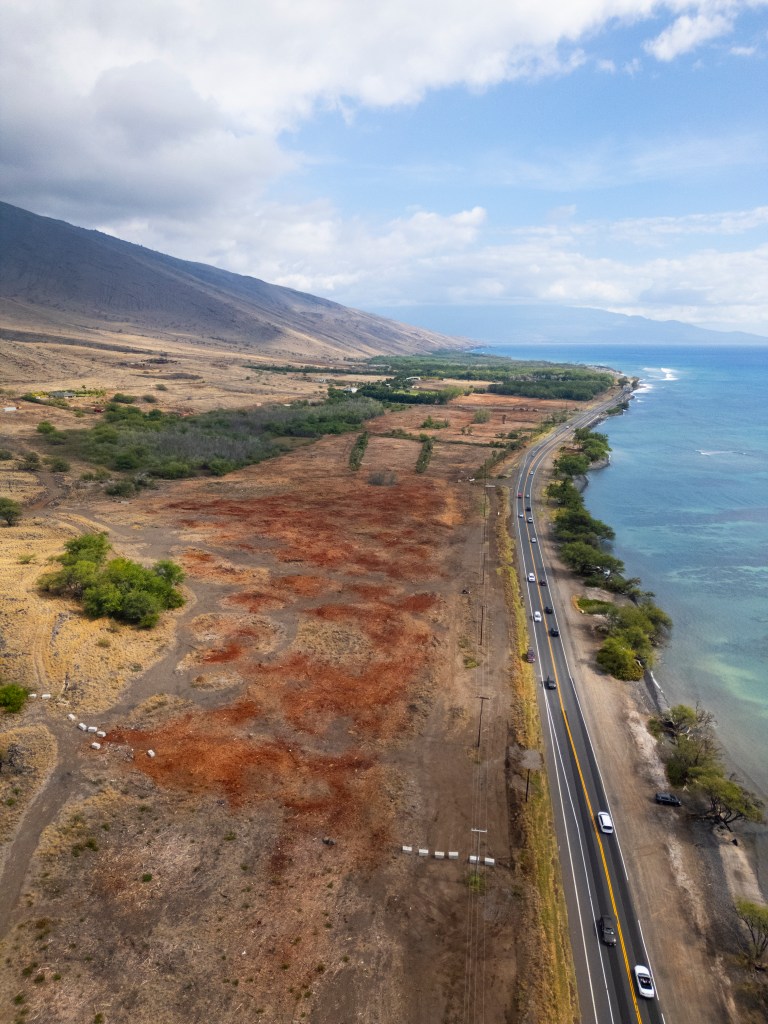
Approximately 26,000 pounds of electric vehicle batteries were removed from the site between August and November, according to the county. Wegner said a team of mechanics, electricians and various experts used the Maui method to transform the batteries into non-hazardous waste.
“The genius of this method is that every step you’re kind of troubleshooting if needed, everybody’s watching each other’s back,” he said, “and there’s emergency and health plans in place for any incident that may occur.”
As part of the same wildfire risk reduction effort, workers cleared more than 150 tons of other types of solid waste, including: 123 vehicles, two boats, 1,226 tires, an excavator, 76 tons of scrap metal, 10 drums of waste oil, 34 Freon and non-Freon appliances and a front-end loader, according to MEMA. The state Department of Land and Natural Resources Division of Forestry and Wildlife is scheduled to start a wetland restoration project at the site next summer.
The Maui method is likely to continue to evolve as experts carry out more cleanup operations, Marquez said. But for now, the EPA recommends it to local and state officials as the preferred way to dispose of lithium-ion batteries.
“Up till about this point, there really hasn’t been any good way of disposing of lithium-ion batteries. A lot of them are going into people’s trash cans and ending up in landfills and causing tons of fires, burning up garbage trucks all over the place and causing millions of dollars of damage for local entities,” he said. “Our ultimate goal is for this Maui method, or some version of it that accomplishes the same goals, to be rolled out across the entire nation and even potentially globally.”
Fires caused by lithium-ion batteries — which serve purposes that range from powering our phones to storing the massive amounts of electricity generated by solar farms — have been a growing concern for years, and the risks are expected to increase as more people drive electric vehicles and as the world increasingly shifts to green energy in an effort to slow the effects of global warming.
Wegner said that is all the more reason that the county and state officials need to continue to work together to improve local battery disposal and recycling procedures.
“We’ve given the state and the entire country now a viable option for handling this sort of hazardous waste,” he said.
Civil Beat’s coverage of Maui County is supported in part by a grant from the Nuestro Futuro Foundation; its coverage of environmental issues on Maui is supported by grants from the Center for Disaster Philanthropy and the Hawai‘i Wildfires Recovery Fund and the Doris Duke Foundation; and its coverage of climate change and the environment is supported by The Healy Foundation, the Marisla Fund of the Hawai‘i Community Foundation and the Frost Family Foundation.