HAKIOAWA —Five decades after George Helm, Walter Ritte and seven other activists landed west of this gusty bay, defying the U.S. Navy and helping spark a Hawaiian reawakening, two dozen of the volunteers they inspired work hard and fast to restore terrain once riddled with bombs.
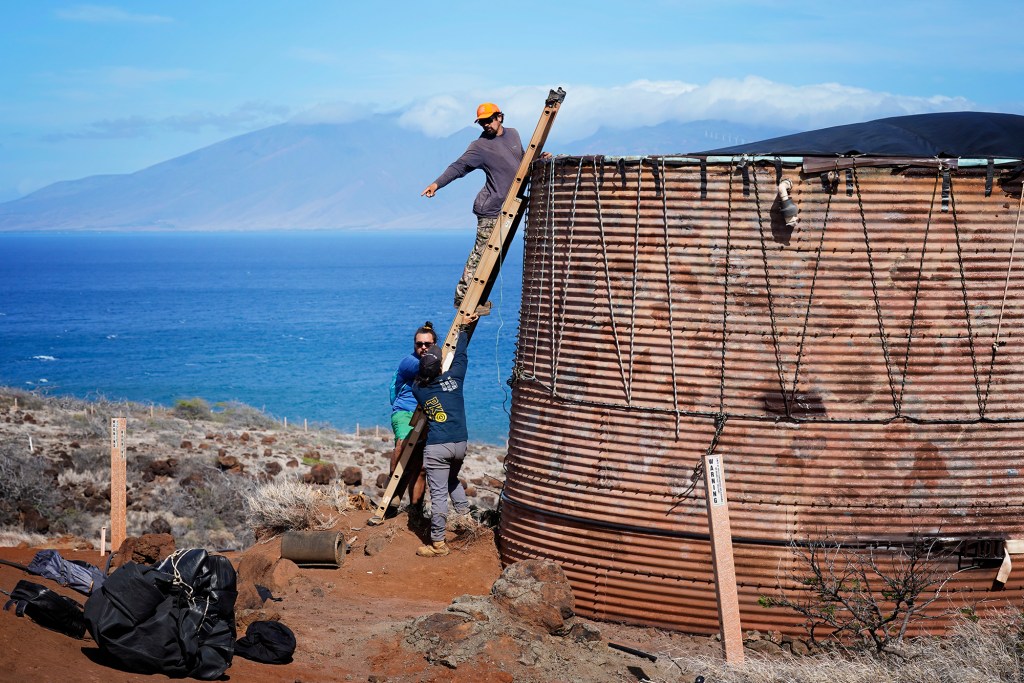
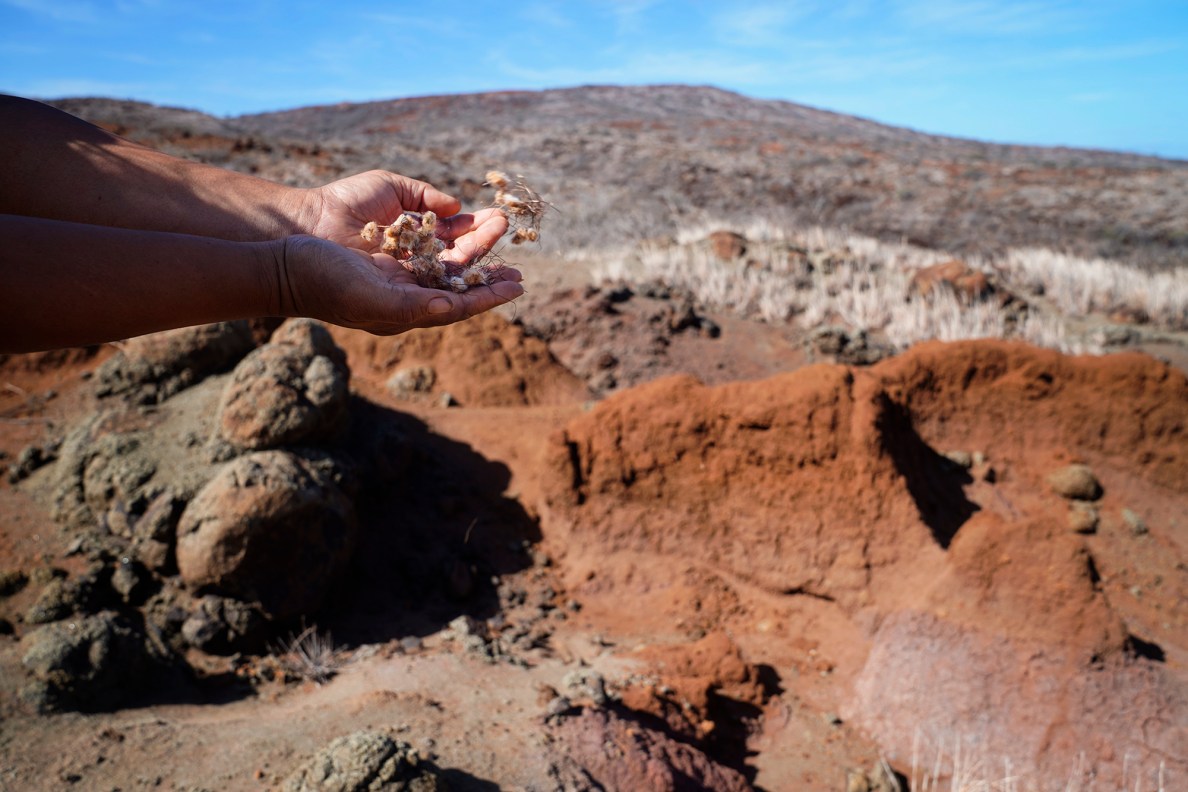
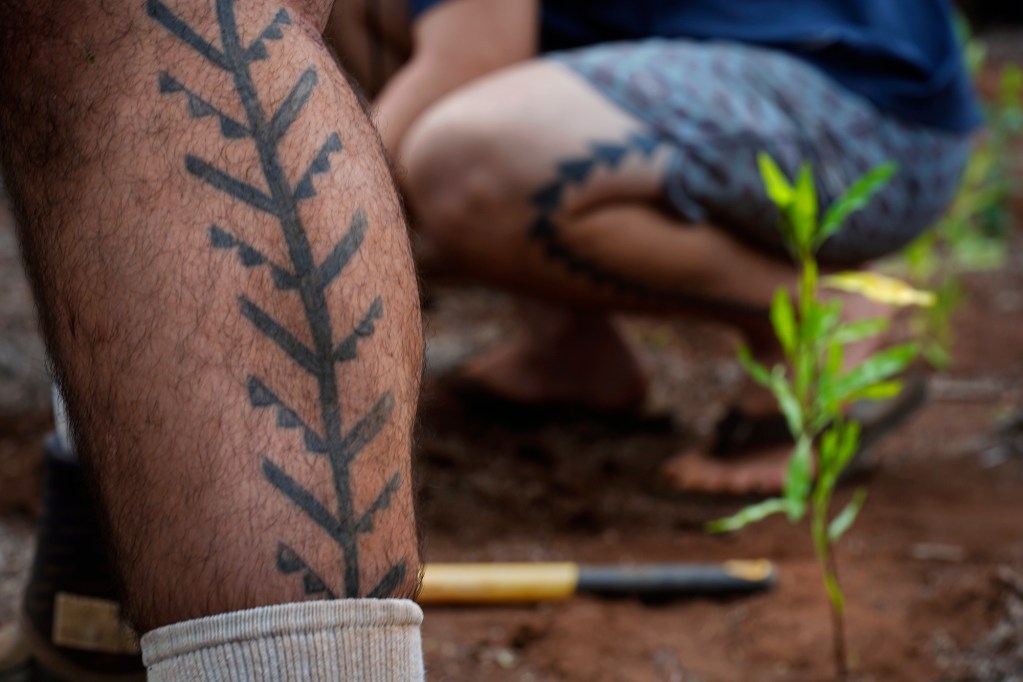
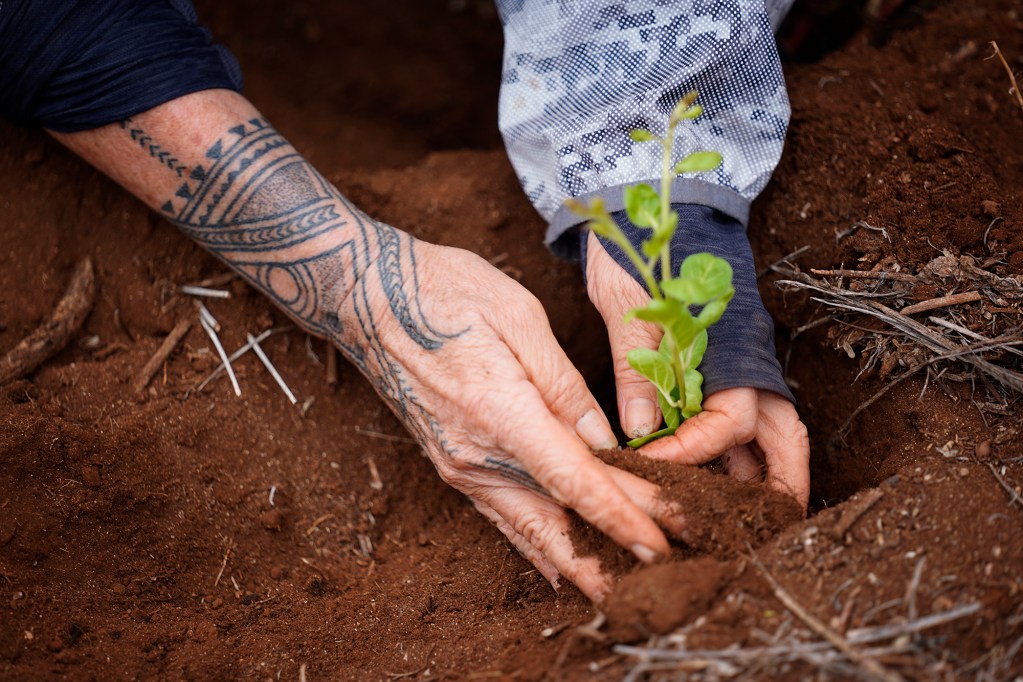
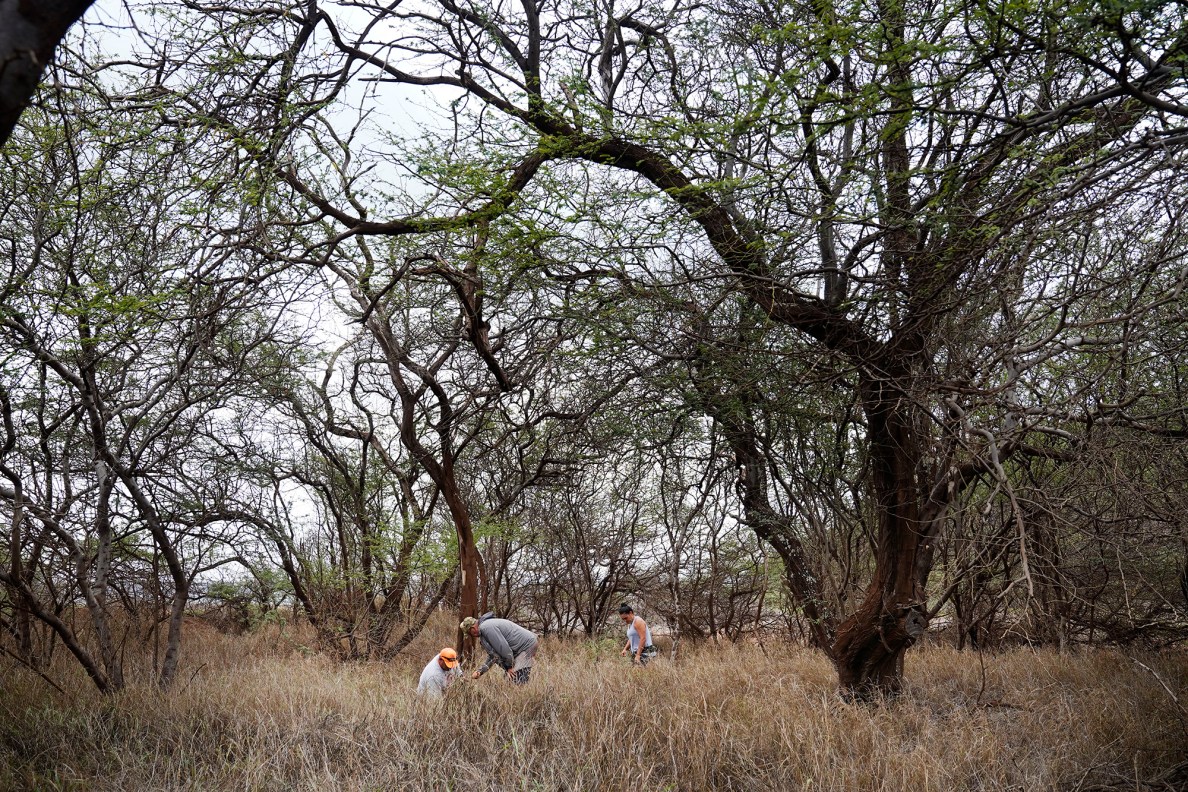
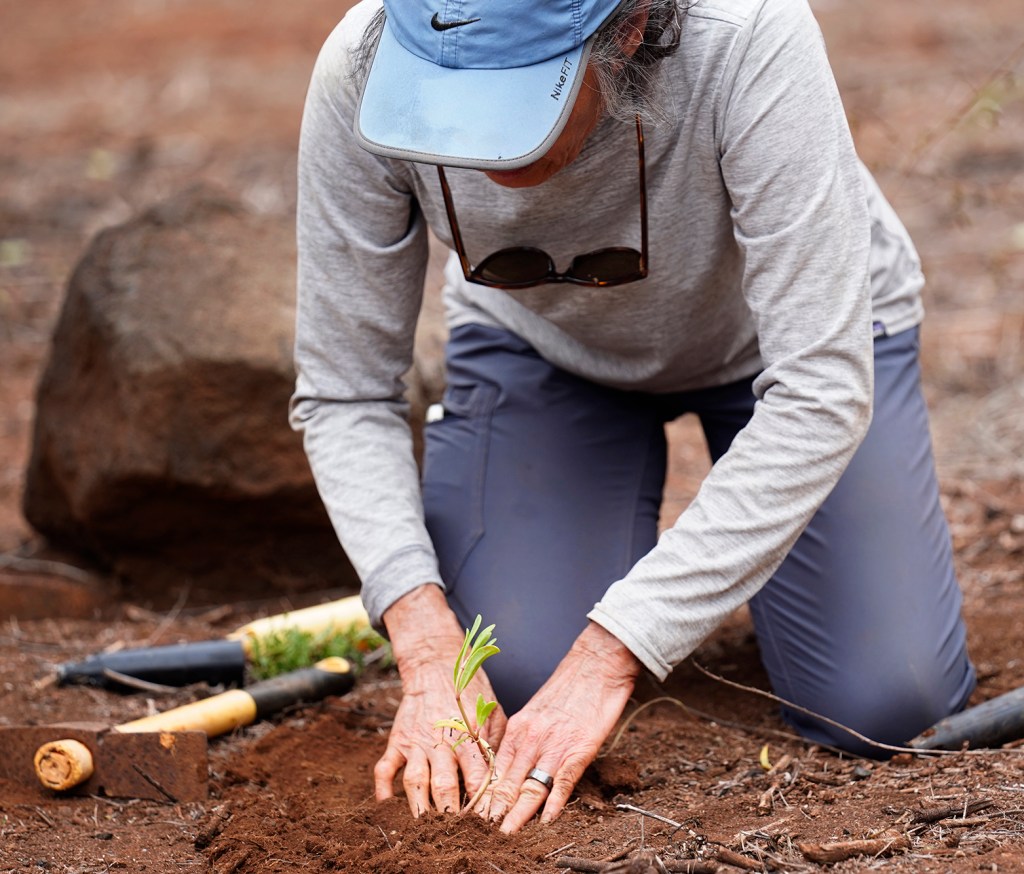
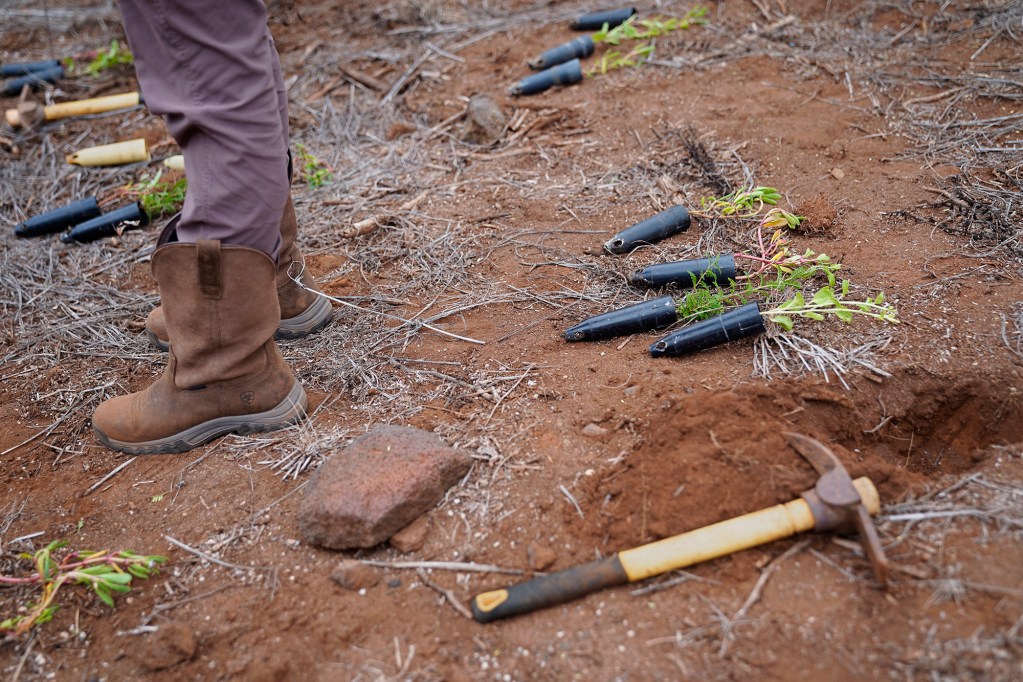
There’s plenty to get done in the precious two days they’ll have on island with limited food and supplies, all hauled ashore in waterproof bags through heavy surf. They dig native plants into Kahoʻolawe’s scrubby northeastern foothills, strategically placing them so the seeds might scatter in the valley below.
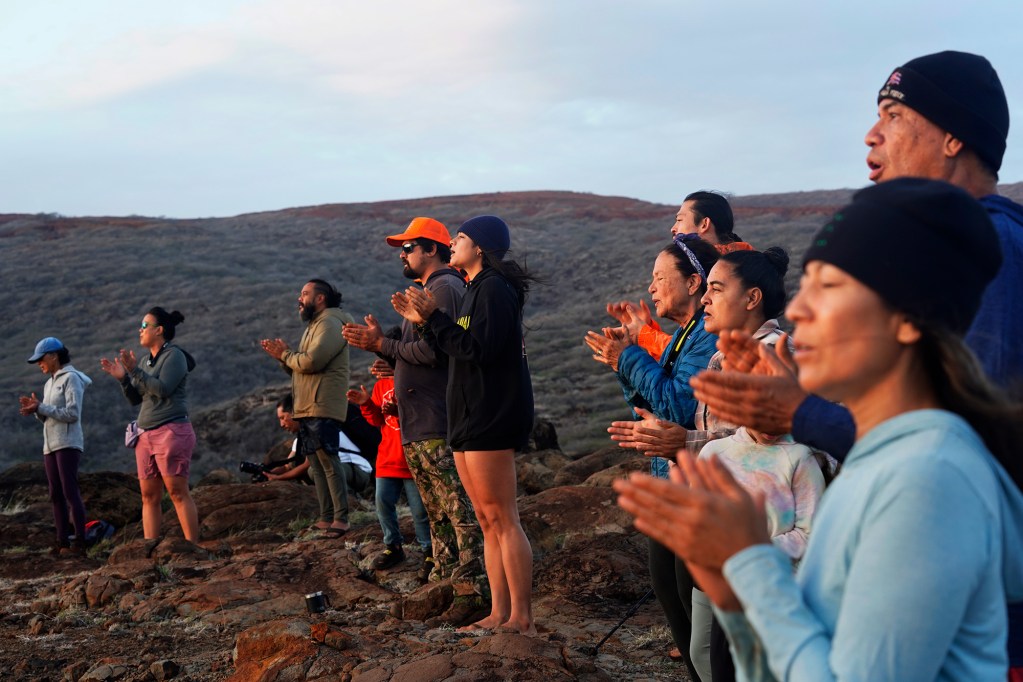
They lash a tarp over an old rain catchment tank that’ll be needed to help keep those plants alive. They also deliver hoʻokupu — offerings in the form of a chant — at an ancient fishing shrine in the rocky remnants of a seasonal fishing village that thrived prior to Western contact.
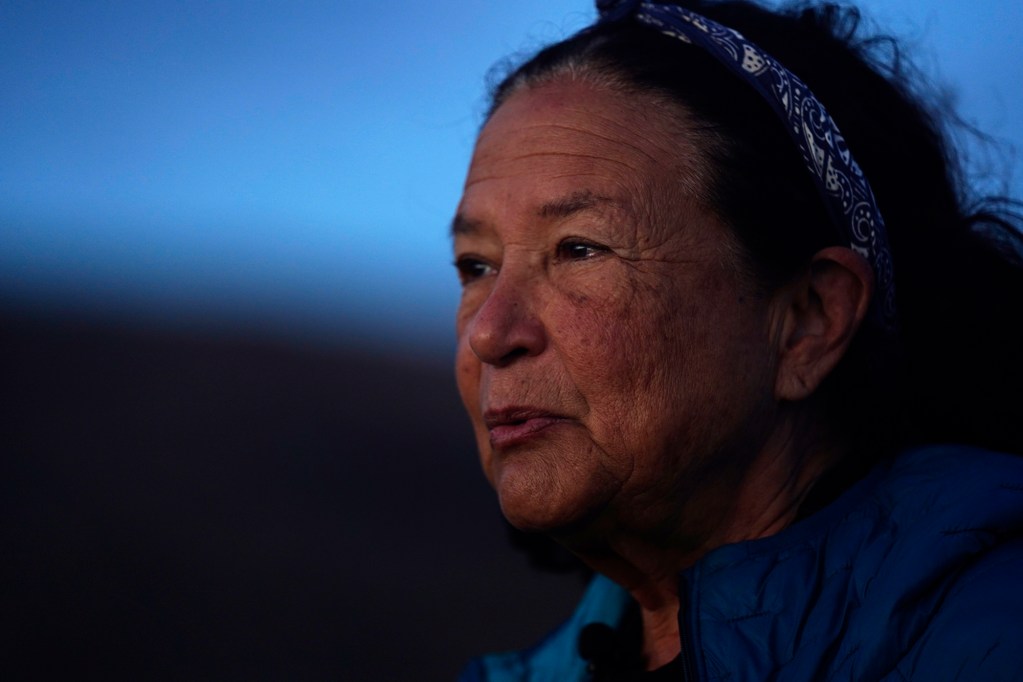


The landing of the nine activists led to a movement guided by one of its key participants, Noa Emmett Aluli, dubbed Protect Kahoʻolawe ʻOhana, or PKO, a nonprofit.
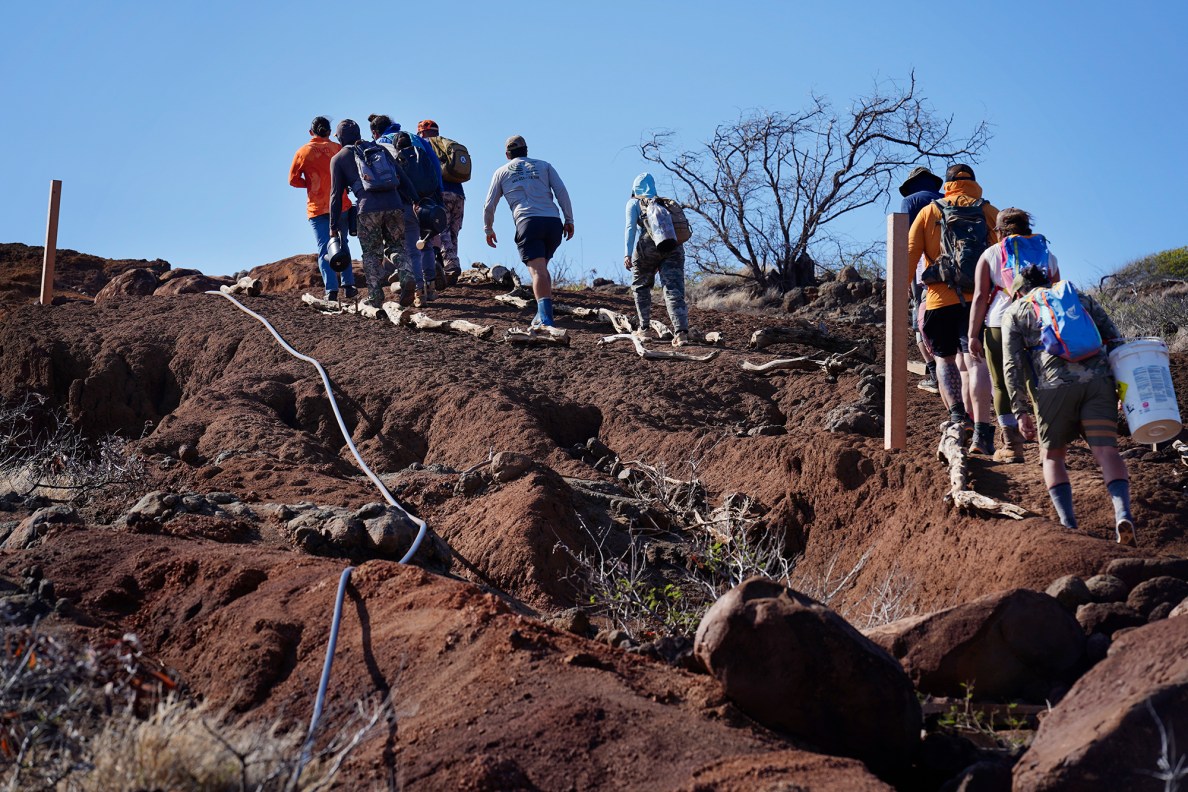
Over the past 50 years, several thousand of its volunteers have braved uninhabited Kahoʻolawe’s harsh elements. They work carefully within posts that indicate the ground beneath them has been swept for unexploded ordnance, or UXO.
The group’s members have made all these trips not just to seed the dry, caked landscape but to revive Hawaiian practices on an island they hold deeply sacred.
“The camp, the sustainable work that we’re doing over here, even just building this compound … this is not an end in itself,” PKO member Kaipu Keala said. “It’s really about the ʻāina (land) and the akua (deities) that dwell in it.”
“The ceremonies allow us to keep in mind the bigger picture, and it allows us to continue to strive for excellence,” he said. “It’s about things that are much bigger than ourselves.”
Occasionally, despite the posts, old casings and bombs appear anyway as the soil shifts and erodes. By conservative estimates, the Navy hit the island with tens of thousands of tons of ordnance as part of its own nearly 50-year testing and training campaign there, from 1941 to 1990.
Its subsequent $400 million cleanup, from 1994 to 2004, swept 75% of the landscape for UXO, with most of that done on the surface. Thus, everyone treads cautiously and follows a cardinal rule: If you see something on the ground that you didn’t drop, don’t pick it up.
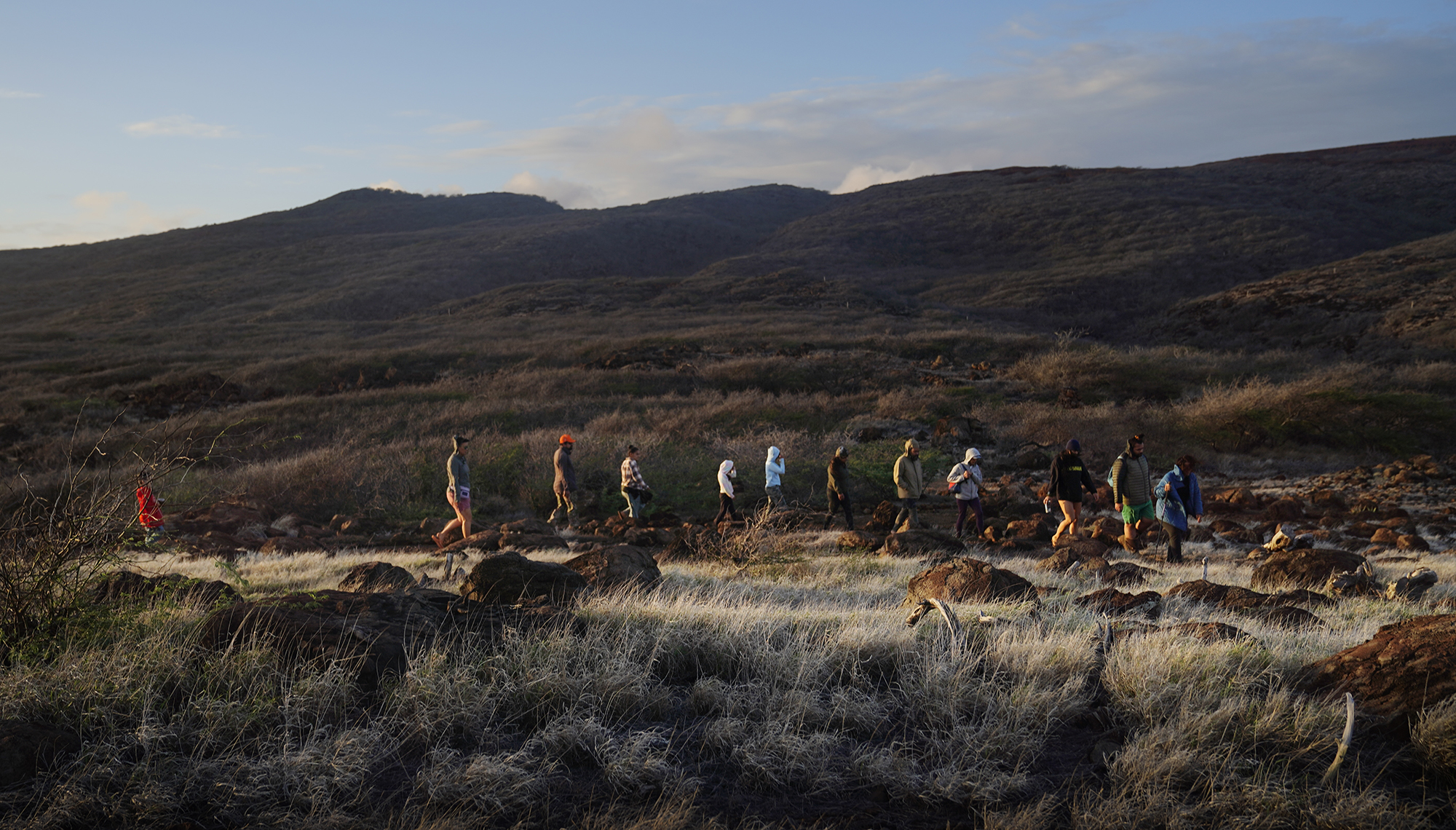
To mark the 50th anniversary of the Kahoʻolawe Nine, whose 1976 landing brought national attention to long-standing plights faced by Hawaiians, PKO looks to ramp up its efforts and expand access to the island.
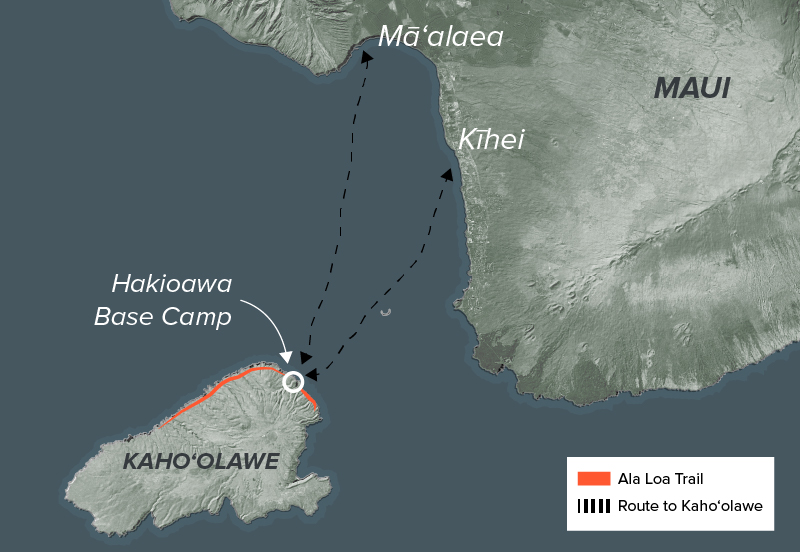
Specifically, it aims to complete in the next five years or so a rock-lined trail that encircles the island on areas clear of UXO.
That path, dubbed the Ala Loa, will open up new coastal landing sites, they say, to accelerate the environmental repairs and expand cultural practices across Kahoʻolawe. So far, just over half of the pathway is finished.
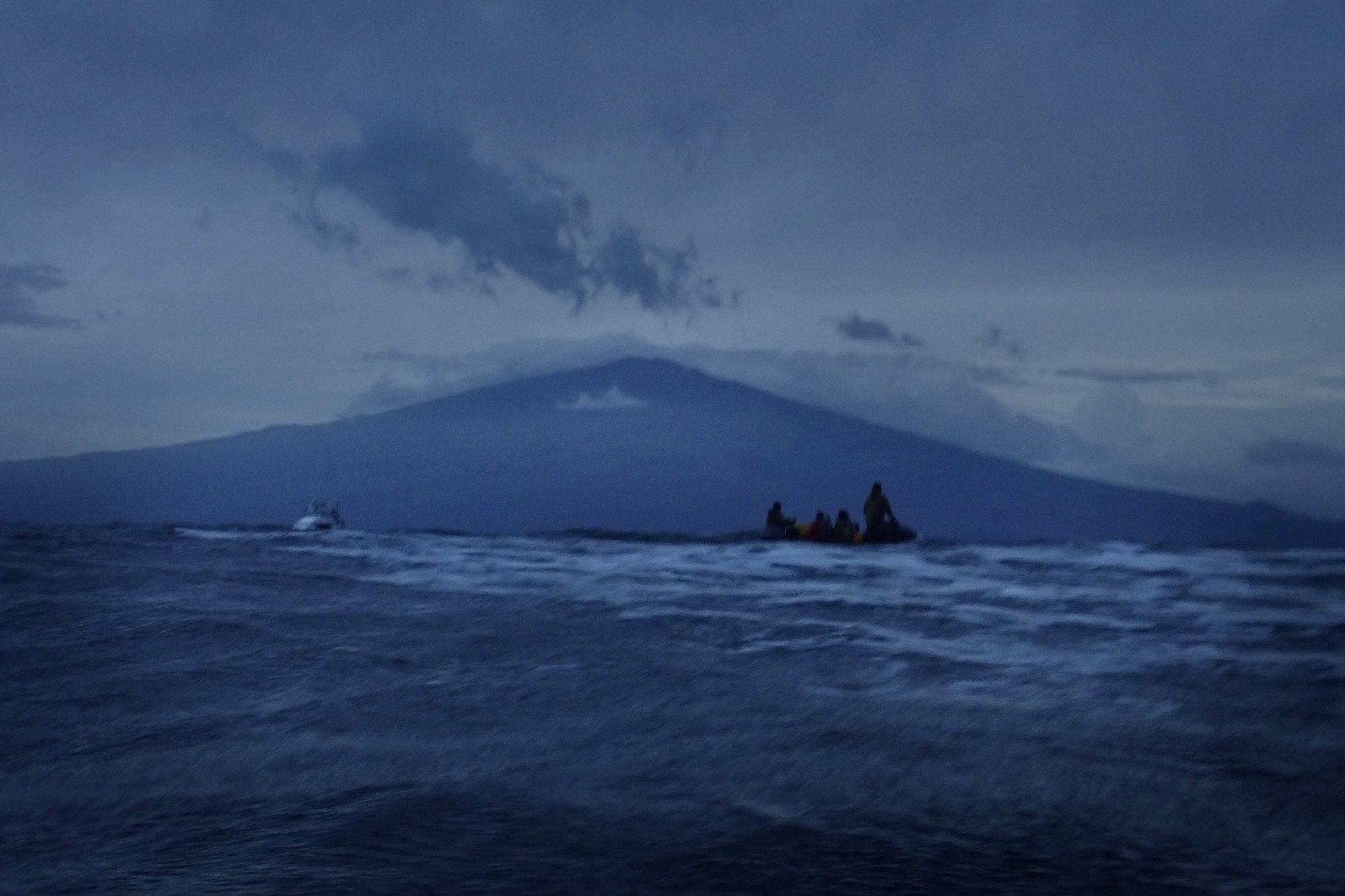
Just getting to Kahoʻolawe requires extra commitment. The island has no docks or piers, so walking ashore inevitably requires some swimming.
Volunteers board fishing boats before dawn at Māʻalaea Harbor and Kīhei’s boat landing to cross the ʻAlalākeiki Channel, where conditions often get pretty rough from the strong winds that funnel through there. As the boats approach the coast, the volunteers recite an oli, or chant, in Hawaiian, asking the island’s permission to come ashore as the sun rises.
An inflatable Zodiac raft, which PKO members call “the Zodie,” joins the boats on their bumpy trip across the channel. Its operators chant back to the volunteers that they can come ashore.
The volunteers switch in groups of four or five from the boats to the Zodie, which motors them as close to shore as the tide permits. They jump in.
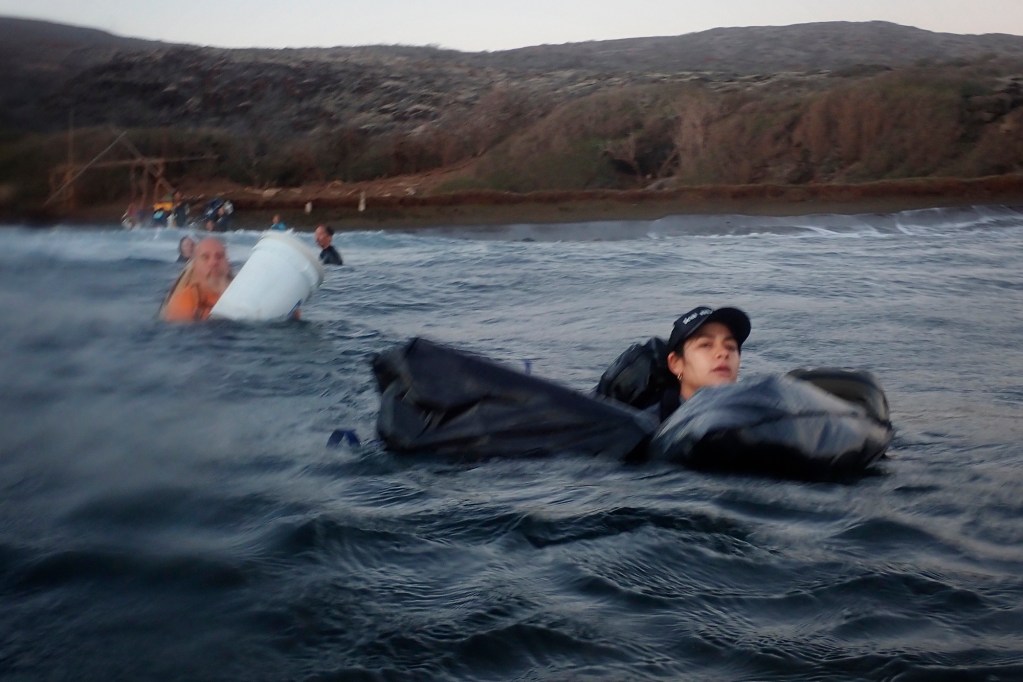
Once everyone’s in the water, the Zodie makes several more trips to the boats to gather their ukana — gear and supplies — stored in waterproof bags and garbage bags sealed with duct tape.
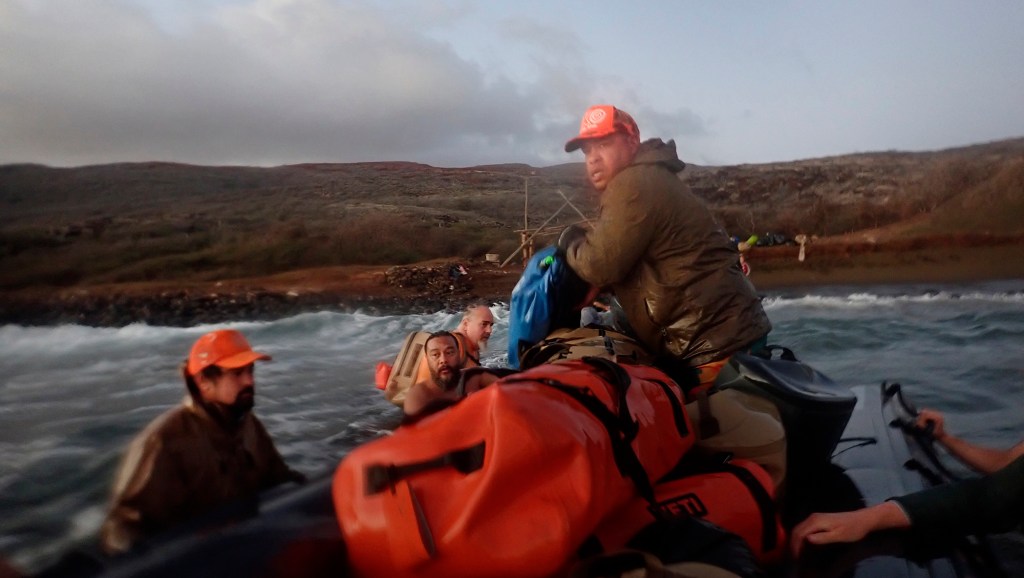
The bags go in the water, too. Everyone forms a line that extends to the Zodie and pass the gear back to the beach in as orderly a fashion as the crashing waves allow.
When it’s time to leave, the volunteers wake before dawn and do the whole process in reverse.
The nonprofit organizes about one trip a month between March and October for members and volunteers to work on Kahoʻolawe. Those who don’t live on Maui pay their own airfare to get there. They also pay some $200 in costs to cover the bus and boat trips, plus their meals.
Despite five decades of intense bombing, some 3,000 archaealogical sites and features remain across Kahoʻolawe’s wounded landscape. The island was added to the National Registry of Historic Places in 1981, almost a decade before the Navy stopped target practice there for good.
Heiau, or temples, ko‘a, or shrines, and petroglyphs dot terrain that’s never been developed as the other Main Hawaiian Islands were, offering a unique window to the past. Many of those sites, including the stone outlines of nearly 200 houses, overlook the ʻAlalākeiki Channel at Hakioawa by the PKO basecamp.
The group stewards these sites, and it’s where much of its cultural practice flourishes.
Davianna Pōmaikaʻi McGregor, a University of Hawaiʻi ethnic studies professor emerita and PKO leader, believes topography helped save the ancient fishing village at Hakioawa. Most of the Navy’s amphibious landings occurred on the island’s opposite west side, she said, where the terrain was easier to access.
Much of the ship-to-shore shelling also took place on that west side, McGregor said, and the military targeted the center of Kahoʻolawe. In 1980, a court agreement dictated that the Navy couldn’t bomb the eastern third of the island at all. That included Hakioawa.
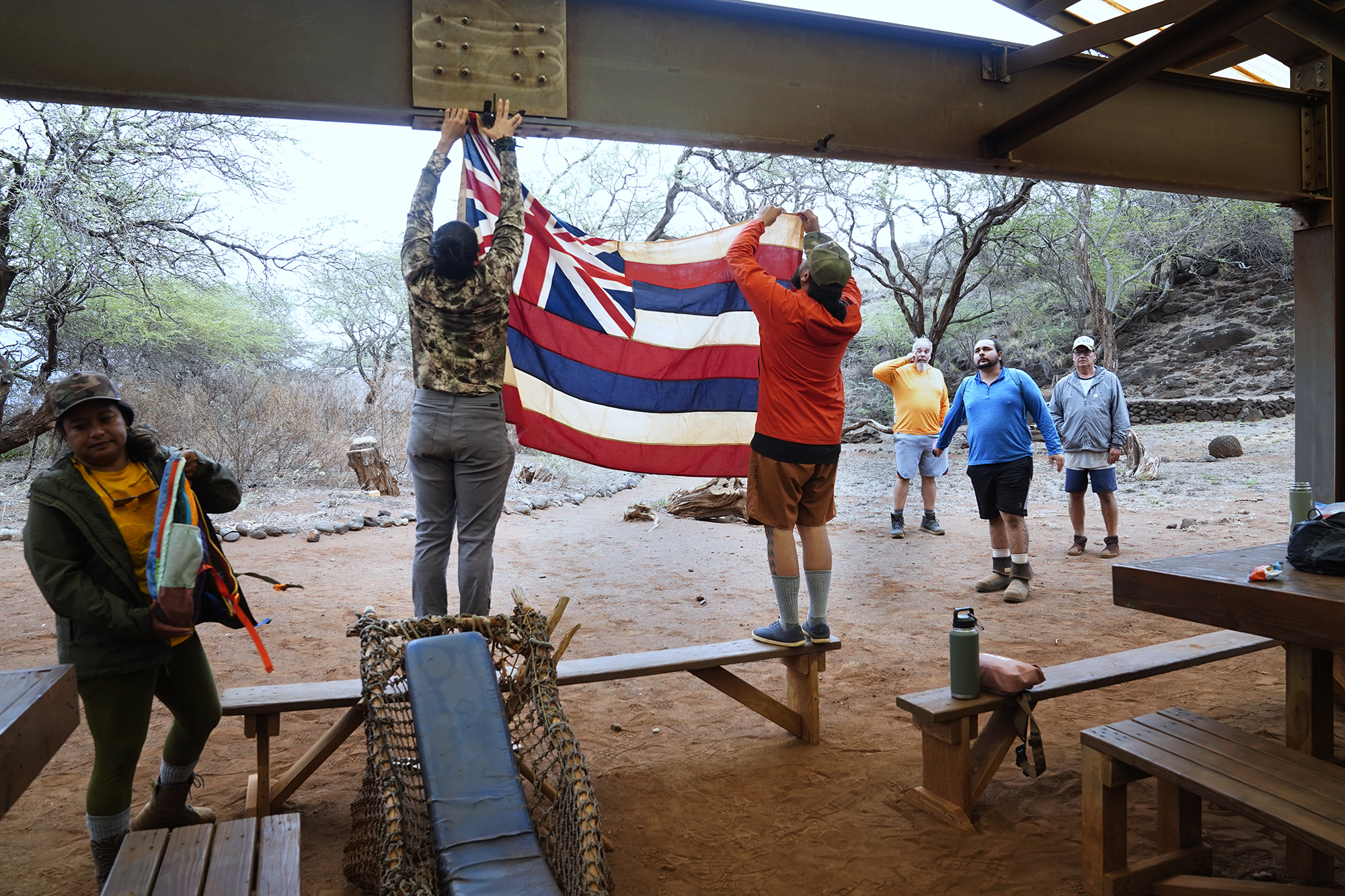
Today, the camp is often boisterously alive with laughter and banter. In other moments, volunteers quietly reflect or solemnly chant in unison, communing with the space around them.
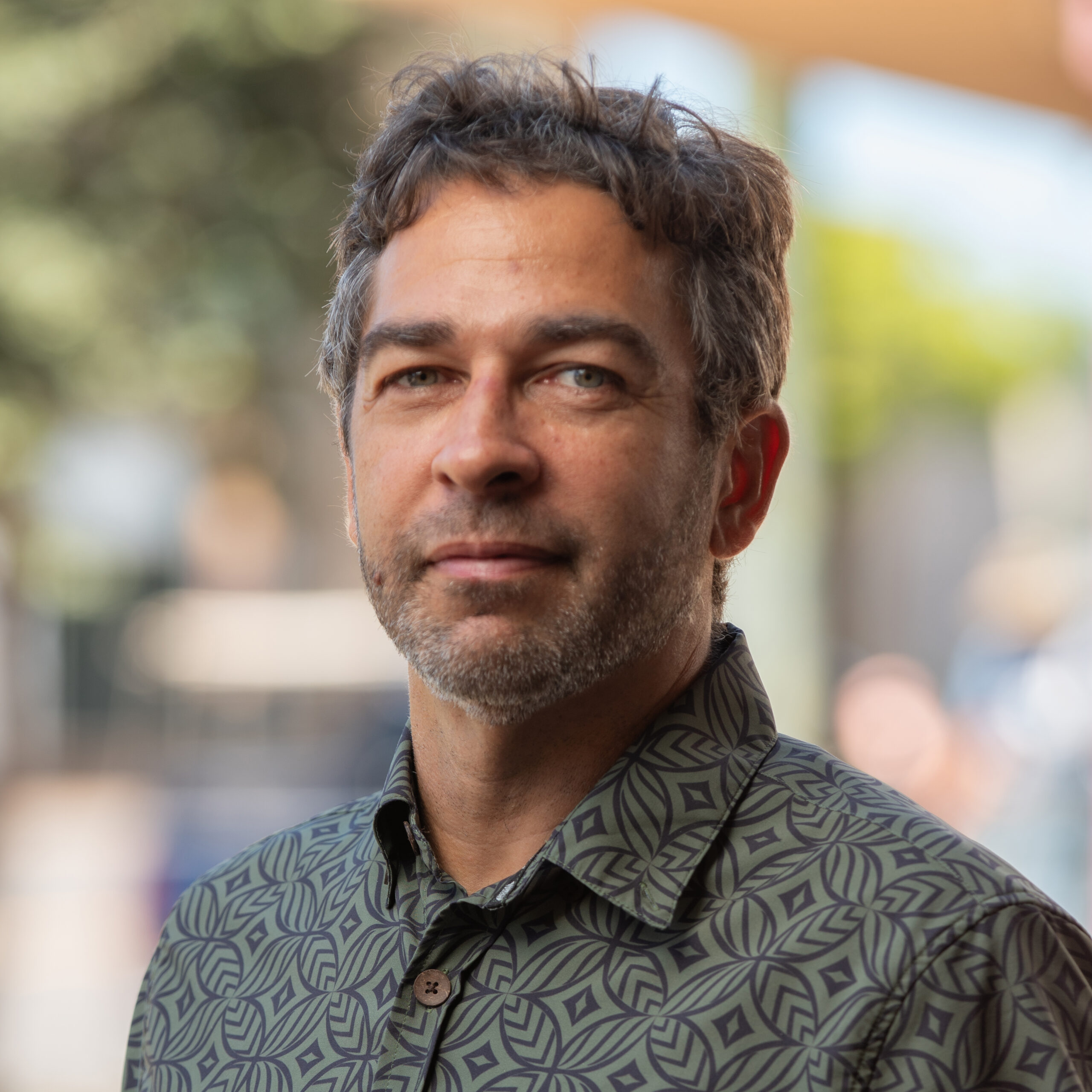
“There’s no roads. There’s no stores. There’s no parking lots,” Craig Neff, one of the group’s kua, or leaders, said hours before departure. “The raw energy is still there.”
One of the main drivers that finally compelled the Navy to let Hawaiian activists legally visit Kahoʻolawe, kua C.M. Kaliko Baker said, was the 1978 American Indian Religious Freedom Act. It forced the Navy to acknowledge the Target Island, as Kahoʻolawe became known, was an important cultural site, too.
When they were negotiating the terms of the 1980 consent decree, the Navy essentially asked, “What’s your Christmas? What’s your Easter?” Baker said. “When do you have to come on island?”
The answer centered on Lono, the Hawaiian deity of agriculture and rain. Practitioners now ask Lono to bring over the clouds and rains from Maui during what’s known as Makahiki, a roughly four-month stretch of Hawaiʻi’s rainy season, to help heal the landscape.

Pilgrims march across the center of the island on a UXO-swept route during rituals that are kapu — sacred and private. Only the participants themselves are meant to be there.
However, in the early 1980s Navy personnel accompanied the practitioners during Makahiki rites, Neff said, despite the participants’ objections. Relations between PKO members and military personnel at that time, he said, were tense.
The Navy presence was “super-distracting,” he recalled. “But for us, that helped us focus on what we were doing, blocking out all of this so that you could complete your ceremony as pono (properly) as possible.”
Eventually, he said, lawyers for the practitioners, including Republican former state Rep. Cynthia Thielen, helped persuade the Navy to stay away during those rites.
Navy crews in the early 1980s also placed a suit of armor about the size of a garden gnome, Neff said, at the entrance of their camp near the PKO’s camp. The message was clear, Neff said: He and the others were to keep out.
“It was their akua,” he joked of the diminutive knight, using the Hawaiian word for deity.

“Just by their presence, it really is easy for this thing called hatred to come up. And I was young,” recalled Neff, who was 21 at the time.
“I thought, you know, you’re fighting. People have died for this island,” he said, referring to activists George Helm and James Kimo Mitchell.
Helm and Mitchell were also in their 20s when they disappeared under mysterious circumstances in 1977. The two men were last seen leaving Kahoʻolawe on a surf board in heavy seas for Maui after trying unsuccessfully to find and extract other activists who’d hidden there in protest during Navy operations.
Helm was a charismatic musician and rising community leader. He played a pivotal, early role in the effort to stop Naval operations on Kahoʻolawe and restore access there.

“If all of us Hawaiians can go over there and touch it,” Helm once said of the island, “we all come together.”
Today, a memorial for Helm and Mitchell rests on a cliff overlooking Molokini Crater and South Maui, not far from the spot where they disappeared.
“It’s not like how we come up today. It’s a super heavy in-battle feeling, yeah?” Neff said. Those feelings eased as he got older and as access to Kahoʻolawe improved, Neff said. He grew past any hatred of the Navy’s presence. “Aloha prevailed.”
In 1990, the Navy ceased operations there. It handed the island back to state control. Aluli, who died in 2022, and his fellow PKO members forged ahead.
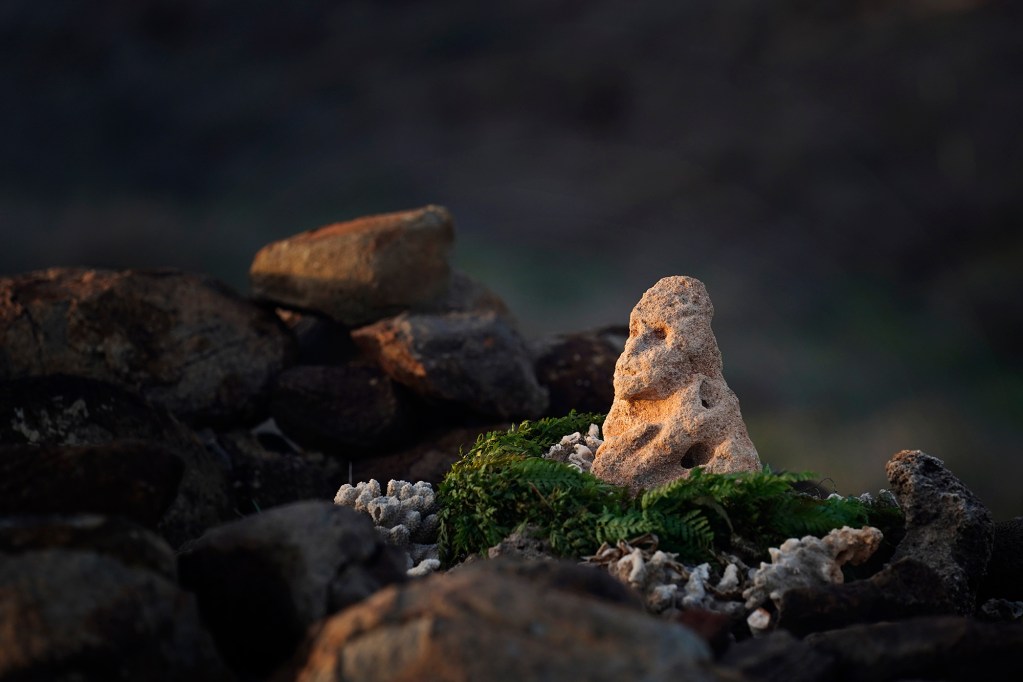
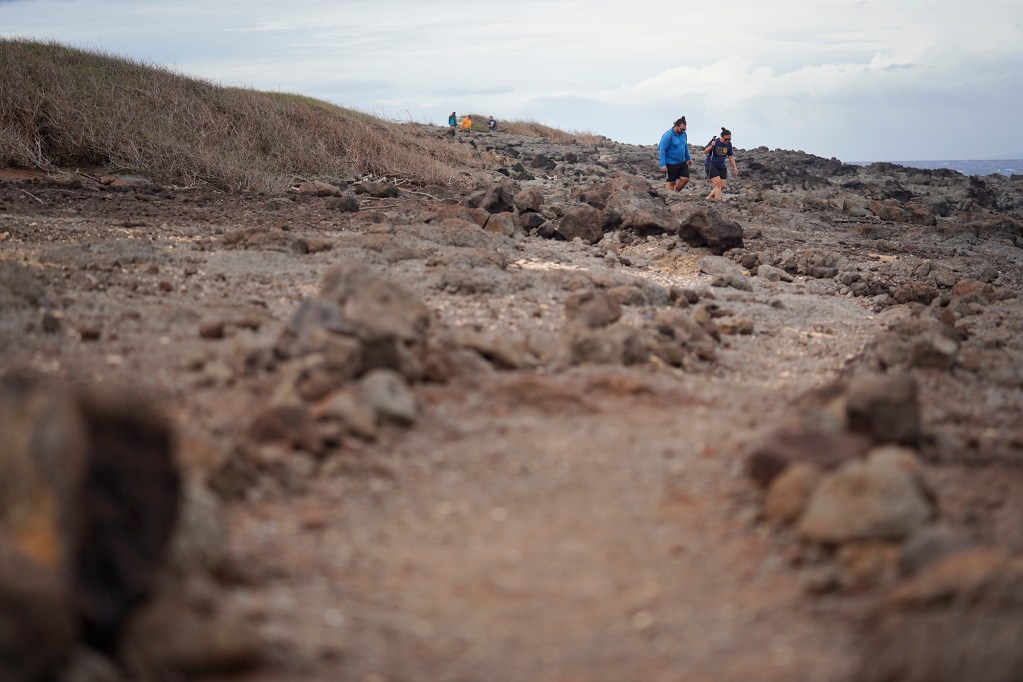
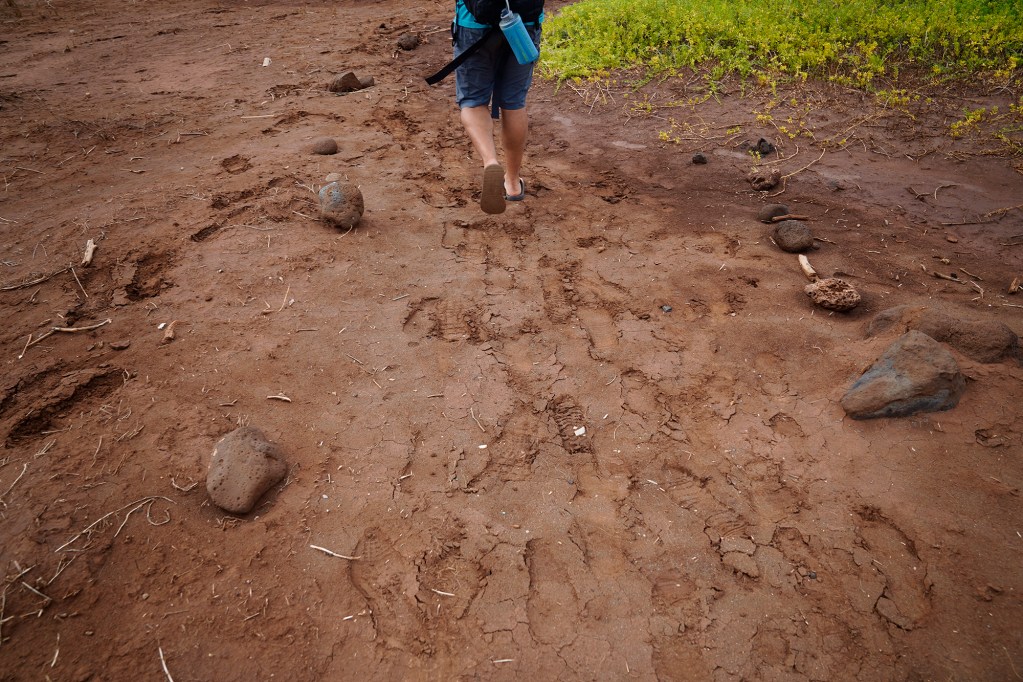
Building the Ala Loa path is arduous and risky. Since 2010, the group’s more experienced and qualified volunteers have carved some 17 miles of paths around the island, kua CJ Elizares said. That includes 10.6 miles that hug the coastline.
A UXO specialist with the Kahoʻolawe Island Reserve Commission accompanies the volunteers. The commission oversees the island for the state and is helping PKO complete the Ala Loa.
The path’s planned routes are swept three times with metal detectors, Elizares said, as crews gradually cut down invasive trees and remove the vegetation. All of the work, according to commission Director Michael Nahoʻopiʻi, occurs on surfaces cleared by the Navy.
Despite all the precautions, crews still stumble upon UXO, Elizares said, including decades-old white phosphorus canisters that never ignited. When that happens, they flag those spots, back up 200 feet, and pick a new route forward.
The difficult work is needed, Elizares said, to link up access to the 69 or so ko’a, or shrines, and other archaeological sites scattered around the the island. The path is culturally significant, Baker added, because it represents Lono’s journey around the island.
PKO looks to do eight trips a year dedicated just to Ala Loa construction, Elizares said. That should finish the path in the next five years.

After a full day’s work, the PKO members huddle in the solar-powered light of the Hakioawa base camp to discuss ideas for a 30-second television spot they’ll air during the upcoming Merrie Monarch Festival, one of Hawaiʻi’s premier cultural events.
What message should they send the public after 50 years of struggle, tragedy, triumph and restoration?
The conversation lands at Hawaiʻi’s active U.S. Army sites, including the Pōhakuloa Training Area on the Big Island, whose 65-year state leases are soon up for renewal. Gov. Josh Green wants to secure $10 billion in federal investment in exchange for the Army’s continued use. He’s expressed concern that the Trump administration could seize the lands through eminent domain.
Many activists, though, including PKO members, want to see the Army relinquish those sites entirely. The past 50 years on Kahoʻolawe, they say, are a beacon to show what’s possible.
“Stopping the bombing at Pōhakuloa sounds impossible, right?” Neff said. “This was impossible. So nothing is impossible.”
Lots of ideas get tossed around for the TV spot. In the end, everyone agrees on a catchphrase.
Not pau yet. Not done yet.

Civil Beat’s coverage of environmental issues on Maui is supported by grants from the Center for Disaster Philanthropy, the Hawai‘i Wildfires Recovery Fund and the Doris Duke Foundation, and its coverage of Maui County is supported in part by a grant from the Nuestro Futuro Foundation.