

Fewer Hawaiʻi Homes Are Vacant As Number Of Households Grow
Hawai‘i residents are getting older and more of us are living with disabilities, according to the latest census data.
Hawaiʻi added 33,000 new households between 2020 and 2024, but the average household size has shrunk, according to new data from the Census Bureau.
Variations in the types of households increased with more couples cohabiting instead of marrying, more householders living alone –– including men with no spouse –– and more solo householders aged 65 and over.
Over the same period, the number of unoccupied housing units across Hawaiʻi fell from 83,250 to 75,443, perhaps indicating the spaces those smaller households are taking up.
Taken as a whole, the results show Hawaiʻi households becoming more socially diverse and trending away from the extended ʻohana household model.

The 5-Year American Community Survey estimates released by the U.S. Census Bureau Thursday are used for allocating financial resources and reveal key details about how the state is changing.
Comparisons between the new survey and the one for the preceding five-year period show there were 492,453 households in Hawaiʻi at the end of 2024 compared to 459,424 households at the end of 2019.
But the average household size fell below an average of three people per household and couples in those households are slightly less likely to be married.
The average family size also dipped from 3.58 to 3.4 people as the percentage of Hawaiʻi households with children under age 18 fell from 28.2% to 26.6%.
That means there are slightly fewer keiki to care for, even as the population continues to skew older and more kūpuna are living alone. Four percent fewer kūpuna are living with their grandkids.

Fertility rates tell part of that story, with 1,300 fewer women aged 15 to 50 giving birth between 2020 and 2024 than in the five years prior.
Slightly more children were now likely to be living with a couple who were cohabiting rather than married, and Hawaiʻi households also had fewer other relatives under the same roof.
Hawaiʻi’s population pyramid continues to get more top-heavy, with over 20% of the population aged 65 years and older — an increase of around 2 percentage points since the last survey.
That demographic shift is resulting in more of Hawaiʻi’s population becoming dependent on social security, as well as drawing on retirement income to weather the coronavirus pandemic and periods of high inflation.
Hawaiʻi’s disabled population has also increased the recent survey found, with 12.9% of the population living with a disability at the end of 2024, an increase of 2 percentage points since 2019.
Changes In Maui
The new census release is the first to include data from the coronavirus pandemic of 2021 and 2022 and the full year following the Maui wildfires in August 2023.
Several measures in Maui County data reflect the impact of those events.
The average work commute time on Maui at the end of 2024 was 23 minutes, an increase of nearly two minutes since 2019. County authorities reported that in early 2025, the number of residents who remained displaced by the fire was extremely high, generating longer travel times.
But the number of people working from home in Maui County doubled from 2019 to more than 10% at the end of 2024.
The new survey also shows the slow progress Maui County has made in addressing its housing shortage, with a net gain of less than 1,000 new housing units added after taking into account the 2,200 structures lost in the fires. There were 72,279 at the end of 2019 and 73,169 at the end of 2024.
The number of housing units in the state increased by 25,200 from 542,674 at the end of 2019 to 567,896 at the end of 2024.
Poverty Remains Entrenched
The number of Hawai‘i residents living in poverty remained essentially unchanged over the last decade.
Ten percent of the state’s population was classified as living in poverty at the end of 2024, the census found. The picture is more nuanced at the county level, especially in Hawaiʻi County where the poverty rate is five percentage points higher than the state’s overall.
The latest ACS data show the Big Island’s poverty rate dropped from 15.6% to 14.9%, mostly due to a significant decrease in the percentage of children living in poverty. Poverty rates for adults actually increased slightly, with seniors seeing the largest increase — from 9.8% to 10.8%.
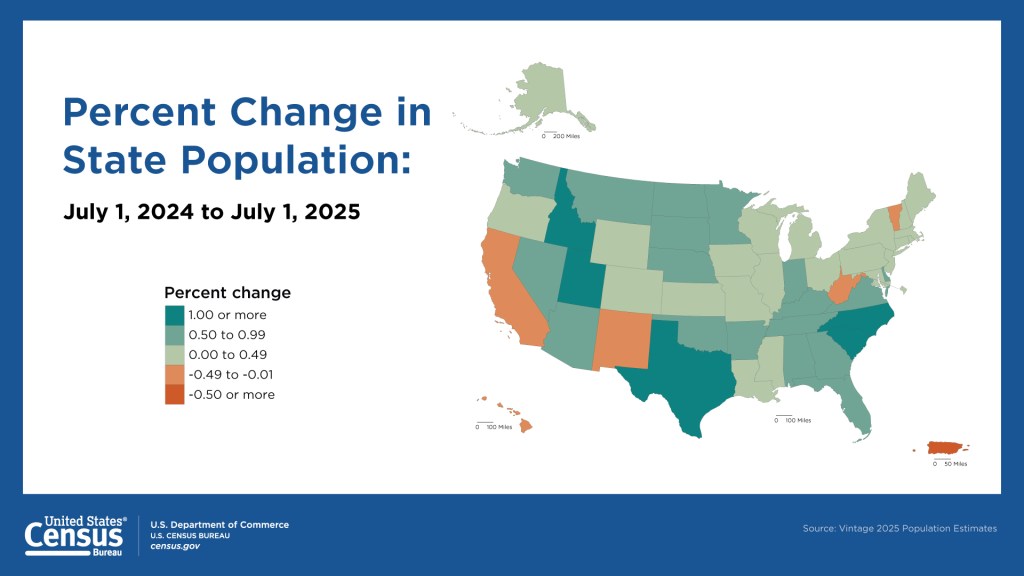
In a separate release this week, the Census Bureau reported that population growth in the U.S. “slowed significantly” between July 1, 2024, and July 1, 2025, mainly due to a sharp decline in international migration. Data on Hawaiʻi’s population show changes across those 12 months were less than one percent, among the lowest in the nation.
Note on sources: The American Community Survey is conducted annually and is considered more accurate for assessing trends in smaller populations and geographic areas and informs many federal funding priorities. The results are based on responses from 3.5 million American households.
The results highlighted in this story are considered “statistically significant” by the U.S. Census Bureau, which means they are large enough represent real change and not to be the result of statistical or other errors.
“Data Dive” is supported in part by the Will J. Reid Foundation

