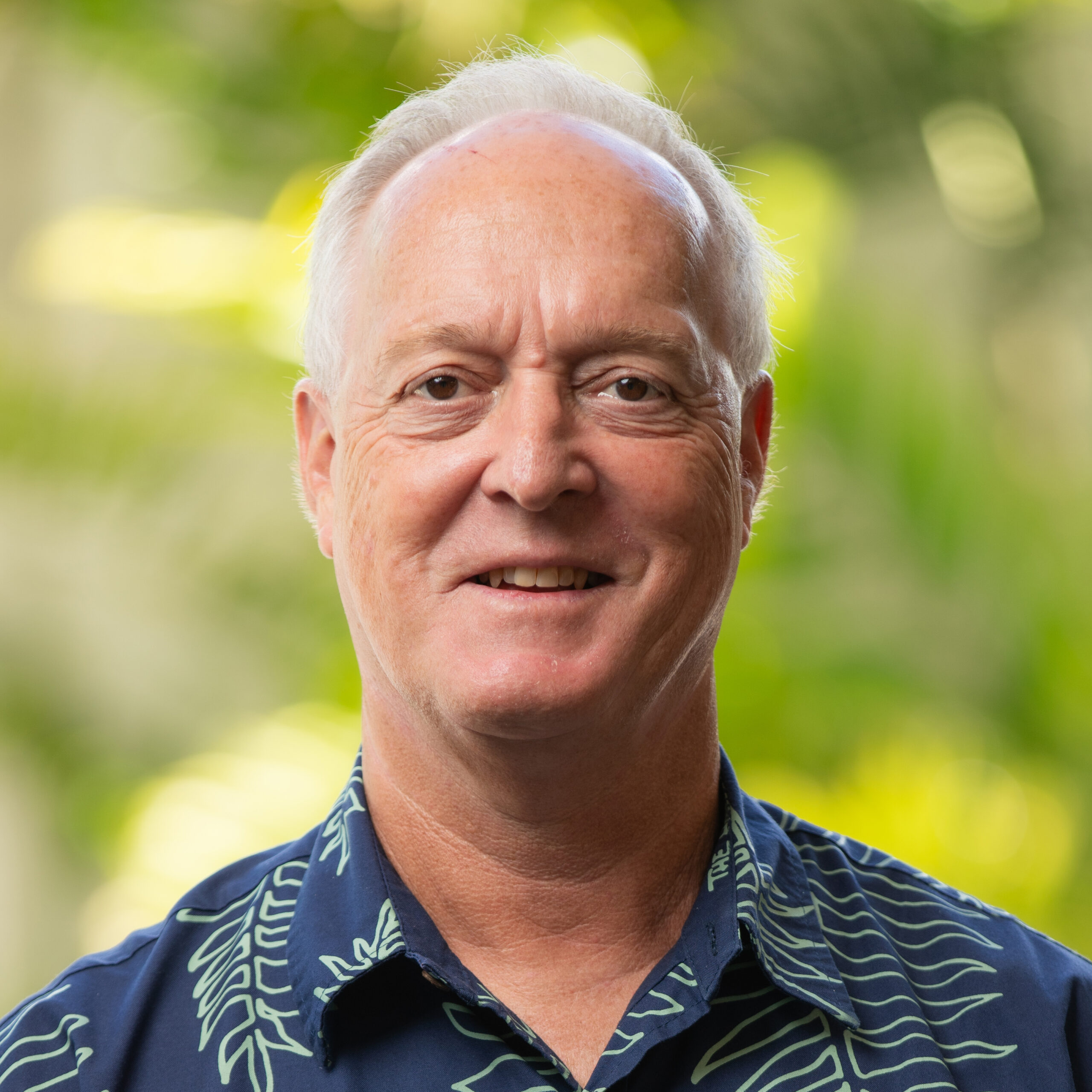
Hawaiʻi Governor Pledges To Build On Tax Cuts, Homelessness, Cost Of Living
Gov. Josh Green talked up the wins so far in his first term during his State of the State address.
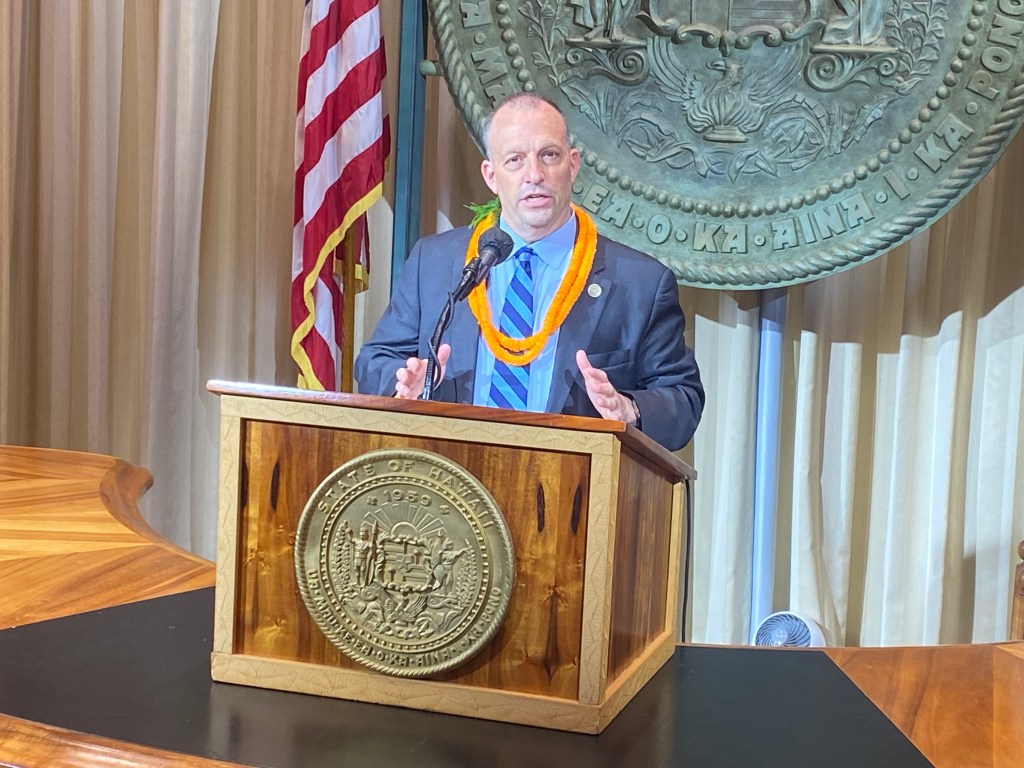
Gov. Josh Green made a case Monday for suspending the generous state income tax cuts scheduled to take effect over the next three years, and also proposed the state sweeten state tax credits for film productions in Hawaiʻi that employ local workers.
In his fourth annual State of the State address at the State Capitol, Green highlighted a lengthy list of achievements since taking office in 2022 that he said addressed the top priorities residents care most about: the high cost of living, the lack of affordable housing and the persistent problem of homelessness.
And he assured lawmakers that he wanted to honor the massive state tax cut approved by the Legislature in 2024 in spite of an ongoing economic uncertainty threatening revenues.
“I am proud to report to you that after three years of overcoming enormous challenges together, the state of Hawai‘i remains strong and resilient,” he said.
There was little in the way of new ideas in the 36-minute State of the State. It was more aspirational and less on specific details. But many of those details were shared later in the day once the administration’s legislative package was posted online.
While wide-ranging, as the legislation encompasses the interests of the governor’s entire Cabinet and all departments, a particular emphasis is on affordable housing. For example, there are bills to make permanent a pilot program aimed at lowering the cost of homes for workers in certain professions, and to clarify what is meant by “mixed-income rental projects” in the statute governing the state’s Rental Housing Revolving Fund, which provides low-interest loans to housing developers.
As for the speech itself, it served largely as a recap of the past three years and a pledge to build on those deeds and to stay the course.
Among those accomplishments, he said, was the launching of the Sun Bucks to provide summer food benefits to eligible children statewide.
“Because of that work, more than 11,000 students in need now have their meals covered — and next year, that help will reach families earning up to 300% of the federal poverty level,” he said. “That means more kids coming to class fed, focused, and ready to learn — a small investment that will truly help these students and our entire state.”
The state also doubled the earned income tax credit and the food tax credit, and increased the child and dependent care credit — “saving Hawai‘i families about $88 million per year in taxes and making our state a little more affordable,” he said.
Income Tax Cuts To Be Paused
Green reiterated that there would be no changes this year to the massive state income tax cuts passed in 2024, but that the planned tax cuts for 2027 through 2029 will be “paused” for all state taxpayers.
“This proposal will bring back $1.8 billion for critical services — $600 million of which I propose must be used for food security and child care needs,” he said.
Green told reporters after his speech that he expects lawmakers will amend that plan, but if the tax cuts are not suspended, “we will start running in the red. That’s what our numbers show right now.”
“We would have been able to keep all of the tax package that was passed two years ago had we not seen the pretty devastating financial picture from the shutdown in federal government, the tariffs and the decline in tourism,” Green said at the press briefing.
But the governor also wants to expand what’s known as stackable film tax credits for hiring local actors and crew. The credit cap would be removed for large productions spending $60 million or more in Hawai‘i, including streaming service productions for the first time.
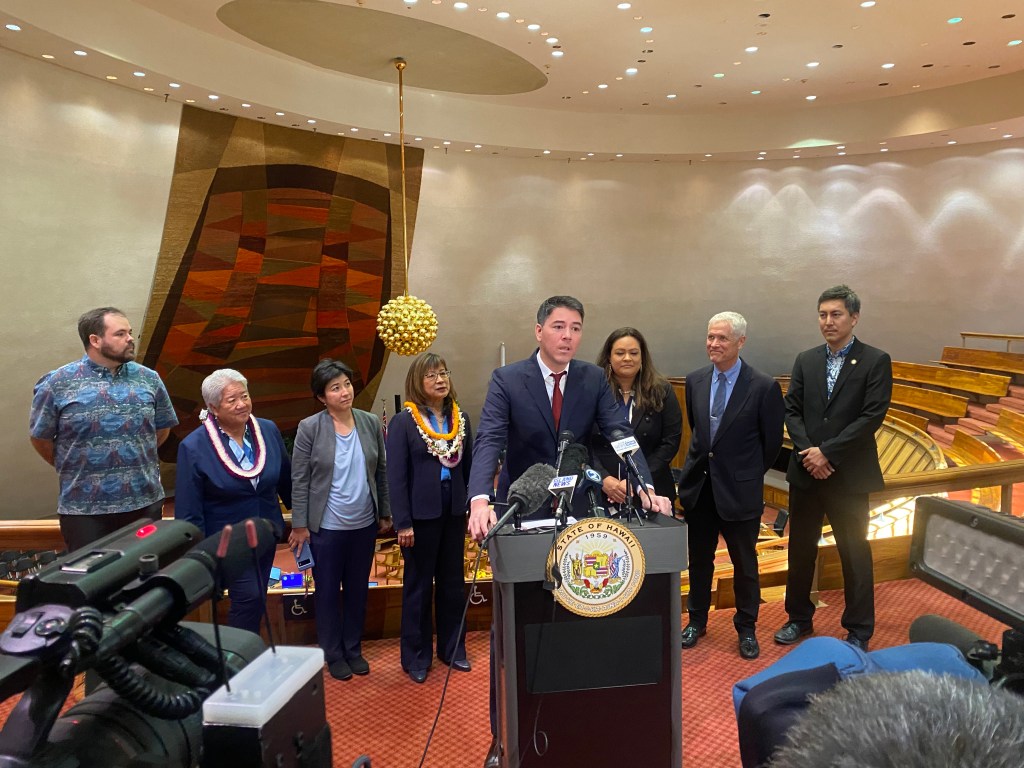
House Finance Committee Chair Chris Todd praised Green for addressing the budget shortfall head on, but “I think the devil is in the details.”
The long-term outlook for the state is “not great,” Todd said, and “we do need to take action this session to shore up our future.”
He said all proposals are on the table, but lawmakers may try other approaches to balancing the budget. “There’s no good way to do it, if we’re being honest,” Todd said, but added lawmakers’ priority will be to avoid further burdening Hawaiʻi residents who are already struggling.
Senate President Ron Kouchi echoed that sentiment, saying senators have been waiting since last fall to hear the details of who will be affected by the administration’s proposal. They want to make sure the most vulnerable residents will be protected, he said.
In many respects, Green’s speech emphasized staying the course on plans already put in place during his first term. For example, he said he retains the ambitious goal of cutting the number of homeless people in half by the end of 2026, “and in half again in the next four years — by treating people with basic human dignity.”
When Green assumed office in December 2022, he noted that Hawaiʻi had the second-highest rate of homelessness in the nation, one more than twice the national average with over 6,000 people unhoused.
While homelessness remains a crisis, the governor said he believed that treating homelessness as a health care problem rather than relying on sweeps, “short-term fixes, and over-reliance on emergency rooms” has made a difference.
Going forward, Green said the state will spend $50 million per year to expand kauhale villages statewide and provide $10.8 million to rapid re-housing, outreach and civil legal services.
The governor did not provide any new data on homeless numbers. “No one knows the numbers,” he said at a press conference after the speech.
The State of the State speech came the same day that the annual point-in-time count on homeless numbers is being conducted — something that did not happen a year ago.
In Honolulu, however, the numbers increased in 2024, as was the case on the Big Island. And homelessness in Hawaiʻi nearly doubled from 2023 to 2024 in large part due to the Maui wildfires.
Green also repeated initiatives already announced in response to the continuing uncertainty with events in Washington, D.C., primarily financial.
The governor is including $16.5 million in his proposed 2026 budget to cover the cost of the enhanced Affordable Care Act tax credits “for everyone in Hawaiʻi currently using them to buy insurance — to help keep coverage affordable for our families, seniors, and children.”
And he reminded his audience that he has helped secure about $190 million in federal funds for fiscal year 2027 to modernize rural access to health care.

The list of Green’s talking points included updates on the recovery from the 2023 Maui fires, the shuttering of the Red Hill fuel facility on Oʻahu and the rollout of the “green fee” to fund climate action and environmental protection. That last update received perhaps the most applause of his speech.
In an apparent nod to blue-collar unions, Green also said the state will support construction apprenticeships tied directly to affordable housing projects — “building homes and building careers at the same time.”
The public-private workforce pathways in health care, energy and education, he said, are sectors “where jobs are growing and where communities need workers. That’s the future we believe in and are working to build — a Hawai‘i where local kids don’t have to leave our islands to succeed, because we’ve invested in creating real opportunities here at home.”
Like many politicians, Green used the examples of real people whose lives have improved under his watch — for example, Jade Mapuana Riley, who he said had spent 37 years on the Department of Hawaiian Home Lands waitlist before finally getting a homestead.
“Today, Jade has a five-bedroom DHHL home — supported by a low-interest loan — and her family has the financial stability to plan, save, and build a future here in Hawaiʻi,” he said. “That’s what it means to honor a promise.”
The State of the State was held in the Hawaiʻi House of Representatives before an audience that included members of the House and Senate, Lt. Gov, Sylvia Luke, First Lady Jaime Green, U.S. Rep. Ed Case, Acting Hawaiʻi Chief Justice Sabrina McKenna and three associate justices, Office of Hawaiian Affairs Chair Kai Kahele, the four county mayors and a half-dozen military officials.
At the beginning of his speech, the governor called for a moment of silence to honor people who lost their lives as a result of the “domestic conflicts on the mainland, especially those in Minnesota in recent days. No matter what our political ideology, I believe we should all pray for and work toward peaceful engagement in our nation.”
He told reporters after his address he was thinking about the shooting deaths of Renee Good and Alex Pretti during protests in Minneapolis during that moment, adding: “There’s no way on earth there should have been violence against those two individuals. It’s just completely not what America’s about.”