

Hawaiʻi AG To Supreme Court: Gun Control Is Hawaiian Tradition
A case questioning whether Hawaiʻi gun owners need explicit permission to carry their weapons onto private property will be argued before the U.S. Supreme Court on Tuesday.
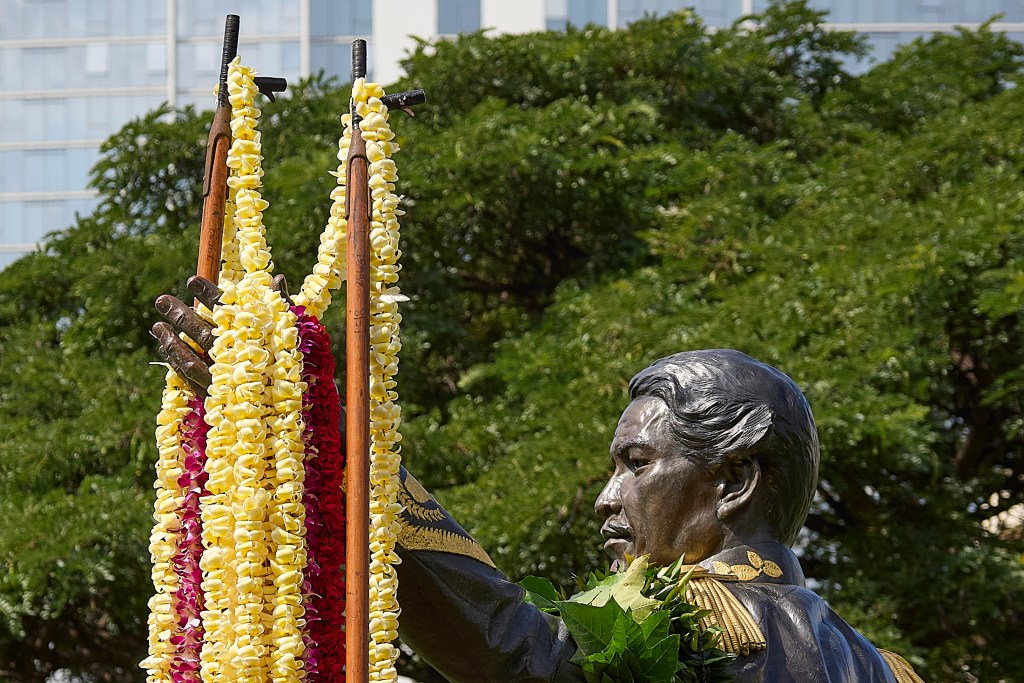
Hawaiʻi has never been big on guns. King Kamehameha III banned the possession of firearms and all deadly weapons in the Hawaiian Kingdom in 1833. Even after the kingdom was overthrown and Hawaiʻi eventually became a state, tight regulations on gun ownership remained. To this day, Hawaiʻi has some of the strictest gun laws — and lowest rates of gun violence — in the nation.
That long legacy of gun control will play a role in the state’s argument before the Supreme Court on Tuesday over a challenge to the constitutionality of a state law that prohibits gun owners from carrying their weapons into private businesses without permission.
Lawyers for the plaintiffs, who are three Maui gun owners and the Hawaiʻi Firearms Coalition, say the law infringes on their clients’ Second Amendment rights by effectively banning guns from most places people go on a daily basis.

The state argues that being gun-free should be the default for Hawaiʻi establishments. If a business owner wants to allow guns on their property, they can put up a sign giving their permission.
“Hawai‘i’s unique history—including its long pre-statehood existence as an independent kingdom—means that its residents never developed a practice of bringing guns into shops, convenience stores, and the like,” state Attorney General Anne Lopez wrote in a brief filed with the Supreme Court in December.
Alan Beck, a San Diego-based attorney who is representing the plaintiffs, says bringing the history of the Hawaiian Kingdom into the argument is invalid.
“What they’re really arguing is that the rights of my clients, who are U.S. citizens, should be dictated by the laws of a monarchy,” he said. “That’s not a position that’s really tenable.”
But Chris Marvin, a Hawaiʻi-based gun violence prevention expert, said Hawaiʻi’s history laid the foundation for its current attitude toward guns. Less than 1% of the state population has a license to carry and shootings are still relatively rare.
Marvin said looser gun laws lead to more violence, and he fears overturning Hawaiʻi’s private property law could have negative impacts on the state.
“We still have very low gun violence rates compared to the rest of the country, but that actually just underlines that we do have a gun-free culture,” Marvin said. “Just because there’s a handful of enthusiasts that would like to have their pistol on them while they eat saimin doesn’t mean the rest of us should have to suffer for that.”
What’s At Stake?
Gun regulations in Hawaiʻi changed drastically in 2022 following a Supreme Court decision known as Bruen, which forced the state to revise its license to carry law to allow permit holders to carry concealed firearms in public.
Before that, the state let people carry guns only when the permit applicant could show they had a reason to fear for their personal safety or property.
The court’s decision found that states couldn’t force applicants to prove they had a good reason to carry a gun. Since Bruen, the state has issued more than 2,200 licenses to carry a handgun, according to a report from the Attorney General’s Office.

State and local lawmakers have made multiple attempts to mitigate the impacts of the Bruen ruling.
In 2023, the Honolulu City Council passed a city ordinance banning firearms from certain “sensitive places” like schools and hospitals, as well as public areas like parks and beaches. The Legislature followed suit that same year, passing Act 52, banning firearms from sensitive places statewide and prohibiting the carrying of firearms onto private property without express permission from the property owner.
Three Maui gun owners and the Hawaiʻi Firearms Coalition quickly sued the state over the law, arguing that banning firearms from so many places effectively voided a person’s right to carry in public. A federal court issued an order preventing the state from enforcing parts of the law.
In 2024, the 9th Circuit Court of Appeals upheld most of the law, including the ban on guns at parks and beaches and the rule that gun owners must get a private property owner’s permission before entering their establishment with a firearm.
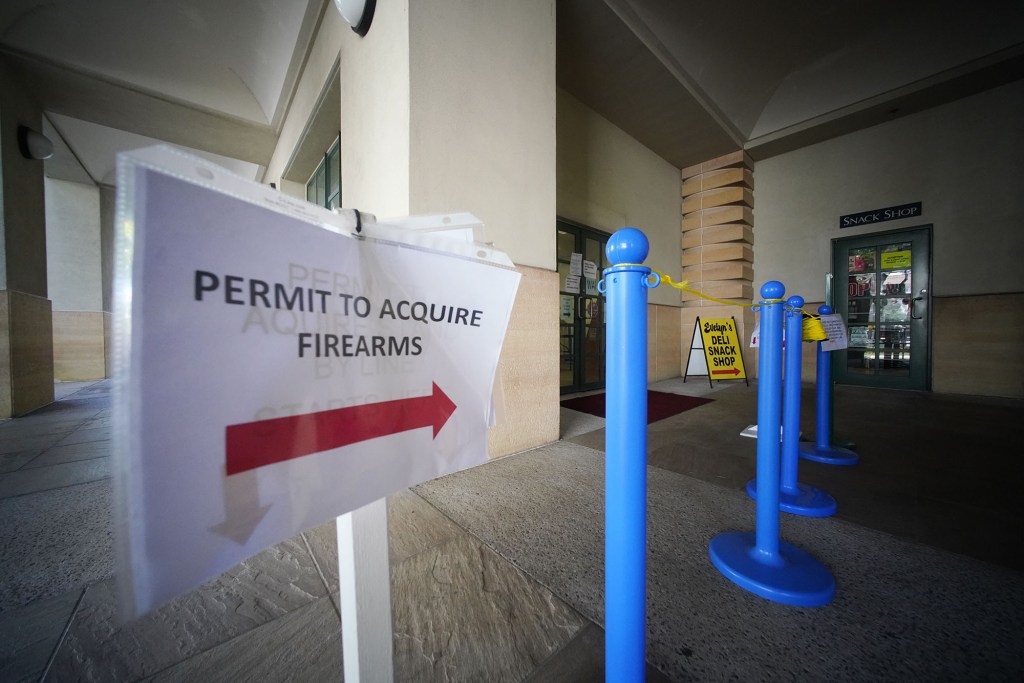
The plaintiffs asked the Supreme Court to review the case. The court said it would, but that it would only consider the private property question.
If the law is overturned, private property owners will still be able to ban guns at their establishments by putting up signs explicitly prohibiting them from the premises.
But if the law is upheld, the default ban on guns on private property will remain, and those who want to allow firearms will have to give permission.
“All this lawsuit is doing is trying to restore that historical default where the onus is on the property owner to say, even though I’ve opened this property up to the public, I don’t want guns on it,” said Beck, the lawyer for the plaintiffs.
Gun-Free Tradition
In Hawaiʻi’s brief, Attorney General Anne Lopez cites an 1833 law from the Kingdom of Hawaiʻi, when King Kamehameha III banned anyone from possessing any type of deadly weapon.
When the kingdom was overthrown in 1893, the provisional government banned the importation of guns and ammunition, the brief says. Three years later, the government passed a law prohibiting carrying or using a gun without a license and strictly regulating who could get a license.
“Similarly tight gun restrictions remained in place until Hawai‘i became a state in 1959,” the brief says. “There is no indication that, after statehood, Hawai‘i’s residents developed a custom of armed carry at odds with the pre-statehood norms.”
Attorneys for two gun control groups that filed a joint brief supporting the state’s position — the Brady Center To Prevent Gun Violence and Giffords Law Center — say Hawaiʻi’s history will be part of the Brady Center’s argument because it helps illustrate Hawaiʻi’s longstanding strict stance on guns.
Billy Clark, senior attorney with Giffords Law Center, said he isn’t sure how much the argument will impact the justices’ final decision, but he hopes it will play a role in their thinking.
“I’m hopeful,” he said, “it will be a part of the consideration, that the court considers the history of all of us.”
Beck said most other states allow gun owners to take their guns onto private property without permission from the property owner. Only New York, New Jersey, Maryland and California passed laws similar to Hawaiʻi’s, but all have faced legal challenges. The laws in New York, New Jersey, Maryland and Hawaiʻi have been enjoined by federal court orders, Beck said, meaning the states can’t enforce them until the courts issue final rulings.
California’s law, which went further than Hawaiʻi’s and banned open carry in counties with more than 200,000 people, was ruled unconstitutional by the 9th U.S. Circuit Court of Appeals earlier this month.
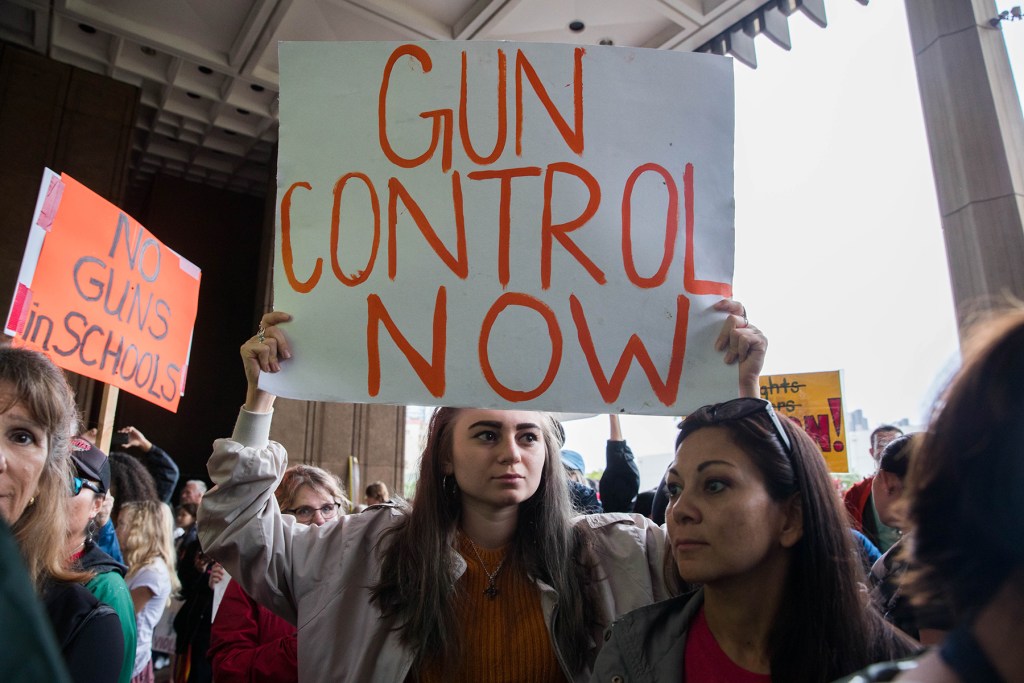
In a brief filed on behalf of the plaintiffs, the Second Amendment Law Center and multiple state rifle associations argue that laws forcing gun carriers to get permission before entering establishments unfairly target legal gun owners. The groups called the law the “Vampire Rule” because vampires, according to mythical lore, can’t enter a building unless invited.
“The Vampire Rule was explicitly conceived to undermine the right to carry,” the brief says, “as its main academic proponents have written that the rule’s very purpose was to make carry inconvenient, so fewer people will choose to exercise their rights.”
Marvin said a reversal of Hawaiʻi’s law would mean chipping further away at its status as one of the states with the strictest gun laws in the nation.
While the rate of gun death in Hawaiʻi remains relatively low, it has still increased in recent years faster than in other states.
In 2023, 73 people died from guns in the state — an 80% from 2014, when 40 people died from guns.
Marvin said opening up more places to allow people to bring their guns will mean more guns on the street and a higher risk of shootings.
“It used to be that road rage was handled with a honk and a fight over a place in a surf lineup was handled with a punch in the face,” he said. “Now there’s a higher likelihood that they’re handled by someone pulling out a pistol and shooting someone else.”

