Oʻahu Needs Sidewalks. Should The County Be Required To Build Them?
Two Honolulu charter amendment proposals this year aim to enshrine sidewalk construction as a core local government responsibility.
In 2006, when longtime Sierra Club volunteer Randy Ching proposed amending the Honolulu City Charter to “make Honolulu a pedestrian- and bike-friendly city,” more than 72% of voters approved the amendment.
The city still hasn’t hit that mark almost two decades later. More than 25 pedestrians and bicyclists have been killed on Oʻahu streets this year alone, on par with the tally from the year voters passed Ching’s amendment.
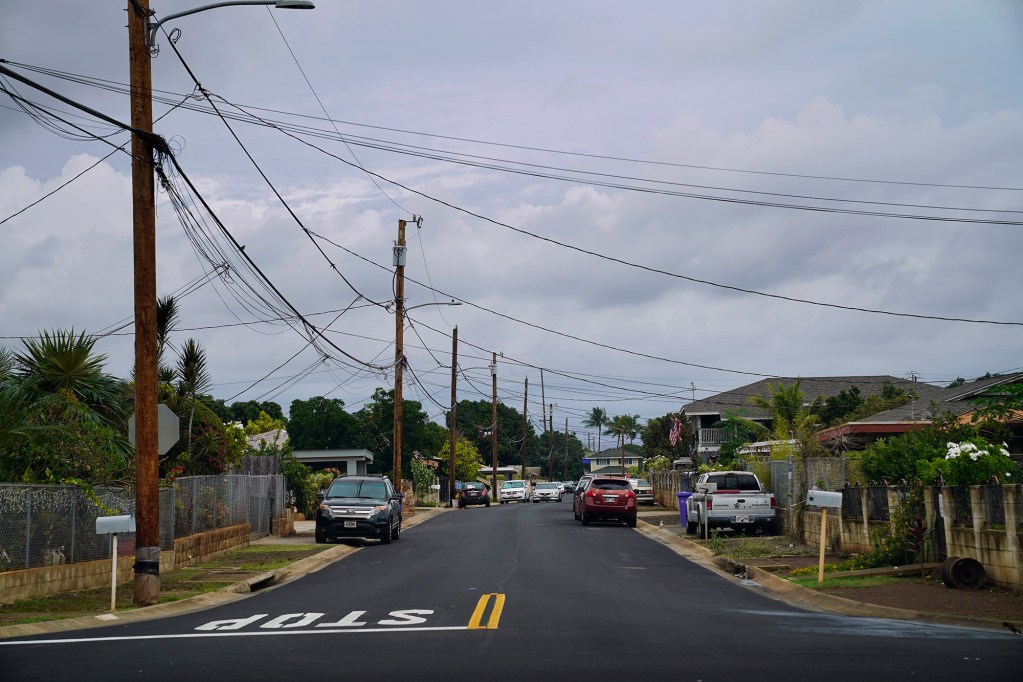
And despite repeated commitments to build sidewalks, the city still lacks about 900 miles of sidewalk along its roads, which it estimated in its 2022 Oʻahu Pedestrian Plan would cost over $2.6 billion to rectify.
Hanging around politicians as much as he did back then, Ching said, “you become extremely cynical about everything.” So he’s not surprised that pedestrians and bicyclists keep dying on the roads in spite of the charter amendment’s promise.
“I didn’t expect anything, to be honest. I really didn’t,” he said. “It’s like, I knew what I was up against … I wasn’t disappointed.”
Now, as the city proceeds with another once-in-a-decade solicitation for amendments to Honolulu’s guiding document, some residents are pushing for stronger language, including proposing to enshrine sidewalk construction as a city responsibility. They hope to protect the most vulnerable users of public thoroughfares.
Lack Of Sidewalks
Mike Wallerstein is one of those residents.
Wallerstein lives in Pālolo and used to ride his bike to work downtown, about 5 miles away. When his office went remote during the pandemic, he replaced his bike rides with walks around the neighborhood.
“That’s when I became aware that — acutely aware that — there were sidewalks in some places and not in others,” he said. “And it was dangerous in the places where there weren’t sidewalks.”
Oʻahu residents have been noticing and commenting on this for decades.
“There aren’t enough sidewalks,” Honolulu Star-Bulletin journalist Cornelius Downes wrote in his first article of a 1964 series on sidewalks. “Some that do exist are in poor condition.”
Those problems persist today. Wallerstein’s proposal calls for the city to prioritize the expansion, repair and improvement of sidewalks and crosswalks.
Commissioners who will decide which proposals make it to the ballot next year advanced his submission to the next round of discussion, alongside other submissions related to pedestrian and bicyclist safety. The first round was based solely on whether submissions were complete and appropriate for the charter.
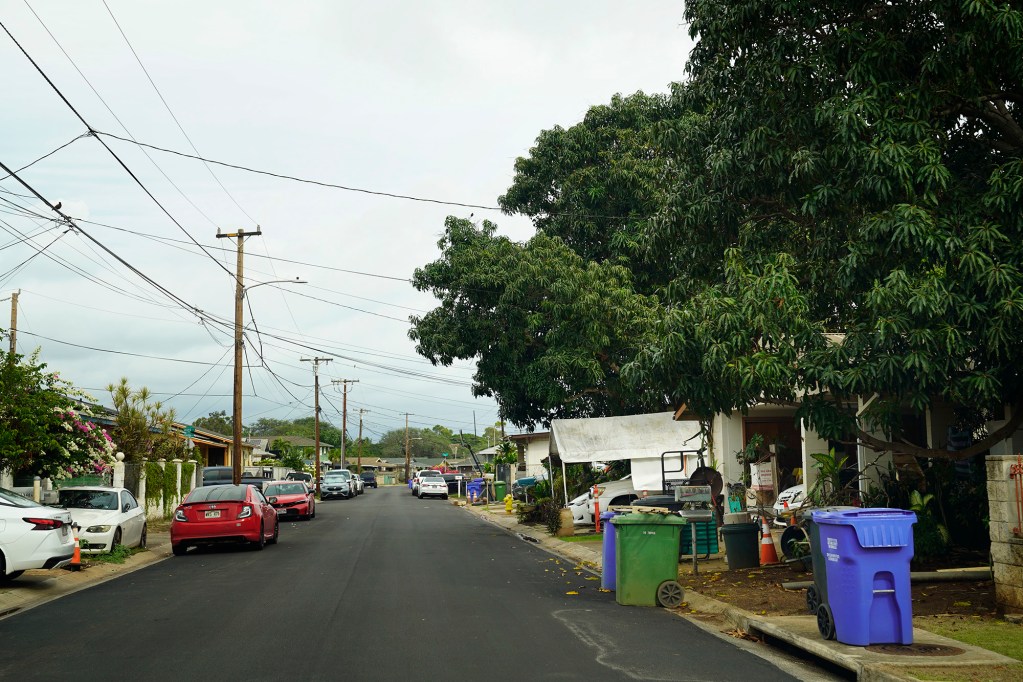
“Many sidewalks across Oʻahu are narrow, uneven, or missing altogether,” Wallerstein says in his proposal submission form. “This creates safety risks for children walking to school, kūpuna seeking exercise, and people with disabilities.”
One example: In February, a 90-year-old woman walking through a Kahuku neighborhood was hit by a car and killed. While the Honolulu Police Department’s report says she was attempting to cross the street outside a marked crosswalk, the neighborhood lacks not just sidewalks but crosswalks, giving residents no safe option.
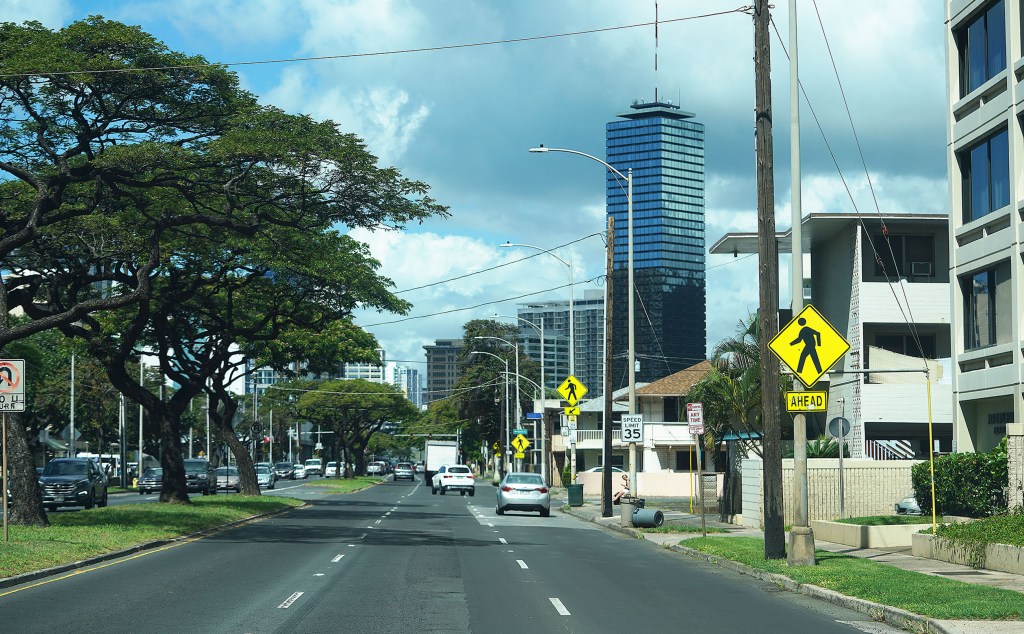
Meanwhile, the city has been removing dozens of crosswalks from wide and fast roads that officials say are too dangerous for pedestrians to cross. A handful of pedestrians killed in 2025 were hit while in marked crosswalks, and officials hope the removals encourage people to cross in safer spots.
Sometimes, however, those safer crossings are far away, and signage left behind makes it unclear the previous crosswalk has been deleted. That was the case in two collisions along Kapiʻolani Boulevard, where the city removed marked crosswalks but left up bright signs that communicated the spots were still safe places to cross.
A woman struck by a car while crossing the boulevard at Paʻani Street won an $85,000 settlement from the city in October. The next month, the council approved a $300,000 settlement for a different lawsuit — this one filed by a mother whose son was hit at the same location.
“Walking is the most accessible exercise that I can think of,” Wallerstein said. “You donʻt need anything really but shoes, maybe not even that. And I think everybody should be able to do it, and be able to do it safely, wherever they are.”
Slow To Fill In The Gaps
Renee Espiau, who leads the city’s Complete Streets program, said sidewalk construction in Honolulu lagged for decades.
Developers were required to include sidewalks in residential subdivisions starting in 1962. But to fill in the gaps in older neighborhoods, the city would step in only after residents agreed to foot half the bill through improvement districts.
Many residents didn’t see the value in paying for sidewalk improvements, especially given the more urban aesthetic sidewalks bring. One oft-cited example occurred in 1928, when about 300 Mānoa residents signed a petition protesting sidewalk construction in their neighborhood. Almost a century later, large areas of Mānoa remain sidewalk-free.
As construction grew more expensive, the prospect of convincing residents to chip in to pay for sidewalks in their neighborhoods became a harder and harder sell. Without that approval, the city couldn’t build sidewalks.
“There was — I don’t know — a few decades of time, where the city really wasn’t building public sidewalks because the improvement districts were just not happening,” Espiau said. “The communities were not approving them.”
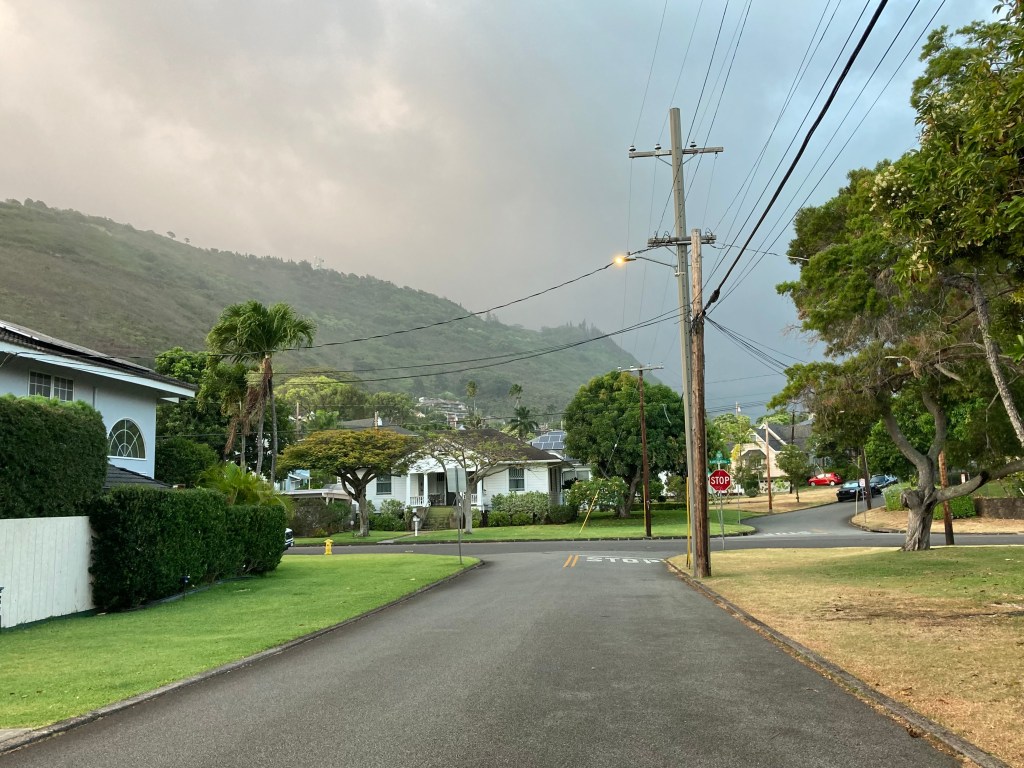
That became a major hurdle for city officials who assumed improvement districts were the only legal way for them to build new sidewalks. In the end, they found a workaround. About a decade ago, Espiau said, council members changed that part of the law to give the city more flexibility in building sidewalks.
With the combination of clearer authority, an infusion of federal money from the 2021 Bipartisan Infrastructure Law and clearer direction of which sidewalks to prioritize in the city’s 2022 Pedestrian Plan, Espiau said the city has started a sidewalk construction program. It now is working to construct sidewalks in six areas: Kalihi, Wahiawā, Waiʻanae, Waipahu, and two areas in Mōʻiliʻili.
Improvements will be slow. At a September community meeting in Wahiawā, Espiau told a resident who asked about the timeline that constructing sidewalks along the neighborhood’s main drag would take about six or seven years.
“Well that’s a shame,” the resident said.
Interim Solutions
How much does a sidewalk cost? Espiau said it depends.
Best case scenario — where there’s already an elevated area, along with drainage and curbs and gutters, she said — “it was about a million dollars a mile, about five years ago. Before inflation.” Planning and design adds about 50% to the cost.
In most of the island’s older communities, she said, the cost is closer to $7 million to $10 million a mile.
But not every walkway has to be a sidewalk with drainage and curbs and gutters. While the city can’t construct substandard sidewalks or bike lanes, it can restrict where cars are allowed to go, informally giving pedestrians places to walk.
Because of limited physical space, Queen Street in Kakaʻako still lacks sidewalks even after the city and state partnered to repave it last summer. Its newly painted bike lanes, however, can double as pedestrian walkways, Espiau said.
“It’s not great,” she said, “but it’s certainly better than it was.”
In other areas of the island, the city has installed vertical posts to block off a section of road for pedestrians. In Haleʻiwa, the city is working to place curbs along the street to separate pedestrians from cars.
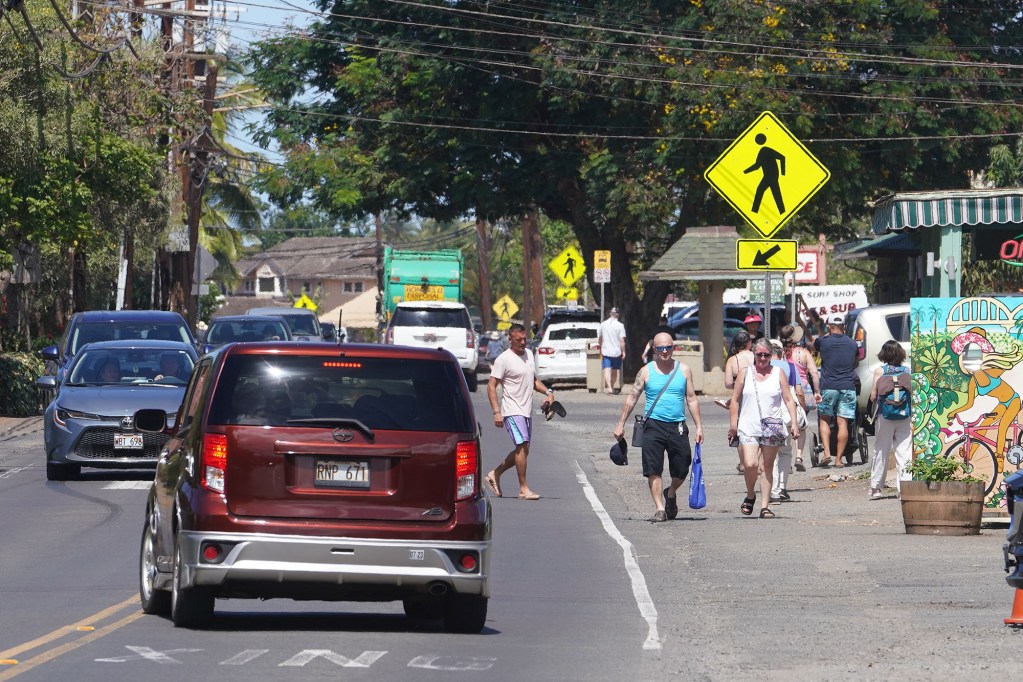
As in previous iterations of sidewalk proposals around Oʻahu, some residents expressed concerns about aesthetics. But neighborhood board chair Kathleen Pahinui said the project generally has strong community support.
“It’s horrible walking through Haleʻiwa,” she said. “It’s not safe. People are almost walking in the street in certain parts.” Pahinui said she avoids walking through Haleʻiwa down Kamehameha Highway for that reason.
Espiau said the walkway design is nearly final and the project should go to bid in 2026.
“It’s not necessarily a forever fix,” she said. “But it is going to get people out of the dirt, and out of the mud, and give pedestrians some dignity.”