

School Sports Fans Are Getting Meaner. Do Hawaiʻi Laws Fall Short?
The recent assault of Moanalua High School’s assistant athletic director has sparked calls to better protect sports officials. Teachers say the DOE needs to do more to keep them safe, too.
In his 15 years of officiating high school football, Matthew Sumstine saw it all: disgruntled fans giving him the middle finger, throwing soda at his car and jumping on the bumper of his truck as he leaves games.
“People do unthinkable things that they wouldn’t normally do in regular society,” said Sumstine, who officiated Hawaiʻi high school football from 1990 to 2005 and currently helps manage the state tournament. “It just seems when they get into these environments that they feel like it’s OK.”
Fan behavior has worsened since the Covid-19 pandemic, officials say, with more spectators harassing and threatening referees at high school athletic events. The aggression came to a head last month when a parent assaulted Moanalua High School’s assistant athletic director, Natalie Iwamoto, punching her in the face and leaving her on the ground after she tried to escort officials to their cars after a heated basketball game.
The parent, Aukusitino Noga, is more than twice Iwamoto’s size, according to a temporary restraining order she filed after the basketball game. Noga was charged with second-degree assault a day later and then permanently banned from all Department of Education campuses. He pleaded not guilty and his trial is set for August.
“At its core, this incident demands a fundamental question: When is enough, enough?” Iwamoto’s lawyer, Lyle Hosoda, wrote in support of the restraining order last month. “If this level of violence can occur in response to a youth sporting event, and without immediate and decisive consequences, then no school employee can reasonably be assured of their safety.”
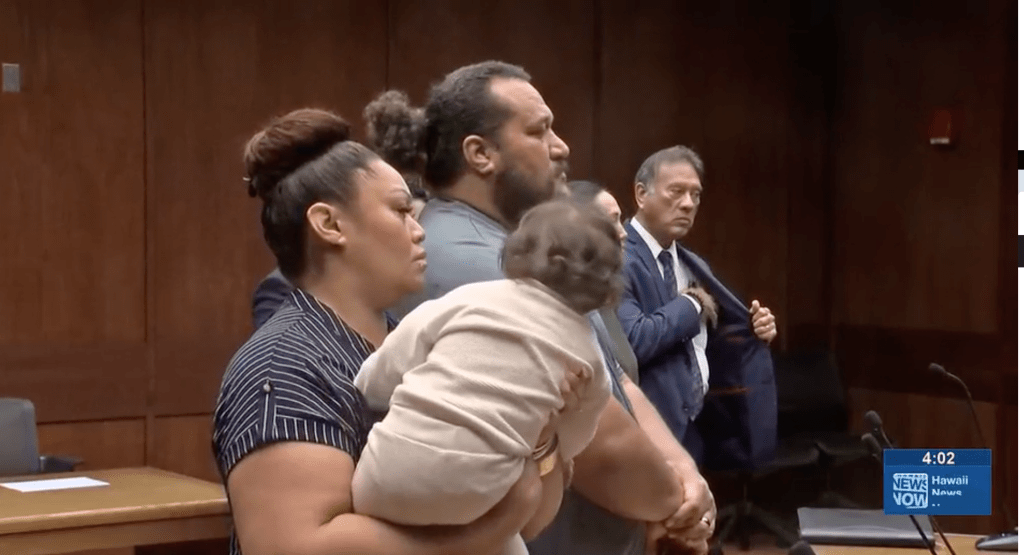
Hawaiʻi sports officials and educators have called for more protections against parent harassment for years, with many arguing that schools need to set clearer expectations for parent behavior and more consequences for adults who pose a serious threat to workers’ safety.
In response, legislators passed two laws in the past five years to increase penalties for spectators who threaten and assault sports officials. The Department of Education also introduced a visitor code of conduct last fall, detailing how families should treat school employees and the consequences for misbehavior.
But officials and educators say these policies are failing to provide meaningful protection against threats and harassment that could escalate to violence, as it did at the Moanalua basketball game last month. Some say the DOE and high school athletic leagues need to develop clearer policies for addressing harassment and should increase security at sports games, while others are in favor of strengthening penalties for parents who step out of line.
In the past, state officials and educational leaders have hesitated to prosecute parents for harassment or ban them from campuses, arguing that DOE needs to find a balance between holding the public accountable for bad behavior and allowing families to advocate for their children and participate in their kids’ education.
“People are going to get emotional,” said Bryce Kaneshiro, who oversees DOE’s extracurricular programs but spoke in his capacity as executive director of the Oʻahu Interscholastic Association. “But there is a balance, and there is a level and limit to what you can say.”
Are More Protections Needed?
There were early signs of aggression toward officials at last month’s basketball game at Moanalua High School. Video footage of the game shows Noga and his wife yelling at referees from the stands, at one point calling, “White ref, you suck!” Noga’s son is a member of Moanalua’s basketball team, which lost the December game against Mililani High School.
Noga and his wife were not removed from the game, but their behavior was alarming enough that Iwamoto later decided to walk the referees to their cars. Noga then struck Iwamoto as she was leaving the gym with the officials, according to court documents.
Noga’s lawyer, Myles Breiner, has since contested that Noga only pushed Iwamoto after she argued with his wife, and his daughter fell over during the confrontation between the adults. Breiner did not respond to requests for comment. Iwamoto and her lawyer declined to comment for this story.
Typically, it falls on a school’s athletic director or principal to address rowdy behavior from fans, and a warning from administrators is enough to curb spectators’ threats or insults toward referees, said Christopher Chun, executive director of the Hawaiʻi High School Athletic Association.
But there are few formal policies specifying how schools should deal with harassment from fans, with principals and athletic directors making judgment calls on whether they want to confront spectators, remove them from the game or ban them from future athletic events altogether.
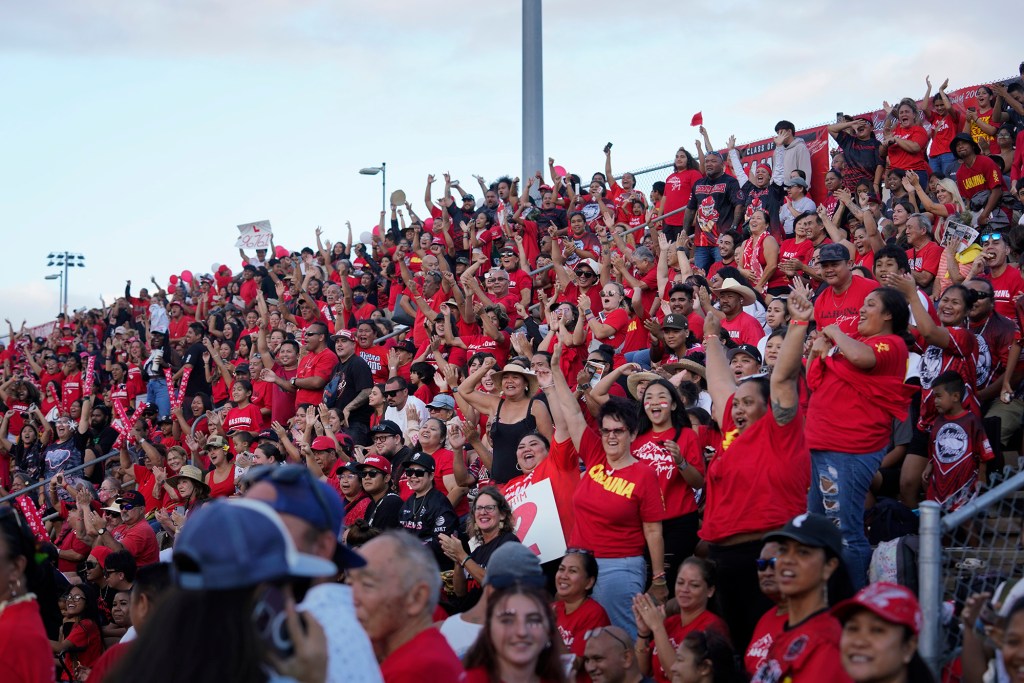
As a result, officials don’t always know what to expect when they show up to high school games, Sumstine said, since approaches to managing crowds and addressing spectator behavior vary by campus.
“My personal opinion is that it needs to be standardized, so that you know what to expect when you go to any venue,” he said.
Kelly Sur, athletic director at Radford High School, said he would be open to more rules specifying the consequences for fans who harass officials during games. At Radford, he said, the school won’t allow parents to attend games for the rest of the season if they’ve been removed for harassment, such as swearing at referees or trying to confront officials, although other schools may give spectators more leeway.
“I think sometimes schools get lax,” Sur said. “I think maybe there should be more rigid stipulation for fans who are constantly being disrespectful during games.”
Chun said he’s open to discussing more policies around fan misconduct with schools, but administrators need to have the discretion to deal with incidents on a case-by-case basis. Different venues and athletic leagues may have their own rules around visitor behavior, he said, so staff also have the additional responsibility of enforcing these policies.
When it comes to the protection of players and officials, schools in the Oʻahu Interscholastic Association are required to have security at regular-season games, Kaneshiro said.
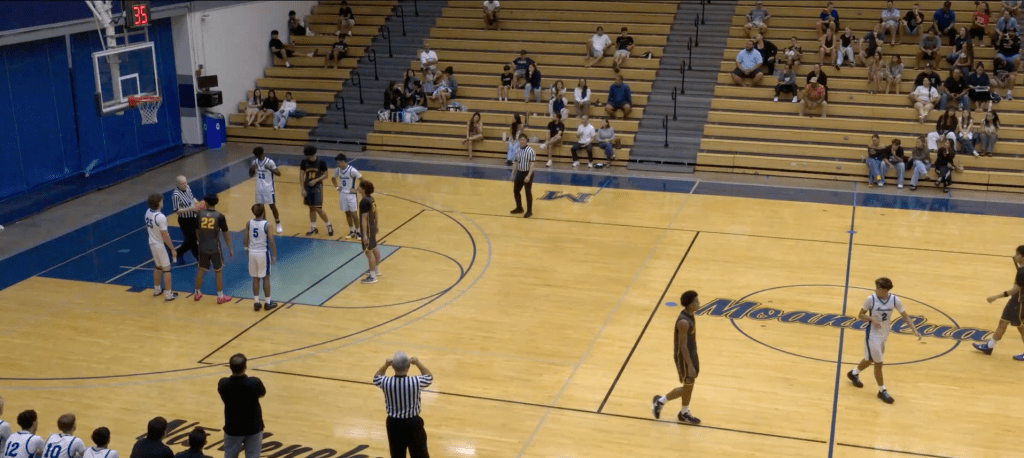
While athletic leagues pay for security during the regular season, the cost falls on schools if they want to contract security for preseason events — like the Moanalua basketball game where Iwamoto was assaulted. The OIA hasn’t required security at preseason events because crowds tend to be smaller, Kaneshiro said, although the association is now reevaluating this policy.
DOE did not respond to questions about whether Moanalua had security at its Dec. 4 basketball game.
In 2020 and 2023, legislators made their own attempt to protect sports officials. One law allowed the courts to ban individuals from certain sporting events if they were convicted of the assault or terroristic threatening of a sports official, including high school coaches and referees. The other made injuring a sports official a class C felony, which can result in a maximum of five years in prison and fines.
Leading up to the bills’ passages, Hawaiʻi received national attention after a parent was convicted of assaulting, harassing and threatening a Kaiser High School football coach in 2019. Days after the incident, the coach resigned, and Kaiser’s principal cancelled the rest of the football season.
The two bills received strong support from sports officials and the DOE, who argued that referees needed to make tough judgment calls without fearing violence or harassment from the public.
But only one person has been charged under the new laws — a man who assaulted Saint Louis School’s football coach last August. He pleaded not guilty to the charge, and the case is ongoing.
The courts have not banned anyone from games because of a conviction for assaulting or threatening an official.
The impact of the laws has been limited, in part because officials are sometimes hesitant to file police reports and press charges out of fear of public retaliation, Sumstine said. In some cases, he said, aggression and threats against officials have become so normalized that referees won’t report smaller incidents.
On the spectators’ end, many members of the public weren’t aware that penalties for assaulting referees changed in recent years, said Danny Casey, who served as vice president of the Hawaiʻi Scholastic Soccer Federation from 2018 to 2022. At the same time, he said, fan aggression doesn’t often rise to the level of assault, but the harassment is still enough to drive officials away.
“For some referees, it’s not worth it to them to put themselves in that environment,” Casey said. “They’ll step away because of it.”
The Danger To School Workers
Prior to Iwamoto’s assault, referees and league directors said extreme aggression and violence were rare in high school sports. But school staff and union leaders say they’ve been raising the possibility of these attacks for years, with little response from the education department.
“Throughout the years, in the face of employees being harassed and stalked, the DOE has seemed ambivalent, seeking first to avoid liability rather than prioritizing the protection of its employees,” Hawaiʻi Government Employees Association Executive Director Randy Perreira wrote in a letter to the department last month. “At its worst, the DOE has worked against the efforts of our union to protect employees.”
HGEA represents roughly 7,800 public school employees, including principals, educational assistants and athletic directors.
School employees need more support from the state once they’ve been assaulted or harassed in their jobs, Perreira said. Iwamoto had to find a private lawyer to help her through the process of filing a restraining order against the Nogas — a service the state should have provided since the incident happened while she was working, he said.

State law doesn’t authorize the attorney general to represent state employees filing restraining orders, said AG spokesperson Toni Schwartz.
The department has also come under fire from teachers and lawmakers in recent years for a lack of procedures and support for staff facing threats from parents. In one case, nearly a dozen DOE employees filed temporary restraining orders against a single parent, with little success in stopping his harassment across multiple schools for more than a decade.
In response, lawmakers considered making the harassment of school employees a misdemeanor, but the proposal failed after some families argued that more penalties would punish outspoken parents advocating for their children.
Now, lawmakers and educators are making the case for stronger internal policies supporting DOE employees dealing with threats and aggression from the public.
One bill introduced last year would have required the department to formally investigate all incidents of harassment, while giving staff paid time off to file restraining orders in response to threats or assault they’ve faced in their jobs. The bill received strong support from teachers and unions, but the department pushed back against the provisions around paid leave and training requirements for staff, arguing the proposal lacked specificity and funding.
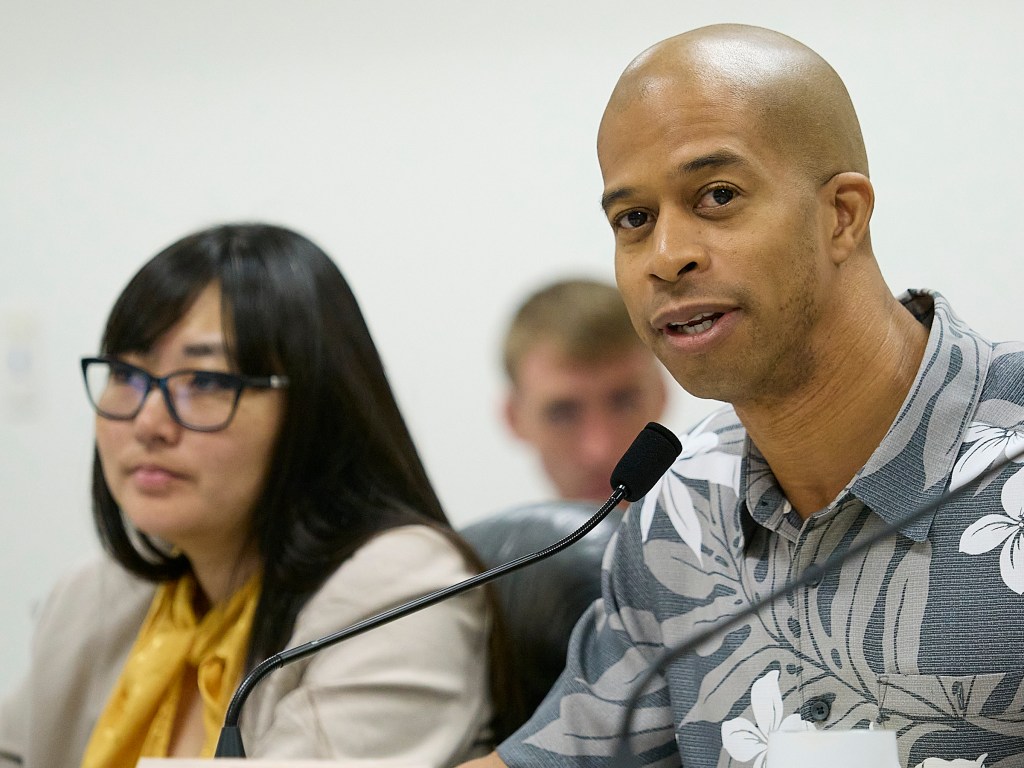
The bill failed to pass, although House Education Chair Justin Woodson said he plans on reintroducing a similar measure this year.
“I feel that most certainly, we have not done enough statutorily to protect DOE employees,” he said.
Following Iwamoto’s assault last month, the department issued its first-ever permanent ban preventing Noga and his wife from entering any DOE campuses.
But DOE needs to have the same aggressive response when educators are facing harassment, said teachers’ union executive director Andrea Eshelman, adding that the superintendent only seemed to take quick action because Iwamoto’s assault drew so much public outrage. While principals have the ability to ban parents from individual campuses for smaller infractions, she said, they’ve rarely issued such trespass notices in recent years.
When it comes to high school sports, referees are independent contractors and do not receive the same protections as DOE employees. Sumstine said there also needs to be stronger protections in place for independent contractors.
Sumstine plans to propose protocols starting with the girls’ flag football season this spring, which would require athletic directors and administrators to stop games when spectators are threatening officials to address disruptive fan behavior. Pausing the game and addressing incidents in a more public way would send a clear, consistent message to spectators that threatening officials isn’t acceptable, said Sumstine, who helps oversee flag football games for the Oʻahu Interscholastic Association.
“Unfortunately, the Moanalua event is leading to us being more organized in this manner,” he said. “But I believe that it’s important in order to prevent it from ever happening again.”
Civil Beat’s education reporting is supported by a grant from Chamberlin Family Philanthropy.

