State To Spend Millions To Replace Fire Control Systems In Honolulu, Maui
The rental car facilities have fire suppression equipment that must be removed because it contains toxic “forever chemicals.”
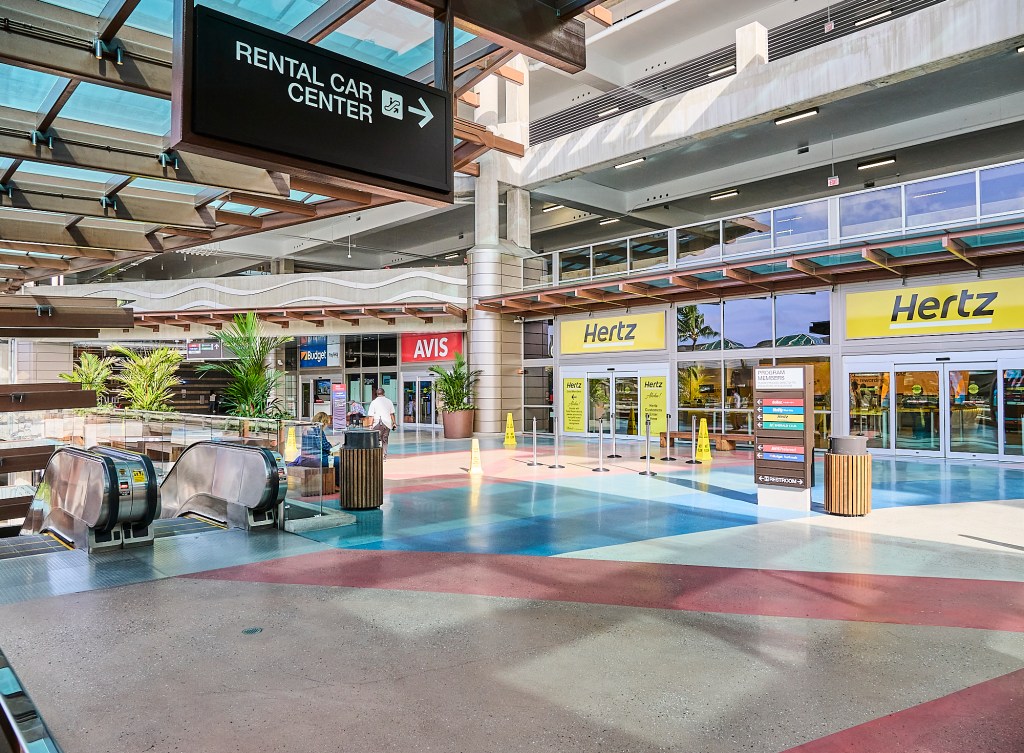
Fire suppression systems in the recently built rental car facilities at the Honolulu and Maui airports contain toxic chemicals known as PFAS, and the state Department of Transportation estimates it will now cost $23 million to entirely replace the two systems.
State Department of Transportation Director Ed Sniffen said last week the firefighting systems use foam developed to extinguish fuel fires, and that foam contains the so-called “forever chemicals” known as PFAS, or perfluoroalkyl and polyfluoroalkyl substances.
Those chemicals, which have been found in a number of Hawaiʻi communities, have now been linked to health problems ranging from increased risk of some cancers to developmental delays in children.
Sniffen told lawmakers last week the Federal Aviation Administration is requiring all fire suppression systems on Maui and in Honolulu be removed and replaced.
“It cannot just be the tanks, it cannot just be the lines, everything has got to go,” he told the Senate Ways and Means Committee.
Senators seemed surprised by both the need for the project and the cost. “It’s the whole system,” remarked Senate Ways and Means Committee Chair Donovan Dela Cruz. “Cannot help. Wow.”
Construction of the $350 million Maui rental car facility was completed in 2019, and the consolidated rent-a-car or “Conrac” structure at the Daniel K. Inouye International Airport opened to the public in 2021. The Honolulu facility cost $377 million.
Sniffen said fire suppression systems typically last about 15 years. “We’re replacing it short,” he said.
PFAS chemicals have been widely used in industry and consumer products since the 1940s, including carpet, furniture, waterproof clothing, and some kinds of food packaging. They have been labeled “forever chemicals” because they don’t break down in the environment.
Hawaiʻi lawmakers banned the introduction or distribution of firefighting foam that contains PFAS chemicals statewide in a law that took effect in 2024.
The same law bans the use or discharge of the firefighting foam “unless the use is necessary for effective suppression of a petroleum fire.” The foam, known as aqueous film-forming foam or AFFF, soaks into the ground and can reach groundwater, drinking water or end up in the ocean.
“The risk now is if that system deploys, PFAS will be deployed and will be in the environment,” Sniffen told Honolulu Civil Beat. He said the new system will still be capable of suppressing fuel fires, but will not use chemicals from the PFAS family.
Sniffen said after the hearing the department will use money from the $7.50-per-day state rental motor vehicle surcharge tax to cover the cost, but did not have a timeline for the project.
Work to replace the fire suppression systems will be done in segments, he said, which will allow the car rental facilities to remain open while construction is underway.
Civil Beat’s coverage of Maui County is supported in part by a grant from the Nuestro Futuro Foundation.
Civil Beat’s coverage of environmental issues on Hawaiʻi island is supported in part by a grant from the Dorrance Family Foundation.