The Sunshine Interview: State Sen. Karl Rhoads And Rep. David Tarnas
More financial support for the Department of Hawaiian Home Lands and tackling federal immigration and customs enforcement are top priorities for the chairs of the judiciary committees in the Hawaiʻi Legislature.
January 18, 2026 · 26 min read

About the Author

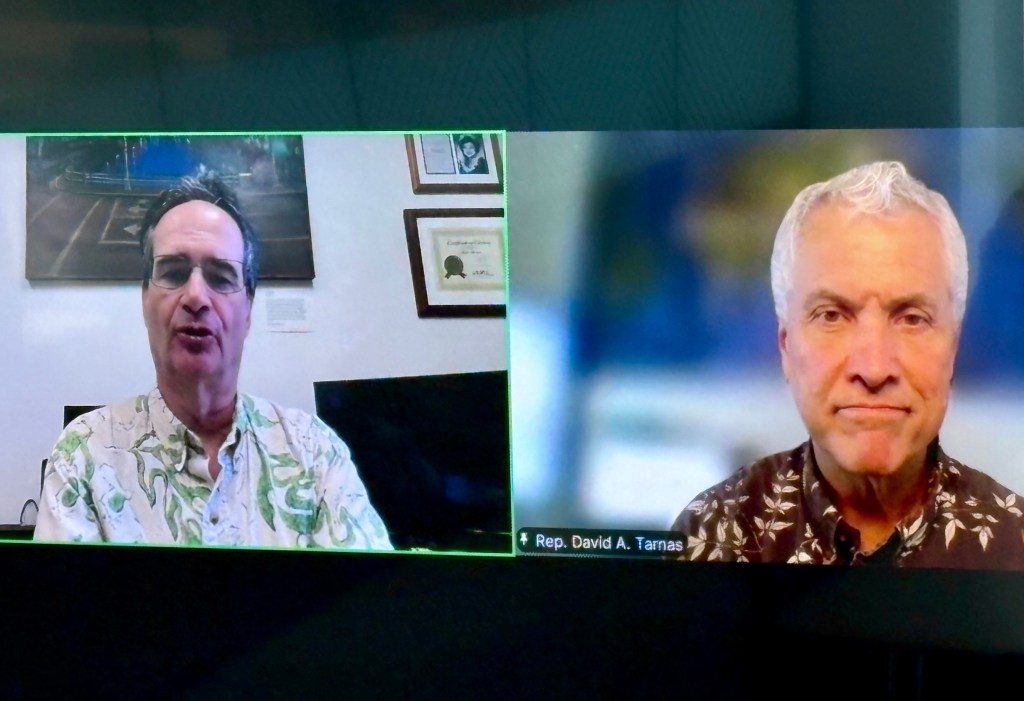
Many of the most controversial bills at the Legislature must go through the committees addressing judicial matters. David Tarnas, chair of the House Judiciary and Hawaiian Affairs Committee, and Karl Rhoads, chair of the Senate Judiciary Committee, joined Civil Beat editors and reporters last week to discuss priorities in the legislative session that begins Wednesday. This interview has been edited for length and clarity and with an eye toward related and future reporting. Tarnas began by discussing Hawaiian issues that he wants to focus on including homelands.
David Tarnas: I’d like to really make sure that we address Hawaiian affairs this session. My committee has a very broad scope of responsibilities as Judiciary and Hawaiian Affairs. And so I think while I’ve spent a lot of time on judiciary issues over the last three years, in my fourth year I really want to make sure that we provide all the opportunity we can for Hawaiian affairs-related issues.
I met with the Department of Hawaiian Home Lands and the Office Hawaiian Affairs, and they’re submitting their legislative package. I don’t have all the details with them yet, but I think I will be looking to address all of the DHHL bills. And one of the things I really want to make sure is that you provide a dependable, recurring appropriation to the Department of Hawaiian Home Lands so that they can build housing and also infrastructure for people who are on the waitlist.
That waitlist is so long and people die on the waitlist. We did make a big step to provide the $600 million a couple years ago (in funding for housing plans), but we need to provide a recurring, dependable source of funding for the Department of Hawaiian Home Lands.

So I’ve been advocating within the House here to propose an increase in the conveyance tax for high-end properties and have that additional money go directly to the Department of Hawaiian Home Lands so that they can be able to build out all the projects that they started with the $600 million, and then be able to continue to work into the future. So that, for me, is a top priority as we move into the session.
What’s your definition of high-end? Is there a dollar figure?
Tarnas: We will finalize that when we submit the bill. I don’t have that number right now. We’re in discussions on that. It’ll be multiple million.
What generally has been the annual budget figure for DHHL? Does it fluctuate widely?
Tarnas: Yes. There has not been a consistent appropriation that the Legislature has given to the Department of Hawaiian Home Lands. And I’d like to change that so that we do have a consistent, dependable appropriation that is provided to the department, so they can plan and execute projects. I’m very pleased with what (DHHL Director) Kali Watson is doing over there and his team, and I want to support that, because we’re finally making progress, and I want that progress to continue. So that’s an important one.

I think they have a couple of requests into the governor’s advisory board with the green fee to pay for a couple of projects, mostly in the wastewater area, conversion of cesspools to septic tanks. And so if it’s not included in the green fee list of projects, that would be something that I’ll also pursue as well. It’s appropriation bills. This is a very difficult year to get more money, but for me it’s a priority to provide tangible, real financial support to the department.
Do you have a specific dollar amount that Kali Watson would like to see go to helping with wastewater and whatnot?
Tarnas: You know, I don’t have that. He did not provide those specific details in the briefing to Finance, but that’s what I’ll be looking for. And then they are asking for a couple of things — changing the Hawaiian Homes Commission Act to allow for nieces and nephews to inherit property, to allowing the Department of Hawaiian Home Lands to do some historic site reviews. We’ll look at that as well.
I want to make sure is that you provide a dependable, recurring appropriation to DHHL so that they can build housing and infrastructure for people who are on the waitlist.
Rep. David Tarnas
Tarnas: And they also would like to do some initial exploration for geothermal development on department Hawaiian homelands. I’m interested in supporting that with the caveat that they must do beneficiary consultations, and they must follow through with Chapter 343 environmental impact analysis for any projects moving forward. I do think that I would like to see geothermal developed in the state, because I think it is a firm, dispatchable renewable energy resource that we should see more of. And I think it’s very appropriate to have Hawaiian Home Lands do it, because there’s a lot of cultural sensitivity. And so I think it would be appropriate to move forward with the project.

Karl, a top priority or two of yours? I know you have a lot on your plate, but what’s right at the top of the list?
Karl Rhoads: Probably to deal with the uncertainty from Washington as much as possible, which a lot of it will be financial, which is not really Judiciary’s kuleana (responsibility). I’ll be looking at bills on banning masks for law enforcement in most situations, limiting cooperation with the federal government. We have I think all the local police departments, all the local law enforcement down (in staffing). The Honolulu Police Department is down I think 400 officers right now. We don’t really have time to do the feds’ job for them especially when they’ve devoted $150 billion to Immigration and Customs Enforcement.
We spoke to ACLU Hawaiʻi not long ago, and they were going to be shepherding a bill on removing masks from ICE officers who are engaged locally in enforcement. Doesn’t there now exist a bill like that in California?
Rhoads: California did pass a bill. It’s not the easiest bill to understand, but yes, it basically bans masks, but it’s through the process of having a policy on masks. It requires that all law enforcement agencies have a policy. And then, presumably when you argue about what the policy should be, then you enforce it from there, is my understanding.
The ACLU says that a state can force a federal law enforcement officer to comply with this state statute.
Rhoads: As a general rule, yes, I believe that’s true, and it works the other way around, of course. But the states are sovereign, and their laws apply to federal employees, just like applicable federal laws apply to state employees. So I’m sure it will be litigated, and with the Supreme Court we have now, who knows what the final answer would be. But as a general rule it’s not far-fetched.
We’re still very interested in the Sunshine-type legislation. It seems like 2023 was a big year for passing new reforms, 2024 a little less so, maybe a little less so last year. But what sort of accountability, transparency, ethical-type reforms are you guys thinking of this year that you’d like to see done, and especially in your case, Karl, since you’re leaving (office).
Rhoads: There’s several, and it’s how you categorize it. I think we’re going to reintroduce the bill on emergency proclamations, which would basically say that mayors and/or the governor can’t refuse to take public records requests during an emergency. They can be delayed, but they can’t just refuse to take them, like they did initially during Covid. And then also, as part of that bill, it would say that the legislative branch of either the county or the state could overrule emergency proclamations. I don’t know if anything’s changed, but it does seem like it would be better to have the rule in place before the next emergency, instead of trying to wing it during the emergency like we did last time.
Tarnas: Both Sen. Rhoads and I worked very hard in trying to get through a bill to restrict government contractors from donating political contributions to elected officials. We had a bill that we thought we could, that we had agreed to in the conference committee, but we did not get release from our respective money committees. And then some leadership had put together a group to come up with an alternative to that. We were ready to move forward with that, just because we wanted to get something passed, and we weren’t able to get that through either. We didn’t get release. So my strategy this session is to reintroduce the bill that we had at the very end of conference committee.

What it does is it would prohibit a contractor from contributing to an elected official in that branch of government in which they have contracts. So if you have a contract with the executive branch, you cannot give to any executive branch elected official. If you have a contract in the legislative branch you cannot give to a legislative elected official. And the rationale for that is that legislators have no say over the executive branch decision in the agency who is selecting the government contractor. And so that was the rationale for that. So I would like to have a full vetting of that through the hearing process.
Wasn’t the concern with that, that there are no contracts with the Legislature, so that the governor and lieutenant governor would be the ones that would sort of take the brunt of that restriction?
Tarnas: I hear that that’s your concern, but I want to have it fully vetted, so that we can hear the concerns from everybody. There were no hearings that people could testify on when that bill was revoked. And so for full transparency, let’s use the legislative process. Let’s go through the process with a bill so we can hear from people, because the Legislature does have contracts. So we would be effected. The people, government contractors with the legislative branch, would not be able to give to the Legislature.
The Campaign Spending Commission is also submitting their version in their package of a contractor contribution ban. I plan to have a hearing on that too. So we’ll have two different bills which are very different. The issues still remain the same — how do we track this? It would be the government contractor, their compensated officers and their immediate family members, including children who are younger.
So how do we track that? You know, that’s not an easy matter, and Sen. Rhoads is a really smart guy, so he suggested the idea of having a password-protected database so that it wouldn’t be getting into the problems of privacy disclosures for individuals who are contractors and their family members. So we still have more work to do on that, but I would like to move it forward.
The other one that I’d like to move forward is increasing the partial public financing program so that there’s more funds that are provided to candidates who qualify for partial public finance. It. So I want to move that bill forward. The Campaign Spending Commission is interested in that as well.
Karl, any thoughts on pay to play and public financing, which would have to go through your committee as well? Any comments on either of those bills that died in the waning hours of conference last session?
Rhoads: My views more or less reflect David’s. It’s not entirely clear to me what happened as to why that died. My sense is that there is resistance to maybe the whole concept. But I’m willing to give it a try. I thought the original thing that we agreed on was just fine. We should have passed that. And there was some complaint that it went farther than anywhere else in the country. I’m not sure that bothers me. We’ve been first on a lot of things, and sometimes being first is good. So we’ll try to move it forward and see what happens.
Do you think that things will be different this time? If so, why?
Rhoads: I don’t know. I’ll put it this way: I don’t think it’s a waste of time for either one of us to move a bill or two forward, and we’ll see what happens. But I don’t really know if anything’s changed.
Everyone’s talking about the $35,000 supposedly given to a lawmaker. And of course, this does bring in pay to play. This does bring in public financing of elections. Do you have any comment on that? Both your chambers are now being pressed on this. I wonder if you might comment, in general, how this cloud seems to still be hanging over something that began back in 2022 and which has fueled a lot of the legislation that has gone through both of your committees.
Tarnas: If somebody broke the law, they need to be held accountable. Pay to play, the way you describe it, that branding of this concern, you’re talking about people giving legitimate campaign contributions and expecting to get a contract in return. It doesn’t sound like what has allegedly happened here. This was not a pay to play. This was something that, if it happened, potentially could have broken campaign finance laws or gift disclosures laws. And it’s not partial public financing. This is talking about somebody who’s giving, potentially, allegedly, a bunch of cash to a legislator in return for something. Now that, to me, is another offense.

And so what we’ve done in the House is asked everybody who is here now (or) serving then, are you the person who accepted it, or do you know who it is? And everyone said no. And I understand from the Senate press release, they said the same thing. I just urged the U.S. Attorney to finish their investigation and make the indictment. If they’ve got sufficient evidence, let’s move forward with it. This is kind of ridiculous that it’s continuing so long and it’s been such a distraction to everybody. Let’s hold this person accountable. If they did something wrong, they need to be held accountable.
Rhoads: I’m very reluctant to initiate a Senate investigation about it, because someone in law enforcement already knows about it. They know who the person is. And while I believe at the federal level the FBI has been just grotesquely politicized, I don’t believe that has reached our shores yet. Not saying it won’t, but people I’ve talked to say that U.S. Attorney Ken Sorenson is an honest person, and he’s asking the state not to be involved. So the only thing worse than us getting beat up for something that may or may not be illegal is me stepping in and saying, you know, “We should do an investigation,” convincing my colleagues that we should do an investigation and then screwing up some other case that we don’t even know anything about.
I’d rather be criticized for what I’m being criticized for now than being criticized for mucking up an investigation that I don’t know all the facts about.
Sen. Karl Rhoads
I do think that there’s the possibility that it’s much ado about nothing. But (if) it turns out that there was something illegal there — it wasn’t just a bundling (of contributions). Bundling is distasteful (and) one reason I support comprehensive public financing, but it’s still legal. So I’m not even sure anything illegal has been alleged. But having said that, I totally agree with David. I don’t know if the $35,000 was in cash or it was checks. If it was in cash, it was pretty much illegal no matter what, because you can’t make cash contributions that large. But if it was checks, then it means you had a really good fundraising night. But law enforcement knows already, so they need to charge or do whatever they need to do, and I wait for that process to end. I would like it to end sooner than later
But what about the responsibility to the voters? I mean, this is an election year. Now you’ve got this case where it’s possibly someone who’s going to be up for reelection this year that was involved in this. And Ali Silvert does make a good argument that there can easily be parallel legislative inquiry and a criminal investigation going on. And he argues, why don’t you just subpoena Ty Cullen to come in and say, “This is who it was.” What’s wrong with that?
Rhoads: Because the FBI and the U.S. prosecutor, the attorney’s office, have asked us not to. I owe my constituents, even though I’m not coming back, I owe them my good judgment on what should happen in this situation. And I think that law enforcement, who already knows the name of the person and presumably what exactly happened, they’re still saying there’s a continuing investigation. So I’m very reluctant to get involved in that, and I don’t want to want to mess up their investigation. I’d rather be criticized for what I’m being criticized for now than being criticized for mucking up an investigation that I don’t know all the facts about.
David, what’s your view on it. Similar?
Tarnas: The U.S. attorney needs to finish their job and finalize whatever. Did they determine that this is a criminal offense? If so, make their indictments. But as Sen. Rhoads says, I think it would be a disservice to the Legislature and to the public if we take action that would undermine a federal investigation, which we’re told is going on right now. Because I want this person, if they did something illegal, I want them held accountable. And it’s just unfortunate that it’s dragged on so long, and so I think it would be best for us, in my view, to move forward with the recommendation of the attorney general, following what the U.S. attorney has asked us to do, is don’t have a parallel investigation.
I recognize what Mr. Silvert is saying. I’m not an attorney. I have to depend on the legal advice from the attorney general, and so she’s saying, “Don’t run a separate investigation in the state. Let the feds finish it. If they want help from us, they’ll ask for it.” I just wish it would do it as soon as possible, because it’s a major distraction. And everybody in the Legislature seems to be under a cloud because of that. And that’s ridiculous, because I think we’re honorable people. There’s a few bad apples, obviously. But the rest of us are honorable people. We’re just working hard to do what’s best for the state of Hawaiʻi and the people of Hawaiʻi, and to have us impugned because of alleged activity by somebody, potentially criminal activity from a influential legislator — I just wish that they would finish their investigation and make the charges, if that’s (what) they found.
The assault weapons bill died rather suddenly on the floor last session. But where did that leave off? Karl, you thought you had a good bill, an assault weapons ban. You had agreement to it, and then there on the floor in the very last week it died. Is that going to come back again?
Rhoads: I don’t know. It’s one of these issues where I’ve never really understood. My position is the popular position on this issue. Most people do not understand why we need 100-round canisters for assault weapons. They don’t understand why we need sniper rifles. But there’s a vocal minority who feel very strong the other way. This is just me thinking out loud. I doubt that it’ll come back in exactly the same form. I’m planning to put in a bill or two, probably one that just deals with sniper rifles and probably one that just deals with magazine size alone, and not other accoutrement that go along with the assault weapon.
For me, the bill was always about that there will be another mass shooting in Hawaiʻi at some point. The question is, how many people die in that mass shooting? Is it going to be the Pulse nightclub (in Florida) where 90 people died in 20 minutes? Or is it going to be 10 people, because the guy had to stop and reload, and the police shot him while he was reloading.
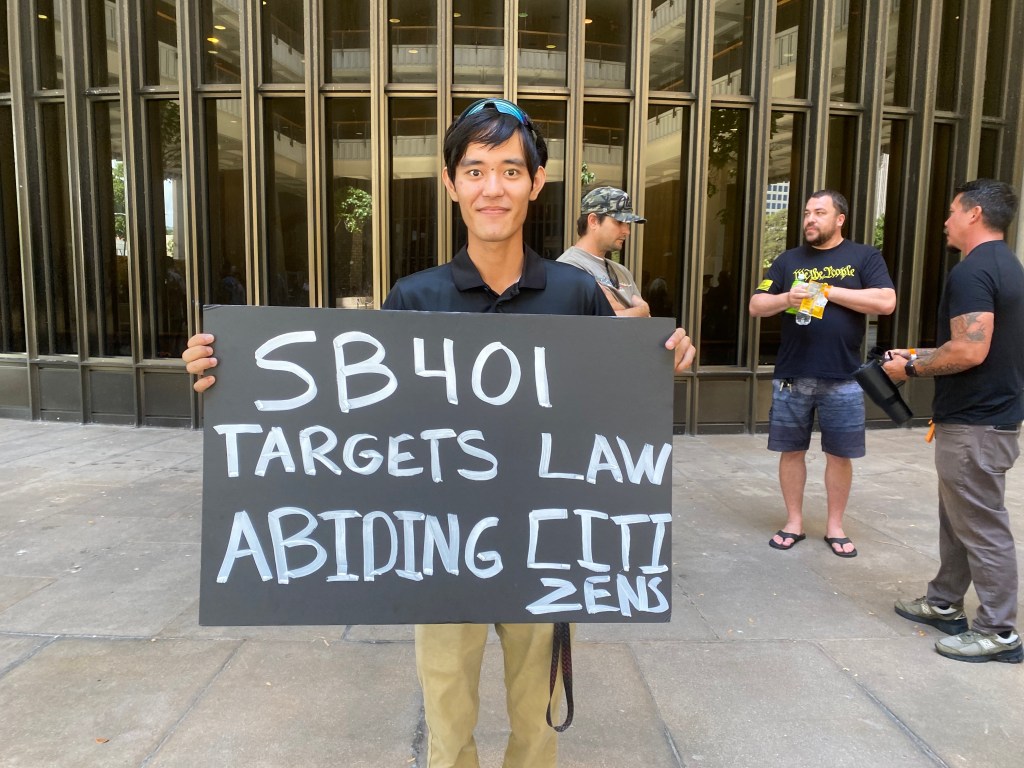
That’s what it was always about for me. I find having unlimited capacity for long gun magazines really bothers me. I’m probably going to put in a bill that just says something really high, but still less than 100, which is kind of the max that you can lift. So maybe 50, something like that, which is well above one of the standard clip sizes, which is 30. But I don’t know. I don’t think the bill that David spent so much time honing in the House side is coming back in its current form. But if the House sends us one, I’ll certainly give it another go to the extent I’m able.
Tarnas: The House’s support is clear, and the House doesn’t want to have to go through it all again and have it die in the Senate. And Sen. Rhoads worked really hard, and it was a last-minute effort from within that ended up killing the bill. If some of those folks who led the effort to kill the bill want to propose another bill, I’d like to see it. It was a very frustrating experience, and I thought we had a fair bill that addressed the issue. But I think there’s so many bills that get referred to my committee, and the same with Sen. Rhoads. We can’t just keep going back and doing the same thing over and over again. We’ve got to move forward with something that is going to address some of the opposition that killed the bill in the past. But the House is not going to initiate an assault weapons ban and send it over to the Senate just to see what happens.
What else will you be working on?
Tarnas: One of the bills that I’m putting in, which will be a difficult bill to get passed because it is asking for appropriations, is that it would appropriate funds to the Office of Elections to do a couple of things. It would support the counties to open up additional in-person voting places, Voter Service Centers. It would appropriate to the Office of Elections funding to print and mail out the voter guide, and appropriate funds to Office of Elections to do a public engagement and education campaign to try to get people to vote. So those are things that I’d like to pursue, and that’s something else to try to support our elections efforts.
What’s the inspiration for that? Is it in part the turmoil with the state Elections Office? There’s been many complaints about having enough voter centers, and then on your own island there are complaints that somehow the vote was tainted. On Kauaʻi as well.
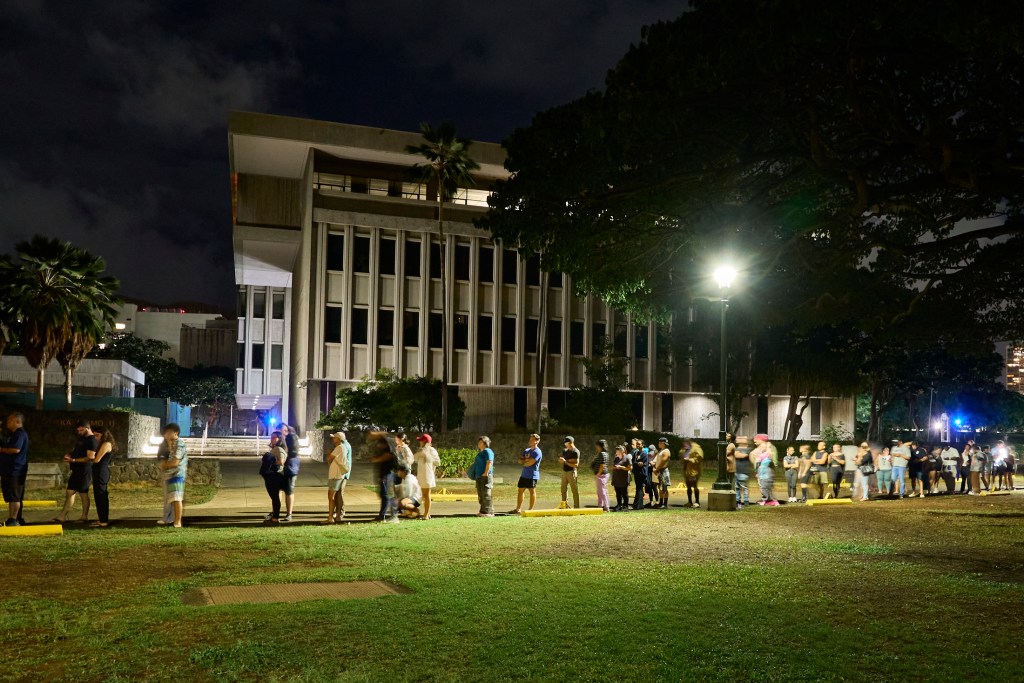
Tarnas: I’ve seen no credible evidence that there are missing ballots, or that there’s some nefarious thing going on with voting. I think what I was trying to address was the lengthy delay in the release of the election results because there are people standing in line who, of their own volition, decided to vote in person. They could have voted by mail, as most people did, but for making a political statement, or for other reasons they chose to vote in person, and the chief (election officer) and the county clerks weren’t prepared for it. I would like the county clerks to open up additional Voter Service Centers. They could do it of their own volition. We don’t have to tell them to do it. But they may need some financial support, so I’m going to put in a bill to provide them.
You know, I hear the Elections Commission says that they want us to stop mail-in voting. I’m not going to do that. The mail-in election system works well. I hear from my constituents, they’re very grateful for it, and so I will continue to support mail-in voting.
Karl, anything on the elections bills that David has suggested?
Rhoads: Well, anything nefarious that happens this coming election is being instituted from MAGA, from the top. They’re already suing us for our unredacted voter records, which my understanding is they have no legal right to, and I don’t know what they would need me for. Elections are run by states and counties. They’re not run by the federal government. So as I mentioned, I think before states are sovereign, this is a place where we’re sovereign.
Hawaii Legislators
Explore detailed legislator profiles, voting records and what happens in hearings on Digital Democracy. Visit Digital Democracy
I do have a couple of hopefully smaller-bore bills, one that would make it so that, if by some coincidence the chief election officer is fired right before the election, that the attorney general would act as the chief elections officer so that the vote could be certified. I don’t want to give the MAGA guys any room there.
Tarnas: You had mentioned to me, Sen. Rhoads, that the election chief election officer could only be fired for cause.
Rhoads: Yeah — a couple little technical fixes that hopefully will make any challenge smoother. And by the way, ever since we passed vote by mail, the counties have been given the authority to open more (voter centers) if they want to, and there is a financial aspect to that. And I do support additional funding for them from the state if necessary, because we do share the burden with the counties.
But I’m also going to introduce a bill that says at the Voter Service Centers there will be three separate lines. There’ll be one for people who are same-day voter registration, for those who have no choice but to vote in person because of a physical or mental disability, and then everybody else. I don’t think the people who don’t have any choice about where they vote should have to wait for all the people who do have a choice for where they vote. They just need need to get over that.

Any significant constitutional amendments that either of you guys want to put in? I know, Karl, you did quite a few last year.
Rhoads: I’m planning to put one in again, on voting for constitutional amendments, just to throw everything out except the yes and the no votes. I think in states you have to have a supermajority requirement, like 60%. I don’t even necessarily oppose a supermajority requirement. I just think that having it the way we do now, where blank votes count as a no, it’s just confusing everybody.
Tarnas: I just want to say I’d like to increase the mandatory retirement age for judges from 70 to 75.
On the recreational marijuana ballot question that you’re pushing, David, if that were to be put forth as a ComAm, would that be this election year or two years from now?
Tarnas: I don’t use the word recreational marijuana. I use the word “adult use cannabis.” Just so you know. I think if we pass something this session, you can get it on the ballot.
And Karl, I’m guessing you’re going to have a Supreme Court confirmation hearing, for Chief Justice. Is that what we’re looking at this session?
Rhoads: I think so. I mean, I’ve seen the list (of candidates for the governor’s consideration), and I’m not sure what’s going to happen, because it all depends on how the Judicial Selection Commission views their duties. You have to have at least four on the list. Are there really four people on that list who are qualified to be Supreme Court justice? I don’t know whether JSC will say, “Yeah, we’ve got four that would be qualified.” Or they’re just going to say, “No, we’ve got to put the name out there again.”
So it sounds like it might be problematic whether the governor would have sufficient names from the JSC. Is that what you’re saying?
Rhoads: Yes, that’s what I’m saying. It’s also possible, I suppose, that JSC could just pick the four names they need as most qualified, even if they didn’t view them all as qualified, and then just sort of steer it to the couple names that would certainly look qualified, including acting Chief Justice Sabrina McKenna. But I don’t really know how it’s going to turn out. I have mixed emotions. Part of it is just frustration that so few people want to be the Supreme Court justice. That, to me, is just odd as an attorney. That’s kind of the ultimate, other than becoming a U.S. Supreme Court justice. But for state purposes, that’s the ultimate legal position.
 Sign up for our FREE morning newsletter and face each day more informed.

Local reporting when you need it most
Support timely, accurate, independent journalism.
Honolulu Civil Beat is a nonprofit organization, and your donation helps us produce local reporting that serves all of Hawaii.
ContributeAbout the Author