Tsunamis, Floods And Not Enough Space: Kauaʻi Is Moving To Replace Its Jail
Officials say the new facility is long overdue so that they can focus on rehabilitating inmates.
For decades, Kaua‘i’s 128-bed jail has struggled with floods, overcrowding and deteriorating buildings.
Staff have clamored for a new facility with more space for inmate programs and outside the tsunami evacuation zone.
“We’ve got to get out of here,” Jerry Jona, Kaua‘i Community Correctional Center’s warden, told Civil Beat. “We’re a disaster waiting to happen every time there’s a tsunami warning or there’s a huge rain.”
With an upcoming highway-widening project expected to encroach on a third of the Wailua facility’s property, the state is finally moving forward with plans to construct a new rehabilitation-focused KCCC on empty agricultural land in Hanamā‘ulu.
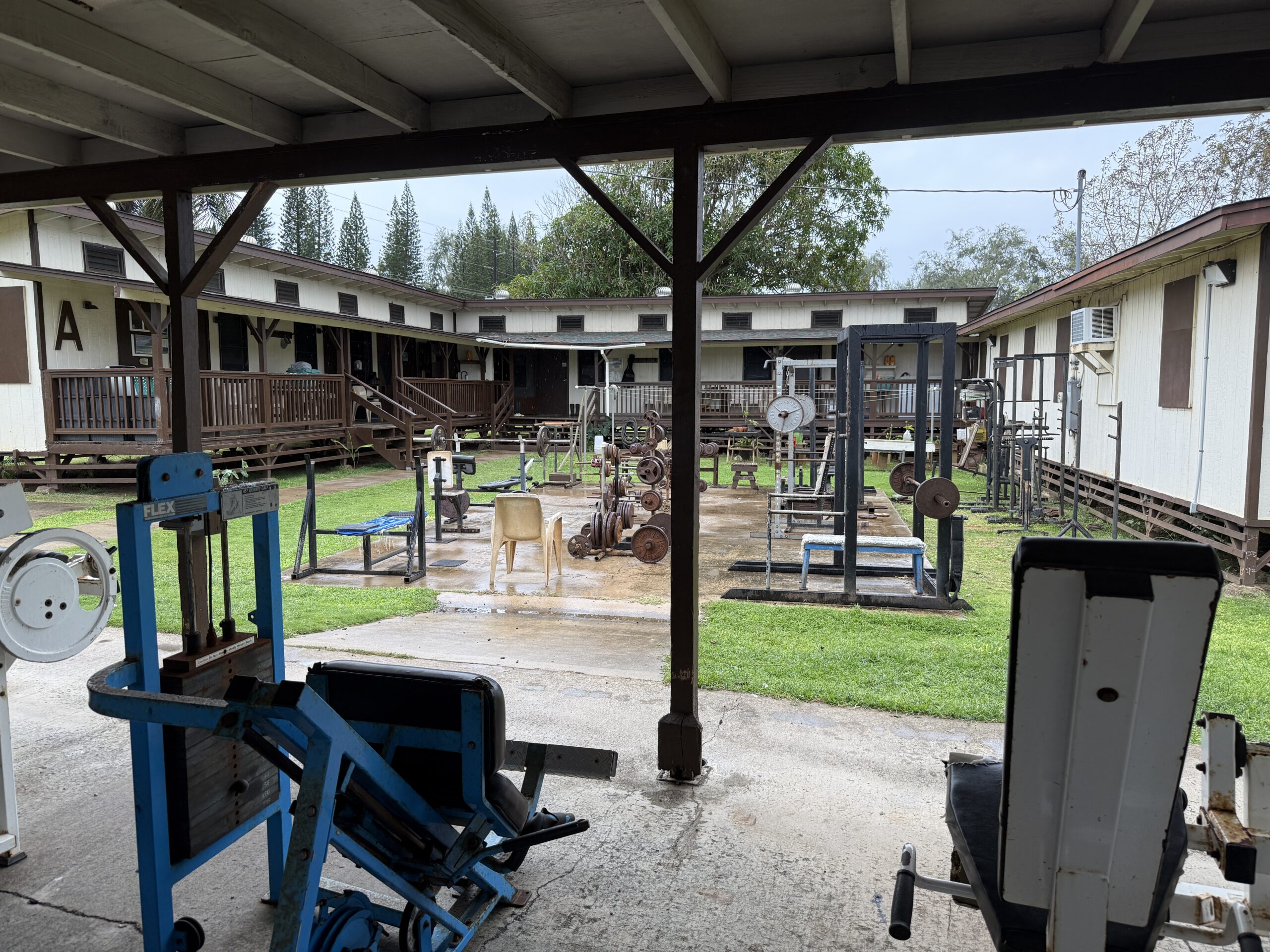
The jail serves just over 80 men and women, including those awaiting trial for misdemeanors or felonies, inmates convicted of misdemeanors, and probation and parole violators. Most stay at the facility for a year or less.
The state Department of Corrections and Rehabilitation in 2024 received $20 million from the Legislature to acquire land and do planning and design. This year, the department plans to ask for an additional $15 million in capital improvement project funds for further planning and design work.
Tommy Johnson, the department’s director, said it’s too early to estimate the cost of the new facility, but he hopes it will be completed by 2030 or 2031. Environmental and other studies are underway.
New Jail Site
The new facility fits into the department’s overall shift toward rehabilitation.
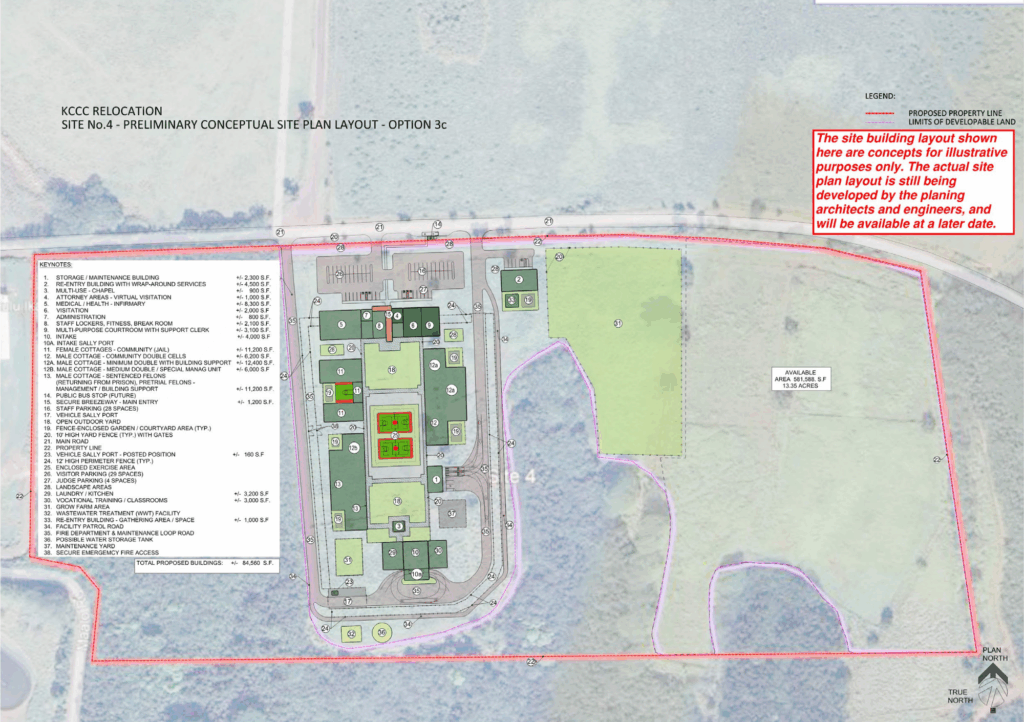
In addition to as many as 180 beds to accommodate Kaua‘i’s growing population, the project’s conceptual site plan includes a multi-use chapel, a room for attorneys to meet with clients, more recreational space, and courtyards and gardening areas. A farm would teach inmates skills and grow produce for the facility.
Stakeholders said in 2024 and 2025 that they would like the facility to promote healing and to teach inmates how to be productive members of society again. One community priority, for example, was for the new facility to create stronger connections with the ‘āina and the island’s cultural values and traditions.
“I think they see how critically important it is to have a modern facility that meets the needs of those people because those people are from the community,” Johnson said. “They’re our sons and daughters, uncles and aunts.”
Zachary Sui, KCCC’s chaplain, said the Wailua facility has no dedicated space for him to counsel inmates. Instead, he and workers from other programs such as Alcoholics Anonymous and Narcotics Anonymous must use the visitation room, also used for education, drug counseling and family visits.
“For myself, for the other people who work with the inmates, we want to see that rehabilitation aspect actually happen, and it’s just hard to get it to happen, unfortunately, at the current facility,” he said.
Another problem at the Wailua facility is that its proximity to the highway leads some people to park nearby and walk up to the fence to get a glimpse of incarcerated loved ones. Some have threatened to fight guards. And in 2024, an inmate escaped by scaling the perimeter fence and then died from injuries from an alleged hit-and-run on the highway.
Forty acres owned by Grove Farm along Mā‘alo Road was chosen as the preferred location for the new facility because of its proximity to Kaua‘i’s existing youth drug treatment facility and Līhu‘e town center and because it’s protected from tsunamis and floods.
It’s also a half mile away from the nearest residence. The site is part of a larger planned 1,000-acre sale to the state. The corrections department would own the jail site and get it rezoned for urban use, while the rest of the land would go to the Agribusiness Development Corporation for agricultural production.
Johnson and Jona said they haven’t heard any objections from nearby residents, though others in the community are concerned that traffic would increase where Mā‘alo Road intersects with Kūhiō Highway. A traffic analysis will be conducted as part of the environmental impact statement.
No nearby residents attended a public meeting Tuesday evening in Līhu‘e about the project’s status and its upcoming environmental, traffic and other studies. During the meeting, a couple of community members affiliated with KCCC said they support the Mā‘alo Road location.
The corrections department evaluated six potential parcels between Wailua and Hanapēpē. Two sites adjacent to the existing Wailua facility were too small to allow much expansion and located in flood and tsunami evacuation zones, according to KCCC’s draft site selection report.
Current Facility Outdated, Inefficient
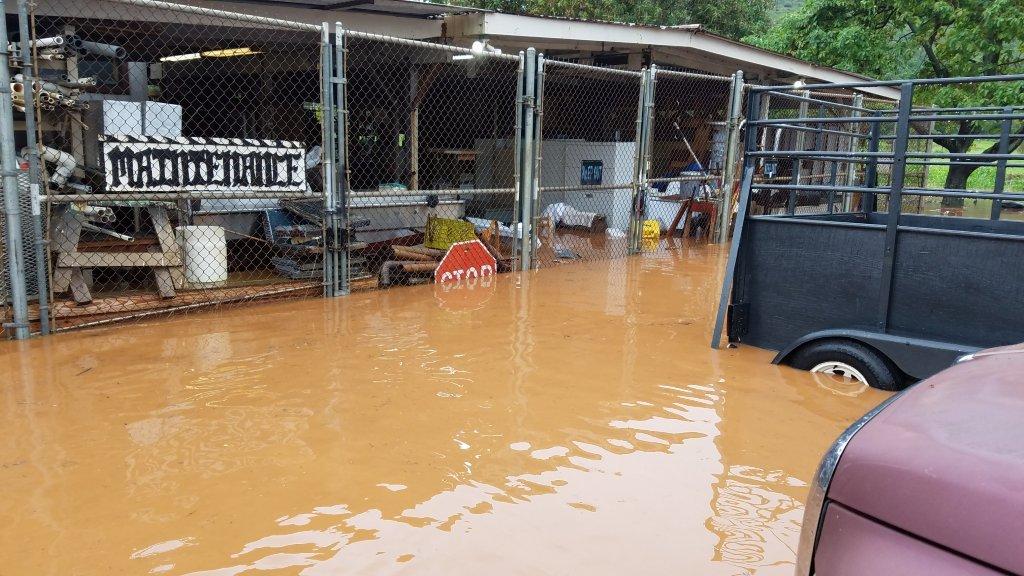
At the current facility, heavy rains often flood the facility’s maintenance, cabin and entryway areas. The last major flood destroyed some of its vehicles and damaged generators and other equipment.
During last year’s tsunami warning, inmates and staff had to evacuate, requiring coordination between the Kaua‘i Emergency Management Agency, the police department and the jail.
Jona, who has been with KCCC in various positions since 1999, said the Kaua‘i facility is the only corrections department jail that has been fully evacuated because of a natural disaster.
KCCC was built in 1977 for 12 inmates, but more buildings have been added over the decades. Today, the facility is rated for 128 individuals, though at times it has housed over 250.
The facility doesn’t have the space needed to house the growing numbers of offenders entering the jail with dual mental health and substance use diagnoses. Those offenders can’t be housed with the general population.
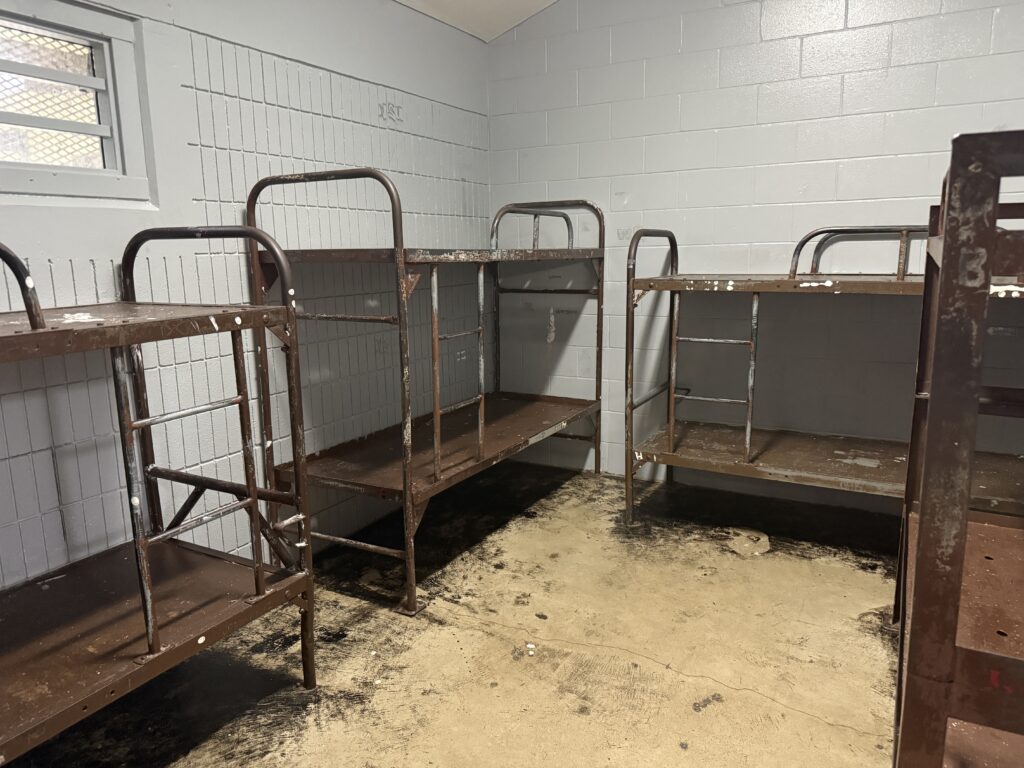
Over the last five years, KCCC has spent $12 million on construction and maintenance. The projects have replaced electronics and hardware, renovated restrooms and showers in Modules A and B, built a new kitchen, paved over a grassy parking prone to flooding, repaired and purchased new air conditioning units and added some new security fencing.
Carl Braun, the facility’s maintenance supervisor, said that the restroom renovations made KCCC compliant with the Americans With Disabilities Act.
The new kitchen opened last week. According to a May 2025 report by the Hawai‘i Correctional System Oversight Commission, floors were worn through to bare wood in some areas and entirely gone in others. The commission even urged the corrections department to close the space.
Rep. Luke Evslin, whose district includes Līhu‘e and Wailua, took part in negotiations to ensure that the preferred site was included in the state’s purchase of land from Grove Farm. He said KCCC staff can only do so much to help rehabilitate inmates when the current facility is falling apart and has limited space.
“It almost seems hard for people to hold onto their humanity in a place like that when you’re living in a facility with limited access to the outdoors,” he said. “It’s hard to imagine people coming out in a better condition than when they came in.”
Jona and Johnson added that they hope a new facility will provide better working conditions for staff and more space to rest.
“Our current facility, we cannot safely support modern correctional standards for security, medical care and mental health treatment, rehabilitation, programming, or even disaster resilience,” Jona said. “Continuing to operate in this location exposes not only staff, but inmates, first responders and just the broader community to unacceptable risk.”
Read the full environmental impact statement preparation notice below.
Civil Beat’s reporting on Kauaʻi is supported in part by a grant from the G. N. Wilcox Trust.