

A mystery has embroiled the Hawaiʻi Legislature.
In January 2022, a Hawaiʻi lawmaker accepted $35,000 in a paper bag from a person subject to an FBI bribery investigation. The interaction was recorded for the federal government by then-state Rep. Ty Cullen, who was acting as an FBI asset and was later sent to prison alongside former Senate Majority Leader Kalani English for accepting bribes.
The lawmaker was described by federal prosecutors as “influential,” perhaps the only helpful clue to their identity.
The interaction, first made public by Civil Beat, represents an unresolved thread in one of the biggest political scandals in Hawaiʻi history and raises a key question: Who is that influential lawmaker?
Hawaiʻi officials have declared they will not make any effort to expose the person at this moment. Hawaiʻi Attorney General Anne Lopez issued a statement earlier this month saying she will stay away from the matter while the federal investigation continues. And House Speaker Nadine Nakamura and Senate President Ron Kouchi have announced they will not take any independent action.
So Civil Beat endeavored to find out.
In the last two weeks, we contacted every person who served in the Hawaiʻi House or Senate in January 2022 and asked them directly:
Question: Are you the “influential” lawmaker who accepted $35,000 in a paper bag in January 2022?


The replies flooded in. One after another, lawmakers’ messages boiled down to: No, it wasn’t me. Only three individuals did not respond. Two others are dead.
The only current lawmaker not to respond at all was Republican Sen. Kurt Fevella. Civil Beat emailed questions to his official email address, texted him and twice nudged his staff over the phone to get him to respond. No answer. However, Fevella arguably wouldn’t be considered influential in Hawaiʻi’s Democrat-dominant political world.

Among the formers, Richard Onishi — who represented Hawaiʻi island in the House from 2012 until 2024 — did not reply to Civil Beat messages left by voicemail, text and email. A former chair of the House Labor and Tourism Committee, he was in a position of some influence.
On the Senate side, Civil Beat did not hear back from retired Maui Sen. Roz Baker. A veteran lawmaker, Baker worked in politics for about three decades before retiring in 2022. At the time of her retirement, she was the chair of the Senate Commerce and Consumer Protection Committee, also a position of influence. Civil Beat sent her multiple emails and text messages.
However, Baker’s friend, former Sen. Gil Keith-Agaran, said he spoke to her himself and she denied involvement.

Two of the lawmakers who were in office in 2022 have since died: the late state representatives Mark Nakashima, a Hawaiʻi island Democrat , and Gene Ward, a Republican who represented Hawaiʻi Kai.
Nakashima was close with legislative leadership, including former House Speaker Scott Saiki and then-finance chair Sylvia Luke. He served as vice speaker of the House from 2018 through 2020 and chaired the House Consumer Protection and Commerce Committee, considered one of three most coveted chair positions.
Our survey was voluntary, and the lawmakers from whom we received denials are not under oath. However, if the “influential state legislator” lied on the record to their constituents, that could further harm their reputation if and when their name eventually comes out.
Governor Calls On Lawmaker To Come Clean
It’s unclear whether the $35,000 payment was an illegal bribe or a bundle of legal campaign contributions.
Luke, now lieutenant governor, was the only person to report receiving a total of at least $35,000 within the seven-day reporting window of the transaction, according to state campaign finance data. But she says the influential lawmaker wasn’t her.
While failing to report campaign funds or gift money is illegal, it’s possible a bundle of cash and/or checks was handed to a lawmaker to further distribute among colleagues. That could be legal but would raise a host of questions about the influence of money in politics.
The existence of the $35,000 transaction was revealed in the first place via a court filing from the Department of Justice explaining why Cullen should get a lesser sentence. Cullen helped officials collect information about the “acceptance of bribes and monetary rewards” by himself and “other legislators,” prosecutors said. The $35,000 handoff was “helpful information to the investigative team.” But four years later, no criminal charges have materialized, at least not publicly.
In the absence of more information, the public is left with unanswered questions.
Even Gov. Josh Green said he’s in the dark about the influential lawmaker’s identity, and last week he called on that person to come clean. If they took a bribe, they should “humble themselves,” and take responsibility, he told KHON on Monday. If it was legal, the governor said, they should set the record straight and explain what happened.
“Whoever did that should own it and then really face the consequences,” Green said. “It’s tough because if you have one bad apple, it really kind of messes everybody else up. I’m kind of upset and sad that that ever occurred.”
No one has come forward in the days since.
Twenty-four hours after Civil Beat began its survey, the House of Representatives put out a blanket statement saying all currently serving lawmakers who were in office in 2022 “publicly affirm that they are not the lawmaker” involved in the $35,000 handoff. It included all of their signatures.
Kouchi — who was closely tied to Milton Choy, the businessman convicted of bribing Cullen and English — issued his own statement two days later, just before 5 p.m. on a Friday. He said all current senators had been asked whether they received the alleged funds and/or if they know who it was.
“All majority Senate members have stated that they did not receive the alleged funds and do not know any legislator who received the alleged funds,” Kouchi said. “None of the minority members responded to my inquiry.”
Senate spokeswoman Sheryl Turbeville clarified in a call with Civil Beat that “all” includes Kouchi himself. The Kauaʻi legislator has held his office for 15 years and is running for reelection this year.
We also had asked each current and former lawmaker whether they knew the identity of the person who handed over the $35,000.
All 47 individuals from the House who responded — either directly to Civil Beat or through the House spokesperson — said they did not know.
Most of the 23 respondents from the Senate said the same. Six lawmakers responded only through the statement from Kouchi, which did not address that question. They did not reply to follow-up requests to answer that question.
Calls For Transparency Grow Louder
Former lawmakers were the most candid in their responses. Some applauded the probe.
“I do hope these people will be revealed and appropriately chastised and convicted if guilty,” former Sen. Gil Riviere said.
Some responded with humor.
“I am not the influential legislator,” former Rep. Bertrand Kobayashi said, “and not even influential then or now.”
“Republicans are not invited to those ‘special’ meetings,” former Rep. Bob McDermott said.
Others were concerned.
“The fact that the attorney general is saying no, they’re not going to deal with it because it’s a federal case, I’m a little puzzled by it,” former Sen. Clarence Nishihara told Civil Beat. “Even if it is a federal case, it’s also a state thing at this time. So I don’t know why they won’t touch it.”
Amid the hubbub, some lawmakers past and present are breathing a sigh of relief that they know nothing about the money in question.
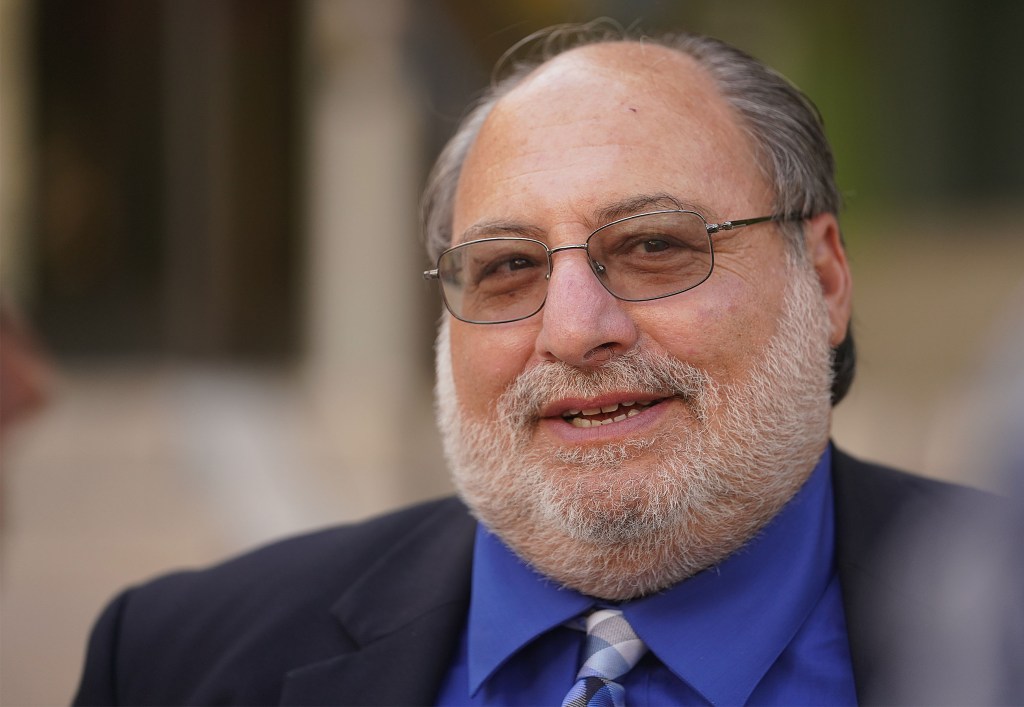
“I am very happy to have been a legislator who played the game right, voted on the merits of bills rather than for favors, fought fiercely for our precious North Shore and state’s natural resources, and I exited the Capitol with my integrity 100% intact,” Riviere said.
“As such, I was always considered a thorn in the side of ‘influential’ lawmakers and not privy to their greatest secrets.”
As the mystery continues, a petition is circulating calling on the House and Senate to convene an investigative committee to determine the details of this $35,000 transaction. The petition notes that no lawmaker has been federally charged for accepting the money, and it is possible the person remains in political office today.
The effort is being led by Alexander Silvert, the retired federal public defender whose investigative efforts helped crack a prior political scandal — that of Honolulu prosecutor Katherine Kealoha and her police chief husband Louis Kealoha, who both served prison time for trying to frame a man for a crime he didn’t commit.
Silvert previously told Civil Beat that the Legislature would only have to call one witness: Cullen, the former state representative who observed — and recorded — the transaction.
Democrat Rep. Della Au Belatti, who is running for Congress, has spoken out in support of a legislative investigation, as have all nine Republican House members.
“The public has a right to the full truth, and we stand with them in the pursuit of ethical governance,” the representatives, led by Rep. Lauren Matsumoto, said in a statement on what her caucus called the “35k bandit.”
“At a minimum, the appropriate House committee should be tasked with identifying the legislator involved and ensuring the facts are fully brought to light.”
While the federal investigation plays out and state investigators sit on their hands, the clock is ticking on filing state charges, if any apply. Prosecutors have only six years after an instance of bribery to file charges. Campaign finance violations have a five-year charging window. The $35,000 was handed over four years ago.
Sen. Jarrett Keohokalole, who is also running for Congress, has drafted a bill to extend the bribery statute of limitations to nine years to buy the state more time.
“If a state crime was committed, we shouldn’t — and don’t have to — forgo accountability because a federal investigation took too long,” he told Civil Beat in an email. “We can change the law.”
CORRECTION: A graphic in a previous version of this story included lawmakers who were not in office in 2022 and has been updated to include lawmakers who have since left office.
About the Author
Help power essential news and information