More Design Delays Could Push Back Honolulu Rail Project — Again
The city center segment of the $10B rail project is supposed to open in March 2031, but an outside consultant questions whether that plan is still feasible.
An unexpected year-long delay in design work needed to finish the $10 billion Honolulu rail project could trigger yet another delay beyond the scheduled March 2031 finish of the system.
A consultant’s report that became public earlier this month shows the city instructed contractor Hitachi Rail Honolulu JV in late 2024 to begin design work on components of the rail operating system from Middle Street to Kakaʻako, the city center segment, but Hitachi did not follow through.
The city center segment is critical because it finally takes the Skyline system into Honolulu’s main business district, which rail supporters expect will increase both ridership and political support for the project.
Now the Honolulu Authority for Rapid Transportation is scrambling to address the problem, and the consultant that monitors the Honolulu rail project for the Federal Transit Administration wants to do a thorough review of the construction schedule.
Hill International Inc., which oversees the rail project for the FTA, wants to determine if the planned March 2031 opening date for the city center segment “is still feasible.”
Cara Mazzei, project communications director for Hitachi Rail, said in a written statement that the company “firmly rejects any claims suggesting that delays to (the city center segment) are attributable to Hitachi Rail.”
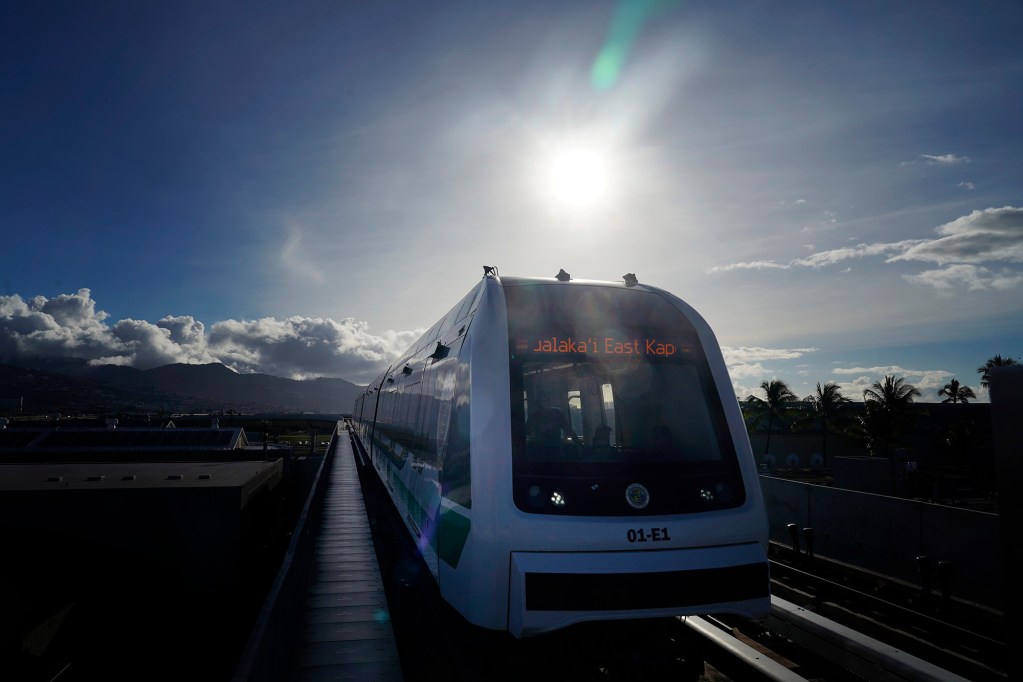
Hitachi and the city have been locked in litigation since December 2024, when the company sued the city and HART demanding $324 million in damages for rail project delays.
HART has pushed back aggressively, filing a counterclaim late last year accusing Hitachi of breach of contract and violations of Hawaiʻi’s False Claims Act. That law allows for triple damages when claims against a county are based on false or fraudulent demands for payment.
Scrapping With A Major Contractor
Hitachi and its predecessor AnsaldoHonolulu have been major players in the Honolulu rail project since 2011, when the city awarded Ansaldo a $1.4 billion contract to design and build the rail operating system, also known as the “core systems contract.”
That original contract also called for AnsaldoHonolulu, a joint venture between the companies AnsaldoBreda and AnsaldoSTS, to operate and maintain the Honolulu system, and to build the rail cars. Ansaldo was acquired by Hitachi in 2015, years before the first rail segment opened.
Construction of the entire rail system was supposed to be finished in 2019 and Hitachi’s original contract to design and install the rail operating system was supposed to end the following year, but things did not go as planned.
The line was originally supposed to extend from West Oʻahu to Ala Moana Center, but cost overruns delayed the project and finally forced the city to end the line in Kakaʻako. The shortened Skyline system is now scheduled for completion in 2031.
HART issued a change order in 2019 to keep Hitachi on the job until 2024, but more delays followed in the construction of Segment 3 into the city center as HART struggled to hire a contractor that would build that stretch of rail line at an affordable price.
In an effort to minimize costs during that pause in construction, HART Project Director Vance Tsuda told members of the rail board, the city issued an extended stop work order to Hitachi in 2021 to delay design and other work on Segment 3.
HART finally selected contractor Tutor Perini Corp. in the summer of 2024 to build Segment 3 from Middle Street to Kakaʻako. The rail authority then issued a “notice to proceed” to Hitachi effective Dec. 1, 2024 to restart design work on the rail operating system for Segment 3.
But by then the relationship between HART and Hitachi had soured considerably.
Weeks after HART issued that notice to proceed, Hitachi filed a lawsuit against HART seeking hundreds of millions of dollars in damages because of more than a decade of rail construction delays. That lawsuit alleges “mismanagement of the Skyline rail project has led to countless delays and other errors.”
HART later countersued, accusing Hitachi of filing false and misleading claims. The HART lawsuit also alleges that either Hitachi was responsible for most of the delays, or Hitachi was not entitled to compensation for the setbacks.

Tsuda also described the hardball negotiations that played out during a “year-long discussion” with Hitachi in 2025, with Hitachi initially demanding payment of $6 million for its costs that year. HART finally bargained the company down to less than $3.1 million, Tsuda said.
Work Has Not Begun
As for the design and interface tasks Hitachi had been instructed to resume in late 2024, according to the Jan. 12 report from consultant Hill International, “at this point HRH (Hitachi) has not begun that work.” In fact, as of Jan. 30 Hitachi still had not “fully mobilized” its subcontractors for the work, Tsuda told members of the HART board in a public briefing late last month.
Hitachi is responsible for designing and installing components of the operating and other rail systems into the elevated guideway and stations that Tutor Perini is tasked with building, but Tsuda said Tutor has not been provided with necessary design information.
“Hitachi’s interactions with Tutor have been minimal because they don’t have their subcontractors on board because they demobilized them as per our direction back in 2021,” he said.
Hitachi disputed that version of events in its statement, alleging HART’s directions to Hitachi in 2024 directed the company to proceed with only limited “system interface and coordination” tasks.
“Meanwhile, all other major Segment 3 work remained postponed,” the company wrote in its statement. “To date, the final two Segment 3 stations continue to be suspended at HART’s behest. Despite the lack of direction from HART, the HRH design team has not been demobilized and remains on site working in support of the Skyline project.”
“Throughout 2024 and 2025, HRH repeatedly sought clear scope, direction, and the contractually required change order to proceed with execution of Segment 3,” according to the Hitachi statement. “To date, HART has not issued the change order, preventing HRH from receiving payment for work performed for over a year.”
Tsuda requested approval of the $3 million change order at the Jan. 30 meeting to pay Hitachi for costs including remobilization for design work and interface between Hitachi and Tutor Perini, and the project oversight committee for the HART board approved that change order.
In the meantime, HART has been providing Tutor with some design information based on lessons learned in the first two rail segments to try to avoid delays, Tsuda said.
HART Executive Director Lori Kahikina declined a request for an interview this week to discuss the concerns by raised by Hill International about the feasibility of the March 2031 opening of rail, or to explain how HART might make up the lost time.
She said in a written statement Tuesday only that “Hitachi is currently mobilizing to continue designs for City Center Guideway and Stations (CCGS) segment.
“In the interim, to mitigate delays, HART has been working with CCGS contractor Tutor Perini Corporation (TPC) to provide necessary input to allow TPC to progress with its designs.”
She added: “HART continuously monitors and evaluates construction progress and the scheduling of multiple overlapping work activities for areas where efficiencies can be gained.”
This article has been updated to include a statement from Hitachi Rail Honolulu issued on March 2.