

Kauaʻi Mayor Campaign Fundraising: Rapozo Outpacing Carvalho
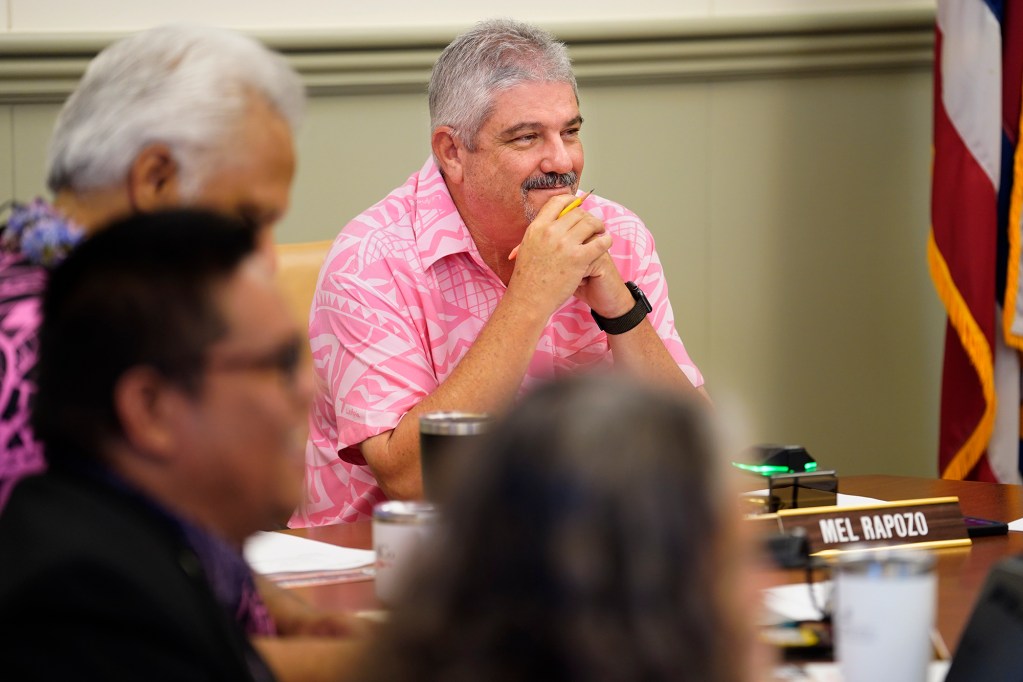
County Council Chair Mel Rapozo is raising and spending more money than his council colleague Bernard Carvalho Jr. in their bid to be Kauaʻi’s next mayor.
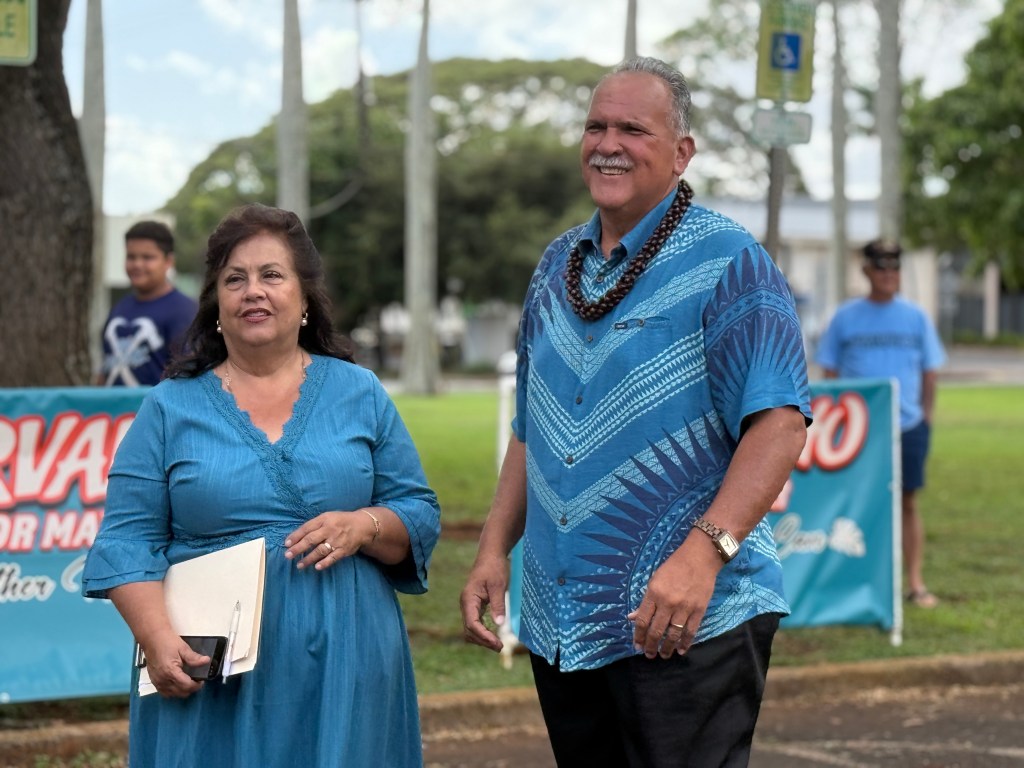
Kaua‘i mayoral candidate Mel Rapozo is out in front of Bernard Carvalho Jr. in campaign financing, according to their latest spending reports filed with the state Campaign Spending Commission.
Rapozo, the current County Council chairman, had $78,954 on hand as of Dec. 31, while Carvalho, also a council member and Kaua‘i’s longest-serving mayor, had $49,003 in his campaign bank. The two are vying to replace Mayor Derek Kawakami, who is finishing his second and final four-year term, in the Nov. 3 general election. The candidate filing deadline is June 2.

Rapozo raised $62,452 during the last half of 2025, outpacing Carvalho’s $49,907 haul from donors, their campaign spending reports show. Rapozo also outspent Carvalho during the same six-month period, $25,159 to $14,202.
Both candidates are raising a significant amount of the overall campaign money off island.
For Rapozo, 65% of the contributions greater than $100 during this election period came from Kaua‘i. Nearly 31% came from O‘ahu, 3% from Hawai‘i island and a little under 1% from out of state. For Carvalho, 41% of his large-dollar contributions came from Kaua‘i, 45% from O‘ahu and nearly 13% from out of state. A little less than 1% came from Maui.
The Campaign Spending Commission does not itemize contributions less than $100. Small-dollar contributions made up 16% of Rapozo’s overall campaign contributions, whereas for Carvalho, they made up about 5%.
A former Kaua‘i police officer and private investigator, Rapozo filed his nomination papers on Monday. He told Civil Beat that he’s running a grassroots campaign, focused on small-dollar donations. It’s a strategy he’s used for past campaigns, including his two prior unsuccessful runs for mayor and 10 runs for County Council, nine of which were successful.
He last ran for mayor in 2018. That time, he raised $180,000. Only Derek Kawakami, who won his first term as mayor that year, raised more, at $518,000. Kawakami easily won his second term in 2022 with $210,000 in campaign contributions.
“There’s a lot of work to do, we got to raise a lot more money,” Rapozo said. “I’m happy with what we got in the last half of last year.”
Carvalho, a former pro football player for the Miami Dolphins, has been a council member since 2020 after an unsuccessful bid for lieutenant governor in 2018. Prior to that, he served as mayor for 10 years, finishing the final two years of the late Mayor Bryan Baptiste’s term and then winning back-to-back elections.
He told Civil Beat that his campaign contributions speak to the relationships he’s built over his political career and that much of the neighbor island support he’s received connects back to Kaua‘i families.
“I’m just so thankful and open to whatever support we can get at all levels,” he said.
Development Industry Among Recent Donors
Many of the larger donors to Rapozo’s campaign came from the development and construction industry.
They include Nan Shin, Fooney Freestone and Ryan Nakima of Honolulu-based general contractor Nan, Inc., who each gave $4,000. Shin is the founder, Freestone is the president and Nakima is the vice president.
Rapozo also received $2,000 from Patti Tancayo Barbee, managing partner of Kalanianaole Development; $1,500 from Jason Fujimoto, president and CEO of HPM Building Supply; and $2,000 from the Local Union 293 State Legislature Fund, a Hawaii Sheet Metal Workers’ political action committee.
Creating housing inventory is a major focus of Rapozo’s platform.
“It would make sense that these development organizations would want to support any candidate that is looking at housing as an issue,” he said. “They want to see more housing on Kaua‘i — and so do I.”
Carvalho also received large donations from the construction industry. Patrick K. Kobayashi, chairman and partner of O‘ahu-based Kobayashi Group, donated $2,000. Susan Kobayashi, the real estate and investment firm’s co-founder, donated $1,000.
Like Rapozo, housing is one of Carvalho’s priorities. When he was mayor, the county built the 44-unit Kolopua in Princeville, the 90-unit phase two of Kaniko‘o in Līhu‘e and got the ball rolling on the 550-unit Lima Ola in ‘Ele‘ele.
“Within that term, that long term I had, I developed these relationships,” he said.
The Mason Local 630 PAC donated $4,000, and the Local 1 PAC – Bricklayers and Allied Craftworkers, Ironworkers Local 625 and the Hawaii Lecet Pac Fund each donated $2,000. Hawaii Operating Engineers Industry Stabilization, affiliated with Operating Engineers Local 3, donated $500.
Carvalho also received $4,000 from Jonathan Day, CFO of Reef Employment Services. Day is also the CFO of Reef Capital Partners, which is trying to rebuild the Coco Palms hotel in Wailua.
Damage sustained during Hurricane ‘Iniki in 1992 led to the hotel’s closure and several owners have tried to rebuild the hotel since, often to the dismay of residents who think Kaua‘i doesn’t need more hotels and want to see the site become a cultural park.
Carvalho said he considers Coco Palms to be the piko (navel or umbilical cord) of the island. He also has a more personal connection to the property because his grandmother, father and uncles worked there.
He said he’s supportive of Coco Palms being rebuilt as long as it maintains the strong cultural connection it had when it was open, though he’s also open to other ideas, such as rebuilding at a smaller scale.
Notable Donors
Some notable Kaua‘i donors to Rapozo’s campaign include Danford Ka‘eo, co-founder of Līhu‘e-based Shredco Hawaii, and his wife, Chanel Ka‘eo, a co-founder of Shredco and business project manager with DMK & Associates. They each contributed the max individual donation of $4,000.
Waimea resident Stephanie Iona, a self-employed public relations professional, donated about $1,806 in pūpūs and supplies for Rapozo’s Nov. 22 chili and rice fundraiser at Kilohana Plantation. Fisherman Barry Brun donated $875 for poke at the event.
Carvalho received $2,115 from retired Kaua‘i pastor Villamor Galiza, $2,100 from Caesar Dullaga of Allied Universal Security Service, $1,095 from Kirk Correa of Island Athletic T’s, $1,000 from Executive Security Services Hawaii, and $1,000 from architect Ron Agor, a former state lawmaker who has long been affiliated with efforts to rebuild Coco Palms.
The Hawaii Government Employees Association’s Kaua‘i division contributed $500 between its division chief, Christopher Nii, and staffer Joni Taba. HGEA is one of the biggest unions in Hawai‘i.
Kikiaola Land Company donated $500 to Carvalho’s campaign.
Carvalho also received several donations from individuals affiliated with the County of Kaua‘i. Carol Beadle, who works in law enforcement, gave $1,005, former council member Ross Kagawa gave $300, Amadeo Dullaga of the Public Works Department gave $240 and Transportation Supervisor Tamara Duterte gave $150.
From Honolulu, Carvalho received $1,000 from SanHI Government Strategies, LLP and Bruce Coppa of Capital Consultants. Each of the government affairs firms gave $500. MK Advocacy Group LLC, an independent lobbying firm on O‘ahu, also gave $500.
Campaign Expenses
Many of Rapozo’s expenditures went to his Nov. 22 fundraiser, on which he spent about $9,500.
He’s also leaned heavily into advertising for his campaign, spending about $12,300 on his campaign website, signs, banners and radio ads.
He spent $650 on fundraiser tickets for O‘ahu Sens. Donovan Dela Cruz and Donna Mercado Kim and Kaua‘i Reps. Nadine Nakamura, Dee Morikawa and Luke Evslin.
Rapozo is active in the community, including in youth sports. He donated $200 to Menehune Athletics for its state flag football tournament and $100 to Kaua‘i Senior Citizens Softball Association for its state senior softball tournament.
Rapozo spent $667 to travel to Hilo and O‘ahu to meet with HPM’s Fujimoto, local International Brotherhood of Electrical Workers affiliates, Hawaii Sheet Metal Workers and bank industry leaders.
“I think the mayor needs to venture out into the community into the different sectors, into the different industries so the mayor can get a good idea of what’s happening on the ground before we make decisions that’s going to impact everyone,” he said.
Carvalho spent nearly $3,600 on an October hulihuli chicken fundraiser at the Kaua‘i Philippine Cultural Center. He spent nearly $2,200 on flights and rental cars to meet with groups like HGEA, the Hawai‘i State Teachers Association, State of Hawaii Organization of Police Officers and Hawai‘i Regional Council of Carpenters.
He also donated $450 to the campaigns of Nakamura, Morikawa and Evslin. Carvalho spent $2,000 on his own campaign website and collateral materials.
He gave $200 to Life’s Bridges Hawaii, a Kaua‘i nonprofit that provides bereavement support after unexpected deaths.
With almost four months before the candidate filing deadline, Rapozo and Carvalho remain the top candidates for mayor. The primary election is Aug. 8, and the top two candidates advance to the general election Nov. 3.
CORRECTION: This story has been updated to reflect two changes Rapozo made to the titles of donors on his campaign spending report.
Civil Beat’s reporting on Kauaʻi is supported in part by a grant from the G. N. Wilcox Trust.

