Meet The Oʻahu Woman On A Mission To Stop The Ala Wai Canal Bridge
Laura Ruby has opposed a bridge over the Waikīkī canal for almost 20 years. Even as construction inches closer, she has no plans to stop.
On this January evening, instead of focusing on mixed-media artwork in her home studio, Laura Ruby was trying to convince her neighborhood board that a proposed pedestrian bridge across the Ala Wai Canal out of Waikīkī was bad news.
The bridge would disrupt activities at a park on the Mōʻiliʻili side where she lives, Ruby said. It would expose the community to “extreme contact with tourists, vagrants and criminal transients.” It would be too expensive. It would be too tall.
Then she pulled out the big guns: Before the planning goes any further, Ruby said, it needs more environmental scrutiny.
She was ready with a draft resolution she had typed up ahead of time. It called for the city to complete a full environmental impact study of adding a canal crossing between University Avenue and Kālaimoku Street before taking another step. The current review, she said, didn’t go far enough.
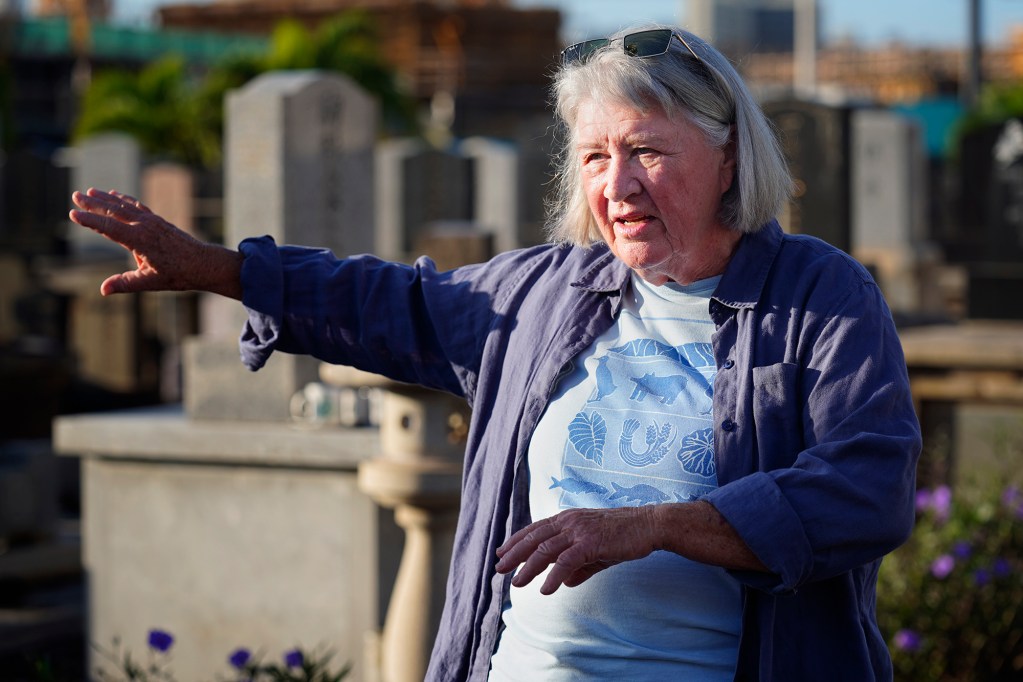
This moment in 2024 was among many in which Ruby went beyond the bounds of a regular testifier. Her opposition to the Ala Wai bridge has so far spawned several community meetings, an amendment to the city budget, changes in the construction plan and additional federal historical review, delaying a project first floated before the 80-year-old was born.
Despite her efforts, the initial round of contractor bids to come up with a final design and construct the bridge are due to the city Monday. In the spring, a shortlist of the top three is to submit detailed proposals.
Ruby has not yet conceded defeat.
Friends attribute her successes to her status as an informed and well-respected member of the Mōʻiliʻili community; her persistence and thoroughness; and, perhaps most of all, her willingness to switch strategies along the way. Her adversaries — such as bridge supporters, some of whom have choice words for Ruby’s stalling and scare tactics — begrudgingly give her credit for those same qualities.
Waikīkī Neighborhood Board member Kathryn Henski, who supports a bridge between her community and Mōʻiliʻili, described Ruby as smart and hardworking but also as a “spoiled 6-year-old” holding her breath until people in charge capitulate.
“She does her homework,” Honolulu Department of Transportation Services director Roger Morton said. “She is intimately involved and reviews all of the documents that we put out. Many activists don’t get beyond the executive summary, but she digs deep into it.”
Countless activists push for or against public projects only to be worn down by Honolulu’s municipal inertia. But after almost 20 years of opposing the Ala Wai bridge, Ruby shows no sign of slowing down.
Learning The Neighborhood
Ruby may be a well-known fixture of Mōʻiliʻili today, but she was raised in Santa Monica, California.
She learned leadership skills early, as a Girl Scout and camp counselor who taught sailing at Redondo Beach. Like many girls of her era, she also loved reading Nancy Drew mysteries, in which the eponymous teenage sleuth solved cases with resourcefulness and tenacity.
After majoring in English at the University of Southern California, Ruby honed her skills as a public speaker while teaching middle school English in East Los Angeles.
Before teaching, she said, “you couldn’t get me to talk … and now you can’t stop me from talking.”

Ruby moved from California to a six-story apartment building at the base of Diamond Head in the mid-1970s when her husband, the late poet Tony Quagliano, was offered a teaching job at the University of Hawaiʻi Mānoa. By then, she had been pursuing art in her spare time, and after coming to Hawaiʻi she earned her MFA with an emphasis on sculpture at UH Mānoa and began teaching there and giving public lectures on art.
She and her husband moved from Diamond Head to Mōʻiliʻili in 1980 after landlords kicked them out of their first apartment. It would prove a fortuitous move, propelling her to become a scholar of her new neighborhood.
After the Mōʻiliʻili Community Center Board of Directors initiated the Discover Mōʻiliʻili Festival in 1995, Ruby helped with the annual event by enlarging historical family and archival photos of the neighborhood to display on the windows of King Street businesses. She learned a lot about the neighborhood’s history in the process, she said, and realized there was enough material for a book.
The finished product was an almost 400-page coffee table tome, published in 2005 by the community center with an introduction by former Mōʻiliʻili resident U.S. Sen. Daniel Inouye. While dozens of people contributed writing and photos, Ruby wore hats as writer, editor and book designer. Many of the contemporaneous photos in the book are credited to her.
Before the book came out, Ruby started hosting more public lectures — now on her neighborhood’s history — which elevated her public profile. Former mayor Kirk Caldwell was among the attendees.
“I love history,” Caldwell said, “and so I would go listen to her.”
Her local stature grew when she cleaned up the dilapidated Mōʻiliʻili Japanese Cemetery. Ruby had visited the cemetery with Harriet Natsuyama, whose grandfather carved many of its gravestones, and thought it looked like a “junk pile.” Some tombstones were loose while others were toppled over.
“We figured, if we don’t do something,” she said, “who will?”
Fundraising was difficult at first. A $1,000 grant from the Awesome Foundation to replace the chainlink fence with a stone wall, put in stone benches and plant flowers, Ruby said, attracted support from others for the rehabilitation project.
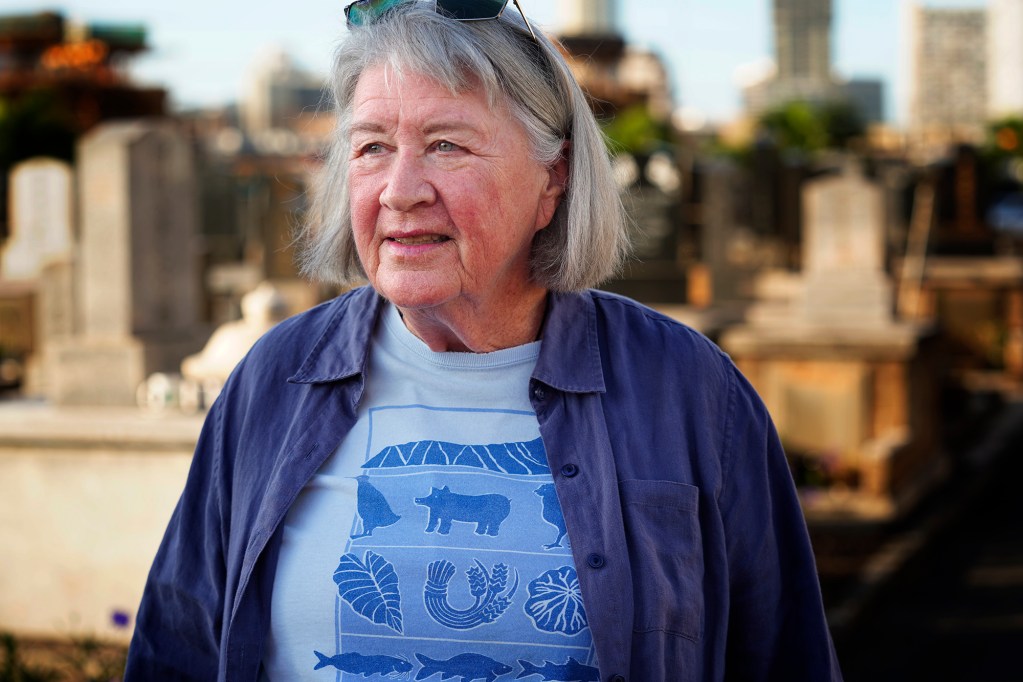
Elected officials such as Caldwell and former City Council member Calvin Say, who represented Mōʻiliʻili, now recognize Ruby in large part because of this work. Caldwell calls her his “hero.”
“She’s always contributed or been concerned about the history and the culture of Hawaiʻi,” said Donna Wong, whose environmental organization Hawaiʻi’s Thousand Friends recently honored Ruby as one of their annual Unsung Heroes.
In 2007, Quagliano passed away. In a letter notifying the E.E. Cummings Society at Grand Valley State, Ruby wrote that the two of them “were the closest of friends and collaborators on both Tony‟s literary works and my artworks.”
It was two years after she had finished “Mōʻiliʻili–The Life Of A Community.” By then, she had become a well-respected member of her community and she was a longtime art professor and public speaker at UH. As an artist, she had become known for an ongoing series of prints, drawings and sculptures focused on Diamond Head and along the way she had produced another series based on Nancy Drew, which, she wrote on her website, “represents the independence and problem-solving intelligence of the detective figure, while also alluding to the independence, creativity and determination of the artist.”
That October, she penned her first resolution against a bridge over the Ala Wai Canal.
Relentless Opposition
Discussion about connecting University Avenue with Kālaimoku Street by bridge pre-dated America’s entrance into World War II.
But Ruby’s move to Mōʻiliʻili with her husband had coincided with a lull in enthusiasm about the bridge. A half-million dollars allocated by state lawmakers a few years before for planning and construction had gone nowhere.
She doesn’t remember exactly how she caught wind of the plan to bring the Waikīkī denizens right to her doorstep, but she knew from the start that she wanted to shut down “any further thinking” about it. She considered it a “pathway to crime,” she said — an escape route for burglars and purse snatchers from either side.
Her first resolution offered an alternative: make the McCully Street Bridge just down the canal safer for pedestrians and bicyclists.
More than a decade passed before one of her fans, Caldwell, became enamored with the idea of adding a bridge. Under his leadership, the city in 2018 held community meetings about the proposal. The cost for a basic pedestrian and bicycle bridge would be about $15 million, with the federal government covering 80% of the cost, Nicola Szibbo of the city Department of Transportation Services told the Mōʻiliʻili Neighborhood Board. Szibbo also noted that an environmental impact statement would eventually be needed.

Caldwell’s administration framed the bridge as a major component of the city’s Complete Streets vision, aligned with plans to connect the University of Hawaiʻi Mānoa and Waikīkī via a safe route for pedestrians and bicyclists. It would shrink a milelong journey, from University Avenue to Kālaimoku Street, to 300 feet. One city study estimated it would put central Waikīkī within walking or biking distance for at least 9,000 additional people and that an estimated 1,300 to 4,200 would cross it daily.
In 2020, when the city released renderings of the bridge — given a name filled with optimism: Ala Pono, meaning “the right path forward” — Ruby seized on a new reason to oppose the project: its size. The Mōʻiliʻili side of the bridge, barely 200 paces from her condominium building’s door, featured a 180-foot tall tower. After inflation in construction costs tied to the Covid-19 pandemic, the cost had also grown to more than quadruple its original estimate — $63 million — although the federal government would still pay 80%.
“They just do the biggest and best thing they can because they want to be in the Guinness Book of World Records.”
Laura Ruby to the Mōʻiliʻili Neighborhood Board in 2024
City officials called the tower structurally necessary to avoid pillars in the water that could block paddlers. Ruby called it a “monstrous bulwark” that would block views of Diamond Head.
“They just do the biggest and best thing they can because they want to be in the Guinness Book of World Records,” Ruby told the Mōʻiliʻili Neighborhood Board at their January 2024 meeting.
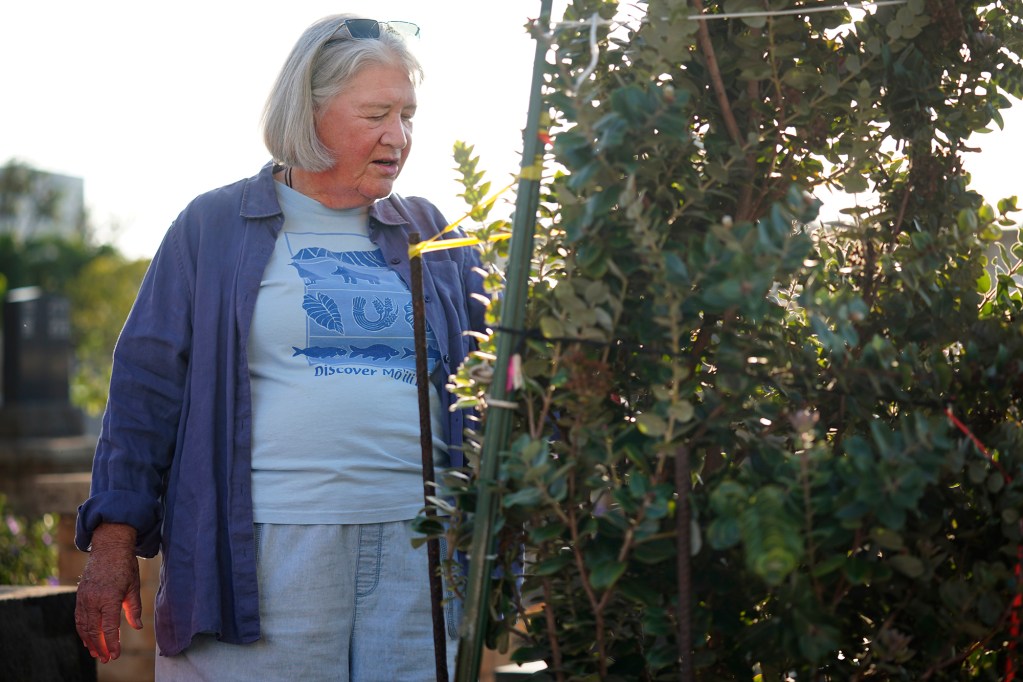
Over the years, Ruby has shown up at dozens of neighborhood board meetings to plead her case against the bridge, often making the same argument to multiple boards before rotating in new talking points. In a typical meeting, she walks up to the microphone wearing sneakers and a Mōʻiliʻili t-shirt. She carries a printed out draft of her proposed resolution for that day, and she speaks authoritatively to her audience like she’s calling them to action.
A prevailing theme is always that the city needs to solicit more community input.
She sends mass emails about the bridge — which range in content from questioning its design to demanding more environmental review — to a list of about 50 people, including the mayor, some of his cabinet members, city and state lawmakers, reporters, neighborhood board members and other residents.
In one email last spring, she included a link to Civil Beat’s Fix It! survey form and suggested people submit responses about the existing bridge at McCully Street.
“The fact is: fixing the McCully Bridge for pedestrians and bicyclists was our very first request — before any other plans regarding the Ala Wai Canal were suggested,” her email said. “Please fill out yours and pass it on to others to fill out.”
Ruby focused much of her lobbying on Say, a former state House speaker who represented Mōʻiliʻili on the council until 2025. Say didn’t kill the project as she’d hoped, but he slipped into the city budget a requirement that officials consider alternatives to the giant tower.
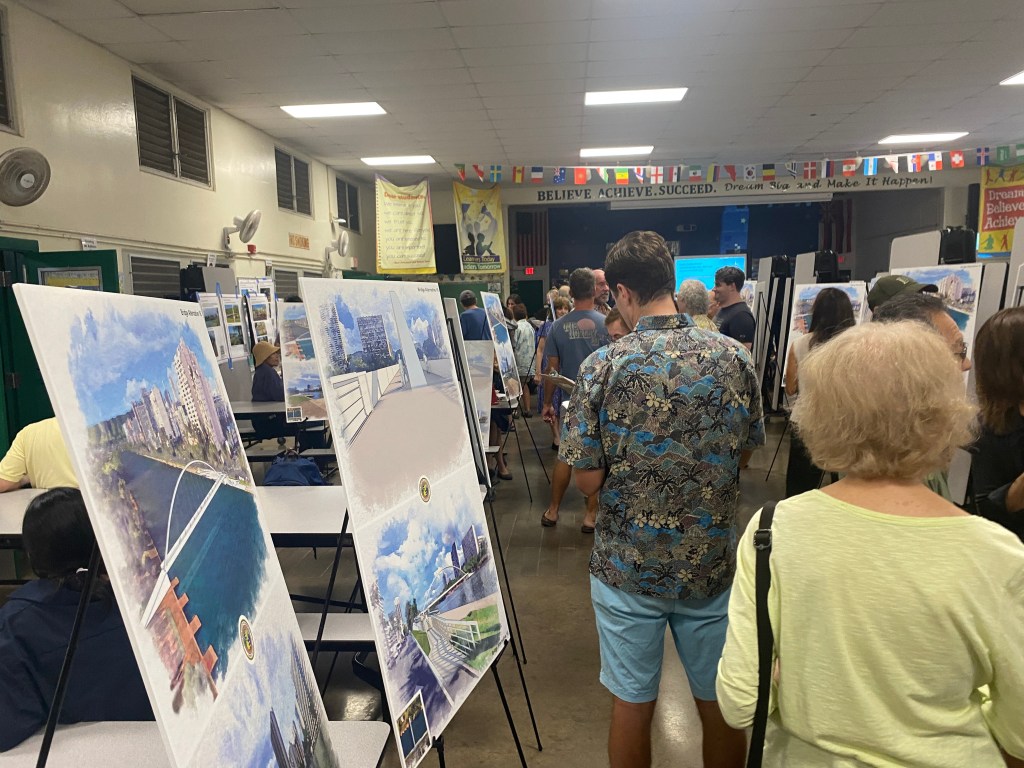
The result was 19 bridge designs put to a vote of local residents, who viewed them at Ala Wai Elementary School over two days in November 2024. Some designs were grand homages to ancient Hawaiian sails or fishing nets, while others looked like the sleek contemporary bridges of cosmopolitan cities such as Singapore or London. One resembled a bridge made of toothpicks.
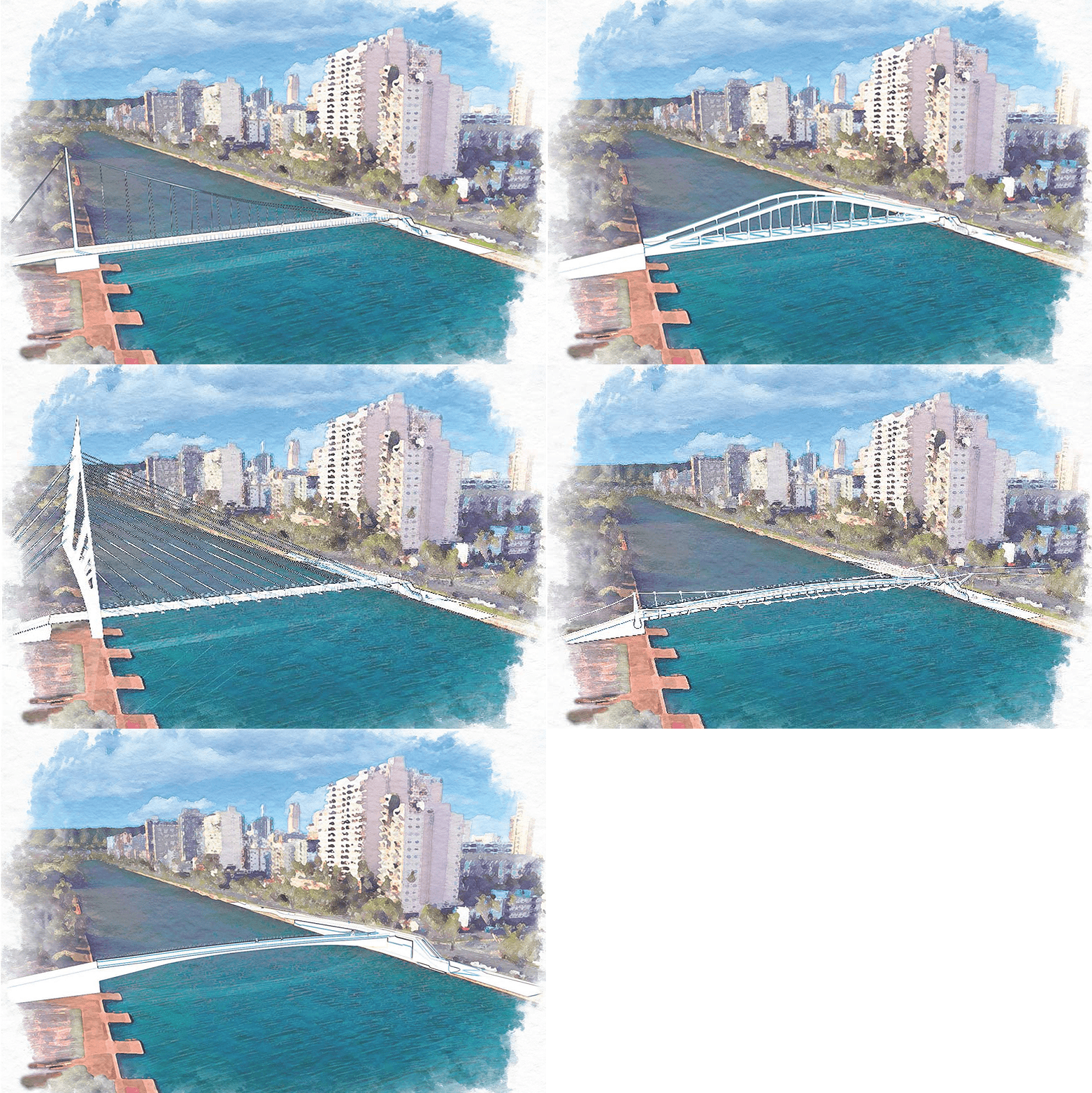
The most popular option was the one Ruby hated least: a low-profile, no frills, utilitarian design.
The city put out a bid for the bridge in December 2025, with responses from construction contractors due on Feb. 2. As another direct result of Ruby’s advocacy, the bid is a two-round contest; the final round will have the top three contractors incorporate resident feedback into their designs. The city will pay each of them up to $300,000 in stipends for their efforts.
Morton, who leads the city’s transportation department, said that process could end with an even smaller — and cheaper — design.
No matter the size, Ruby still has gripes about the bridge, including some fresh takes.
“It’s going to be a field day for skateboarders and mopeds and everything else but,” she said recently — which she fears could pose a danger to senior citizens’ ankles — and constant security would be necessary to make sure the skateboarders behave.
“It’s not a respectful group of people,” she said.
Persistence Pays Off
The city’s environmental assessment of the bridge, released as a draft in 2021 with a final version expected in the coming months, touches on a variety of issues, all of which it says can be resolved.
The hālau used by paddlers who take off from Ala Wai Community Park can be moved. Trees can be replanted or replaced. Views of Diamond Head that might be obscured for some will be offset by new views from the bridge.
Ruby says that review was not nearly enough.
“It’s a shorthand. It’s a Band-Aid,” Ruby said, calling the 1,112-page document “a small little thing” considering the scope of the project.
She wants the city to complete a more thorough environmental impact statement, which would take roughly two years. That quest became her primary strategy in 2024, when she presented the idea to five neighborhood boards in the form of yet another resolution.
In April that year, she framed her comments before the Mānoa board around the up to 4,000 people expected to cross the bridge daily.
“Where are they going?” she asked. Then she answered her own question, referring to the college-oriented neighborhood on the back side of Mōʻiliʻili: “They’re going to come right up to Puck’s Alley and right up into Manōa.”
That board, along with two others — Diamond Head and Makiki — voted for Ruby’s resolution.
Diamond Head board chair Winston Welch said Ruby consistently shows up to their board meetings offering a wide variety of knowledge beyond the proposed bridge. Still, he conceded, she does talk a lot about the bridge.
People’s eyes roll when they hear the same thing over and over, Welch said, but sometimes that’s what it takes for them to truly hear a message.
“I think she presents as very sane, logical, rational, professional, poised,” he said, “and is a good communicator and is succinct in her message.”
Like Ruby, Welch questions the need for the bridge, calling it “a solution in search of a problem.” Ruby and Michelle Matson, a Diamond Head Neighborhood Board member who also opposes the bridge, persuaded the board to pass two resolutions in 2021 against the bridge, one of which describes Waikīkī as a place for “illegal drug havens” and “roaming prostitutes.”
Not surprisingly, Waikīkī folks aren’t fond of such characterizations. When Ruby presented her resolution to their board in January 2024, members butted heads with her and even once admonished her to “quit interrupting.”
“She’s an intelligent woman,” Henski, the Waikīkī Board member, said. “It’s just that she’s very misguided.”
Henski admires Ruby’s work rehabilitating the Mōʻiliʻili Japanese Cemetery — “that bulldogness,” she said, “that determination to prevent the graves from being robbed.” But she’s irked when Ruby applies those same qualities to her anti-Ala Wai pedestrian bridge campaign.
“She has convinced people that nothing good will come from Waikīkī. All the riffraff and the trash and the homeless will just end up in Mōʻiliʻili.”
Kathryn Henski, Waikīkī board member
In particular, Henski doesn’t like Ruby using scare tactics, portraying Waikīkī as dangerous to rally people against the project.
“She has convinced people that nothing good will come from Waikīkī. All the riffraff and the trash and the homeless will just end up in Mōʻiliʻili,” Henski said. “Why? Why would they leave Waikīkī?”
Henski accused Ruby of “getting as many people as she can who don’t live in Waikīkī or don’t live in Mōʻiliʻili involved in this.”
That’s kind of the point, of course. The neighborhood boards have no official vote in the matter, but the more they join the opposition, the more their elected officials have to listen. If Ruby had stuck with just her local Mōʻiliʻili Neighborhood Board, Say said, “she would’ve lost it way earlier in the ballgame.”
Even her own community’s board was initially skeptical of Ruby’s stance. Members rejected her resolution calling for an environmental impact statement four times, noting it didn’t refer to a specific project or that what she presented was substantively the same resolution the board had already rejected.
At the time, Greg Misakian was Ruby’s lone ally on the Waikīkī Neighborhood Board. He told the Mōʻiliʻili Neighborhood Board at their March 2024 meeting that they should support her resolution because there might eventually be litigation against the project.
“I really don’t think your board wants to have that to address later,” he said, “that your board didn’t support something that is just common sense.”
Ruby’s persistence showed its worth through this process. She gained more support each time she presented her resolution to the Mōʻiliʻili board, until finally, in December 2024 – her fifth attempt – it passed.
‘She Used It As A Weapon’
Four neighborhood boards adopting Ruby’s non-binding resolution is an achievement, but it doesn’t mean the city will require a new environmental impact statement for the bridge. What it shows is she has political power, which makes it hard for public officials to dismiss her entirely.
Morton, the city transportation director, said the extra community meetings to vote on bridge designs did not delay the project since they were not part of the “critical path” anyway.
“One thing that might have delayed it a little bit was that we ended up going to the Advisory Council (on) Historic Preservation,” he said. “That may have been — probably was, in part — as a result of Laura’s advocacy.” Consulting with the federal agency probably took more than a year, Morton said.
Ruby’s opponents think her ongoing push for an environmental impact statement is insincere, intended to delay the project until it dies.
“I really, really personally resented that she used that process, which is supposed to improve the environment, improve projects,” Waikīkī Neighborhood Board member Jeff Merz said. “She used it as a weapon to kill this project.”
Morton agreed that sometimes the environmental review process, “from an activist point of view, is a timestopper,” but also noted that state and federal agencies frown on adding an environmental impact statement if they feel it’s simply a stalling tactic.
So far, the Ala Wai bridge project is continuing unabated. The city’s public posting of the bid showed five interested vendors as the bid deadline approached.
Ruby knows it’s possible her efforts have been for naught, that the bridge will be built. She knows people decades from now might use it without any idea of its past controversy, similar to the once controversial H-3, which was opposed for years by activists concerned that its construction posed too big a disruption to the environment and Hawaiian cultural sites, and threatened Kahaluʻu’s rural character.
She herself still refuses to drive H-3 on principle, but also figures that the six-story building she called home when she first moved to Hawaiʻi might have once been opposed by residents of the single-family homes around it.
These days, she has a new target in mind: a German contractor listed as an interested bridge vendor on the city’s website. Ruby is considering reaching out to “convince them that it’s not in their interest.”
Her message to them would take on a new flavor – not blocked views or fleeing criminals.
“It’s small, it’s away from their main German center … It is not their own design. They would be picking up another design from somebody else,” she said. “And if we could convince them that that’s not a design that’s compatible here – for the environment, or for the people, or for anything – those would all be reasons that I would give them.”