

New Mauna Kea Authority Has Difficult Task Ahead — And Limited Time
University officials and some senators are concerned about the fate of astronomy on the mountain.
Lanakila Mangauil, one of the most recognizable faces of the movement to stop construction of the Thirty Meter Telescope on Mauna Kea, sat in a room last week full of astronomers, farmers and fellow activists in Waimea to talk about the future of the mountain.
Running up to the summit of the mountain in 2014 dressed only in a red malo and a kapa sheet to stop the groundbreaking ceremony for the TMT “was the fun part,” Mangauil said.
Now comes the hard work of taking over management of the mountain and trying to set up a new state agency almost from scratch.

Mangauil is part of a 12-member authority set to take over the summit of Mauna Kea from the University of Hawaiʻi after a series of protests over the construction of TMT exposed deep rifts in the community. By 2028, the Mauna Kea Stewardship and Oversight Authority will oversee the leases for observatories on the mountain, hold the power to issue new permits, manage the visitor center and control access to the summit.
Although construction on TMT has been paused for the better part of a decade, the telescope still looms large over the discussions, as major policy decisions that could affect the fate of the project — and that of astronomy on Mauna Kea — will have to be made in the coming months and years. Leases for the existing telescopes are set to expire in 2033.
UH was once able to push forward with those decisions on its own, but now must work jointly with the authority until the transfer of power is complete. University officials have been concerned that there is no clear path forward for astronomy on the mountain and late last year raised concerns that the authority was moving too slowly on issues such as the lease renewals.
But, authority members pushed back on the idea of moving quickly on lease extensions. They want to let the community guide their decision-making first, in part through a series of meetings to gather community input on the future of the mountain.
“You really got to go in there and listen. Otherwise, the community will smell it. They’ll smell it out that you’re only here to check a box.”
John De Fries, executive director of the Mauna Kea Stewardship and Oversight Authority
The meetings have brought together people who have been on opposing sides until recently. Astronomers are sitting next to protesters who halted construction of TMT just several years ago. In the meetings, they’re finding common ground in limiting tourist access to the summit, restoring rivers that flowed from Mauna Kea and doing more to share Indigenous knowledge about the mountain with people who come to Hawaiʻi island.
It’s a process that needs time, members of the authority say.
“You cannot go into that space with a transactional mind,” John De Fries, the authority’s executive director, said in an interview in Hilo last week. “You really got to go in there and listen. Otherwise, the community will smell it. They’ll smell it out that you’re only here to check a box.”
An ‘Extremely Steep’ Learning Curve
Lawmakers created the authority in 2022 to help resolve issues over Mauna Kea that had been simmering for 60 years.
The University of Hawaiʻi has managed the summit of Mauna Kea and the development of astronomy there since 1968, when the state awarded it a master lease covering more than 11,000 acres for $1. It later became a part-owner in observatories that were built there over the last 50 years, ensuring precious viewing time for UH’s own astronomers.
There were concerns over UH’s track record as a landlord for years. The observatories had a history of chemical leaks and leaving trash on the summit. Audits in the 1990s faulted UH for failing to hold the observatories accountable.
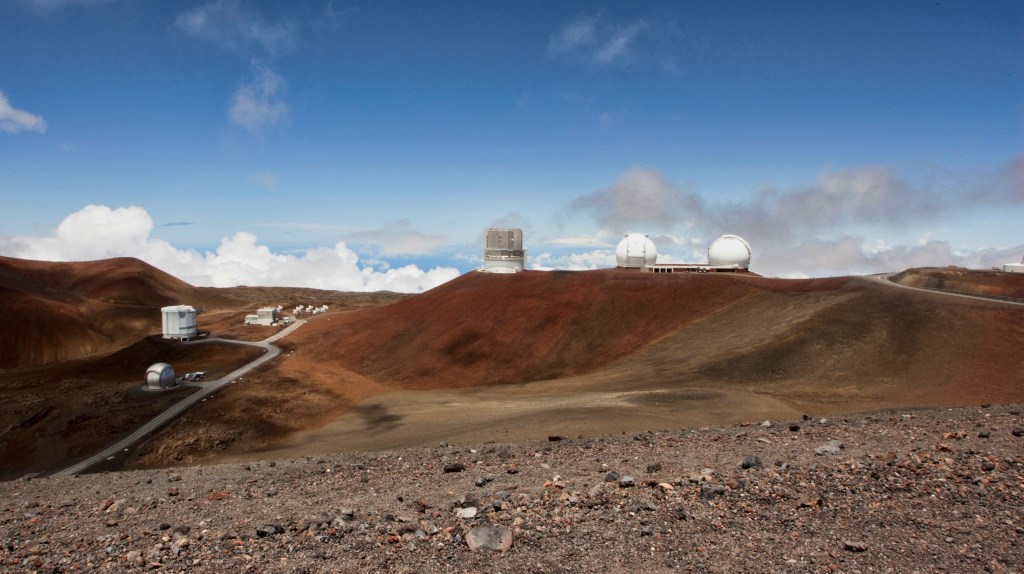
The university has done a better job overseeing the summit since then, but the past failures engendered public distrust. Protests over TMT in 2015 and again in 2019 brought to the forefront issues of land use, conservation and recognition of cultural practices as well as the management of the mountain.
The 12-member authority taking over stewardship of the mountain includes representatives from the astronomy community as well as UH officials and leaders in the protest movement.
In addition to creating a new management plan, transferring leases and setting up a management structure to take over the role as landlord, the authority will also be responsible for overseeing observatories, managing rangers who monitor access and employing staff for the visitor center along with others who work at the UH Hilo campus.
During the transition period, the authority is working with the Center for Maunakea Stewardship at UH Hilo, which manages the day-to-day activities on Mauna Kea.
“The learning curve for them is extremely steep,” Greg Chun, the center’s executive director, said.
The Mauna Kea authority will contract the center so it can continue its operations and keep its people employed, De Fries said.

De Fries, a former tourism and real estate executive, said that most of the authority’s other objectives are on track and expected to be completed by 2028. The members appear to work well together so far despite coming from opposing sides.
“Everybody cares about the mauna, so you’ve got that in common,” De Fries, who is not a member of the board, said.
For the last three years, most of the authority’s work has been backstage, as De Fries put it, getting itself ready to take on a tremendous management responsibility.
It secured a $14 million budget from the Legislature to ramp up operations and is turning an old Bank of Hawaiʻi branch in Hilo into its new offices. It has four staff members, including De Fries, but will eventually be responsible for more than 60 employees.
It’s pushing forward with a measure this session that clarifies the land and leases that will transfer to the authority in 2028. The bill requires UH to transfer operating permits to the observatories themselves to avoid a situation where the authority becomes both landlord and permittee, as is the case under the current arrangement with the observatories.
The bill also buys the authority some time to complete its administrative rules, which could take many months past the 2028 deadline. The rules are the only component that won’t be completed in time, De Fries said.
Until those new rules are complete, UH’s current rules would stay in effect on Mauna Kea under the bill.
How To Manage A Mountain
The authority’s most pressing task is to create a new management plan for Mauna Kea, which will cover everything from how people access the mountain to how the authority will address expected impacts from climate change.
To that end, it has convened 16 community workshops and talk-story sessions across the state in the last several weeks. A team of consultants will turn those conversations into data that can be used to drive the management plan.
Participants are being asked about access to Mauna Kea and the sharing of Indigenous knowledge. They’re also asked for input on an aspirational statement meant to guide the authority’s mission and tackle unresolved social justice issues. Participants have brought up everything from housing and homelessness to including more Hawaiian voices around astronomy on the mountain.
Last week, the authority went to Kanu o ka ʻĀina charter school in Waimea to host its latest community meeting. The agrarian town, which sits on the saddle between Mauna Kea and Kohala, is home to both prominent TMT protesters and an enclave of astronomers. The W.M. Keck Observatory and the Canada-France-Hawaii Telescope are headquartered there.

More than four dozen attendees, including astronomers and some of the protesters, crammed into the charter school classrooms for small group discussions over the future of Mauna Kea.
In one classroom, several employees from Keck said that they didn’t feel astronomers do a good job of sharing the knowledge they’ve gained from using Mauna Kea. In another room down the hall, a Waimea resident asked the room, which was also filled with astronomers, what their field has done to create jobs in the broader community or advance food security. Both issues are top of mind for the Big Island, where wages are low and the price of groceries keeps climbing.
Jean-Gabriel Cuby, director of the Canada-France-Hawaii Telescope, told one of the breakout rooms that he was devastated watching the protests on Mauna Kea in 2019 that brought thousands to camp at the base of the summit. Now, he wants to help bridge divides in the community.
“Thank you,” he said to the protesters who halted TMT’s construction that year. “You made me understand that something was going wrong.”
The impacts of tourism and access for cultural practitioners have been common themes during the community meetings.

Observatory employees have also seen an increase in the number of tourists going up the mountain or attending stargazing events. During the meetings, some have suggested moving to a reservation system that charges tourists similar to Hanauma Bay on Oʻahu.
There were calls for sharing more Hawaiian knowledge about Mauna Kea with visitors, including sites to stay away from and how to act while on the summit.
At the end of the meeting in Waimea, which ran just over three hours, one woman took the mic and thanked the board members for taking the time to understand the mountain.
“It deserves it,” she said. “We deserve it.”
John Komeji, who chairs the authority board, said the members are trying to build a culture of trust. He said that takes time.
“Some people,” he said, “think we move too slow.”
Authority Doesn’t Want To Rush
Chun, from the Center for Maunakea Stewardship at UH, agrees that the many meetings the authority is holding across the state are important for trust building.
But, he said that the university is still advocating for astronomy interests on the mountain and for lease extensions to the observatories. Other officials are worried that time could be running out for the observatories.

In a letter to the authority in November, Gabe Lee, chair of the UH Board of Regents, and UH President Wendy Hensel said they were concerned with an apparent lack of progress by the authority to establish a stable governance structure. The uncertainty over who would manage the mountain and what would happen when observatory leases need to be renewed in 2033 could lead the observatories to divest from Hawaiʻi, they warned.
They pointed to a canceled $500 million replacement project for the Canada-France-Hawaii Telescope that was discontinued over uncertainty involving the long-term leases.
Komeji wrote back, saying the authority must also consider the environment, cultural preservation and “historical injustice,” in addition to astronomy. He cautioned against appearing to advance the interests of one sector.
“If our respective experiences have taught us anything, it is that we should strive to move at the speed of trust, rather than being driven by the expedience of transaction,” he wrote.
The worry that the authority could endanger the future of astronomy has hit the Legislature as well.
“… we should strive to move at the speed of trust, rather than being driven by the expedience of transaction,”
John Komeji, board chair of the Mauna Kea Stewardship and Oversight Authority
Sen. Lorraine Inouye, a longtime critic of the authority, introduced a bill that would require an audit of the authority in 2031, three years after it takes over management. If the audit finds that the authority is unfit to continue, control would revert back to the university.
Inouye doesn’t think the authority supports astronomy.
“We’re not encouraging and supporting an economic viability for Hawaiʻi island,” she said.
DeFries said it’s a common misconception that the authority is against astronomy.
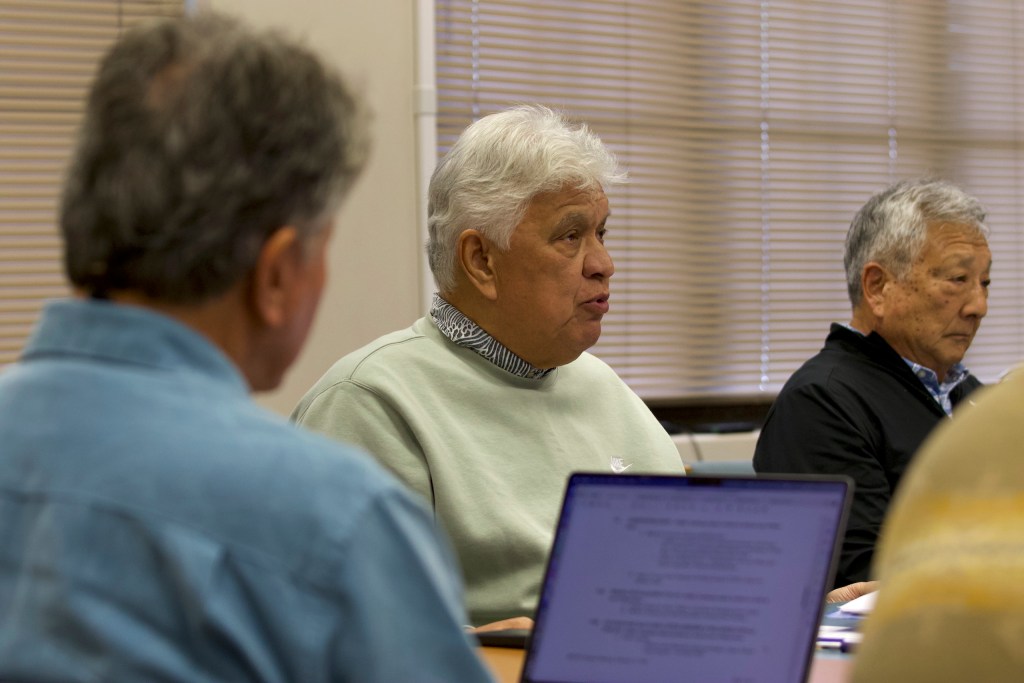
State law says that support for astronomy is the policy of the state. But how exactly that policy is carried out will be up to the authority and the communities it is reaching out to, DeFries said.
For the authority, its toughest conversations over astronomy lie ahead.
The UH Board of Regents will soon consider a policy change that could be a precursor to TMT construction. A group of regents has recommended that the university allow new facilities to be built on decommissioned telescope sites. The state law that created the authority also allows for reuse of sites, but the current practice is to restore the site when a telescope is removed.
The proposal comes several months after a letter from Gov. Josh Green and Hawaiʻi’s congressional delegation indicated that TMT would explore using a decommissioned site rather than break ground on an untouched portion of Mauna Kea.
The policy change will need to go to the authority for approval, which doesn’t plan on making a quick decision. The process for approving the change could take at least eight months and would include a widespread community outreach effort alongside UH.
Civil Beat reporter Taylor Nāhulukeaokalani Cozloff contributed to this article.

