

Hawaiʻi Land Board Approves Acquiring Wahiawā Reservoir As Costs Increase
A budget request from Gov. Josh Green puts the new price tag on repairs to the dam and reservoir, which rose to dangerous levels during the recent Kona low, at more than $60 million.
The state land board voted 6-1 Friday to move forward with the acquisition of the Wahiawā Reservoir from Dole Food Co., the first step in a multi-pronged deal that will put the cost of repairing the Wahiawā Dam on the backs of taxpayers.
Dole has claimed in recent years that it cannot afford to pay the more than $20 million it would cost to bring the dam into compliance with modern safety standards even as its parent company averaged $120 million in annual net income over the last three years and made payments to shareholders.
The 120-year-old earthen dam is considered hazardous, in part because of an undersized spillway that Dole refused to repair. The public safety issues were underscored when last week’s storm brought water levels in the dam within three feet of its crest, triggering evacuation orders for an already flooded North Shore as officials worried that it would fail.
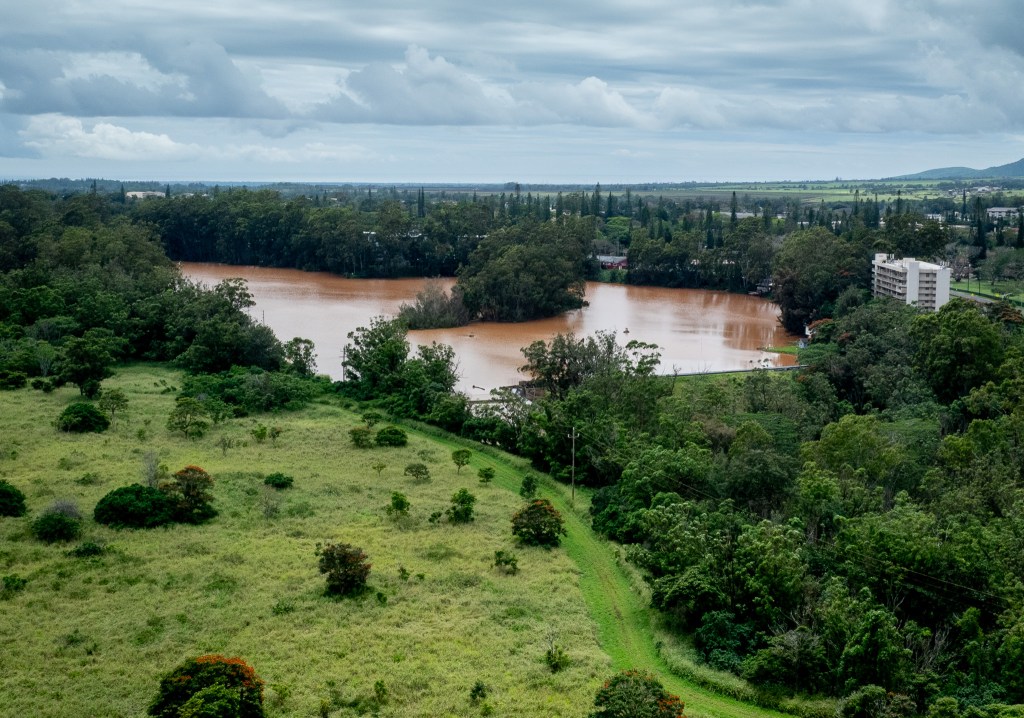
Once the transaction to acquire the dam and reservoir is complete, liability for the dam will transfer to the state.
And as Dole offloads its liability, the price tag to repair the dam and take control of the reservoir is likely to triple to $67 million after Gov. Josh Green sent a letter to lawmakers this week asking for additional funding for repairs and environmental testing.
Green has stated he supports the dam acquisition as he and other state leaders forge ahead with the deal to repair the dam, spillway and irrigation system fed by the reservoir, also known as Lake Wilson, to support farmers downstream.
Those agricultural interests include Dole, which owns the majority of land that pulls water from the system. The company asked for up to 60% of the water from Lake Wilson after the acquisition.
“It’s a damned if you do, damned if you don’t situation,” Lauren Yasaka, director of land management for the Department of Land and Natural Resources, told the Board of Land and Natural Resources Friday.
If the state doesn’t acquire the dam, Dole would decommission it, leaving farmers without water. If the state gets it, then it would bear the responsibility for repairs.
Yasaka said the state has the ability to move forward with those repairs and should do so to protect residents downstream.
Dole argued at the Friday meeting that its dam is still safe.
“The spillway works, the dam works, everything is functioning as it should,” Dole lawyer Jared Gale said.
Gale said Dole stopped remediation after lawmakers voted to acquire the dam in 2023.
Board member Wes Yoon, who cast the only “no” vote, criticized Dole for holding back.
“I would imagine you’d continue projects in good faith,” Yoon said.
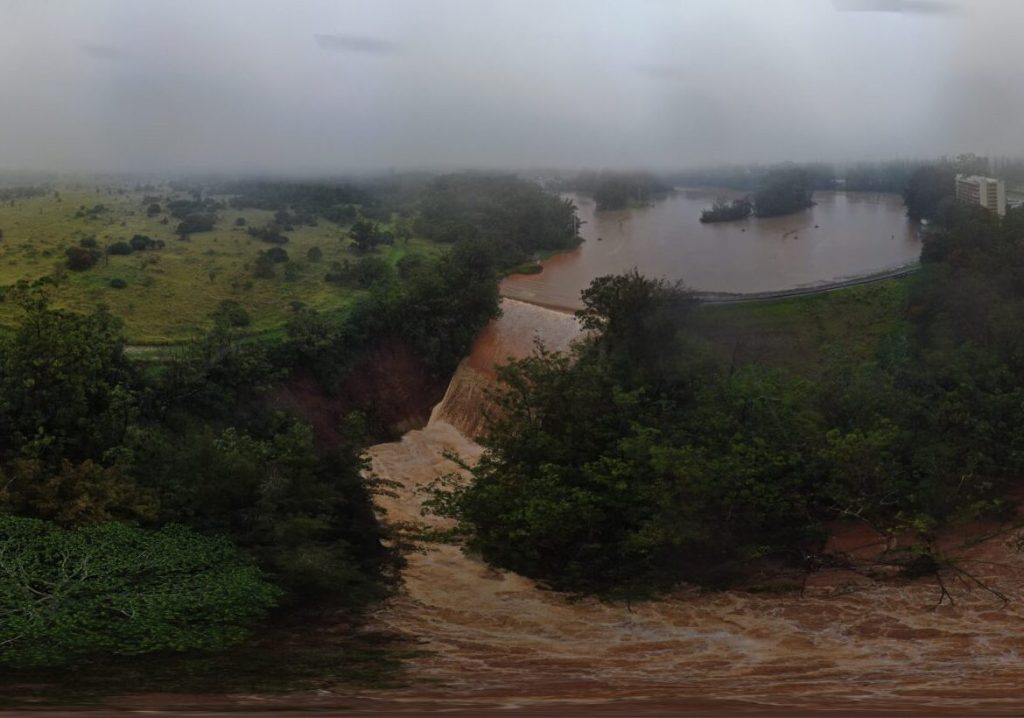
But Dole consultants pointed out that a board vote in 2024 cancelled much of that remediation schedule, leaving repairs in limbo as the state’s acquisition dragged on.
Gale said Dole has done maintenance over the years, but did not make upgrades to the spillway to comply with modern safety standards because its footprint in Hawaii was shrinking.
“We need to do what’s best for Dole,” the attorney said, adding that the state should do what it feels is necessary to protect public safety.
Trish Kehaulani Watson, one of Dole’s consultants, told the board that there has been disagreement over the underlying data used to justify state dam safety requirements.
The vote on Friday allows acting land board chairman Ryan Kanakaʻole to begin negotiating with Dole and other landowners for the acquisition of parcels around the reservoir.
A DLNR staff report on the acquisition noted the presence of homeless encampments around Lake Wilson and also identified at least one Wahiawā business that has a lease with Dole, an auto shop partially on Dole land. The state would have to decide what to do about that tenant.
The acquisition of the entire water system, which also involves two other state agencies, must be completed by June 30 by law.
The Agribusiness Development Corporation plans to acquire the irrigation system, while the state Department of Agriculture will repair the dam and spillway before transferring the dam to the ADC.
Dole co-owns the dam and spillway with Sustainable Hawaiʻi Inc., owned by North Shore developer Howard Greene.
Lawmakers have set aside $20 million for the dam and spillway repair work, the largest single project in the agency’s history. Officials have asked the Legislature this year for an additional $15 million for the dam project. On top of that, Green asked lawmakers to provide $28 million in additional bond funds.
The governor also asked lawmakers this week to allocate $4 million to test for contamination and clear debris in Lake Wilson.
Lawmakers are considering a separate measure this session to fund irrigation system improvements statewide. The ADC has put the price tag for those improvements at more than $160 million.

