

Hawaiʻi Is On Track To Obtain And Fix Dam That Almost Failed
Taxpayers will pay more than $20 million for repairs. Partial owner Dole might still get the water.
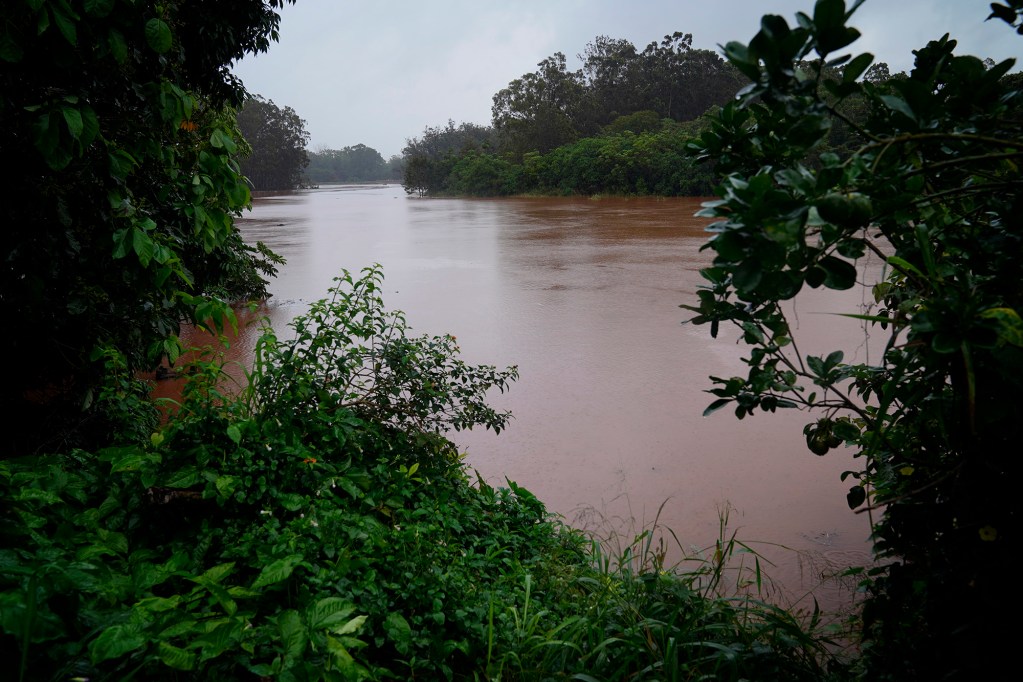
The state will soon acquire the Wahiawā reservoir and accompanying dam that came within two-and-a-half feet of overflowing during the second Kona low that hit Hawaiʻi last week.
The state land board is set to take a key vote on Friday that would clear the way for the government to take over the privately owned dam and spend upward of $20 million upgrading the dam and its spillway to comply with modern safety standards.
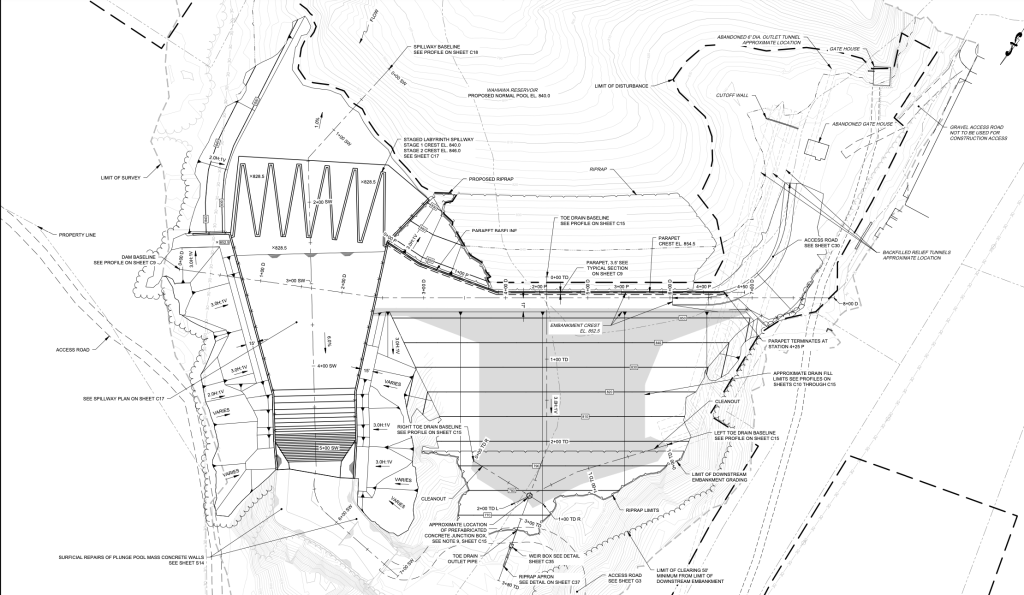
Central to the state’s plan to make the dam safer is a structure called a labyrinth weir. From the top, it looks like a backgammon board with triangular protrusions intended to control the flow of water.
Dole Food Co., which partially owns the dam and reservoir, has said for years that it didn’t have the money to do the repairs itself. It did little to fix the dam even as its parent company made record payments to shareholders, a Civil Beat investigation found.
The deal to transfer ownership of the dam and reservoir will place liability for the dam on the state, and the cost of repairing it on taxpayers.
As part of the state’s acquisition and subsequent dam repair, Dole has asked for up to 60% of the water from the reservoir to irrigate its many acres of pineapple fields, the last vestiges of a sprawling empire that once dominated agriculture in Hawaiʻi before the company was subsumed into a global produce supplier.
Political leaders in Hawaiʻi are backing the dam transaction.
“This is an asset the state just needs to own,” Gov. Josh Green said at a press conference on Monday.
He recounted watching the water levels rise in the reservoir alongside Mayor Rick Blangiardi, calling it their most “harrowing moment” of the recent storm.
“We welcome the opportunity to have more control of that asset,” Green said.
The proposal also had the support of Sen. Donovan Dela Cruz, who represents Wahiawā and pushed for the state’s acquisition, and Sharon Hurd, director of the state agricultural agency that will be required to make the fixes to the more than 100-year-old dam. Hurd said the department is committed to the repairs “to keep this valuable resource available to agriculture operations and sustain food production on Oʻahu.”
Dela Cruz wrote in testimony to the land board that keeping the irrigation system intact will help expand agricultural production in the region.
Jared Gale, Dole’s chief legal officer, said in written testimony that the reservoir and the 30 miles of irrigation system that it feeds are “best owned and managed by the State to ensure that the entire community will always have access to the many benefits the WIS provides.”
“Our farm would not exist without this ditch system water.”
Jaymie Barton, owner of Two Bees Protea Farm in Waialua
Were the state to opt not to acquire the reservoir, Dole would begin decommissioning it under a plan approved by the land board in 2024.
All of the testimony received ahead of the land board meeting has supported the state’s acquisition of the dam. Much came from organizations and companies representing agricultural interests in the North Shore, as well as farmers themselves.
“Our farm would not exist without this ditch system water,” Jaymie Barton, owner of Two Bees Protea Farm in Waialua, wrote to the land board.
Barton said farmers would not be able to grow in the area without that water, and if the “water goes, the farmers go along with it.”
A New Spillway
Repairs to bring the dam into compliance with safety standards will fall to the state Department of Agriculture. Officials have said the dam work will be the agency’s single largest construction project yet.
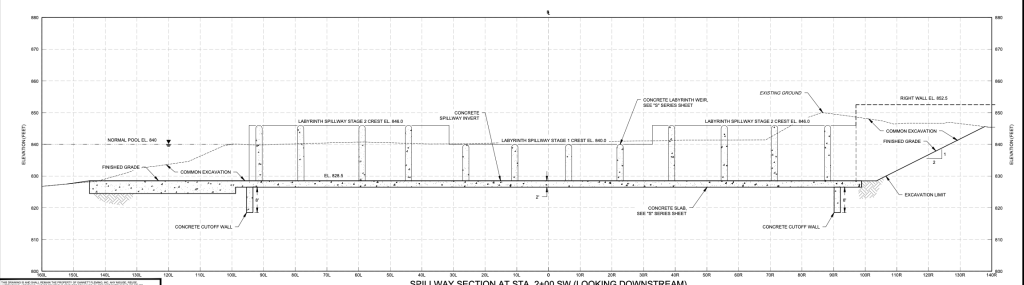
The new configuration allows the spillway to both hold and discharge more water from the dam. The triangles elongate the spillway without taking up more land by “folding” the crest into the current spillway’s footprint.
John Roche, president of the Association of State Dam Safety Officials, said that labyrinth weirs can increase the efficiency of spillways twofold or more.
“You’re getting more capacity,” he said.

Each segment of the weir is a little over 88 feet, according to project drawings. Water would flow from the reservoir over the tips and legs of each triangle.
But that increased capacity comes with an added problem of controlling the flow of water coming off the spillway.
To do that, the three triangles in the middle of the labyrinth will sit lower in the spillway, letting out water once levels reach a few feet above the current spillway height. The entire volume of water being held back by the labyrinth doesn’t start flowing until water levels reach weirs on the outer edges of the spillway.
“You don’t want to cause excessive flooding downstream,” Roche said
Engineers at the state Department of Agriculture were not available for an interview about the dam and how much the new weirs increase the its capacity and ability to discharge water.
The spillway itself will be rebuilt with new concrete.
There are also plans to reinforce the current earthen dam, with concrete at the crest and riprap on the downstream slope, as well as the toe drains that help pump water out of the reservoir.
The dam owners, including Dole Food Co., have disagreed with the state about the dam’s safety. The state has warned for years that the spillway was undersized and posed a danger to the community. But the owners have insisted that their dam is safe and that the state precipitation and flooding scenarios it must prepare for are unlikely.
Roche, who oversees dam safety in Maryland, said the point is to prepare for extreme scenarios, which could become more likely with climate change. He pointed to rainfall in parts of North Carolina hit by Hurricane Helene that came close to those scenarios officials prepare for.
“We design dams to be commensurate with the risk they pose to society,” he said. “With 2,500 persons downstream, it certainly warrants that upgrade.”
He said dam safety has a primary goal above all others: “loss of life is unacceptable.”

