

Immigrant Protection Bills Advance In State Senate
Bills would prohibit collaboration between local police and federal immigration authorities, outlaw most masks for law enforcement officers
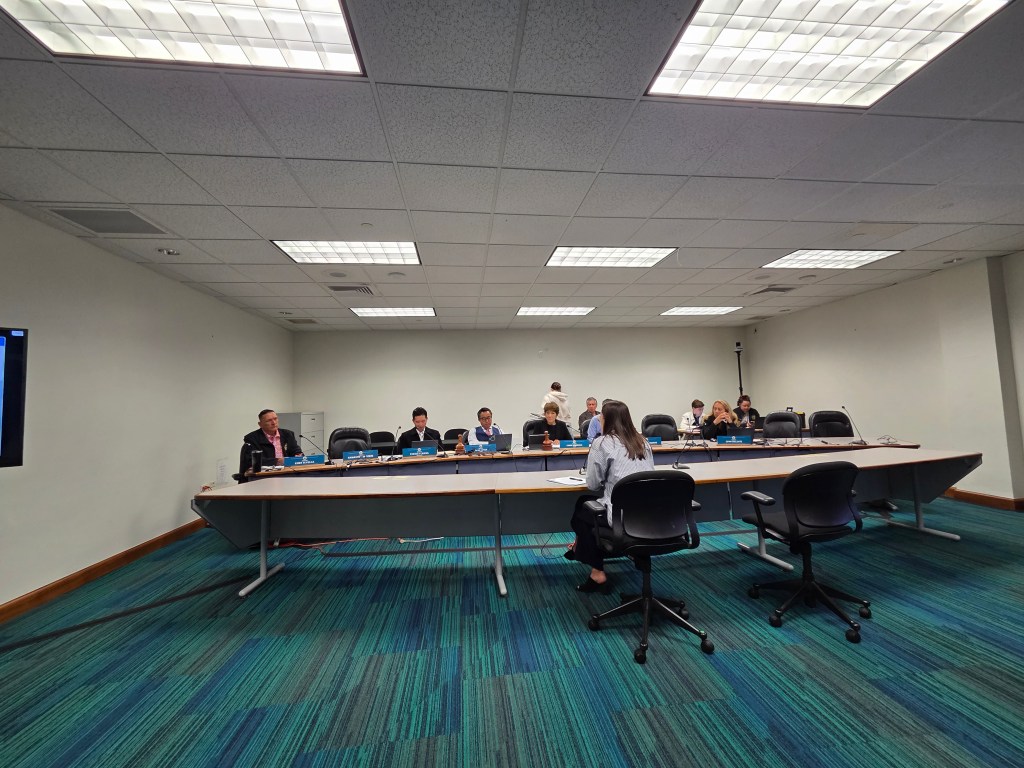
A slate of bills protecting immigrants and protestors progressed without fanfare in the state Senate Monday amidst heightened concern over the federal government’s enforcement offensive – and a lot of behind-the-scenes advocacy.
“Things have gotten so much more aggressive, and people have gotten organized,” said state Sen. Carol Fukunaga, chair of the Committee on Public Safety and Military Affairs.
The committee advanced four immigration bills Monday out of a joint session with the energy and intergovernmental affairs committee.
Together, the bills would prohibit local police agencies from participating in immigration enforcement operations or from making agreements with the federal government to do so, and sharply restrict the use of masks by law enforcement officers, a measure aimed at protecting protesters, said Liza Ryan Gill, co-coordinator of the Hawaiʻi Coalition for Immigrant Rights.
“This has to do with folks that might be protesting and expressing their First Amendment rights and wanting to make sure that if they are encountering law enforcement, that that law enforcement is easily identifiable,” Gill told the committee.
One bill would establish a state law prohibiting immigration enforcement in certain locations including schools, health care facilities and churches. President Donald Trump discarded a similar and longstanding federal policy after taking office last year.
Another would require state and local law enforcement agencies to notify people in their custody in their primary language of their right to legal counsel before immigration authorities interview them.
No such bills survived the 2025 legislative session, with many dying early on. By contrast, all the bills that moved forward Monday had already crossed over from the state House of Representatives early this month.
Advocates said they have spent hours talking to lawmakers, police leadership and state officials to assure smooth passage through committees.
“The next frontier is to be able to prosecute ICE agents for harming our citizens in the state of Hawaii by using these mechanisms that we’re introducing today.”
Salmah Rizvi, executive director, ACLU of Hawaiʻi
“It’s hard to get on the agenda, so getting there meant that we had done a lot of prep work,” Amy Agbayani, a longtime Hawaiʻi civil rights activist, said after the hearing.
Of legislators at the hearing, only Sen. Kurt Fevella raised objections to the proposed legislation. Local police should be able to call on federal partners for assistance in fighting crime, he said. And prohibiting local police officers from participating in immigration enforcement would mean eliminating critical local knowledge and sensibility from the process.
“You want continent people to come enforce all of these kinds of things, and take our city and our local people out of the equation,” he said.
Fevella said he didn’t agree with the Trump administration’s immigration policy, “but this is government overreaching.”
Leilani Stacy, an ACLU of Hawaiʻi immigration attorney who engaged in several lengthy exchanges with Fevella, said Hawaiʻi was one of 11 states without any agreements between local governments or police departments and federal law enforcement agencies to do immigration enforcement.
She said the proposed legislation would not affect existing agreements with federal police agencies such as the FBI or Homeland Security Investigations, a division of ICE, that are focused on criminal investigations.
Regarding HB 1768, one of the bills under discussion, Stacy said, it “really prevents local law enforcement from going beyond those agreements that are already in place to be deputized to make purely immigration arrests … that should only be enforced by federal law enforcement.”
Salmah Rizvi, the ACLU chapter’s executive director, said after the hearing that the bills would create a legal framework to prosecute federal agents who committed criminal acts themselves while conducting immigration enforcement.
“The next frontier is to be able to prosecute ICE agents for harming our citizens in the state of Hawaii by using these mechanisms that we’re introducing today,” Rizvi said, noting that HB 1886 would allow authorities to pursue legal action against agents who committed crimes while wearing “improper facial coverings.”
“That’s what we want to see,” Rizvi said. “That’s how we get to accountability.”
All four bills face further votes, including at the Senate’s Judiciary and Ways and Means committees.

