Lahaina Wastewater Plant Spilled 200,000 Gallons. Why Did People Still Swim?
Several people at nearby beaches said they did not know that backwash had overflowed from the Lahaina Wastewater Reclamation Facility days earlier.
Heavy rains overwhelmed a West Maui sewage treatment plant last week, causing roughly 200,000 gallons of partially treated wastewater to spill into a beach area at Kāʻanapali that is popular with locals and tourists.
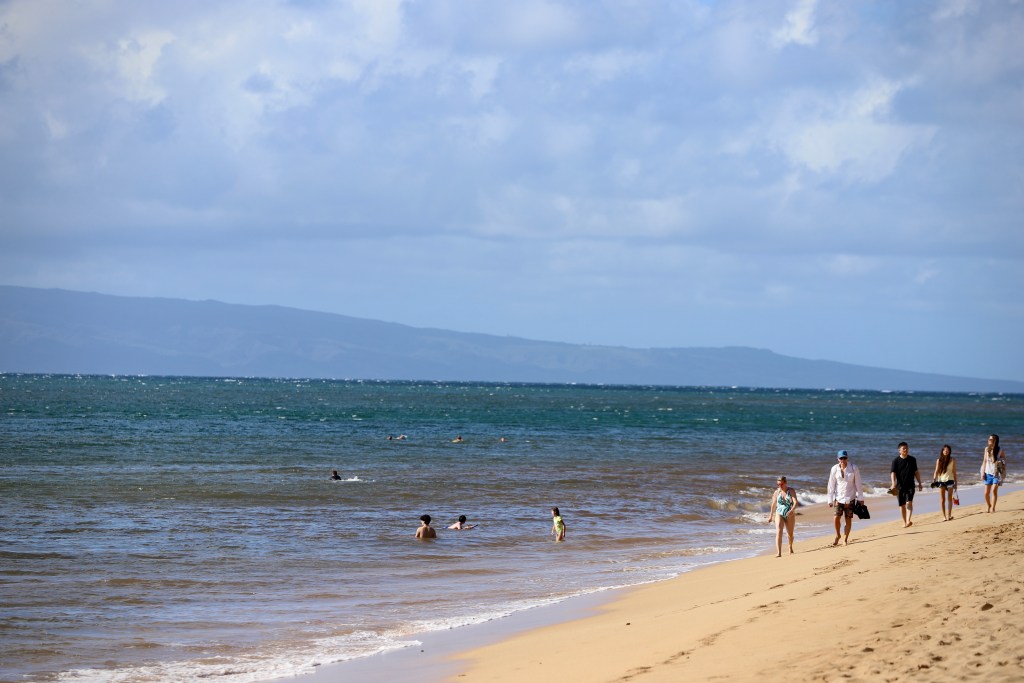
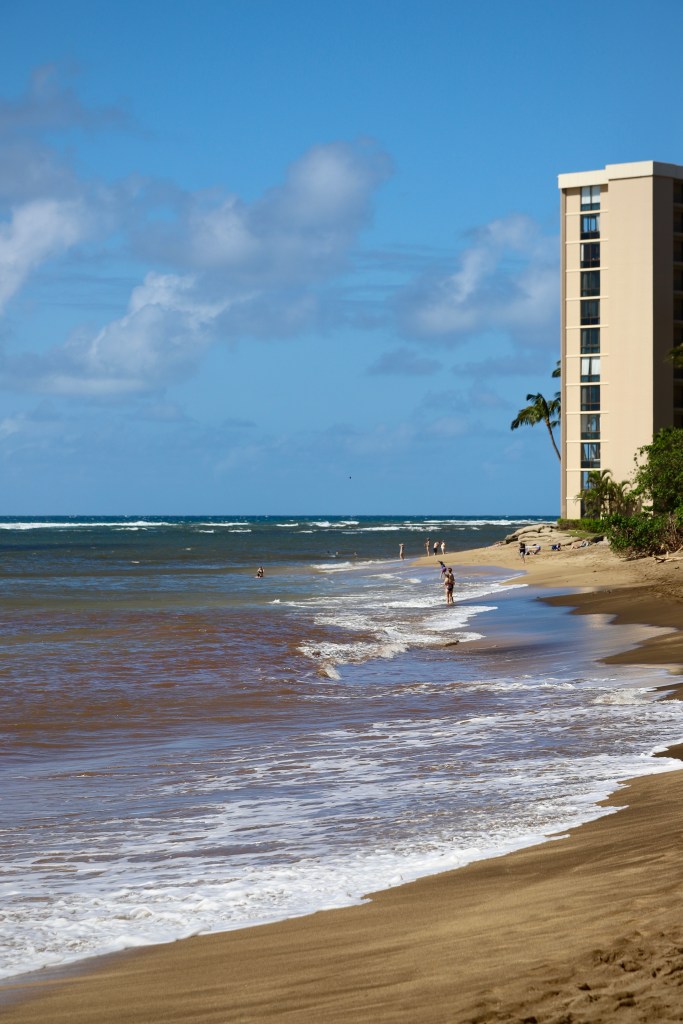
That didn’t deter people from snorkeling, boogie-boarding and splashing around in the brown waters fronting popular resorts, which some said is at least partly because they did not know it was likely contaminated from the spill. Warning signs are required to be posted, which the county did, but they were few and far between early last week at Honokōwai and Kāʻanapali beaches and many beach-goers failed to notice them.
The Lahaina spill was one of several across the state attributed to the two Kona low storms that hit Hawaiʻi this month. The state Clean Water Branch has reported at least nine wastewater discharges since March 13, ranging from 115,000 gallons contaminating Maunalua Bay on O‘ahu March 21 to ongoing spills in Kailua and Kāneʻohe affecting streams and ponds due to the heavy rains. The Lahaina spill was not included in the Clean Water Branch’s list of public advisories online.
Heavy rains often overwhelm sewage and stormwater systems, and it can have a significant impact on the water quality at local beaches and streams, according to Daniel Amato, an environmental scientist and coordinator for the Oʻahu chapter of the Surfrider Foundation’s Blue Water Task Force, which independently tests ocean water quality.
“When we get these kinds of wastewater blowouts, it’s just lots of fecal bacteria,” he said. “It’s often too much to even be able to quantify it.”
Backwash overflowed from the Lahaina Wastewater Reclamation Facility over the course of about nine hours on March 21, according to the Maui Department of Environmental Management, mixing with the murky floodwaters that swept mud, sewage and debris into the ocean throughout the weekend.
By Monday and Tuesday, much of the typically clear blue waters off West Maui were cloudy and reddish-brown. Several people at beaches in the area said they did not know that backwash had overflowed from a nearby facility over the weekend, and that a combination of pollutants from the wastewater and flood runoff had likely contaminated the water that they had been swimming in.
Sheri Belau and Johnnie Medina, who were visiting from Seattle, said it was extremely difficult to find any official information about brown water advisories or the wastewater spill, but they ultimately decided to avoid swimming in the ocean after researching water quality online.
“Nothing was posted on the beach,” Medina said, sitting in a folding chair on the beach near Pōhaku Park in Kahana. “We really didn’t hear much, which I think is stupid because there is a lot of ignorance and a lot of people who don’t realize how sick you can get.”
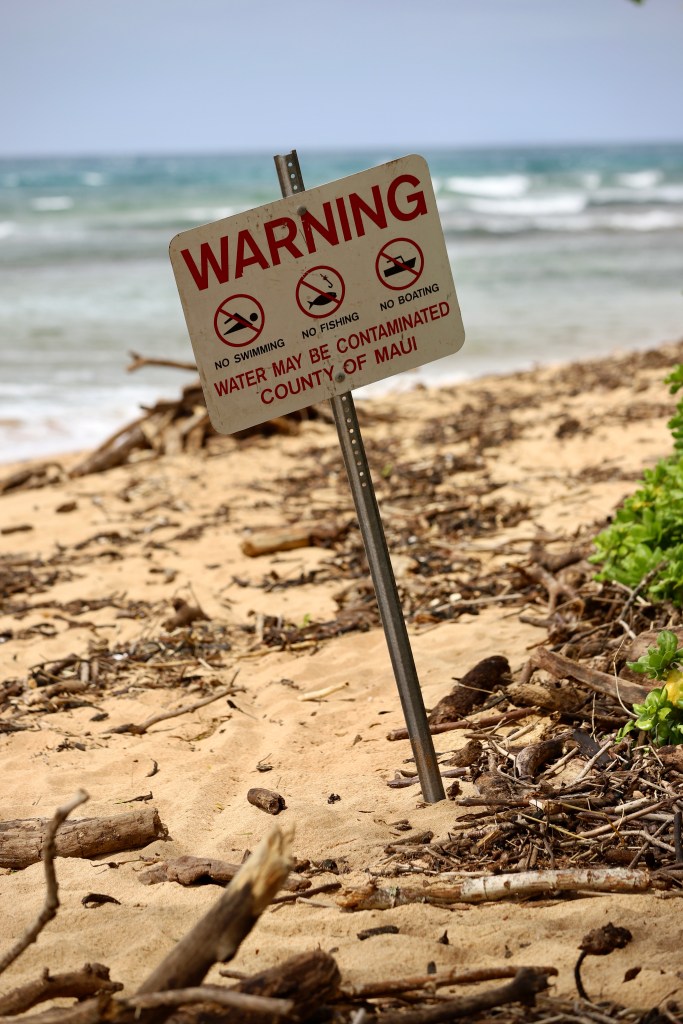
Wastewater treatment facilities are required to post advisory signs along any impacted beaches and streams if there is a spill that affects local water quality, and they must collect water samples to test for contamination, according to a statement from the state Department of Health provided by communications director Stephen Downes.
On Tuesday, a county spokesperson shared a statement from the Department of Environmental Management’s Wastewater Reclamation Division saying that warning signs had been “posted in prominent locations near areas affected by the overflow” at the Lahaina facility. The county later identified those locations as: four signs south of the storm ditch at Kā‘anapali Shores Resort, spaced approximately 200 yards apart; and one sign north of the storm ditch at the Papakea Resort ocean access.
On Saturday, three signs warning that the water could be contaminated were placed within a few dozen feet of each other around a storm ditch between Kāʻanapali Shores and Papakea. A fourth was planted in the sand roughly 350 yards south, up against the dunes at Honoapi‘ilani Park between the Aston Mahana at Kāʻanapali hotel and the Maui Kai condominium complex.
According to Shayne Agawa, the department’s director, state officials said samples did not need to be tested because an island-wide brown water advisory had been issued.
Beach-goers at Nāpili, Kahana, Honokōwai and Kāʻanapali on Monday and Tuesday said they did not see warning signs related to either the spill or brown water.
Don and Sheila Grand, a couple visiting from Calgary, Canada, said they learned about the water contamination from online news outlets, but they hadn’t observed any signs on Monday or Tuesday near Kahekili Beach, less than a mile away from the warning signs and where wastewater discharge from the Lahaina facility has been known to feed into the ocean.
Concerned about pollution and an increased chance of shark encounters, the couple spent their afternoon observing turtles and whales from shore. Not far off, snorkelers leisurely swam in and out of faded brown plumes and children splashed around in the seawater lapping against their ankles.
“We actually haven’t been swimming yet,” Don Grand said. “Mostly because of the brown water. We brought our masks and snorkels out with us, but we haven’t even put them in the car yet.”
‘You Can’t Assume That Clear-ish Water Is Safe’
Surfrider only tests water quality at certain beaches, and they have not published water quality test results yet for any Maui beaches since the spill. On March 18, three days before the spill, Surfrider found that the water at Pōhaku Park in Kahana — about a mile north of the wastewater treatment facility and the testing site closest to where the spill occurred — had medium levels of enterococcus, the fecal indicator bacteria.
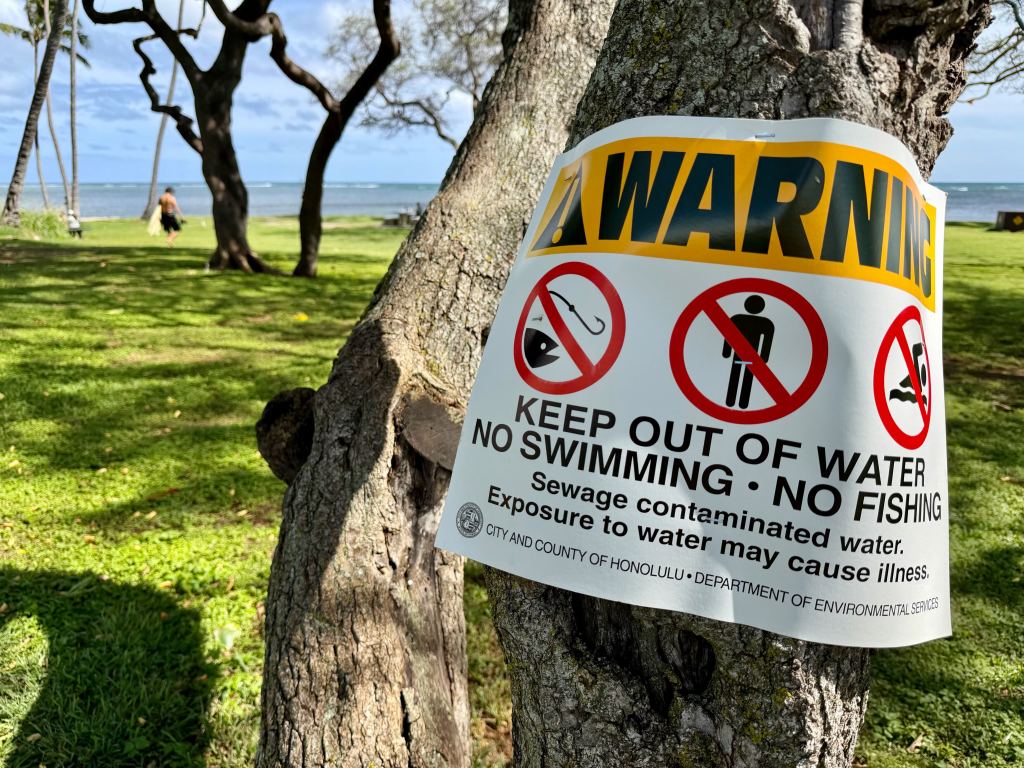
On Oʻahu, Surfrider recently determined that 15 out of 16 sites tested around the island last week failed to meet recreational health standards for enterococcus, according to a Surfrider release Tuesday. Low bacteria readings are considered anything between 0 and 35 parts per 100 mL, and anything over 130 is considered unsafe, according to state health department water quality standards. An area of Maunalua Bay, near one of the wastewater discharges, hit 5,475 parts per 100mL on March 22, and sampling at Kahaone Place on O‘ahu’s North Shore was 2,924.
This contamination can wreak havoc on reef ecosystems, and people who swim in water affected by a wastewater spill could be exposing themselves to dangerous bacteria and putting themselves at risk of contracting various diseases, Amato said.
“Swimming in wastewater is never something that anybody wants to do, and it’s never a good idea,” he said. “The whole community’s viral load is in there.”

Despite the risks associated with swimming in the ocean after a wastewater spill, it is not always easy for people to find information about water quality, and methods used to notify the public about potential contamination have not always been effective, he added.
The U.S. Environmental Protection Agency told Hawaiʻi officials in 2016 that they needed to do a better job warning the public about contaminated beaches.
Surfrider has been advocating for better signage to warn people about contamination events and brown water advisories for years, Amato said, and the organization is one of the only groups to regularly test water quality and publish the results. He hopes to see all lifeguard stands in Hawaiʻi use cheap, rapid tests that assess water for enterococcus at least once every day so that they can post the results on the beach.
He said such routine testing is done in American Samoa, where he used to work, so the public can know the water quality each day even at beaches not staffed by lifeguards.
“They post on the sign either a green happy face or a sad red face to indicate the results of their last test,” he said. “So that’s accessible information on site, and it’s easy to read. You don’t even need to know how to read letters, just how to interpret happy faces. And that’s a clear way of communicating the most recent results for the assessed risk of being in that water.”
The amount of time that it takes for bacteria levels to return to normal after flooding or wastewater spill depends on multiple factors, Amato said, but in general, people should wait at least a few days before they consider going in the water. He added that while the color of the water can be a reliable indicator that it has been contaminated, it should not be relied on when determining whether it is safe to go swimming.
“If it’s brown, it is probably high in bacteria and other pollutants,” he said. “But it doesn’t go both ways. You can’t assume that clear-ish water is safe, because we found many instances where there’s clear water that also has high levels of bacteria.”
Brown water advisories remained in effect for Maui, Kauaʻi, Oʻahu and parts of Hawai‘i island throughout last week.
Civil Beat’s coverage of climate change and the environment is supported by The Healy Foundation, the Marisla Fund of the Hawai‘i Community Foundation and the Frost Family Foundation.