Lost Homes, Destroyed Farms: Hawaiʻi Takes Stock In Wake Of Storm
The storm brought flash floods and damaging winds to all parts of the state between Thursday and Sunday, but no deaths and only two serious injuries were reported.
Carrie Bashaw watched from her Maui home as the ʻĪao Stream, strengthened by torrential rains from the storm that swept across the state over the weekend, gobbled up two trees — a 30-foot mango and a gigantic monkeypod.
“They went floating down the river, and we said, ‘OK, that’s not a good sign,’” she said.
Over the next four hours, the raging water continued to rise, eating about 100 feet of Bashaw’s property on Mokuhau Road, until it reached her doorstep.
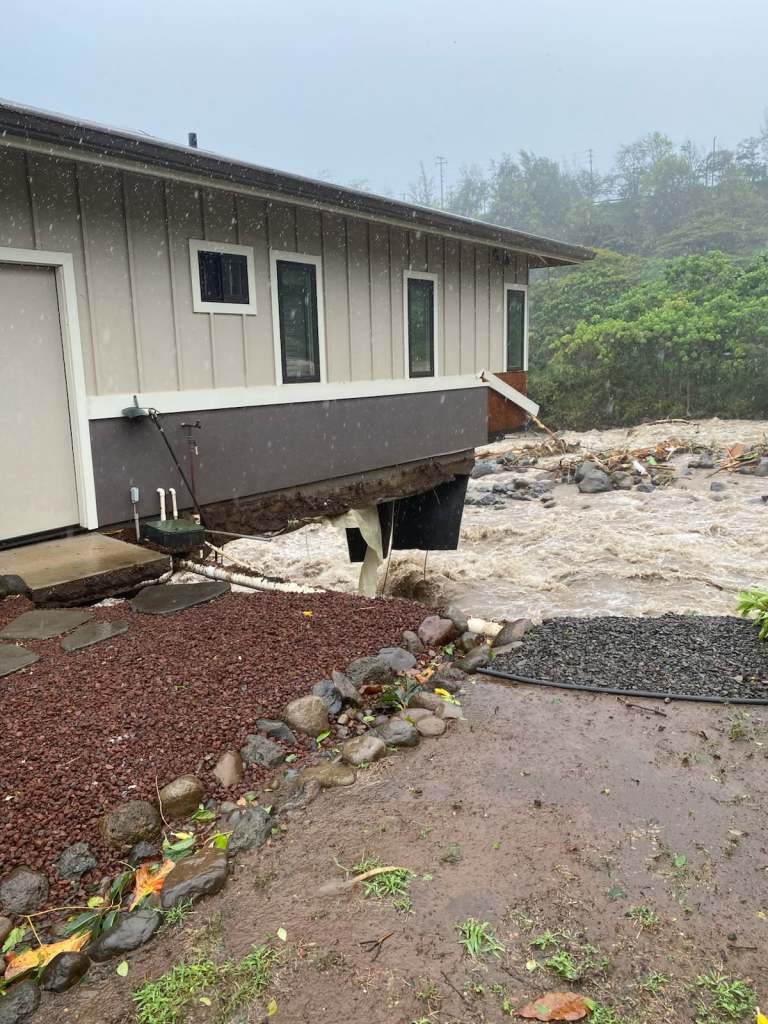
At that point, Bashaw, her husband Tom, and their two cats, Civa and Ty, were packed and ready to go.
“As soon as the front entry… tiles started to crack, we said, ‘OK, we can’t salvage anything else,’” she said. “‘Let’s just get the hell out of here.’”
The couple fled to a barn about 180 feet back from the stream. By morning, water had eroded the ground out from under the home where the Bashaws had hoped to spend their retirement, and swept it away.
“I was going to have my grandkids come over for the summer,” she said. “But I texted my daughter, I said, ‘I think maybe I’ll come visit you instead.’”
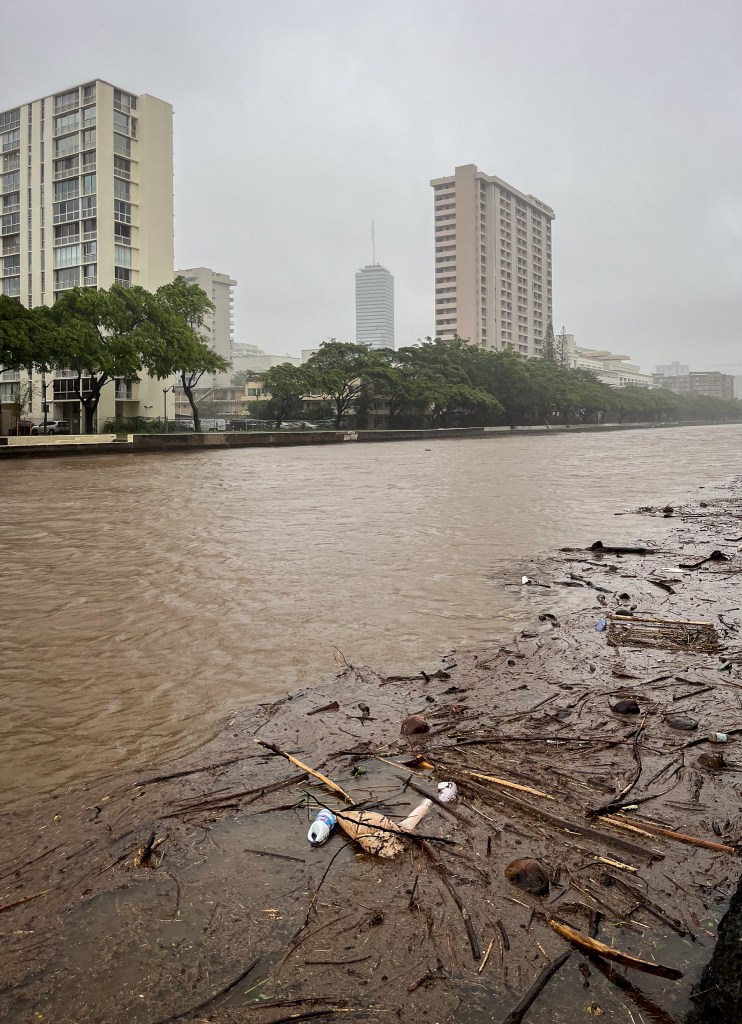
As state buildings prepared to reopen Monday and residents started to dry off from the weekend’s deluge, officials began taking stock of the Kona low’s toll. Cleanup crews had already begun work Sunday repairing roadways, clearing debris and siphoning trash out of Waikīkī’s Ala Wai Canal. District courts in Kāneʻohe and Wahiawā on Oʻahu will be closed Monday for cleanup after water made its way into both courthouses over the weekend.
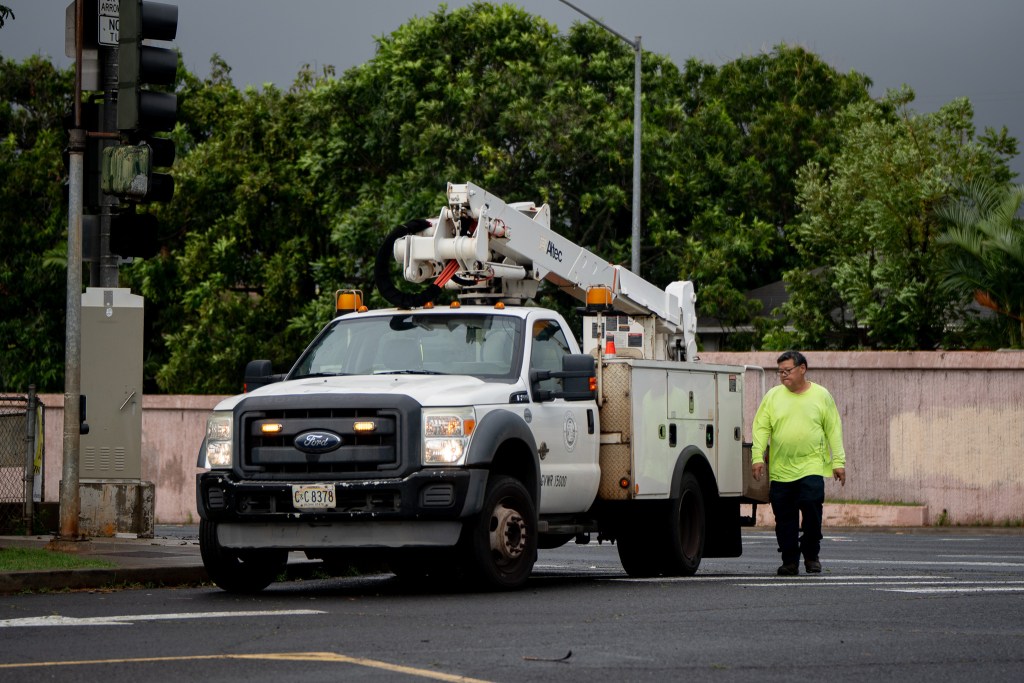
At the storm’s peak, more than 100,000 Hawaiian Electric customers were without power and by Sunday afternoon, more than 32,000 were still without electricity. The company put out a statement saying that 300 crew members were in the field doing repairs. The H-3 Freeway at the Helkou Interchange in Kāneʻohe was closed Sunday afternoon to allow for some that work.
As official rain gauges rose, it became increasingly clear that the subtropical cyclone that tore through the Hawaiian islands between Thursday and Sunday was no ordinary storm.
It broke rainfall records, flooded roads, tore off roofs, uprooted trees and threatened to compromise the Wahiawā Dam, forcing residents of Haleʻiwa and Waialua to spend most of Friday night monitoring evacuation warnings. Their evacuation notice was lifted early Saturday.
Gov. Josh Green on Sunday said the state was beginning to assess the damage. But no deaths were reported, the governor said, and only two people were seriously injured.
“Overall, people responded very well,” Green said.
Many residents watched the storm play out on social media, including via Hungry Hungry Hawaiian Newz, an Instagram account that collects videos from community members and shares them to more than 300,000 followers.

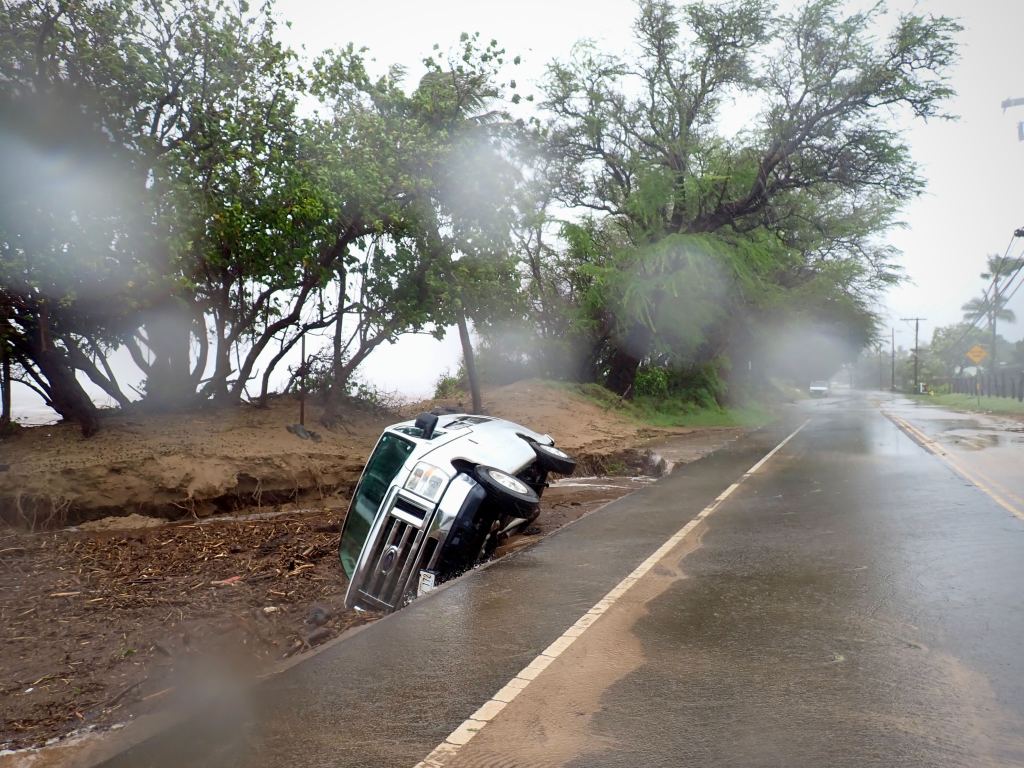
Dramatic scenes unfolded across the islands. Rocks tumbled from a hillside in Pālolo on Oʻahu. The entire roof was ripped off a popular bar and restaurant in Kona on the Big Island. On Kauaʻi, the parking lot at Poʻipū Beach was flooded with brown water. Sinkholes opened up on some Maui roads, including on South Kīhei Road, where a white van had fallen sideways onto an eroded beach.
Videos also showed people out in the stormy weather, defying officials’ pleas to stay home. Some boogie-boarded on turbulent brown water rushing down flooded roads, while others surfed and kite-boarded in menacing waves.
The force of the downpour varied from town to town, soaking some areas that typically are drier. Meteorologist Kenki Kino with the National Weather Service said the most damaging rainfall fell in South Maui, which endured up to 16 inches.
“A lot of those places only average 10 to 15 inches a year,” he said. “So they got their average annual rainfall and then more with this one storm.”
Statistics told their own story of the storm’s power. In Honolulu, the amount of rainfall in February and the first half of March hasn’t been this high since at least 2000, totaling at least 12.25 inches. The previous high set in 2017 was roughly two inches less. Friday was the single rainiest day in the state’s capital in more than two decades, with 5.51 inches of rain.
On Kauaʻi, Līhuʻe hasn’t had a wetter year in more than a decade. At least 14.85 inches of rain have fallen there since the start of February. Friday was the city’s rainiest day so far this year, with a total of 5.47 inches.
As the Kona low rolled east and dissipated in some parts of the state, the Big Island and Maui continued to feel its impacts. Already, as of Saturday, Hilo had recorded more than 26 inches of rain since the start of February. The National Weather Service logged more than 5 inches of rain in just three hours that evening near the Puʻuhonua o Hōnaunau National Historical Park south of Kailua-Kona.
On Maui, the Kula Forest Reserve had been pummeled by more than 6.5 inches of rain in a three-hour period ending early Saturday morning.
“I believe that it’s getting worse,” said Dominic Kadooka, who owns Waimānalo Country Farms with his wife, Shawn.
On Kadooka’s property the storm tore down trees, flooded fields, stripped roofs off of barns and toppled shacks, chairs and tables. It was the most severe damage he’s seen there since family members founded the farm in 1948, Kadooka said.
“This wind we had yesterday,” he said Saturday, “it’s the most powerful that I’ve seen.”
Addressing Extensive Damage
While the state began its work to estimate the scope of the damage, it was already clear that public infrastructure, private homes and many kinds of services across the islands had been significantly affected.
Crews on Oʻahu were working Sunday to repair damaged storm drain culverts on the Pali Highway and Kionaole Road in Kāneʻohe. A rockfall catchment fence on the mauka side of Kamehameha Highway in Waipiʻo was damaged when it caught multiple large boulders late Friday.
The Maui Department of Environmental Management temporarily suspended trash pickup to some residents on the eastern part of the island due to a landslide blocking access on Kamehameha V Highway near Kawela Gulch. Service was expected to resume Thursday.
The Kula Hospital in Upcountry Maui closed its emergency department on Saturday evening because of the severe weather and referred anyone seeking care to Maui Memorial Medical Center, 20 miles northwest in Wailuku.
Lance Luke, a Hawaiʻi forensic construction engineer, put out a news release advising homeowners to document damage carefully to report it to their insurance companies. He outlined the steps they should take: walk around their homes, take pictures and videos of any damage they see and keep an eye out for fallen debris, standing water near the foundation, clogged and overflowing gutters, stucco cracks and rust stains.
Each can offer clues to hidden problems, Luke told Civil Beat. Standing water around the home, for instance, could indicate the foundation has been damaged.
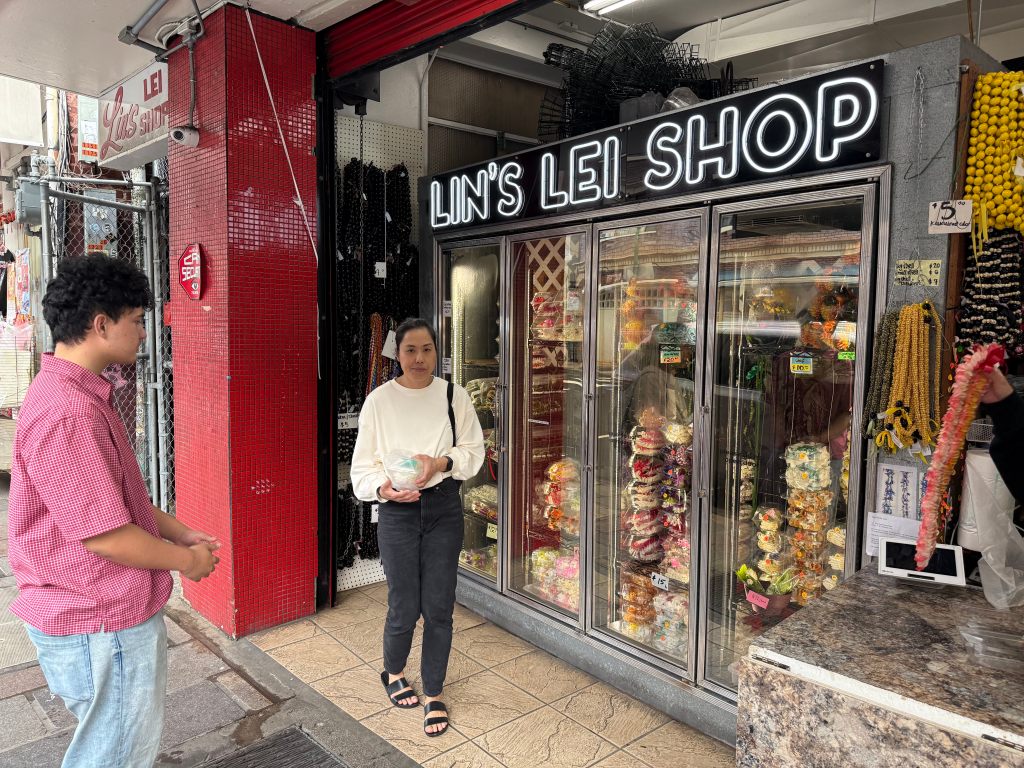
The storm had ripple effects for businesses, too, some of which were wind-whipped, flooded or coping with no-shows and cancellations.
Hinaleimoana Wong-Kalu, a cultural ambassador with the Hawaiian Council, was worried about the financial impact on lei makers who had already strung garlands for events that were canceled, including the annual Kamehameha Schools Song Contest, which had been scheduled for Friday evening.
She sent out a public plea for participants to follow through and still pick up and pay for the lei they had ordered.
But Alex Nguyen, a manager at Lin’s Lei Shop in Chinatown, said most customers canceled their orders, and, if they paid in advance, Lin issued refunds. The shop had made hundreds of lei, ranging in price from $8 to $60, with purple, green, pink and red flowers to reflect the students’ class colors.
The contest is one of the biggest events of the year for the shop, he said, and he expected to lose tens of thousands of dollars because of its cancellation.
Homeless Particularly Vulnerable
Among those who faced the most physical danger were the state’s homeless, who often live along riverbanks and on beaches, under bridges and low-lying freeway overpasses.
Honolulu firefighters rescued four people who had been living under a bridge near Kaimukī High School and became trapped as the Mānoa-Palolo Stream rose Thursday morning.
Rescuers in red helmets and lifejackets clambered down the muddy banks and climbed down a ladder to reach the two women and two men stranded below. They tethered the people with ropes for safety, then helped them up the ladder. Their dog, too, was hoisted up.
Everyone was OK, but the group declined an offer of shelter from the city’s CORE team, a division of emergency services that focuses on homeless individuals.
By nightfall on Thursday, the team had also relocated eight people living on Westside beaches to the U.S.VETS shelter in Waiʻanae. Dozens of emergency shelters were opened up by counties, and many of the hundreds who used those facilities were homeless.
At the Puʻueo Community Center shelter in Hilo on Saturday morning, a half dozen men and women were gathered around a table as sporadic rain fell outside, eating snacks and occasionally singing along with island music playing in the background.
When asked if they were homeless, all nodded. Among them was Tina Whitney, 61, and her sister Roberta. Whitney said she has been living on the street or in her car for about six weeks, after her money ran out and she couldn’t make rent. Then her car died, she said, and “I’m working on getting … a car again because I cannot stay like this.”
Across Hawaiʻi County, a dozen emergency shelters were housing 43 people as of Saturday morning. county spokesman Tom Callis said all but two were homeless.
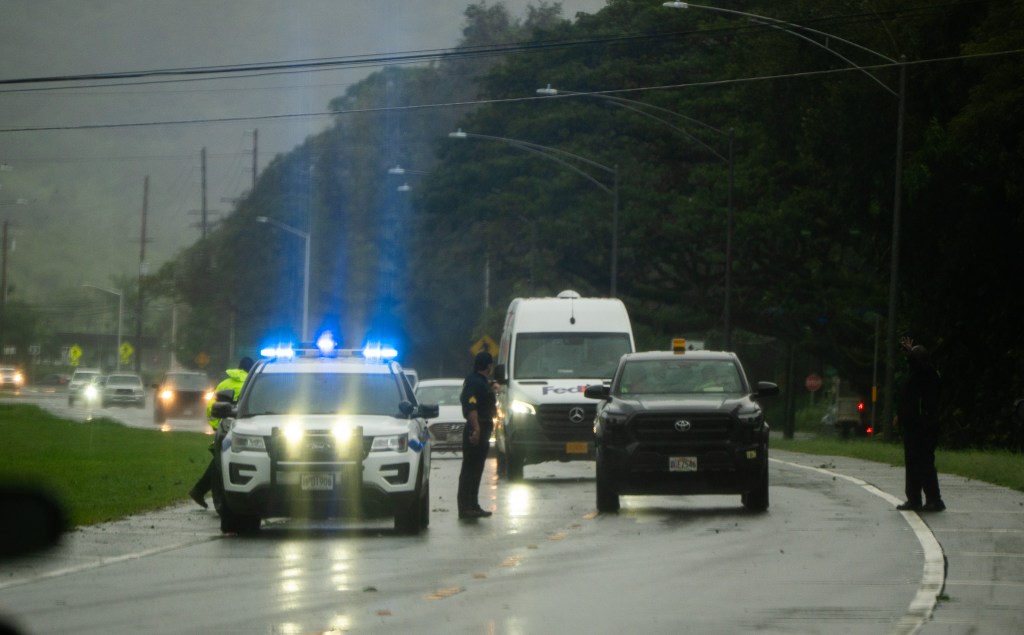
A deluge closed roads in North and South Kona, Kohala, Puna and Kaʻū on Saturday evening, and Hawaiʻi County Assistant Fire Chief of Operations Christopher Olai Carvalho said fire crews scrambled for hours answering calls for help from residents stranded in their homes and cars.

Water rushing across the Māmalahoa Highway in the Konawaena area reached heights of 4 to 6 feet shortly after 7 p.m., he said, and fire and rescue crews were deployed for rescues on both sides of the surging water at Konawaena Road.
“At that point we had homes, we had some vehicles that were trapped with people trying to cross moving water and got stuck,” Carvalho said. “Calls were just dropping.”
Parts of Captain Cook and Nāʻālehu in Ka’u became isolated, and one road after another became impassable. Carvalho said the county called for Hawaiʻi National Guard LMTVs or Light Medium Tactical Vehicles to help with the rescues because they were better suited than fire trucks to cross the deep, rushing water.
One of those vehicles also helped move about a half-dozen evacuees from an emergency shelter at Nāʻālehu Community Center to another shelter at Nāʻālehu Elementary School after water in the area’s flood canal rose.
The rain finally began to let up at about midnight Saturday.
Hurricane-Strength Winds
Damaging wind gusts were a hallmark of the Kona low storm, threatening property and people.
At Makapuʻu Beach on Oʻahu, 81-mph wind gusts were recorded on Friday. Kāneʻohe Bay experienced 70-mph gusts.
Winds came even harder in Kula on Maui Friday night, up to 108 mph, and early Saturday morning gusts of 79 mph were recorded at the Kona airport.
Big Island Mayor Kimo Alameda said the storm was the most damaging he has seen since he took office in 2024, with Kaʻū and the leeward Kona side of the island hardest hit.
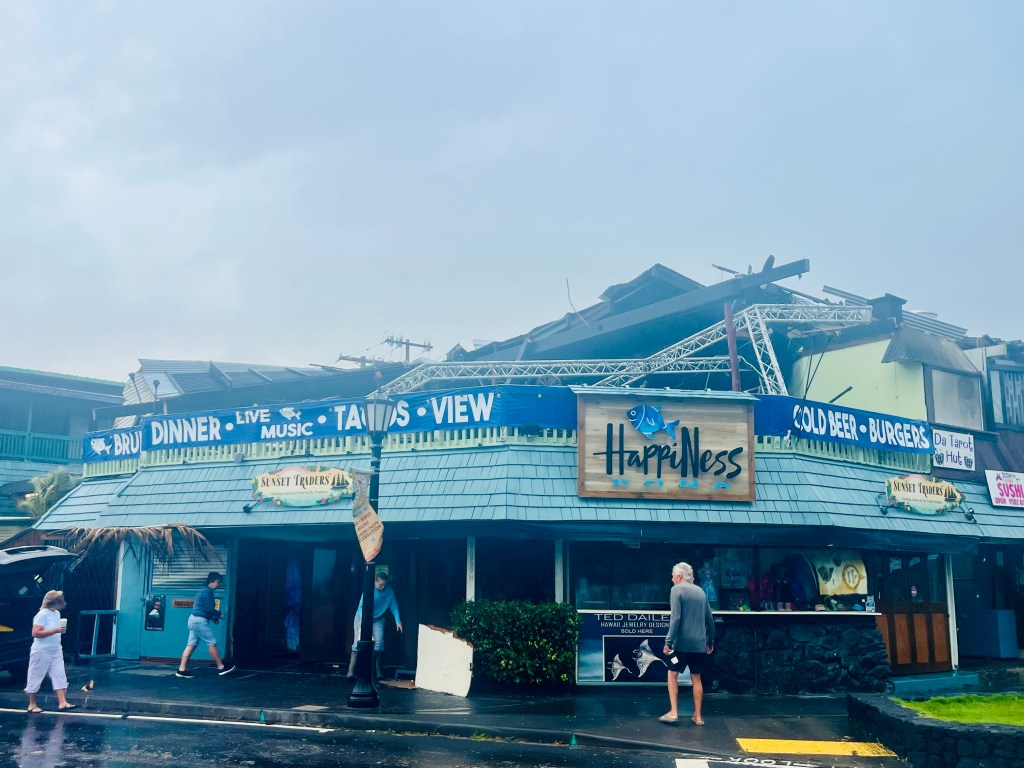
Powerful gusts partially ripped the roofs off two Aliʻi Drive businesses in Kailua-Kona late Friday night, and a fallen tree on Highway 190 in North Kona caused a motorcycle crash at about 5 a.m. Saturday, county officials said. Alameda said the motorcyclist was flown to an Oʻahu hospital for treatment.
A downed tree in North Kona also caused major damage to two houses, the mayor said, but there were no other reports of injuries.
“The winds are killing us on the west side,” Alameda said Saturday afternoon. “It’s like 30 miles an hour, and then all of a sudden it’s 70. That’s all you need, is a big gust.”
Reporters Erin Nolan, Noelle Fujii-Oride and Taylor Nāhulukeaokalani Cozloff contributed to this report.