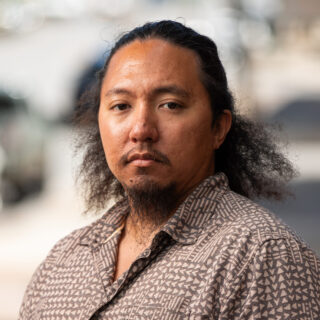
Will Hawaiʻi Take This Native Hawaiian Advisory Group Seriously?
The Aha Moku Advisory Committee weighs in on issues from fishing to military leases, but many think it’s not as effective as it could be.
Among the throngs of Kauaʻi residents who turned out to oppose a new housing development in Kōloa last month were a group of people raising concerns about the impact the project could have on Native Hawaiian cultural practices and resources.
They were part of the Aha Moku, a state-funded committee created by the Legislature more than a decade ago to bring Indigenous knowledge into government decision making.
“We had to go speak for the culture,” said Billy Kaohelaulii, Aha Moku’s representative for Kauaʻi.
People not in the know would have a difficult time participating in the group’s process. Despite the important role the Aha Moku is supposed to play in reviving traditional Hawaiian consultation practices, it hasn’t functioned at the level the public, and even its members, want.

The statewide committee, whose members are appointed by the governor, hasn’t met in at least four years. The law creating the committee doesn’t include requirements around the conduct or frequency of its meetings. However, the Public First Law Center and the Attorney General’s Office agree that the committee is subject to the state’s Sunshine Law.
By law, the committee is supposed to file annual reports detailing its activities but it has only filed one in the last four years.
The state budgets $286,000 a year for Aha Moku, but its leaders say they often struggle to access the funds. And while by law it “may advise” on any issue it wants, there’s no requirement that state or county agencies contact the Aha Moku for consultation.
Kawaikapu Hewett, a cultural practitioner and volunteer with the Aha Moku, said the work often feels like jumping through hoops.
“So, we go through the process, and then, here’s the cookie again,” he said, dangling his fingers in the air. “Go ahead, jump. Jump for the cookie.”
The head of the Department of Land and Natural Resources has legal oversight of the committee, but committee members say DLNR directors have thus far taken a hands-off approach.
Now, state lawmakers are weighing a bill to restructure oversight of the Aha Moku by putting its executive director directly under the head of the department and requiring decisions on policy recommendations to be made in open, public meetings.
That bill is getting pushback from leaders of the Aha Moku, who say the measure would doom its mission by stripping its independence. If the executive director has to answer to DLNR, people will refuse to participate in the process, the committee’s leaders say, seeing the committee as just another apparatus of the state.
It’s a worry shared even by those who support a more formalized process for the Aha Moku.
“The process has to be more visible, more structured,” Former Kamehameha School’s trustee Corbett Kalama told lawmakers in February, while urging them to take a more grassroots approach and allow community leaders to work directly with the Aha Moku on its restructuring.
Lawmakers haven’t heeded that advice. On Tuesday, the House voted unanimously to advance House Bill 2047, putting the Aha Moku executive director under DLNR, to the Senate.
An Informal System
Lawmakers created the current Aha Moku Advisory Committee in 2012, enshrining into law a centuries-old Hawaiian method of resource management intended to gather input from people with knowledge of specific districts across the islands.
Although administratively attached to DLNR, it has largely remained independent.
The committee is composed of eight members representing each of the main Hawaiian islands. Aha Moku councils for each island are made up of district representatives and people with cultural knowledge from each of the ahupuaʻa on that island.
The committee faced challenges from the beginning. The meetings that led up to its creation were largely funded by the Western Pacific Fishery Management Council, also known as Wespac. Wespac installed the members of the committee and island councils, in what critics viewed as an attempt by the fisheries council to manipulate an Indigenous process.
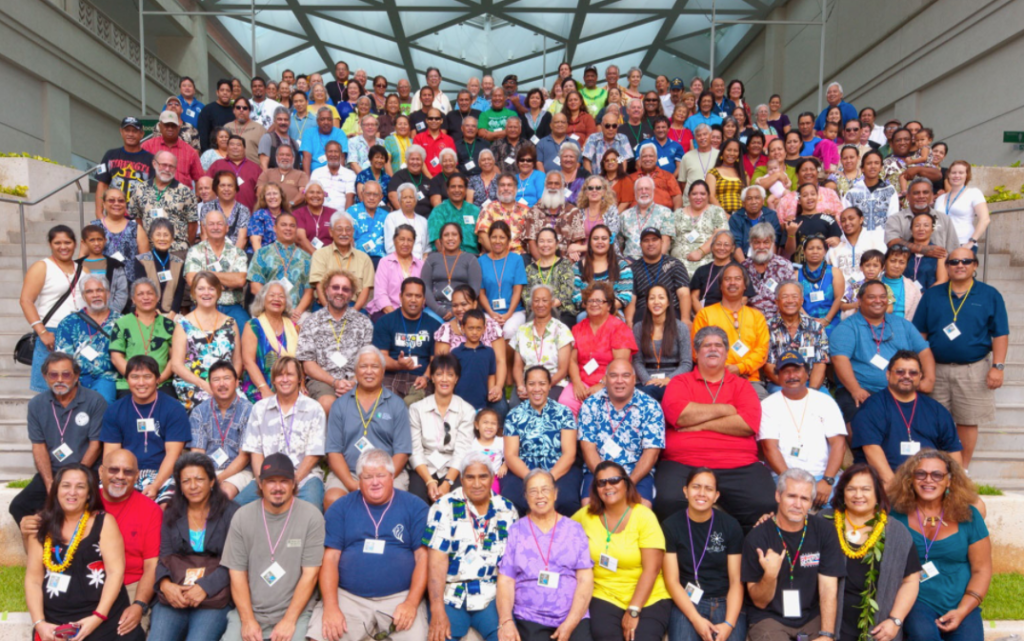
The Aha Moku had a falling out with Wespac and went independent nearly a decade ago, but that was where many of the current issues started.
State committee members are appointed by the governor based on recommendations from the island councils. But how those councils are appointed is not laid out in the law and there’s no official, public list of their members. That has led to disputes in the past over who is part of the real Aha Moku system.
Most of the representatives were chosen for their deep cultural knowledge during the Wespac-funded meetings in the mid-2000s. It’s how Kaohelaulii, who learned to live off the land and sea in Poʻipū where he now cares for a heiau, first became a part of the Aha Moku.
The current Aha Moku committee members were appointed by Gov. David Ige in 2022 to two-year terms that expired in June 2024. Yet they all continue to serve.
The law creating the Aha Moku does not actually set term limits, nor does it explicitly dictate how the committee should operate. The committee appears to have approved its own rules in 2016 that set up more formal processes and procedures for operating and public meetings. However, Leimana DaMate, executive director of the small agency, said those rules aren’t official — so, they aren’t followed.
From the outset, the Aha Moku’s process for gathering generational knowledge from communities across the island was meant to be somewhat informal.
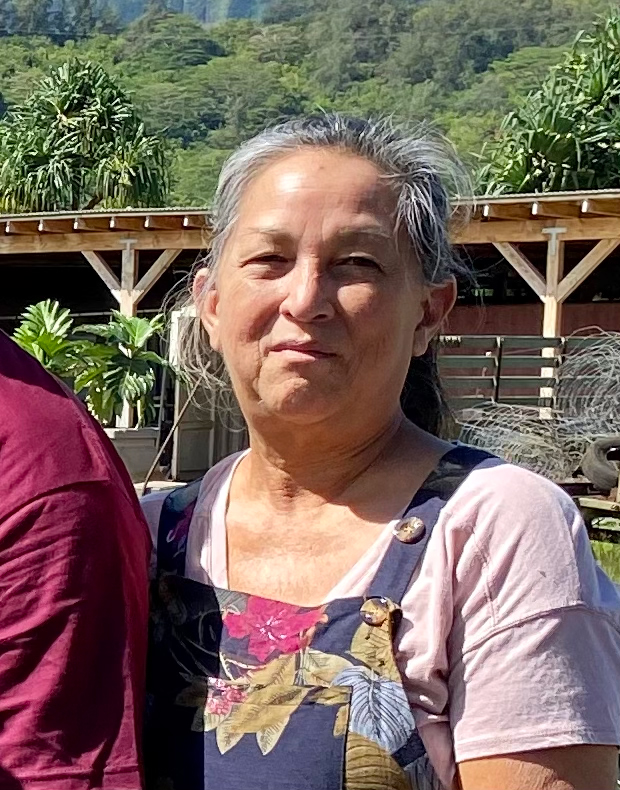
DaMate explained it like this: when there’s a project or proposal affecting a certain island, that island’s representative contacts the district representatives, who are then in charge of finding other people from specific ahupuaʻa in that district who would be affected by the project. Their input is gathered and run back up the chain so that DaMate can help bring those views to state agencies overseeing the project.
DaMate is the committee’s sole employee. She began serving the Aha Moku as a Wespac contractor.
To know what issues to weigh in on, Kaohelaulii said he keeps an eye on government meetings while also taking suggestions from DaMate. That work is largely driven by the individual island representatives.
That’s how Kaohelaulii and others came to testify to the Kauaʻi Planning Commission on new developments in the south end of the island. It’s also how the Aha Moku came to support the removal of the Kahiliwai reservoir in Anahola when its permit came before the land board in November.
Presley Wann, the Aha Moku representative for that district, reached out to people with lineal and cultural connections to Kalihiwai. The Aha Moku, agreeing with land board staff, recommended the reservoir be closed and its permit revoked because there were no cultural connections associated with the dam built in the 1920s.
The land board voted unanimously to remove the dam in November.
That project was among seven before the land board that the Aha Moku testified on last year, according to its annual report. The committee also weighed in on issues such as aquarium fishing rules and military land leases.
Legislature Wants Transparency
The committee typically works behind the scenes, DaMate said. She gave the example of a developer who planned a project on the Waiʻanae Coast but scrapped the plans after hearing from kūpuna in the area who disagreed with the proposal.
Operating behind a curtain has worried some lawmakers.
Rep. Mahina Poepoe of Molokaʻi said people from her community have had trouble getting involved with the Aha Moku. She said she also hasn’t gotten satisfactory answers to questions on the committee’s use of funds during budget briefings in the last few years.
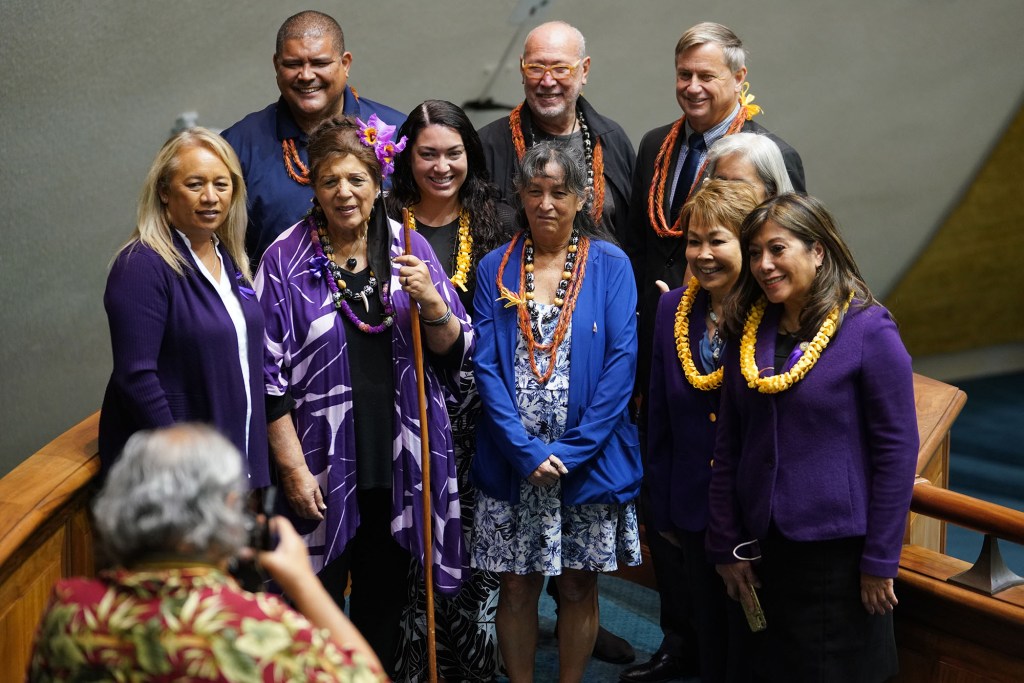
Information regarding the committee’s activities on the Aha Moku’s official state website is sparse and the last records of its meetings are from 2014.
Those factors led Poepoe to introduce H.B. 2047 this year in an attempt to make the Aha Moku’s processes more open and transparent.
The bill would give the DLNR chairperson authority to hire and fire the executive director, a power that now rests with the Aha Moku committee. The bill requires annual performance reviews for the executive director and mandates experience working with Hawaiian communities and practitioners as part of the director’s job requirements.
The measure also requires more detailed annual reports that with an itemized list of annual expenditures and it it would require the committee to make all of its recommendations in open, public meetings.
Many of those provisions are already part of the rules that the Aha Moku appeared to adopt in October 2016, but doesn’t follow. Poepoe held up a copy of those rules during a hearing in February and asked DaMate if she views them as legally binding.
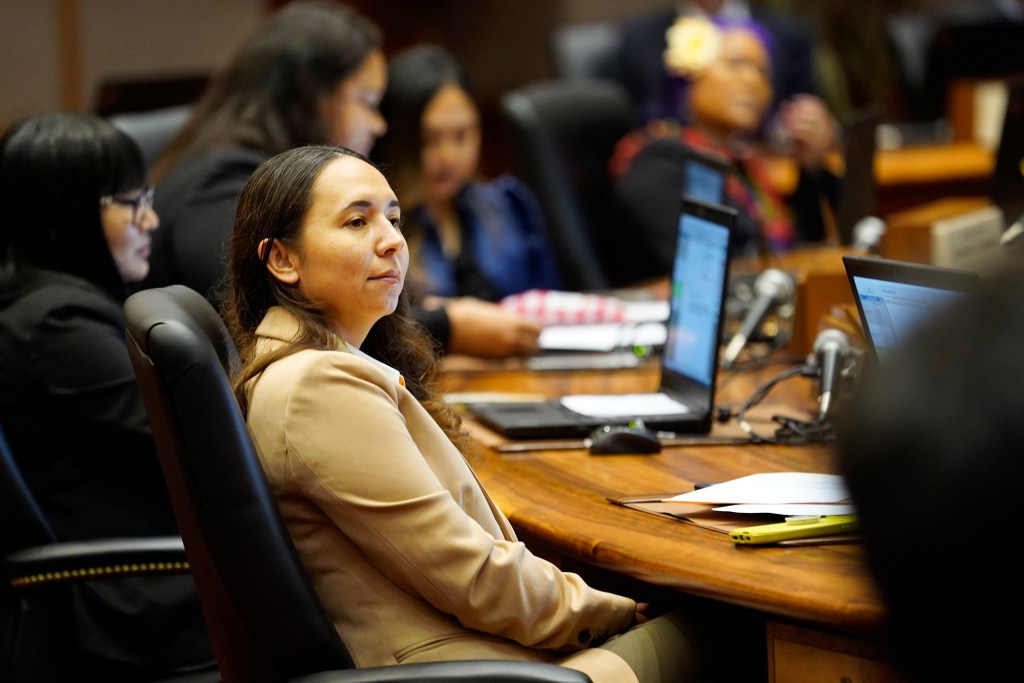
The committee doesn’t have rules, DaMate said, because it’s only advisory. That kicked off a tense back and forth between DaMate and Poepoe over the committee’s compliance with Hawaiʻi’s open meetings law and its use of funds.
“As a Native Hawaiian, this is not an easy thing to do,” Poepoe said as she questioned the committee’s leaders. “But this is a program that could operate at such a higher level than it is to serve our people.”
In an interview with Civil Beat, DaMate reiterated that those rules aren’t official because they were never approved by the Aha Moku members.
Poepoe also said those rules, pulled from the Aha Moku’s website, are still in question; they don’t appear in the state’s official list of administrative rules. Still, Poepoe and the majority of those who have testified on the bill support a more open process.
She sees the committee as a bright spot in state government that provides an avenue for Native Hawaiians’ voices to be heard.
“I understand this is an uncomfortable conversation to have; I don’t even want to have to be the one to bring it up,” Poepoe said. “But if we aren’t willing to have these conversations, it’s not going to get better.”
Committee Needs More Support
Although state law already gives oversight of the Aha Moku committee to the director of DLNR, Demate says that placing the power to appoint its executive director in the hands of the department director, a political appointee, would erode trust in the process among the island representatives.
“All the voices we have already brought forward, all the Hawaiians we have worked with and helped on every single island … it would just be pau,” DaMate said. “They will not come under DLNR jurisdiction.”
Aha Moku members say they already have a difficult enough time operating.
Rocky Kaluhiwa, the chair of the committee, said members often have trouble accessing funding. They pay their travel expenses out of pocket, and reimbursements from the state are slow to come, if they come at all.
“They just don’t want us to succeed,” Kaluhiwa said.
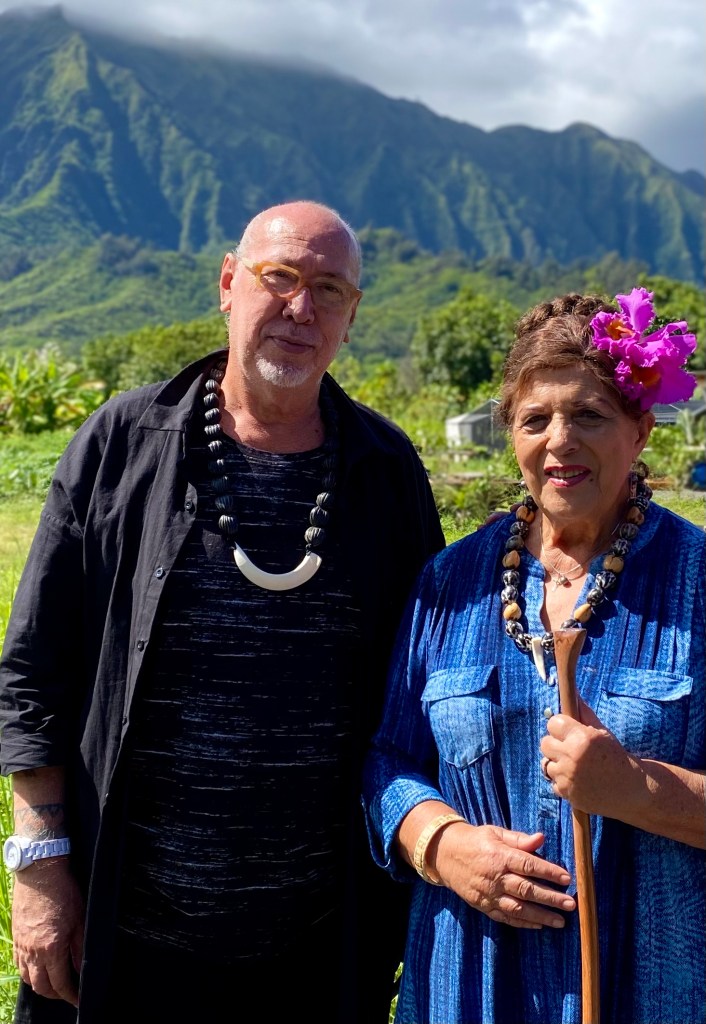
If it was able to access all of its funds, the Aha Moku could put its $286,000 annual budget toward travel, hosting meetings, training for community leaders and office equipment. DaMate also said that the committee wants to use some of those funds to get computers for the island representatives. They currently use their home computers or their cell phones.
This session, DaMate put in a budget request for an assistant to help with accounting, an area where DaMate says she struggles. But that wasn’t included in the governor’s budget submission to lawmakers.
Acting DLNR director Ryan Kanakaʻole was on leave early this week and unavailable for an interview.
In a hearing in February, he said the department has taken a hands-off approach to the Aha Moku and only gets involved to help the committee access its funds or take up legal questions. He told lawmakers that oversight generally falls to the committee itself.
DaMate said that accessing funds has improved under Kanakaʻole’s leadership. He’s given the Aha Moku access to state debit cards to make booking travel and paying for office supplies easier.
Eventually, DaMate said the goal is for the island councils and their leaders to have regular meetings open to the public that would let people weigh in on issues specific to their island. Those would be agendized and have minutes of the proceedings.
So far, island leaders have reservations about speaking on issues on other islands; they don’t want to appear to be butting in on issues that aren’t theirs. The full Aha Moku committee would only meet for issues affecting the entire state, Kaluhiwa said.
As it faces questions about its immediate future, the island representatives are looking to pass down their knowledge and responsibility. On Kauaʻi, the district representatives are all elderly. Kaohelaulii will turn 76 this year.
The Aha Moku is reliant on passing knowledge from one generation to the next. At a county water meeting, Kaoheaulii and his wife met a young woman they hope can one day fill a spot in the Aha Moku system. She’s a teacher, fluent in ʻŌlelo Hawaiʻi.
“She found us, she introduced herself,” Kaohelaulii said. “I said ‘Look, we need somebody to represent their side. We need somebody like you.’”
UPDATE: This story has been updated with comment from the Public First Law Center.