Anti-ICE Masking Bills In Hawaiʻi Doomed After Court Ruling
Advocates and lawmakers are pressing forward on other bills to limit police cooperation with immigration enforcement.
High-profile bills that would have prohibited federal and local law enforcement officers in Hawaiʻi from wearing masks and required them to display clear identification appear to have died Wednesday in the Legislaure, done in by a federal court ruling.
Other bills that seek to sharply limit the ability of local police agencies to cooperate with federal immigration authorities were going down to a Friday evening deadline to be advanced, with advocates and legislators hopeful they would win at least some of what they’ve been pushing forward.
The so-called masking bills — House Bill 1886, House Bill 2540 and Senate Bill 2203 — were doomed by a federal judge’s ruling last week that a California law requiring federal immigration officers to wear identification violated the U.S. Constitution by illegally regulating the federal government’s activities.
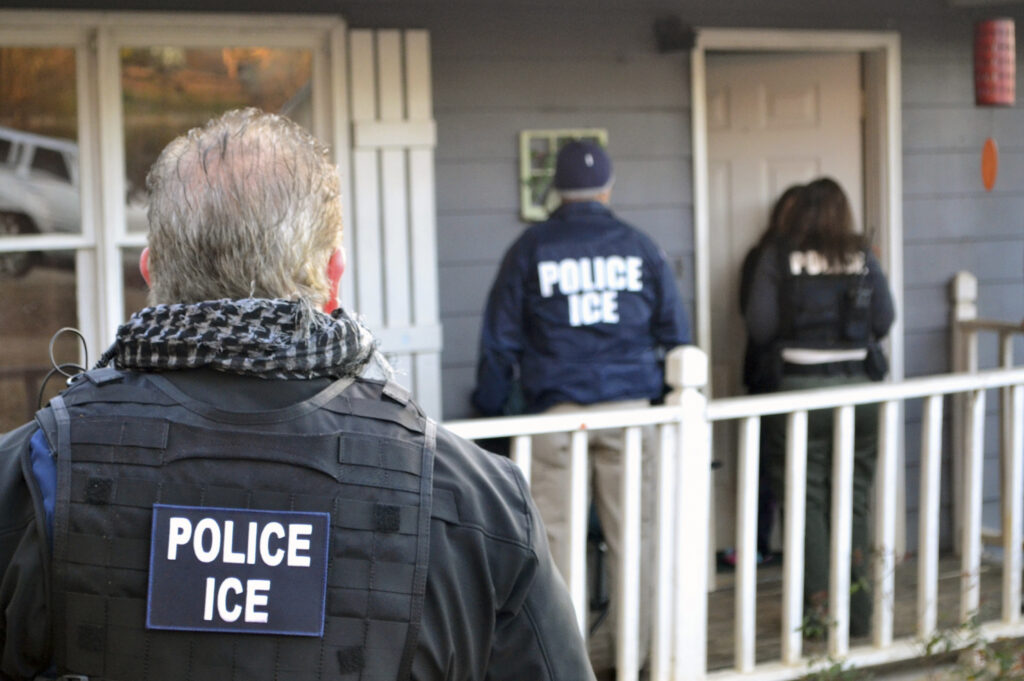
A February ruling had blocked another California law that banned immigration officers from wearing masks on the grounds that because it exempted state law enforcement it discriminated against the federal government. California lawmakers were trying to address that obstacle through a proposed bill that would apply the ban to state law enforcement officers too.
But last Wednesday’s ruling by the 9th U.S. Circuit Court of Appeals effectively killed the chances for that workaround — and quashed similar legislative efforts in Hawaiʻi that were part of a nationwide pushback against the Trump administration’s aggressive crackdown on immigrants.
Since being introduced this year in the Hawaiʻi Legislature, the masking bills had gone through changes that took into account local law enforcement officials’ concerns.
For example, SB 2203, which would have made it a criminal offense for law enforcement officers to wear a facial covering, was amended to allow masks during undercover operations after pushback from the Honolulu Police Department and the state Department of Law Enforcement.
Legislators effectively killed the bills through a procedural move rather than a vote — by not assigning negotiators from both chambers to the bills by 6 p.m. Wednesday.
Advocates Hopeful On Other Fronts
All three masking bills had advanced relatively smoothly through the Legislature until the court ruling — a marked contrast to last year when no immigration-related bills survived long into the session.
Immigrant rights advocates said they were disappointed by the bills’ apparent death but the federal court ruling left lawmakers with little recourse.
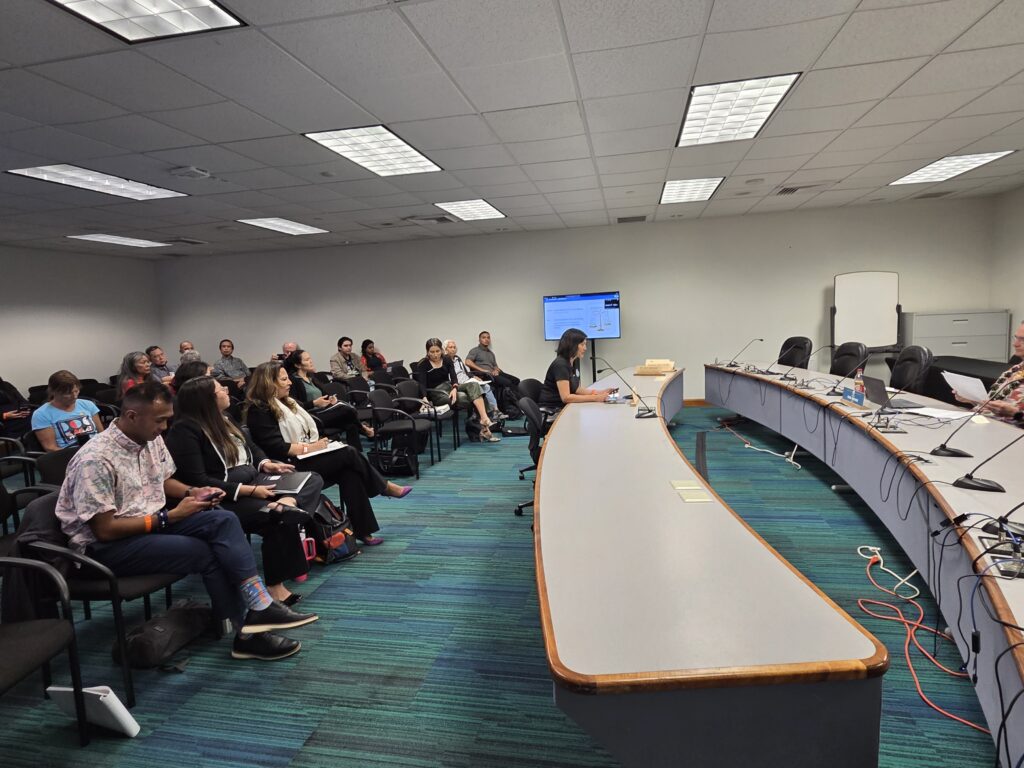
“We just have to let that part go,” said Bettina Mok, executive director of The Legal Clinic, a nonprofit that helps immigrants with legal services.
At the same time, advocates said they were still feeling positive about ongoing legislative attempts to prohibit local law enforcement agencies from cooperating with immigration authorities beyond what the law already requires.
The ill-fated masking bills also contained sections aimed at limiting any such cooperation and advocates said efforts are underway to incorporate that language into immigration bills that are still alive.
“We are working closely with Senate and House leadership right now to advance non-cooperation provisions that were in many of those bills,” said Mandy Fernandes, policy director of ACLU of Hawaiʻi.
“I know that they’re still very dedicated to advancing these non-cooperation provisions to make sure our state and local police are not co-opted for federal immigration enforcement,” Fernandes said.
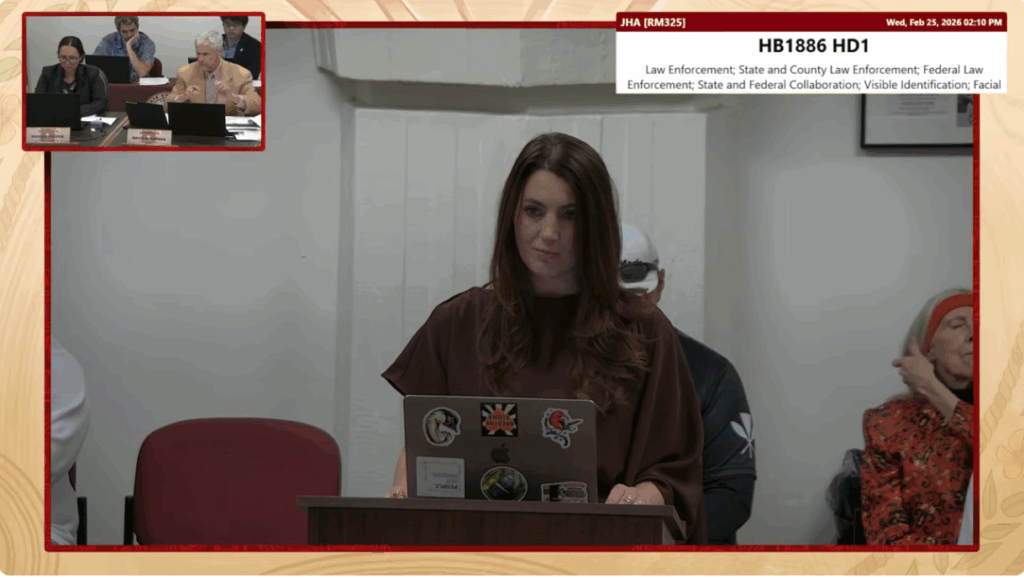
She said advocates hope two bills in particular might carry those provisions forward. House Bill 1768 would bar local law enforcement agencies from making agreements with the federal government to participate in immigration enforcement. Senate Bill 2057 would prohibit law enforcement agencies from using local funds to support civil immigration enforcement.
Action to advance both bills — including negotiations between Senate and House lawmakers — would have to take place by 6 p.m Friday for them to stay alive.
‘Seeing What Sticks’
Pressed by concerns over the immigration enforcement campaign — and by advocates and public opinion — legislators this session introduced more than 25 bills related to immigrant rights and immigration enforcement.
Advocates said all along that their strategy this year was to have “multiple vehicles” carrying different immigration-related legislative goals, so that as bills died, were amended or lost momentum, other bills could pick up pieces that might otherwise have fallen by the wayside.
“There was a lot of spaghetti that was thrown at the wall. And we have been seeing what sticks,” said Liza Ryan Gill, co-coordinator of the Hawaiʻi Coalition for Immigrant Rights.
One bill that has so far stuck is House Bill 1870, which would prohibit local officials from facilitating civil immigration enforcement in certain locations including schools, health care facilities and churches. President Donald Trump discarded a similar and longstanding federal policy after taking office last year.
That and another bill, House Bill 1839, which would require police to notify immigrants in their custody of their rights before they can be interviewed by immigration authorities, are to be heard Thursday in a conference committee.
Rep. Greggor Ilagan, who introduced both bills, said Wednesday that it was too early to assess their chances.
“I just really want to pass them out,” he said.