Debate Over Hawaiʻi Income Taxes Gums Up Budget Negotiations
If the Legislature is going to end this year’s session on time, lawmakers must make some tough decisions this week. Insiders say there is no consensus yet.
It’s crunch time at the State Capitol this week, but budget negotiations appear to be stalled over what to do about Gov. Josh Green’s proposal to halt a series of state income tax cuts that are scheduled to take effect over the next five years.
Lawmakers are also wrestling over how to divide up about $120 million in extra revenue from the new “green fee” on tourists that is supposed to help preserve Hawaiʻi’s natural resources, protect against climate change and fund sustainable tourism.
If lawmakers reach an impasse, the Legislature could be forced to extend this year’s session beyond the scheduled adjournment on May 8, or even require a special session later in the year to work through any unresolved tax and budget disputes.
The pivot point this year is Green’s proposal to halt a series of income tax cuts that lawmakers approved in 2024 and Green signed into law. The tax cuts were spread over eight years, but the governor wants to pause the next five years of tax relief.
The tax cuts would cost the state more than $740 million in lost revenue next fiscal year, and billions of dollars more in the years ahead. Green has said the state needs that money to fund state operations in the face of federal budget cuts.
But Green’s plan to halt the tax cuts proved to be unpopular in an election year where every member of the state House and half of the senators are up for reelection. The House and Senate have each developed their own alternatives and are haggling over how to proceed in the final days of session.
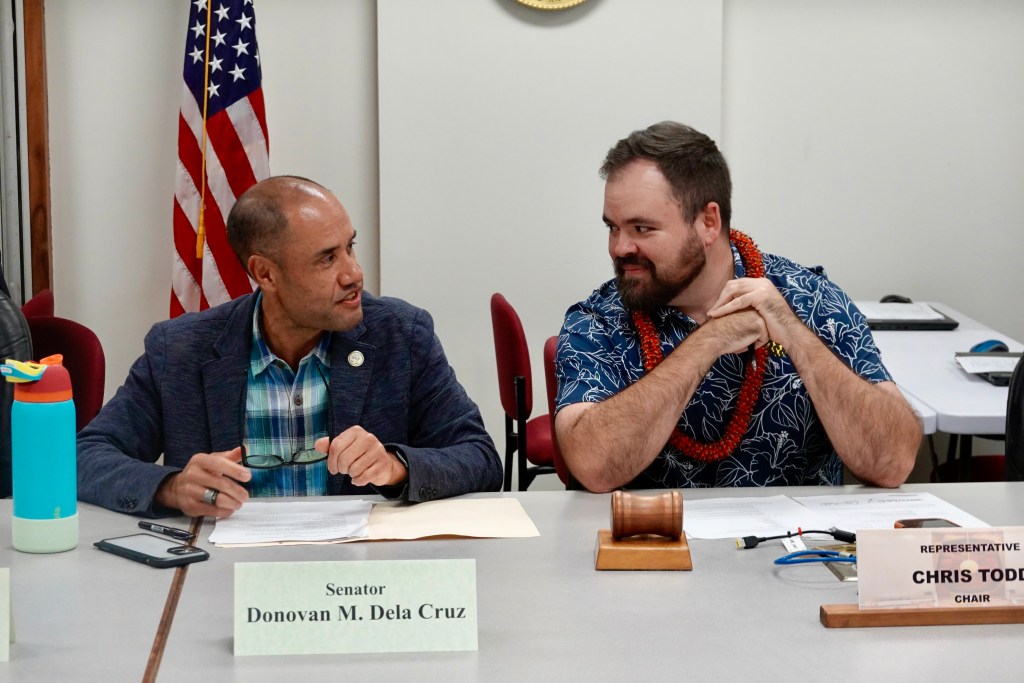
Senate Ways and Means Chair Donovan Dela Cruz pointed out at a budget hearing last week that the tax cut issue is inseparable from the budget negotiations because the House and Senate cannot resolve many budget issues “until we figure out the tax revenues.”
“The sooner we get some agreement, then we know how much more we can add to the budget,” Dela Cruz said, referring to state tax collections. “If we don’t get to an agreement, then the current law is as is, and we would have to go back into the budget and maybe find some cuts.”
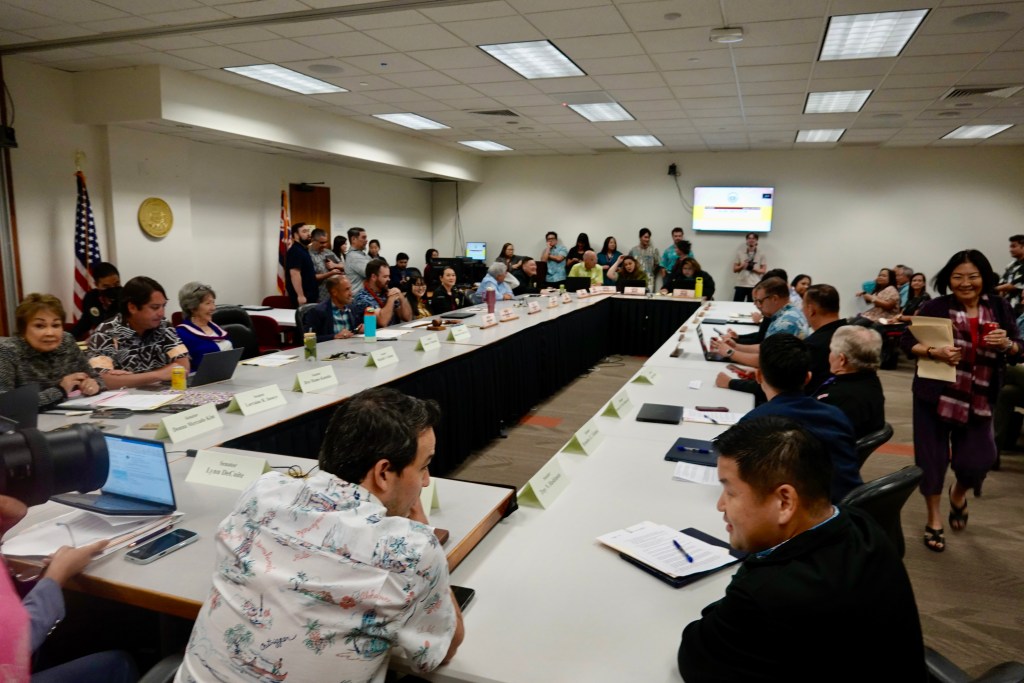
The House-Senate conference committee tasked with negotiating the details of the income tax changes is scheduled to meet in public for the first time Tuesday afternoon to officially open negotiations, but the budget negotiations seem to be moving slowly. A conference committee meeting that had been scheduled this past Friday to discuss the details of the state budget was canceled without notice.
Every bill, including the state budget, is supposed to be in its final form by midnight this coming Friday in preparation for final voting before the session ends next week.
What Is The Disagreement About?
Several senators used a budget conference committee hearing last week to publicly reject the idea of deferring or canceling the income tax cuts lawmakers approved in 2024.
Democrat Sen. Glenn Wakai said the public despises a broken promise, and “we assured them of a historic tax cut two years ago, and what we’re contemplating now is a historic bait-and-switch. That is unacceptable.”
Sen. Lynn DeCoite, also a Democrat, said an average household in Hawaiʻi would save $19,000 to $20,000 over the next eight years. “This relief that we promised to the people of Hawaiʻi will help them now. Promise made, promise kept.”
The Senate has proposed a package that would continue the tax cuts for households earning less than $350,000 for joint filers, $262,500 for head of household filers and $175,000 for individual filers.
Dela Cruz and the Senate have also outlined budget plans to abolish state government positions that have remained unfilled for five years, and to lapse the unspent money back into the general fund to help balance the state budget.
The Senate is also proposing eliminating a variety of state tax credits to save money.
In the House, Todd has proposed a bill that would leave in place a series of increases in the standard deductions that were part of the 2024 tax cuts, and also boost the standard deduction by another 50% between now and 2030.
Todd’s proposal would reduce the scheduled taxpayer savings from the 2024 tax cuts in the years ahead by suspending a series of adjustments in income tax brackets that were part of the 2024 tax package.
But he has also proposed an increase to the top marginal income tax rates for the wealthiest Hawaiʻi taxpayers in the top three income tax brackets to raise some additional revenue for the state.
He has offered the example of joint filers with a combined income of $450,000, saying they would see the tax on portions of their incomes increased from 9% to 10%. Tax filers in the next two highest tax brackets would also see comparable increases of 1%, he said.
What If There Is No Agreement?
If the negotiations between the House and Senate remain stalled, lawmakers could extend the legislative session for a time to try to reach an agreement, or could adjourn and return to the Capitol later in the year for a special session to resolve any outstanding issues.
One well-placed insider who declined to speak on the record suggested lawmakers may “punt” and leave the tax cuts as they are for the time being. Under that scenario, the House and Senate might approve a bare-bones state budget for next fiscal year, and delay tough decisions on taxes until after the election.
That may be possible because the budget proposal Green submitted to lawmakers last December projected a healthy budget surplus of more than $1.8 billion when the current fiscal year ends on June 30.
The scheduled income tax cuts will cost the state about $740 million in lost revenue next fiscal year, according to data from the state Tax Department, which suggests the state could continue to absorb the cost of the tax cuts in the short term.
Lawmakers are also supposed to decide this session exactly how to spend more than $100 million in new revenue from the green fee, but that has also been a subject of some disagreement between the House and Senate this year. The green fee is being funded primarily by an increase in the state hotel room tax.
Dela Cruz and Todd, who are leading House-Senate negotiations, did not respond to requests for comment on the tax and budget issues.