

Fatal Work Accident Spurs Hawaiʻi Immigrant’s Widow To Fight Back
An undocumented Chinese warehouse worker faced safety hazards at a Honolulu job site that a lawsuit says cost him his life after 87 weeks in the hospital.
He was desperate for any way to support his wife. So Zhenxiong Lin left China and made his way via Vietnam to Mexico, the U.S. border and, in mid-2024, to Hawaiʻi.
Days after arriving in Honolulu, Lin was in an accident at his new job that left him hospitalized at The Queen’s Medical Center. He would never recover. Eighty-seven weeks after he was injured, he died early this month, on April 3.
His death is now central to a pending civil lawsuit against his former employer. And his story, as it comes to light, offers a window into the vulnerabilities of undocumented immigrant workers.

Lin entered the United States without permission, according to the lawsuit, which was filed last month in Hawaiʻi’s First Circuit Court. He was 56, without a formal education, and spoke no English.
“He was willing to do any job, for any wage, simply to survive and send money home,” the lawsuit says.
But things went horribly wrong when a plank fell on Lin’s head just days after he started work renovating a Golden Cabinets & Stone warehouse on Mookaula Street. From then until his death, he was “permanently and totally disabled,” the lawsuit says, “unable to move, communicate normally, or meaningfully participate in his own care.”

The lawsuit cites a long list of wrongs it blames on the company’s owner and two other men: They took advantage of his status as an undocumented immigrant, failed to address risks at the warehouse job site or give Lin safety gear, and didn’t call medical responders when he was hurt.
An investigation by Hawaiʻi’s workplace safety agency backs up some of those allegations: The agency cited a man who had a hand in hiring Lin for what it termed “serious” safety infractions, including not providing safety equipment, lacking training and not reporting the accident until Lin’s wife’s attorney filed a complaint. The agency fined the manager $14,930.
The lawsuit also alleges that the defendants offered Lin’s wife, MeiMei Weng, a large sum to make “the matter disappear” by taking him back to China. Weng had traveled to Hawaiʻi on a tourist visa after her husband’s injury and is now applying for asylum, said Honolulu attorney Michael Green, who is representing her in the lawsuit.
“He got treated like trash,” Green said, referring to Lin.
Wayne Cao, owner of Golden Cabinets & Stone, acknowledged Lin was hurt in a warehouse that his company leases, one of four it has in the area. But he said the lawsuit is otherwise far off base, including the allegation that he tried to pay off Lin’s wife.
“There’s a lot of things that are not true,” he told Civil Beat.
The lawsuit seeks unspecified damages and a jury trial. It also names Fujino Family Limited Partnership, the warehouse’s owner, as a defendant, saying it had a duty to provide a building to Cao’s company that was safe, should have known of the hazards and required proof the warehouse renovation had been permitted.
A call seeking comment from Hansel Fujino of ʻAiea, registered agent for the limited partnership, was not returned. The case has been assigned to a judge; the defendants had 20 days to respond, but as of last Thursday only one had.
Filed just under a month before Lin died, it included the statement of a neurologist who at the time said Lin would likely need 24-hour care for the rest of his life. On the advice of doctors, Weng agreed on March 18 that her husband’s care should be changed from life prolonging to comfort measures only, the lawsuit says, allowing him to die naturally two and a half weeks later.
A Common Immigration Route
As he left his home country in 2024, Lin was part of a post-pandemic uptick in Chinese people traveling through Mexico to cross the U.S. border.
That Chinese migrant passage phenomenon is known as “zouxian,” or ”walking the line,” said Aaron Halegua, a New York attorney who has represented undocumented Chinese workers in trafficking and labor violation cases, including in Saipan and the Pacific region.
Upon arriving in Hawaiʻi, Lin joined an estimated 2,000 or so undocumented Chinese in the state, according to the Migration Policy Institute, many of whom work in construction, hospitality, agriculture or restaurants.
Those workers are uniquely vulnerable, immigrant advocates and attorneys who have represented them say. They also often travel similar roads in trying to establish themselves and carve out new lives in the U.S.
In many cases, they find work through networks of family, relatives and friends, many of whom come from the same place back home, Halegua said.
“I don’t think it’s super organized,” he said. “It’s just, people contact who they know.”
Much remains unknown about Lin’s time in Hawaiʻi. Mere days passed between his arrival and his injury, his wife declined an interview and the pastor of a Honolulu church where people knew her and Lin did not return calls seeking comment.
Cao, a Honolulu resident, is a naturalized U.S. citizen known, the lawsuit says, for offering work to immigrants from Fuqing, a city in the southeast China province of Fujian where he and Lin both were from.
Within days of Lin’s arrival, the lawsuit says, “intermediaries” for Cao recruited Lin to work in the Golden Cabinets & Stone warehouse. Cao said he hired someone to run the job, who in turn hired someone else, who then hired Lin as part of a crew of laborers to renovate the warehouse.
“We did not hire him, he’s not our employee,” Cao said of Lin.
The lawsuit alleges that Cao, one of his employees, Jiadi He, and another man who He hired who is identified only as John Doe, seized on Lin’s “vulnerable status.”
“They … relied on his inability to refuse dangerous work, his willingness to accept below‐minimum‐wage pay, and his fear of deportation to keep him silent,” says the lawsuit. It also alleges that Cao relied on undocumented laborers because he could pay them less, lower costs by paying them cash to avoid taxes and dodge workplace insurance requirements.
Jiadi He filed a response in court March 23 denying all the allegations.
Cao denies hiring undocumented workers and told Civil Beat he did not know Lin’s immigration status until long after the accident.
“We don’t hire illegal people, we only hire people with work cards,” he said, meaning immigrants with visas or work permits allowing them to work in the U.S.
‘Disposable Labor’
In the brief time before he was injured, Lin lived in a house in Kalihi with other workers from Fuqing employed by Cao, said attorney Peter Hsieh, a partner of Green’s who is also representing Weng.
Lin was being paid $100 a day, Hsieh said, less than Hawaiʻi’s $14 minimum wage at the time.
For undocumented workers – or even those here legally living in households where someone is undocumented – life has become more fraught amid the federal government’s crackdown on immigrants.
“Top of mind for a lot of migrant workers, those who have papers and also those who don’t, is concerns that any little thing could be a flag and cause for them to be scrutinized even more,” said Kami Yamamoto, executive director of the Hawaiʻi Workers Center.
“It definitely takes a toll on people,” she said.
“It’s very rare that you see workers or the families of workers come forward to report a case…”
Liza Ryan Gill, co-coordinator of the Hawaiʻi Coalition for Immigrant Rights
On the job, few immigrant workers are taught – or are in a position to learn about – workplace safety regulations, said Jeremy O’Steen, a Honolulu attorney who has represented Chinese workers in workplace injury cases.
“They don’t know anything about OSHA safety regulations,” O’Steen said.
And it is daunting to advocate for oneself as an immigrant worker, let alone one without legal immigration status, said Liza Ryan Gill, co-coordinator of the Hawaiʻi Coalition for Immigrant Rights.
“It’s very rare that you see workers or the families of workers come forward to report a case if they don’t really have the support of their church or the support of an organization to be able to do so,” she said. “It’s just incredibly scary to do that on one’s own.”
Wage theft and other employment-related violations are common in workplaces that rely on immigrant and undocumented labor, she said, noting she didn’t have first hand knowledge of Lin’s case.
O’Steen also said he couldn’t speak directly to Lin’s case, but that, “My experience is that the Chinese immigrant workers here, they’re just treated very poorly and kind of as disposable labor.”
In The Bed Of A Pickup
At the warehouse on Mookaula Street, Lin was put to work helping demolish a mezzanine that had been built without permits. The job was part of a larger overall renovation of the nearly 12,400-square-foot building that involved adding, removing and altering structural elements as well as electrical and plumbing work.
Cao’s goal was to create storage space for inventory such as cabinets, stone countertops and sinks, the lawsuit says. But it adds that neither Cao nor his employees had conducted “any meaningful inspection of the warehouse” before telling workers to start the job, leaving unsecured building materials on the mezzanine level.
And, while the mezzanine demolition would not have required permits if it was built without them, according to Department of Planning and Permitting spokesperson Curtis Lum, other major structural work would have.
Also, the lawsuit describes the job as involving structural alterations, including demolition, additions, and major renovations, which would have required permits. Lum said there were none.
As a result, the lawsuit says, no authorities had inspected the project site, so no safety measures had been required.
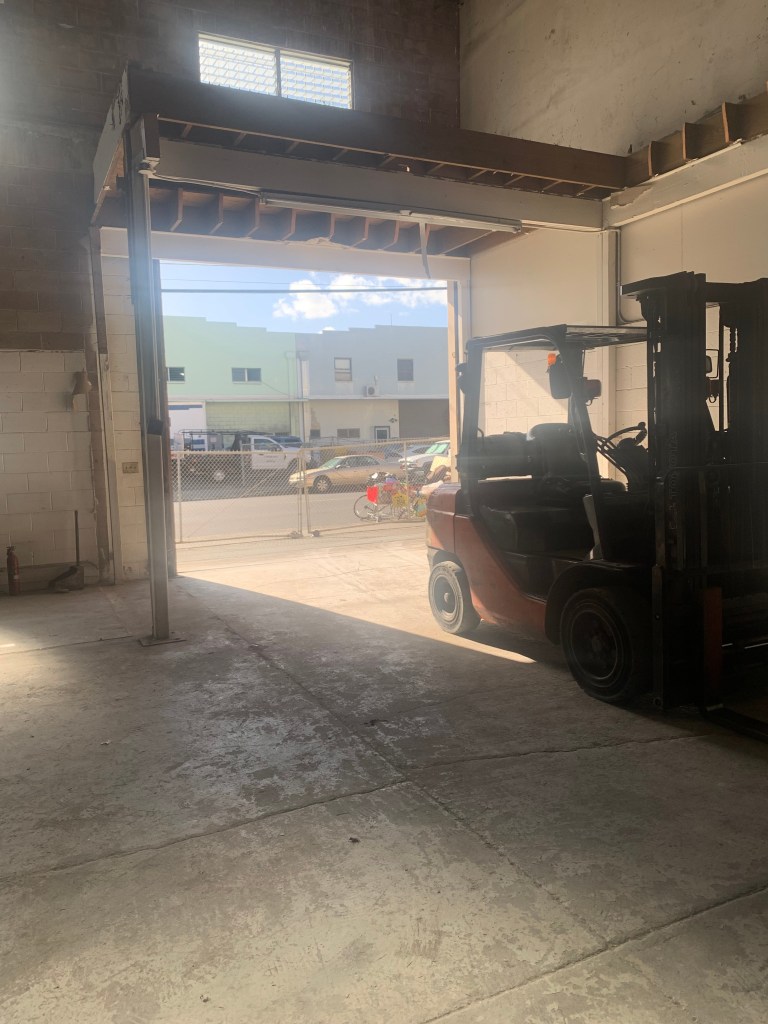
On Aug. 3, 2024, a forklift driver struck a support pillar in the warehouse, dislodging a 12½-foot-long, 50-pound plank.
Lin was working immediately below. Safety regulations call for a construction hard hat in such situations, but he had not been given one and was bare-headed.
The plank fell and struck him, crushing his skull. A helmet, the lawsuit notes, would have “prevented or significantly reduced” his head trauma.
Some of what happened next is not a matter of debate. Nobody called 911 and someone loaded Lin into the back of a pickup and drove him to The Queen’s Medical Center emergency room on Punchbowl Street.
From there, the accounts diverge.
The lawsuit says no one provided basic first aid and Lin was dropped off at 2:03 p.m. by people who left without identifying him or themselves. It says hospital admission records state that “neighbors” transported him in the back of a Toyota Tacoma pickup and reported he had been found at his home.
“Patient was unresponsive requiring extrication of patient from bed of truck,” those records say.
Cao told Civil Beat that it was his employees who drove Lin to the hospital in the pickup and he said they did so because time was of the essence since he was so badly hurt.
“They cannot wait,” he said. “They sent him to the hospital right away.”
He added: “It’s sad, very sad.”
Cao referred further questions, including why he had yet to file a response to the lawsuit, to his attorney, Steven Goto, who declined to comment.
An Offer Refused
Weng learned what had happened to her husband from a member of the Fujianese community in Honolulu who had known Lin from Fuqing.
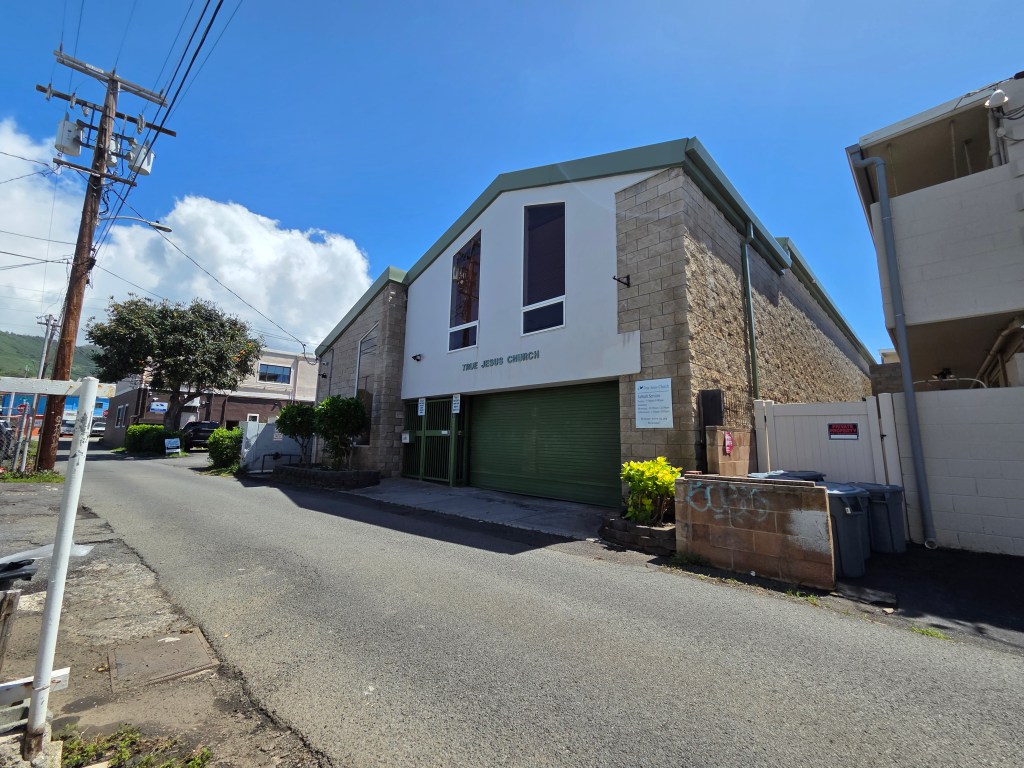
She came to Hawaiʻi on Aug. 24, 2024, three weeks after her husband’s accident, the lawsuit says. She quickly got in contact with the True Jesus Church, a congregation housed in a building kitty-corner from a shelter for homeless families in Mōʻiliʻili.
“She started asking questions because she wanted to know what happened to her husband,” Hsieh said. “And she got conflicting stories, a lot of people didn’t want to talk because they were afraid of retaliation.”
“It was not about the money. She just wanted to hear the truth and what happened.”
Peter Hsieh, an attorney representing Zhenxiong Lin’s wife, MeiMei Weng
But word got out about Weng’s inquiries, and, Hsieh said, in September or October of that year He approached her with an offer: $350,000 to return to China and “make believe (Lin) was never here.”
Weng rejected the offer, Hsieh said, because she wanted to expose what had happened.
“It was not about the money. She just wanted to hear the truth and what happened,” he said.
Cao said he did not try to pay off Weng. Instead, he said, he told his insurance company about the accident and suggested they pay her because he had heard through Jiadi He that she needed to repay a large loan that she and Lin had taken out to finance his journey to the United States.
“She did approach us. She has a big loan in China. So she needs to solve this case right away, like ASAP,“ Cao said. “And I talked to my insurance company – is there any way we can help her, we can close this case right away.”
He said insurance and legal negotiations have prolonged the whole affair, which he characterized as “complicated” and a “miscommunication.”
Hsieh chose two different words to describe the case.
“It’s about dignity and accountability,” he said.
Can’t see the form below? Use this link.
Civil Beat’s reporting on economic inequality is supported by the Hawaiʻi Community Foundation as part of its work to build equity for all through the CHANGE Framework; and by the Cooke Foundation.

