

Hawaiʻi Slashes Pay For Autistic Student Aides On Neighbor Islands
The education department offered more money for specialists serving autistic students on the neighbor islands. Four years later, it’s retracting its offer.
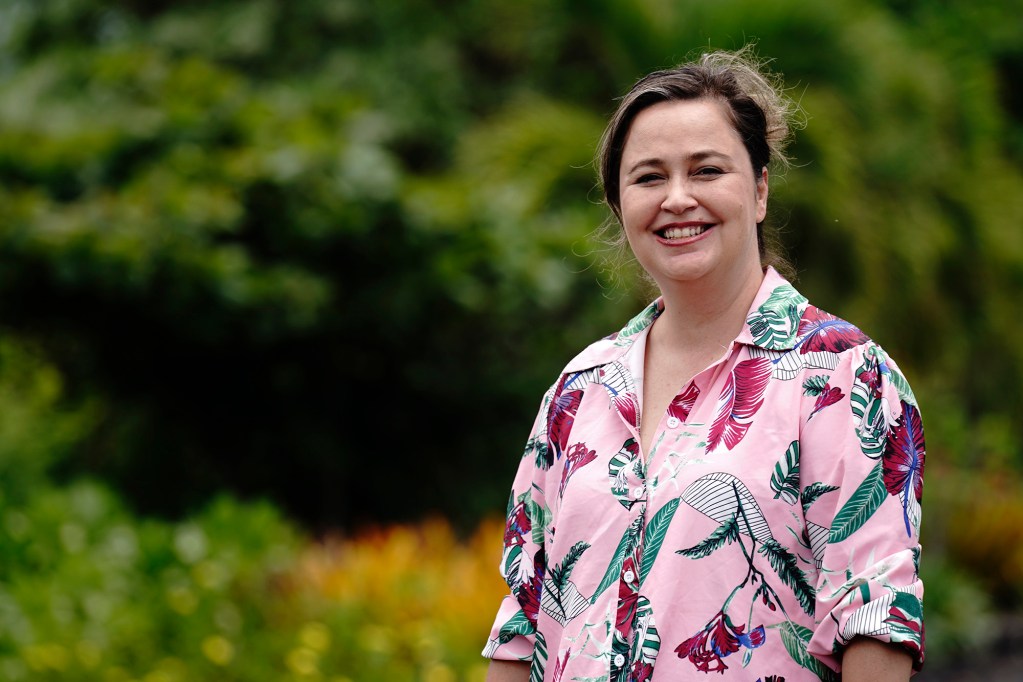
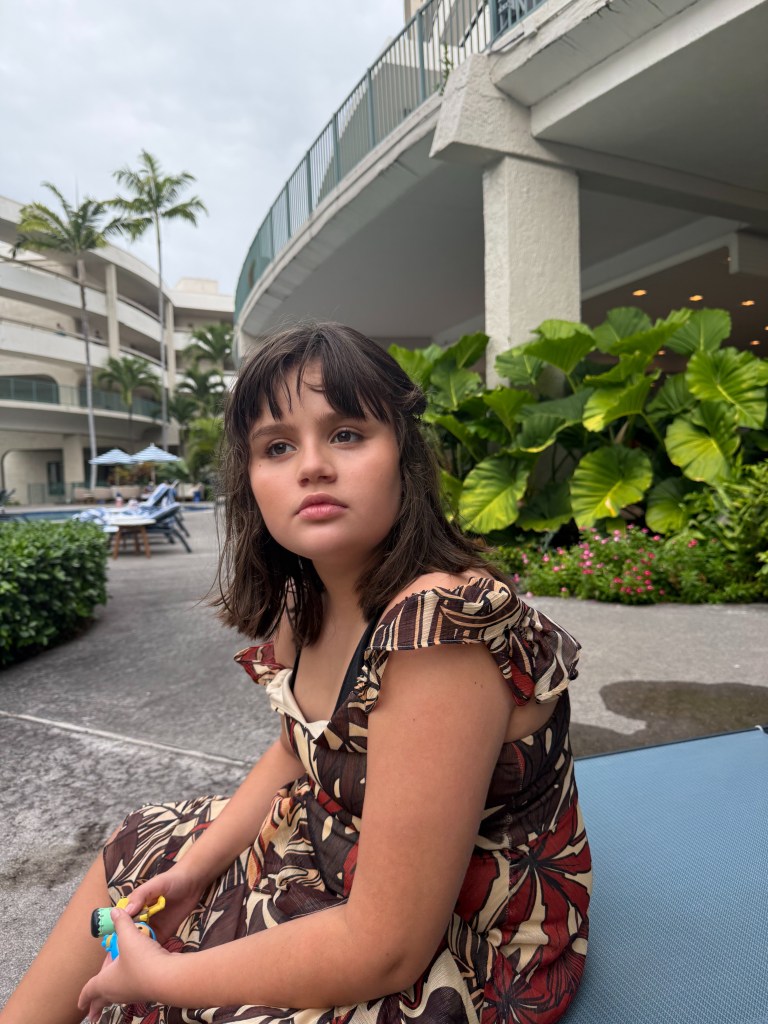
For Big Island mom Jessica McCullum, having one-on-one support for her 13-year-old daughter during the school day is non-negotiable.
McCullum’s daughter, Ava, is non-verbal and profoundly autistic. She attends classes at Kealakehe Intermediate alongside a specialist who helps her communicate through an iPad and curb behaviors – like running away from class – that could otherwise prevent her from attending school, McCullum said.
“They’re just integral in implementing and reinforcing curriculum and other therapies,” McCullum said. “When we’re thinking about the long road ahead, about what does Ava’s life look like when she becomes 50, 60, or 70 years old, her experience at the school is essential.”
McCullum’s daughter is one of roughly 1,000 kids in Hawaiʻi who require the support of a registered behavior technician, trained professionals who provide daily support to autistic students and help them with skills like socializing and communicating in class. But some families worry their children are at risk of losing access to these specialists as the Hawaiʻi Department of Education reduces compensation for the companies that supply them.
The education department is slashing the hourly reimbursement rate for agencies that employ technicians in neighbor island schools next year, despite growing demand for these services and companies’ ongoing challenges to recruit employees.
Under the new contract, agencies will receive $60 an hour for every technician they employ in schools — a $15 hourly drop from the rates the education department currently offers neighbor island technicians. The $60 hourly rate will mark a $10 increase for Oʻahu-based technicians, which agency directors say will improve hiring on the island but isn’t targeting where shortages are most severe.
If the cuts reduce access to technicians, the results could be devastating for kids like Ava. Roughly a third of students receiving technicians’ services, called applied behavior analysis, live on the neighbor islands.
The state is already facing a shortage of professionals who are trained to work with autistic kids, and it’s sometimes hard to find a replacement if a specialist calls out sick and can’t support Ava at school, McCullum said. The family keeps Ava home from school on these days, worried about meltdowns and bathroom accidents that could happen if she doesn’t receive one-on-one services.
“We knew that bringing her to school would probably result in her having three to four potty accidents or becoming incredibly dysregulated and potentially having a meltdown,” said McCullum, who is also the founder of the nonprofit Ava Sofia Foundation, which supports families with autistic children. “We just kept her home, which is impeding her access to her education.”
Department of Education Communications Director Nanea Ching said in an emailed statement that multiple factors contributed to the reduced rates on the neighbor islands and maintained that schools are not reducing services for autistic students.
But budget documents suggest that schools will need to provide more services with tighter budgets next year.
In 2022, the department said it would cost nearly $70 million to hire roughly 720 technicians and other specialists working with autistic kids. But four years later, the state has set aside only $40 million to contract nearly twice as many technicians and a total of 1,845 employees.
“You can only pay people so much when it comes to being a solid business,” said Beau Laughlin, who runs a Maui-based agency that contracts with the education department to provide technicians to schools. “You can’t do this and lose money.”
Staffing Challenges Made Worse
When the education department raised the hourly rate for neighbor island behavior technicians in 2022, the Mālama Pono Autism Center jumped at the chance to serve schools on Lānaʻi and Maui for the first time, Chief Executive Officer Matthew Brink said.
Previously, the agency only worked with Oʻahu schools, Brink said. But the new contract, which runs from 2022 to 2026, offered agencies $75 an hour for neighbor island behavior technicians. The rate for Oʻahu technicians was set much lower at $50 an hour.
Even with higher reimbursement rates in recent years, it’s been difficult for agencies to find technicians willing to work in schools, particularly on the neighbor islands, Brink said. Technicians tend to regularly cycle through their jobs, he said.
The hourly reimbursement rate agencies receive for behavior technicians also needs to cover a variety of expenses, including health insurance, workers’ compensation and overhead, Brink said.
Going into the new contract, which begins in July, Brink said, many agencies were hoping for another raise. The rate for Oʻahu technicians has been stagnant since at least 2019, and the hourly rate for neighbor island employees has remained the same since the 2022 contract began.
It was a surprise to providers when the education department initially proposed a significant drop in rates for neighbor island technicians and no change for Oʻahu workers, Brink said. In the first version of the 2026 request for proposals, the department said it would set the rate for technicians at $50 an hour statewide.
After providers questioned the low rate, the education department increased its rates, setting payments at $60 an hour for all technicians.
Schools currently contract around 1,000 behavior technicians, according to the education department’s annual report to the Legislature. Next year, the department projects it will need more than 1,100 technicians, with the greatest demand in central Maui and the ʻAiea-Moanalua-Radford complex area on Oʻahu.
Now, agencies are grappling with how they’ll deal with the neighbor island pay cuts and whether staying in business with the education department is worth it.
“They’re not going to be able to survive.”
Oscar Salgado of Hawaiʻi Behavior Health, referring to service providers’ financial struggles
Laughlin said he currently pays technicians a starting rate of $46 an hour on Maui, Lānaʻi, Molokaʻi and Big Island. But next year, he’s considering dropping the rate to $41 under the new contract with the education department. While most employees are willing to work with lower rates, Laughlin said, he still expects some technicians to leave the company.
“I was very upfront,” Laughlin said, adding that he alerted his staff to the possible pay cut as soon as possible. “I felt that was the right thing to do as well, knowing that, if things might change, giving them as much notice to change or plan their life accordingly.”
Oscar Salgado, vice president and clinical director of Hawaiʻi Behavioral Health, said technician pay starts around $25 an hour on Oʻahu and $30 an hour on the neighbor islands. He doesn’t want to reduce the rates for current employees, Salgado said, so he’s hoping the company will be able to break even if it were awarded the contract starting in July. The agency would need to reassess its starting rate for new hires, he said.
There’s a possibility other agencies may cut ties with the education department altogether, Salgado said.
“I think that is the biggest risk on the neighbor islands for any agency, either they’re going to have to decrease the rate for their employees, or they’re going to not apply,” Salgado said. “They’re not going to be able to survive.”
Compared to insurance companies that also cover services for autistic kids, the education department’s rates aren’t keeping up, Brink said. Medicaid and private insurance offer roughly $70 to $80 an hour for technicians working with kids in clinics or home-based settings.
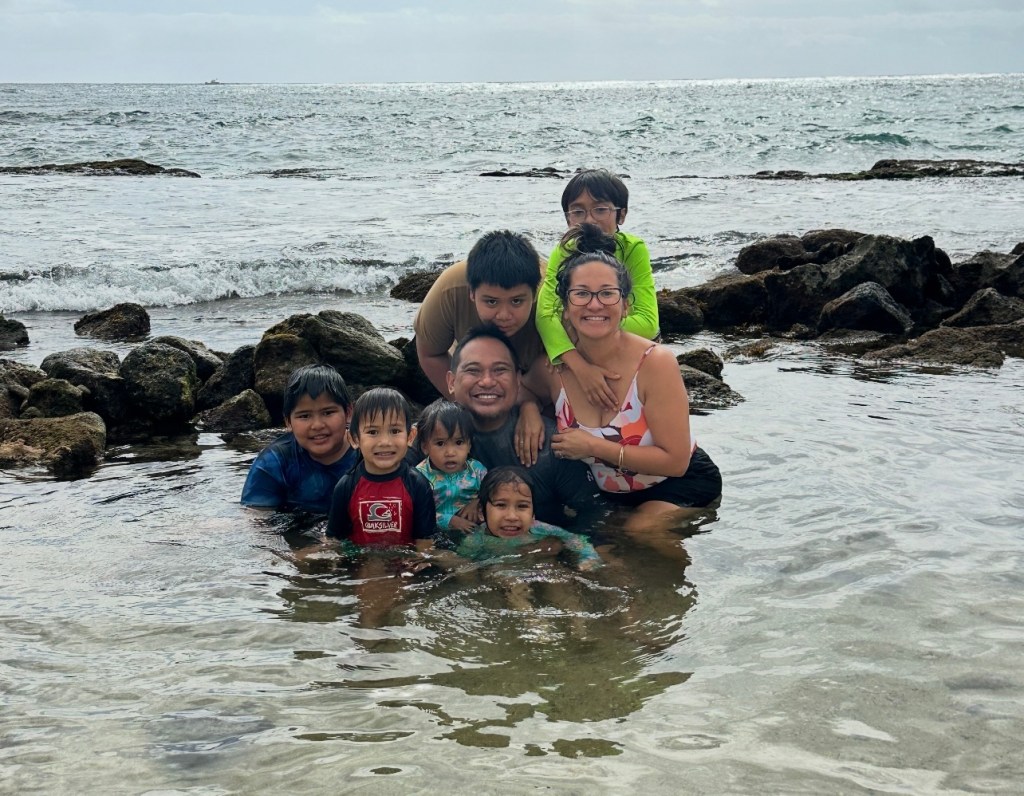
On Kauaʻi, parent Shana Cruz said she’s seen firsthand the importance of having qualified technicians in schools. For years, two of her sons with autism have worked with technicians in schools. They support the boys with basic tasks like handing in their homework assignments or transitioning between activities in their schedules.
“They really put their best foot forward to try and help the kids regulate and get back on task,” Cruz said.
At the same time, Cruz said, the technicians have helped her understand what learning strategies work best for her sons, which allows her to teach her kids new household skills like cooking rice or doing the laundry.
With some technicians facing pay cuts next year, Cruz said she anticipates that neighbor island schools may struggle to find specialists qualified to work with kids with autism. Instead of behavior technicians, she said, she’s worried schools may pair some students with paraprofessionals, who don’t receive specialized training to work with kids with autism.
More Demand, Less Money
This isn’t the first time the state has struggled to fulfill its responsibility to provide adequate services to autistic kids, said Louis Erteschik, director of the Hawaiʻi Disability Rights Center.
In 2018, the center filed a lawsuit against the state education department and Department of Human Services, alleging both agencies violated federal laws mandating that autistic children receive necessary accommodations, including behavior technicians in schools.
The state’s failure to provide students with access to technicians during class led some families to pull their children out of public schools and enroll them in private schools or clinics where they could receive all-day access to behavioral services, the lawsuit said.
The lawsuit will go to trial in the fall. Spokespeople for departments said they cannot comment on active cases.
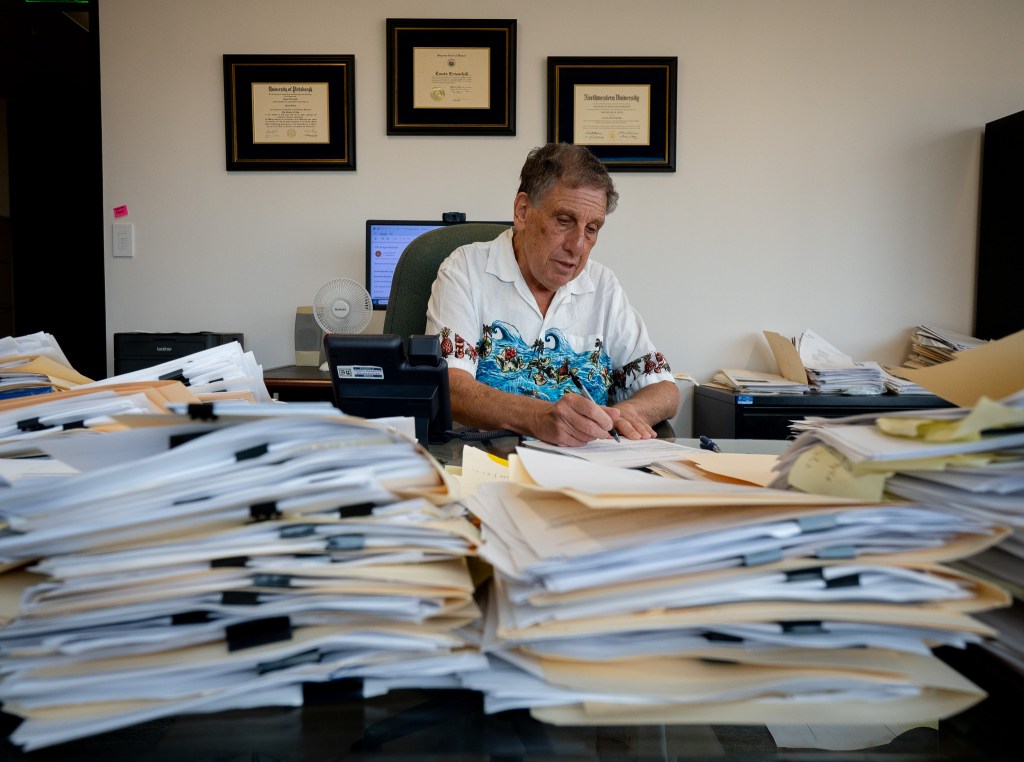
Eight years after the lawsuit was filed, the education department still doesn’t seem to be offering adequate services to autistic students, likely because of a shortage of technicians who are qualified to provide this support, Erteschik said. This year, roughly 1 in 3 autistic students receive services through a behavior technician. While not every autistic student qualifies for a technician in school, Erteschik said, the number is lower than he would expect for Hawaiʻi.
“You’re struggling with a bit of a shortage of providers as it is,” Erteschik said. “The last thing you want to do is have disincentives for people to go into that kind of work.”
Erteschik and agency directors said they’re unsure why the education department lowered its rates for neighbor island technicians amid growing demand for their services.
The department set aside $40 million to cover the new contract that begins in July, according to its recent request for proposals. But it worked with a much larger budget when it was contracting fewer technicians in 2022 and paid neighbor island technicians more. The department has also tried to hire more technicians internally, according to a 2022 budget report, but still relies on contractors to meet students’ growing demand.
Last year, the department proposed — and received — a $7.6 million cut to its budget for services for autistic students. Of the $7.6 million that was eliminated, roughly $1.7 million specifically covered the costs of providing applied behavior analysis in schools.
The education department did not respond to questions as to why it proposed these cuts.
In an emailed statement, Ching said the new contracts take into account student needs, the availability of resources and the capacity of providers.
“Rate adjustments on neighbor islands were evaluated as part of broader contract standardization and market alignment efforts and were not driven by a single factor,” she said.
But the education department isn’t in a position to suggest cuts to its funding for autistic kids, said attorney Eric Seitz, especially when the number of students qualifying for services is rising.
The state is prepared to enter into a $8 million settlement with one of Seitz’s autistic clients because the education department allegedly failed to provide her consistent special education services and providers for several years.
McCullum, the Big Island mom, said she’s worried how cuts to neighbor island reimbursement rates will affect students’ access to technicians in the future. McCullum said she had to partner with a legal advocacy group to secure a behavior technician for her daughter, and she knows not all families are able to navigate the lengthy process of securing these services.
“I always have a hard time going to bed at night,” McCullum said, “knowing that if I’m having this much of a challenge, what are other families going through.”
Civil Beat’s education reporting is supported by a grant from Chamberlin Family Philanthropy.
Civil Beat’s health access reporting is supported in part by the Atherton Family Foundation.

