

It’s Illegal To Ride A Moped Without A Helmet. Does Anyone Care?
Hawaiʻi made moped helmets mandatory last year, but police aren’t issuing tickets and few riders appear to be voluntarily donning the protective gear.
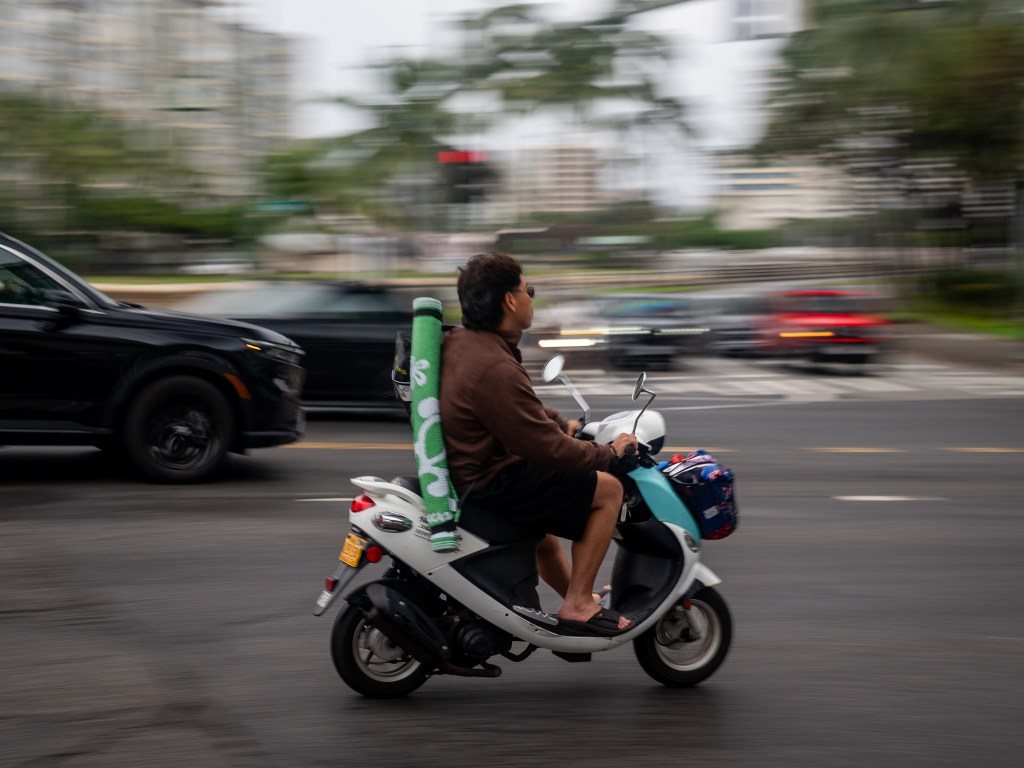
Hirut Ferraris rides her moped around Honolulu because it is quick, cheap and easy to park. She knows she should wear a helmet, but she doesn’t.
“Honestly, it’s not cute,” she said.
It might not be cute, but neither is getting a ticket or a serious head injury.
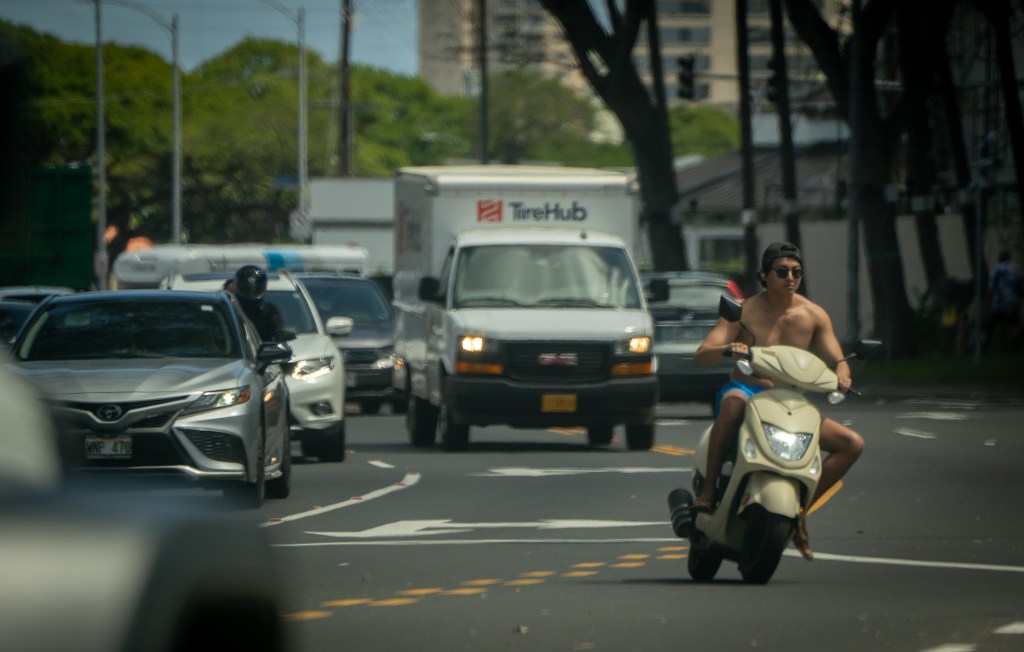
Ferraris is one of many riders across Hawaiʻi who are now breaking the law every time they head out without a helmet. But nearly a year after a new statewide law took effect, enforcement has barely been seen.

The goal of the 2025 bill was to reduce serious injuries and deaths among moped riders by requiring helmets for riders of all ages. Previously, only minors needed to wear a helmet.
Several agencies supported the measure, including the Hawai‘i Department of Transportation, the Department of the Prosecuting Attorney, and the Honolulu Police Department, which said helmets “prevent serious brain injury and death.”
The main opposition came from moped rental companies and riders who said it should be a personal choice whether to wear a helmet.
After the bill passed, its sponsor, Sen. Stanley Chang, said the effort was meant to respond to the growing safety problem on the roads.
“These changes are proven to reduce serious injuries and fatalities,” Chang said in a press release.
Yet in the first 10 months of the law, the Honolulu Police Department only ticketed three riders for not wearing a helmet — a decrease from the five minors cited during the same period in the previous year, when the state only required riders under the age of 18 to wear a helmet.
Helmets Help Prevent Brain Injury
Research shows why lawmakers and Gov. Josh Green changed the law.
In 2025, Hawaiʻi recorded 129 traffic fatalities, including 39 motorcycle and moped riders. In 2022, 33 riders in those categories were killed, accounting for 28% of all traffic deaths that year. Only nine were wearing helmets.
Hawai‘i law still does not mandate helmets for motorcycle riders over the age of 18.
A 2016 study published in the Hawaiʻi Journal of Public Health analyzed medical reports of 1,965 people involved in motorcycle and moped accidents from 2007-2009. The study found that moped riders not wearing helmets were significantly more likely to suffer head injuries, including traumatic brain injury, than people wearing helmets. For instance, the study found 103 riders without helmets suffered skull fractures versus seven who had been wearing helmets. In addition, 225 moped accident victims without helmet suffered traumatic brain injuries compared to 22 who had been wearing helmets.
The study also highlighted the financial hit to crash victims and taxpayers.
About 1 in 5 riders without helmets lacked health insurance, the study found, leaving them to pay for expensive medical care out of pocket. In addition, people without helmets faced 50% higher medical charges, including dozens who had to pay medical bills of $25,000 or more on their own dime.
Overall, unhelmeted moped accident victims racked up $16.4 million in medical bills versus $1.4 million from people wearing helmets.
In cases where riders without helmets had medical insurance, it was often financially strained public insurance programs that were left to foot the bill: 21% of the riders without helmets were on Medicaid, the study reported.
The study noted it accounted only for acute care, not longer-term care the riders without helmets might have needed.
The conclusion: “This data provides direct economic incentive for universal helmet laws covering mopeds as well as motorcycles.”
It’s hard to blame moped riders for not knowing about the law, which has received little attention, even as moped crashes remain a problem across Oʻahu.
It’s not just that the Honolulu Police Department isn’t enforcing the law. Even some top emergency management officials have expressed a lack of awareness.
In a podcast in January, nearly six months after the law went into effect, Honolulu Emergency Services Director Dr. Jim Ireland pointed to ongoing moped injuries across the city.
“We don’t have a helmet law in Hawaiʻi,” he said. “That contributes to the degree of disability and death, people having death injuries on mopeds.”
Ireland directed interview requests to Shayne Enright, spokesperson for the Honolulu Emergency Services Department, who provided a written statement.
“Anyone on a two-wheel vehicle should wear a helmet whether required to by law or not,” she said. “Our paramedics and Emergency Medical Technicians respond to serious, critical and fatal head injuries that could have been mitigated or prevented with the use of a helmet.”
“If no one’s getting in trouble, why wear one?”
Hirut Ferraris, moped rider
HPD declined an interview request but said in a written statement that officers may issue citations during patrols, traffic stops or after crashes. HPD also said it is focusing on education and public safety through continued outreach on helmet use and riding risks.
When asked why the number of citations issued by the department actually decreased after the law was expanded to cover riders of all ages, the department said the decline may be due to a mix of factors, including greater public awareness of the law and more riders choosing to follow the helmet requirements.
“I’m disappointed that only three citations have been issued since the (law) passed last year,” Chang said in a written statement. “I hope that they will employ proactive methods to inform the public of the new law, combined with greater enforcement, to improve safety among young moped riders.”
The governor’s office declined an interview request, but provided a written statement saying the law was a long-overdue safety measure. Drawing from the governor’s experience as an emergency room physician, Green said he has seen firsthand the consequences of riders not wearing helmets.
Still, the law hasn’t changed much on the streets.
Ferraris said enforcement, or the lack of it, plays a major role in how riders respond.
“If no one’s getting in trouble, why wear one?” she said.
Perhaps more effective than the new law is what some people have learned the hard way.
Students at the University of Hawaiʻi Mānoa have long relied on mopeds as an easy, affordable way to get around campus and town. Riders like Trevor Hartnett and Shiloah Colby say they once scooted around Honolulu without helmets, until each was involved in an accident.
Now, both say they wouldn’t ride their moped without a helmet. It shouldn’t have taken getting injured to change their minds, they said.
“People just don’t think about wearing helmets,” Hartnett said. “Or they don’t even know it’s required … I didn’t even know that it was a law.”
CORRECTION: A previous version of this story included an incorrect reference to the original intent of the bill.

