Charter Amendment Would Pull Power Away From Hawaiʻi County Mayor
A divided County Council is moving forward with plans to let voters decide if a county manager system would work better for the Big Island.
Hawai‘i County’s mayor would become more of a figurehead under a proposed charter amendment that shifts significant executive powers to an appointed county manager.
The County Council narrowly moved forward Tuesday with plans to put the measure on the ballot this November. Bill 158, introduced by council member Heather Kimball, squeaked through committee in a 5-4 vote and now heads to the full council for approval.
The bill would give much of the responsibilities currently held by the mayor to a county manager that would be appointed by a committee of four council members and the mayor. Kimball said she hopes the model will allow for better continuity and effectiveness in government, ensuring projects don’t languish by depoliticizing key departments and functions.

Hawaiʻi County has had three mayors in the last decade. That turnover has been disruptive, Kimball says, especially to the budget and public infrastructure projects.
Long-term projects and repair and maintenance of public infrastructure such as roads and parks are often deferred, she says. Papa‘aloa gym in Kimball’s district, for instance, was closed for years for repairs but ultimately needed to be replaced after extensive termite damage made it unsalvageable.
The county’s wastewater systems were similarly ignored for years and now require multimillion-dollar repairs that have taken up much of the county’s capital improvements budget this year.
The council, Kimball says, kept asking itself how the county got to this point. “Why are we having to play so much catch-up with repair and maintenance?” she said. “It’s important to look at what structural barriers might exist that cause those persistent problems.”
Some 43% of counties in the U.S had county managers or administrators in 2015, according to the latest data from the National Association of Counties. Of those, 44% had a high level of authority, meaning the administrators appoint and remove all or most department heads, prepare the budget and supervise day-to-day operations.
Numerous mainland counties have shifted power to an appointed county manager system. In recent years, Houston switched in 2021, joining Dallas, El Paso and other major counties in Texas. The Georgia Legislature, among others across the country, was debating a bill in March to let Augusta-Richmond County switch to such a model. It’s been considered in other Hawaiʻi counties but none have made the change in the Aloha State.
Under Bill 158, Hawai‘i County’s manager would replace the current managing director, prepare and execute the budget, administer operations of the county and assist in establishing priorities for the county.
That person would also appoint key department heads, including the directors of finance, public works and environmental management. They would also take over supervision of the police department, liquor control and water supply.
The mayor would still appoint the directors of planning, research and development and other departments, as well as board and commission members, under the bill. The mayor would also continue to steer policy and act as a spokesperson for the county in intergovernmental relations.
Shifting power to a manager could provide continuity, stabilize the county’s finances and depoliticize key government functions, Kimball says.
Mayor Kimo Alameda, who took office in December 2024, says giving executive power to an unelected official would have significant negative consequences for the public.
“By placing executive power in the hands of an unelected person, this bill would make government less democratic and responsive to the people’s needs,” Alameda said in an emailed statement Tuesday. “I am also concerned that this system could allow one group of Council members to effectively control the County through the County Manager.”
The charter amendment would not immediately apply to Alameda. It would take effect on “the first Monday of December immediately following the election to the office of mayor of a person who did not hold the office of mayor when this amendment was approved by a majority of voters.”
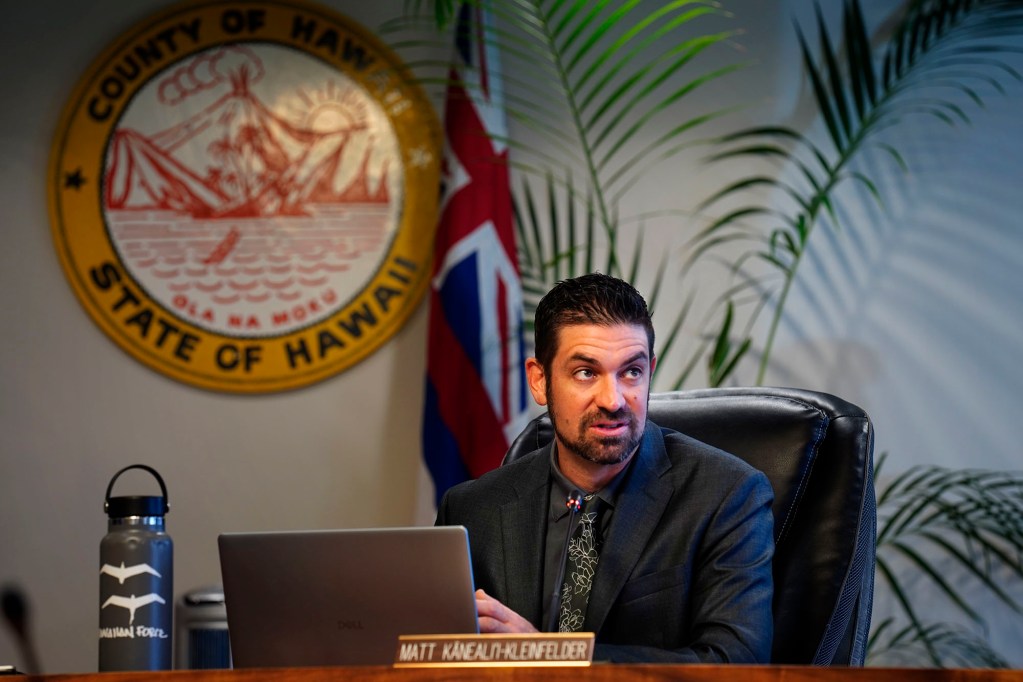
Council member Matt Kaneali’i-Kleinfelder shared similar concerns during Tuesday’s meeting. He worried the appointment process outlined in the bill would make a manager loyal to the council members who appointed them.
Having just four council members appointing the manager was a concern of council member Dennis Onishi as well. He told the council on Tuesday that could make the process too political.
But Kimball told Kaneali’i-Kleinfelder his scenario could also happen under the current system. The full nine-member council would also still have to approve whoever the four council members and mayor appointed.
A Power Grab?
Kauaʻi and Maui considered hiring a county manager but neither adopted the model.
Mason Chock was part of a Kauaʻi County Council subcommittee to study the model over a decade ago. He said the model was proposed by citizens in an attempt to have more accountability in government and ensure priorities don’t shift when mayors do.
“There are about 100 or 1,000 ways that you can undermine decision-making processes in our system,” Chock said. “Things don’t get done if they’re not a priority of the mayor. The county manager system seemingly provides an avenue for the council to have a little bit more power.”
Chock didn’t remember exactly why the measure never moved forward, but said it was opposed by Kauaʻi’s mayor at the time.
“It was definitely a power grab in some ways,” Chock said. “Realistically, that’s what you’re doing, you’re kind of leveling the playing field here for the council.”
The county manager system could provide an opportunity for shared prioritization of projects and policy, he said, and can take politics out of decision-making.
“The question is more about cohesiveness: Is it one person, or is it many people making that decision together?” he said. “Are we forcing our leaders to actually sit in the room and make conscious decisions and problem solve, rather than just pick political sides?”
Less Risk?
Kimball’s key concern with Hawaiʻi County’s current governance is repair and maintenance projects that have been waylaid as mayors and priorities shift amid instability in the county’s finances. A county manager would ensure government functions are run from a business standpoint, she said.
“There’s less risk associated with a county manager,” Kimball says. “They tend to be more likely to maintain stable reserves and avoid short-termism,” or the focus on short-term projects at the expense of long-term sustainability.
Municipalities headed by a manager are also associated with increased bond ratings and lower borrowing costs, according to one 2017 study.
Under Kimball’s bill, the manager would serve a six-year term and be a trained expert in executive administration. The council and mayor would also be able to fire the manager, providing greater accountability, Kimball says.
She said numerous projects across the island have been left in disrepair for years, including parks, roads and community facilities.
“There might have been more attention to that sort of spending with the county manager model, because you’re taken out of that electoral cycle of spending,” she said.
In Tuesday’s meeting, council members said they’ve also seen long-term projects and plans slip through the cracks.
“I really like the concept of having a professional in the field be strategically placed in one of the higher positions of our county to help guide,” council member Rebecca Villegas said. “I have struggled with so many projects and the turnover of directors and mayors.”
Council member James Hustace voted against the measure but told the council that projects in policy and planning documents like the general plan and community development plans have no follow-through.
“A lot of them have not been carried out, and maybe that speaks to that managerial role, and some of that political strife between carrying some projects out,” he said.
Kimball said she hopes to get the public’s opinion on the change in governance. “I’m trying to introduce these to facilitate the conversation about what structural changes might actually yield results,” she said.