Despite A Death And Damage, Maui Stalls On Chronic Kīhei Flooding
Residents remain frustrated by the county’s lack of progress in addressing the decades-long problem facing the burgeoning South Maui town.

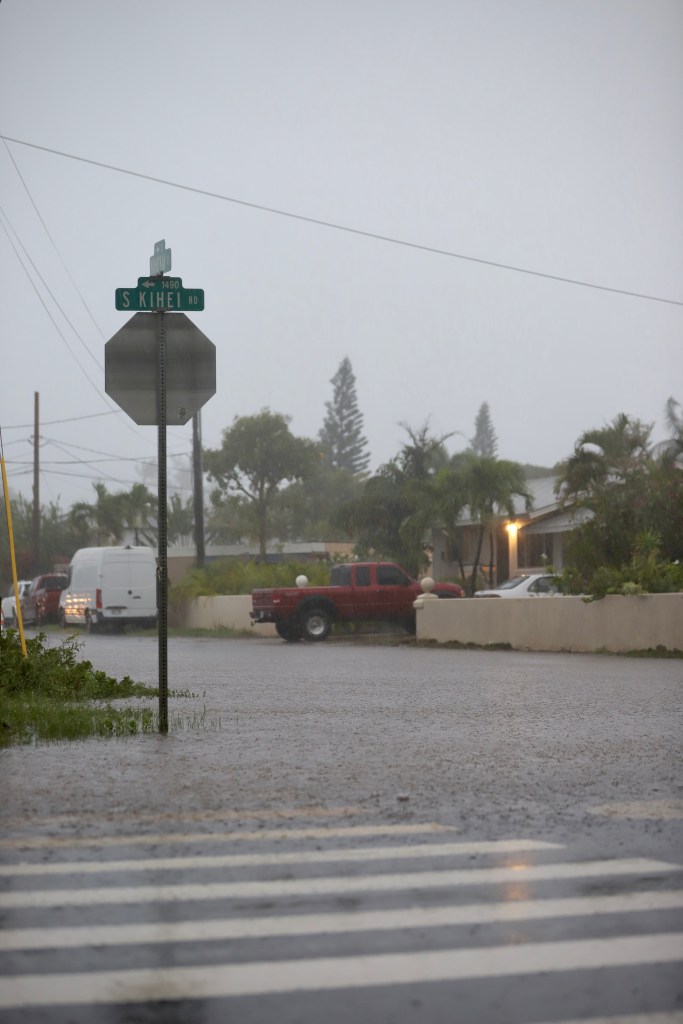
Weeks after intense floods brought on by back-to-back Kona low weather systems pulverized parts of South Kīhei Road, Maui County workers are still patching up massive, crater-like sinkholes and addressing the millions of dollars in infrastructure damage wrought by the storms.
For local residents like John Laney, the coastal road seems all but destined to crumble again in the not-so-distant future.
“None of these fixes currently are going to make any difference in the next big rainy season,” said Laney, president of the Kīhei Community Association. “Those are stop-gap fixes.”
South Maui — particularly neighborhoods along low-lying South Kīhei Road — has long been prone to flash flooding. But in recent years, catastrophic floods have hit the community, devastating homes and businesses and upending the tourism-dependent economy on a near-annual basis. In 2023, a firefighter died while responding to severe flooding near South Kīhei Road.
Year after year, flood-affected residents have called on local officials to prioritize the problem. Community groups, experts and state and federal officials have all offered guidance on potential ways to mitigate the damage. Yet county records show little progress has been made on projects related to the issue.
County officials have hired consultants to research and identify long-term solutions at least three times over the past decade but haven’t moved forward with the plans in any meaningful way. Instead, the priority has been patching up whatever’s broken and investing in new evacuation routes rather than flood mitigation.


Part of South Kīhei Road was closed for several weeks after the Kona low storms hit Maui in March. Flooding has forced the road to close frequently over the years. (Sean Hower/Civil Beat/2026)
The county paid $662,800 to contract a group of engineering consultants to compile the 405-page Kīhei Drainage Master Plan, which was completed in December 2022. The plan outlines roughly $200 million worth of flood mitigation projects, ranging from detention basins intended to intercept floodwaters draining down the slopes of Haleakalā to new and improved culverts for stormwater runoff.
Then-Mayor Michael Victorino acknowledged in a letter attached to the report how Kīhei’s rapid buildup since the 1970s brought the drainage challenges the community has faced for decades. He said this “technical document” provided recommendations that would alleviate flooding in the district.
“Maui County must take steps to preserve our Kīhei community and minimize the impacts of stormwater runoff, which will only become more of a challenge as we face changes due to climate change and sea-level rise,” Victorino said in the letter, adding that he looked forward to working with the various parties necessary to implement the plan.
Not much has happened since then. The county has studied some flood mitigation projects, but virtually no significant steps have been taken to implement them. Jordan Molina, who heads the Public Works Department under now-Mayor Richard Bissen, said the priority is maintaining access to major roadways during floods. That means building the North-South Collector Road, a major throughway that would reduce traffic on Piʻilani Highway, which in 2020 was estimated to cost more than $155 million.
“We’re not going to stop flooding in Kīhei with any of these projects,” he told Civil Beat. “It’s not a question of can we stop flooding. It’s more of how do we become better at managing through it.”
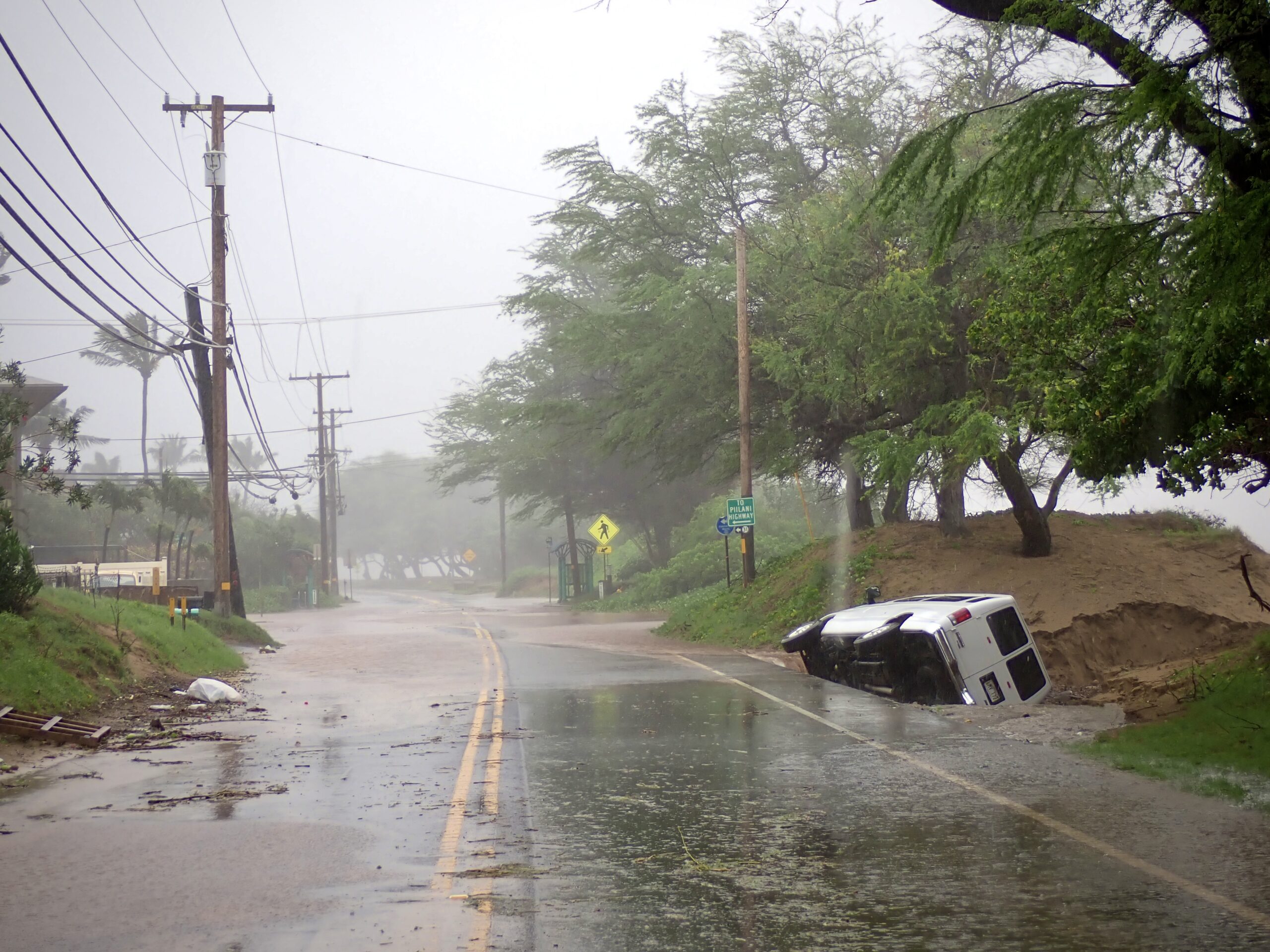
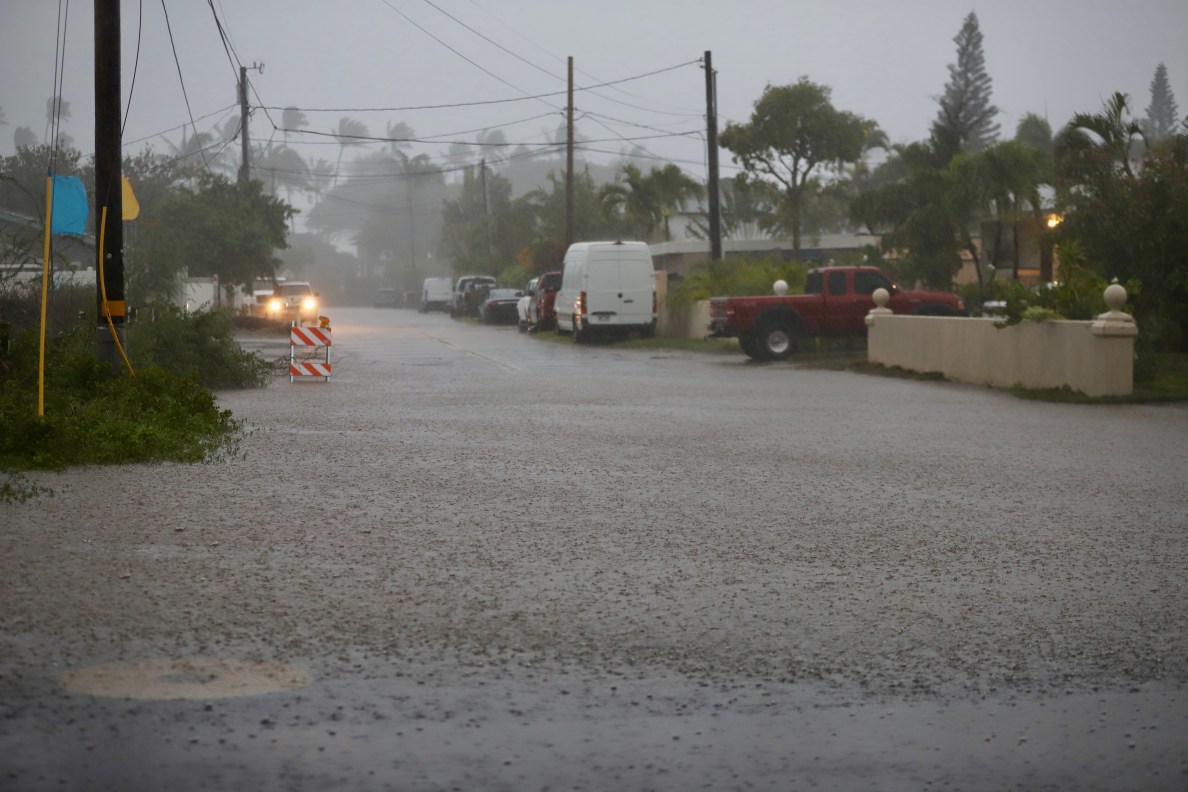
Heavy rains during the first Kona low storm in March washed away parts of South Kīhei Road, leaving vehicles overturned in some places. (Erin Nolan/Civil Beat/2026)
Kīhei residents and environmental advocates said they were frustrated by the county’s failure to take action, especially as climate change has increased the frequency of the types of storms that have historically fueled floods. Kīhei is very dry compared to other parts of the island, typically only getting about 10 inches of rain a year, according to the 2022 drainage plan, but nearly double that amount poured on the community over the course of the two Kona lows in March, contributing to severe floods up and down South Kīhei Road.
Les Iczkovitz, who heads the Maui Meadows Community Association in South Kīhei, said he and other community members want to see officials address the root cause of the problem, rather than repairing the same damage again and again.
“Everybody in South Maui is upset about the lack of government response to the flooding. Everybody,” Iczkovitz said. “I would like to see some politicians actually come forward and say, ‘This is insane.’ It’s the year 2026, and we can’t stop flooding? Of course, we can. We just haven’t had a commitment for it.”
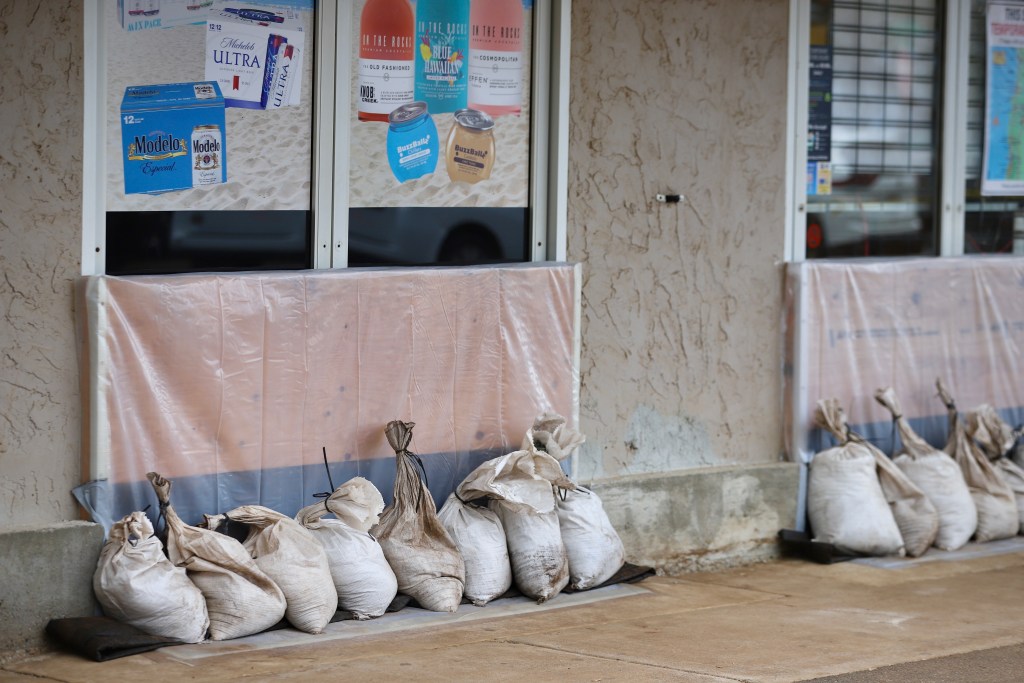
Dealing With A Half-Century Of Development
South Kīhei Road, which runs along the coast from Wailea to Māʻalaea, was once a sparsely developed wetland. A development boom transformed the area during the latter half of the 20th century, spurred by the construction of new infrastructure that brought water to the region from ʻĪao Valley in the 1970s and the completion of Piʻilani Highway in the 1980s. Between 1980 and 2010, South Maui’s population grew by 300% and the region’s vast marshland was largely replaced by condos, hotels, shops and restaurants.
Maui County Council member Tom Cook, a general contractor by trade who represents South Maui, said he remembered when Kīhei was “the boonies.” The town’s rapid development was in many ways a success, he said, but paving over the region’s wetland came at a cost.
“I agree it was overdone,” he said.
Development has dramatically altered the hydrology of the area by increasing the volume and velocity of stormwater runoff, according to a 2023 plan for managing Māʻalaea Bay watersheds. Stormwater that historically would have been absorbed into the marsh like a sponge now glides on top of more impervious concrete and asphalt and rushes into nearby communities. Water that once would have drained into the ocean is now trapped by buildings that block crucial gulches and sand dunes, the plan says.
There are two main philosophies on how to best approach the issue: one calls for building more hardened storm drains, detention basins and widened culverts; another advocates for the restoration of wetlands and ecologically grounded ways to work with the natural flow of water.
While both parties generally agree that some form of action is necessary, adequately addressing the problem will take extensive changes to existing infrastructure, complicated deals with the multitude of private landowners and government agencies who own critical property along gulches, consistent maintenance and decades of work.
“It was 50 to 75 years of doing the wrong thing that got us to where we are today, and there’s no immediate fix to undo 50 or 75 years of mistakes,” said Mike Moran, a longtime resident and Kīhei Community Association leader. “But doing nothing is not the answer, and that’s too much of what we’re getting.”

The 2022 drainage master plan offers a stark acknowledgement that South Maui’s existing storm drainage system — a network of gulches, culverts and detention basins — isn’t keeping up.
“The existing storm drainage system on South Kihei Road is not meant to convey large runoff,” the plan says.
Among the first projects laid out in the plan is a series of detention basins along Piʻilani Highway meant to prevent water from flowing downhill, which engineers estimated would take five to 10 years to complete and cost about $13.5 million.
Just one of those proposed basins, which would be constructed near the base of Kūlanihākoʻi High School, was estimated to cost almost $2.4 million, but it would also decrease the runoff flowing under the highway toward South Kīhei Road, the plan says.
More than three years after the drainage plan was finalized, the county has not taken steps to build that or any of the other detention basins earmarked in phase one.
More detention basins, improvements to the culverts on South Kīhei Road near Kama‘ole Beach Parks I and II and the restoration of a ditch uphill from the community at Ohukai in North Kīhei would take 10 to 20 years, according to the plan. About half of all the proposed projects would take more than two decades to complete, engineers estimated.

Some of the drainage master plan’s more ambitious projects have garnered criticism, such as a proposal to spend roughly $21.5 million diverting floodwaters draining down Waipuʻilani Gulch — a major contributor to flooding on South Kīhei Road — to the larger Kūlanihākoʻi Gulch.
That idea was raised in a previous iteration of the drainage master plan in 2016. EcoSolutions Hawai‘i, an engineering consultant, put together as a more environmentally friendly alternative that challenged the diversion proposal as impractical and complicated by the archeological importance of the land around the gulches.
“That’s not a reasonable solution,” said Amanda Cording, a scientist and an author of the alternative plan that embraced using more of the natural landscape to address the flooding in Kīhei.
The Progress – Or Lack Thereof
The county has not budgeted money toward breaking ground on projects included in its 2022 master drainage plan for Kīhei, and none of the proposed projects are included in the Department of Public Works’ lists of completed or upcoming capital improvement projects.
Drainage master plans take time to implement because large-scale improvements are expensive and controversial, according to Molina. The 2022 plan was meant to be a breakdown of local drainage systems and an inventory of options to improve them, he said, not a set path forward with a prescribed timeline.
“I know there’s probably an expectation that this master plan has all the answers,” he said. “It’s really just starting the conversation. Each of those problems now needs to get vetted further to reach the level of design and construction plans to go out and actually build something.”
For the last two fiscal years, the County Council has budgeted $1 million for the Public Works Department to do hydraulic studies and surveys of the streams.
This work helps the county understand how the floodwaters move through the areas, Molina said. “We have a lot of anecdotes of what people think they see,” he said, “but it’s not always exactly representative of what’s really occurring.”

In December 2023, the county received a $345,000 grant that would let the Mālama Haleakalā Foundation assess sites and create an early-stage design for a detention basin in Kūlanihākoʻi. The state and the county allocated about $2.5 million toward the project, splitting the cost. Cook described the work as “very, very, very preliminary.”
The county also applied for federal support to conduct a watershed project that would examine the feasibility of improving the landscape to better retain water above Piʻilani Highway, according to Molina. That funding has not been granted yet.
That lack of progress is frustrating to people like Kelly King, a former council member from South Maui.
“We should not be doing any more studying at this point,” she said. “They should specify what they’re going to do, instead of basically, ‘Give us a million dollars and we’ll see what we can do with it.’”
Cording, the engineering and environmental consultant, encourages transparency and collaboration with the community. Things work best when the county “communicates what decisions they make at each juncture, and then get feedback,” she said. “The public may not like it, but at least they would have an opportunity to provide input at each crossroads.”
Still, she said, the county is doing the best it can with the staffing and funding it has.
“One of the things that has to be considered in this whole equation is just that there aren’t enough resources — especially with the North-South Collector Road project — to do two things at once,” she said. “And that’s a fundamental problem.”
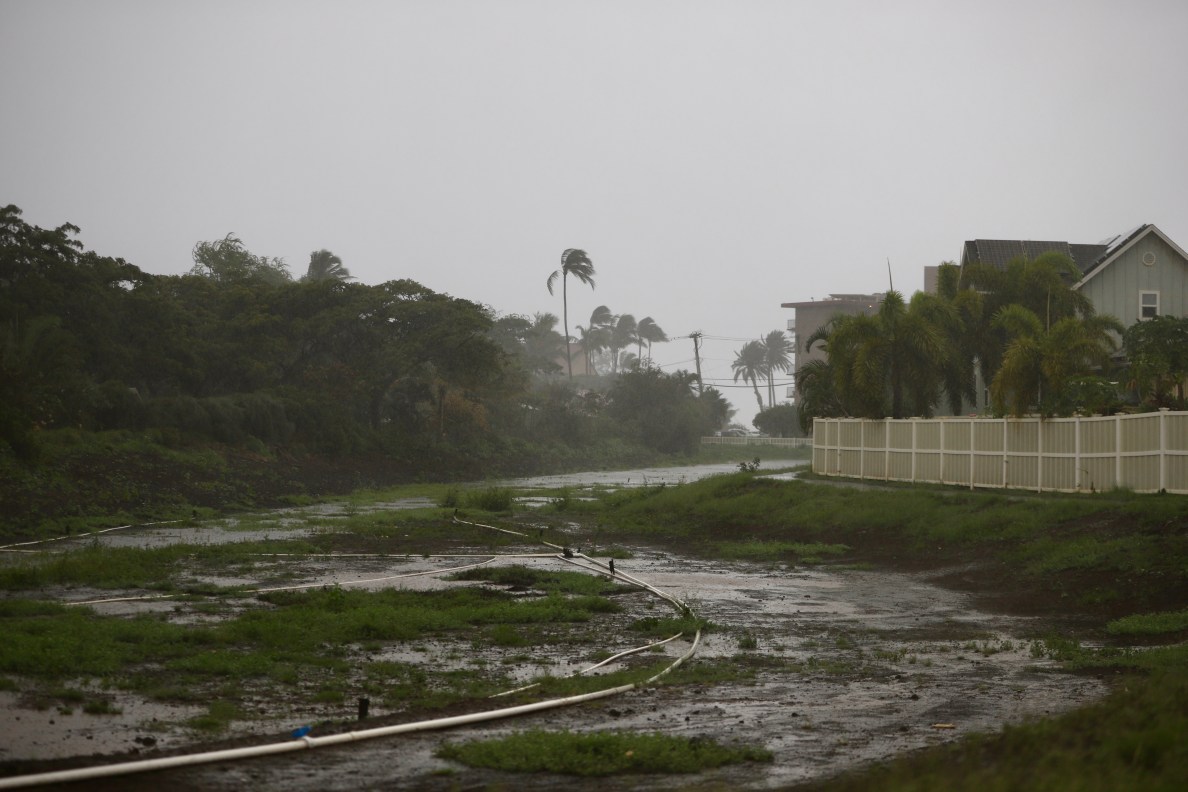
Over the years the county and community groups have attempted to reduce flooding by dredging thousands of truckloads of sediment out of Kūlanihākoʻi Gulch so that it can accommodate more floodwaters draining through South Maui and out to sea. Moran said the dredging of this gulch has been “one of the few true mitigation projects that the county government did that really was effective.”
However, these efforts are only effective when paired with long-term regular maintenance. Moran said the mid-March storm brought a torrent of new mud, sediment and debris into the gulch. But he acknowledged that if it hadn’t been cleared ahead of that, then the second storm might have taken out more homes and condos.
Maintaining Access
One of the county’s top priorities has been advancing a decades-old plan to build a road that will offer a route out of South Maui other than Piʻilani Highway in the event of flooding or other emergencies, Molina said.
“When we’ve had South Kīhei Road go down, the traffic impacts on Piʻilani Highway are substantial, and that in itself can create a hazard to public safety,” he said.
Molina acknowledged the residents’ repeated calls for long-term flood mitigation projects, but he said his office simply doesn’t have enough staff to “match the scale of the problem and the urgency that the community has.” That, in addition to the reality that there are not currently multiple routes out of South Maui, means his department must focus on immediate road repairs and ensuring that people can access Piʻilani Highway in an emergency.
“The number one thing that we have been responding to is maintaining access,” he said. “So if we are able to maintain access, then the need for further mitigation is less.”
The flooding on South Kīhei Road is “a nuisance at this point,” Molina said.
King agreed that the North-South Collector Road should be a priority, but she said that doesn’t mean just letting South Kīhei Road continue to flood.
“The North-South Collector Road is necessary because we need that throughway,” she said. “But they’re going to have to figure out a plan for how to address the destruction that keeps happening along South Kīhei Road.”
The new road, which has been considered since at least 1998 and repeatedly delayed, is still a ways off. The next section is set to go out for bid next summer, and Molina said he was aiming for a 2030 completion date.
The county has also discussed potential ways to undo infrastructure projects that have caused more flooding, such as a bridge on South Kīhei Road between North Kīhei Road and Uwapo Road. Debris has frequently clogged the culvert beneath the bridge and blocked the flow of water, which local property owners said has intensified flooding in the area. Some county officials are exploring whether it would be possible to divert the road and create alternate routes so the bridge can be dismantled, according to Cook.
The recent flooding has brought “acute awareness,” Cook said, “that is letting people know we got to get our ass in gear and address this. But there’s big challenges.”
The Bottom Of The Waterfall
Sarah Bott, who was raised in Kīhei during the 1970s, said her hometown no longer resembles the quiet, remote community where she grew up. Back then, there were no big, boxy condominium complexes or oceanfront resorts along South Kīhei Road — just a handful of modest homes, mosquito-infested marshes and thorny kiawe trees.
“It was totally out in the sticks,” Bott said, recalling the damp, earthy smell of the wetlands that once surrounded Kalama Park.

Bott remembered a few damaging floods during her childhood — particularly one in 1971 that completely submerged the northernmost part of South Kīhei Road and cut the community off from the rest of the island — but they were infrequent compared to today, she said.
“So many more people are impacted now,” she said, noting the existing developments not to mention future projects already planned for the area.
Moran lamented that previous county administrations hadn’t done more to anticipate the consequences of replacing South Maui’s wetlands with pavement and concrete.
“You never should have built all those condos along there and filled in the wetland, but what are you going to do? Rip them all down and rip the shopping center out?” he said.
A comprehensive, long-term solution would take into account that Kīhei is part of a greater watershed, he added, and it would involve the coordination of communities mauka to makai.
“You’re at the bottom of the waterfall down here,” he said. “You can’t stop the water if you’re at the bottom.”
Civil Beat’s coverage of climate change and the environment is supported by The Healy Foundation, the Marisla Fund of the Hawai‘i Community Foundation and the Frost Family Foundation.